
BPD Central: An Illness of Extremes

What is Borderline Personality Disorder (BPD)?
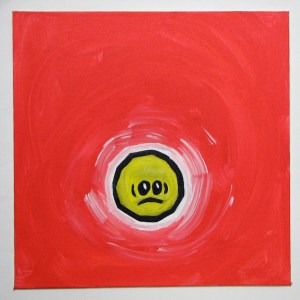
sufferingface
Sometimes, it's just too much

A borderline writes: 

“Being a borderline feels like eternal hell. Nothing less. Pain, anger, confusion, hurt, never knowing how I’m gonna feel from one minute to the next. Hurting because I hurt those who I love. Feeling misunderstood. Analyzing everything. Nothing gives me pleasure. Once in a great while I will get “too happy” and then anxious because of that. Then I self-medicate with alcohol. Then I physically hurt myself. Then I feel guilty because of that. Shame. Wanting to die but not being able to kill myself because I’d feel too much guilt for those I’d hurt, and then feeling angry about that so I cut myself or O.D. to make all the feelings go away. Stress!”

Therapists use a book called “Diagnostic and Statistical Manual” (DSM) to make mental health diagnoses. They’ve outlined nine traits that borderlines seem to have in common; the presence of five or more of them may indicate BPD. However, please note the following: Everyone has all these traits to a certain extent. Especially teenagers. These traits must be long-standing (lasting years) and persistent. And they must be intense.

Be very careful about diagnosing yourself or others. In fact, don’t do it. Top researchers guide patients through several days of testing before they make a diagnosis. Don’t make your own diagnosis on the basis of a WWW site or a book!

Many people who have BPD also have other concerns, such as depression, eating disorders, substance abuse — even multiple personality disorder or attention deficit disorder. It can be difficult to isolate what is BPD and what might be something else. Again, you need to talk to a qualified professional.

DSM-IV Definition of BPD

A pervasive pattern of instability of interpersonal relationships, self-image, and affects, and marked impulsivity beginning by early adulthood and present in a variety of contexts, as indicated by five (or more) of the following:

Frantic efforts to avoid real or imagined abandonment. Note: Do not include suicidal or self-mutilating behavior covered in (5).

A pattern of unstable and intense interpersonal relationships characterized by alternating between extremes of idealization and devaluation. This is called “splitting.” Following is a definition of splitting from the book “I Hate You, Don’t Leave Me” by Jerry Kreisman, M.D. From page 10:

 “The world of a BP, like that of a child, is split into heroes and villains. A child emotionally, the BP cannot tolerate human inconsistencies and ambiguities; he cannot reconcile good and bad qualities into a constant coherent understanding of another person. At any particular moment, one is either Good or EVIL. There is no in-between; no gray area….people are idolized one day; totally devalued and dismissed the next.”

“Normal people are ambivalent and can experience two contradictory states at one time; BPs shift back and forth, entirely unaware of one feeling state while in the other. When the idealized person finally disappoints (as we all do, sooner or later) the borderline must drastically restructure his one-dimensional conceptionalization. Either the idol is banished to the dungeon, or the borderline banishes himself in other to preserve the all-good image of the other person.”

“Splitting is intended to shield the BP from a barrage of contradictory feelings and images and from the anxiety of trying to reconcile those images. But splitting often achieves the opposite effect. The frays in the BP’s personality become rips, and the sense of his own identity and the identity of others shifts even more dramatically and frequently.”

Identity disturbance: markedly and persistently unstable self-image or sense of self.

Impulsivity in at least two areas that are potentially self-damaging (e.g., spending, sex, substance abuse, reckless driving, binge eating). Note: Do not include suicidal or self-mutilating behavior, already covered.

Recurrent suicidal behavior, gestures, or threats, or self-mutilating behavior.

Affective instability due to a marked reactivity of mood (e.g., intense episodic dysphoria, irritability, or anxiety usually lasting a few hours and only rarely more than a few days).

Chronic feelings of emptiness.

Inappropriate, intense anger or difficulty controlling anger (e.g., frequent displays of temper, constant anger, recurrent physical fights).

Transient, stress-related paranoid ideation or severe dissociative symptoms.

Dissociation is the state in which, on some level or another, one becomes somewhat removed from “reality,” whether this be daydreaming, performing actions without being fully connected to their performance (“running on automatic”), or other, more disconnected actions. It is the opposite of “association” and involves the lack of association, usually of one’s identity, with the rest of the world.

 There is no “pure” BPD; it coexists with other illnesses. These are the most common. BPD may coexist with:

  1. Post traumatic stress disorder
  2. Mood disorders
  3. Panic/anxiety disorders
  4. Substance abuse (54% of BPs also have a problem with substance abuse)
  5. Gender identity disorder
  6. Attention deficit disorder
  7. Eating disorders
  8. Multiple personality disorder
  9. Obsessive-compulsive disorder

Statistics about BPD/ BPs comprise:

  • 2% of the general population
  • 10% of all mental health outpatients
  • 20% of psychiatric inpatients
  • 75% of those diagnosed are women
  • 75% have been physically or sexually abused

Learn about the causes and treatment of BPD.  Contact BPD Central at  tel: 1-888-357-4355 or 1-800-431-1579 or check out this web link: http://www.bpdcentral.com/index.php

Out in mid-November: Randi Kreger’s new book “The Essential Family Guide to Borderline Personality Disorder!” If you care about someone with BPD, you must have this book.   Get an excerpt and/or order from BPD Central web site.

When Post-Traumatic Stress Disorder Gets Bad

Stress destroys lives
Traumatic stress destroys lives

Combat veterans, sexual assault survivors, and other victims of trauma are vulnerable to a condition called Post-Traumatic Stress Disorder (PTSD). People with PTSD suffer from a range of symptoms that interfere with their capacities to enjoy normal life.

People who suffered suicidal conditions, particularly conditions that were chronic, recurrent, or included one or more attempts, may also be victims of PTSD. According to its definition, PTSD may result when a person suffers an event or situation that is outside the range of normal experience, exceeds the individual’s perceived ability to meet its demands, and poses a serious threat to the loss of life.

Suicidal people meet the formal criteria for PTSD. Severe and prolonged suicidal pain is not something that most people suffer. People in suicidal crises feel that they are at the breaking point of what they can cope with. Since 30,000 people die by suicide each year in the United States, it is a condition that posesses a serious threat to the loss of life.

Many of us are haunted by memories of acute crises, acts of self-injury, or extended periods of severe depression. Like citizens of a besieged city, we lived through periods of time in which we had a realistic and unrelenting fear that we would soon be dead. We suffer PTSD simply from having been suicidal, independently of whatever particular traumas may have contributed to our becoming suicidal, such as abuse during childhood or exposure to the violent death of someone else. Our “suicide PTSD” is also distinct from whatever traumatic events may happen as a result of being suicidal, such as involuntary hospitalization or job discrimination. Undoubtedly, most of us suffered many types of traumatic events in our lives, and these events and their consequences need to be addressed in recovery. But the suicidal crises themselves may be events that induce PTSD.PTSDgraph

The PTSD literature for veterans and sex assault survivors lists conditions that are commonly found among survivors of those types of trauma. Survivors typically have only some of these symptoms, and the severity of a particular symptom may vary from individual to individual. Survivors of different types of traumatic events often have a different range of symptoms. A remarkably large number of these conditions are common among people with long-term histories of suicidal pain:

  • Problems with memory. Persistent, intrusive, and vivid memories concerning the traumatic situation. Events of daily life may trigger distressing memories related to the trauma. Memory lapses for parts of the traumatic situation. Many suicidal people are troubled by strong images, such as the feeling that they have bombs inside their bodies or a knife over their heads, and in recovery continue to be bothered by the memory of having had these images.
  • Avoidance of things associated with the traumatic experience.
  • Denial on the seriousness of the experience.
  • Persistent anxiety.
  • Fear that the traumatic situation will recur. The trauma is often an event that shatters the survivors’ sense of invulnerability to harm.
  • Disturbed by the intrusiveness of violent impulses and thoughts.
  • Engagement in risk-taking behavior to produce adrenaline.
  • A feeling of being powerless over the traumatic event. Anger and frustration over being powerless.
  • A feeling of being helpless about one’s current condition.
  • Being dramatically and permanently changed by the experience.
  • A sense of unfairness. Why did this happen to me?
  • Holding oneself responsible for what happened. Feeling guilty.
  • The use of self-blame to provide an illusion of control. Sexual assault survivors often blame themselves: “If I hadn’t been at that location, worn those clothes, behaved in that way, then it wouldn’t have happened.” This pattern is also found in the survivors of a completed suicide. “If I had only done x, the suicide would not have happened,” can be used to try to cope with the fear that suicide will happen again in the family–i.e., it is preventable if I just manage things differently. The suicidal are often full of self-blame. As in the other cases it is partly due to an internalization of social attitudes that blame the victim or family, and also due to the effort to gain mastery over the situation. To imagine we could have done more is more tolerable than total helplessness.
  • Pushed into the corner
    Pushed into the corner

    An inability to experience the joys of life.

  • Feelings of being alienated from the other people and society in general. “I am different. I am shameful. If they knew what I was like, they would reject me. I don’t belong in this world. I’m a freak, an outcast.”
  • When people with PTSD try to return to normal life, they are plagued by readjustment problems in the basic elements of life. They have difficulties in relationships, in employment, and in having families.
  • A lack of caring attachments. A sense of a lack of purpose and meaning.
  • Some chronically traumatized people lose the sense that they have a self at all.
  • Veterans report the feeling that they never really made it back from the war. Formerly suicidal people feel they never really made it back to normal life.
  • One Viet Nam veteran with PTSD said, “I don’t have any friends and I am pretty particular about who I want as a friend.”
  • PTSD was aggravated for Viet Nam veterans because they returned to a country that had negative attitudes toward them. For sexual assault survivors, stigmatization is the “second injury”.
  • When Viet Nam veterans returned home people were angry at them. They had shamed the country, they had done something wrong, they were potentially harmful to others, it was dangerous to be with them. Sexual assault survivors may receive angry responses–on the grounds that they have done something that shames the family. Suicide attempters often experience great anger from family and care providers.
  • A deep distrust of co-workers, employers, authorities.
  • Left with unexpressed rage against those who were indifferent to their situation and who failed to help them.
  • In personal relationships there are problems of dependency and trust. A fear of being abandoned, betrayed, let down. A belief that people will be hurtful if given a chance. Feelings of self-hatred and humiliation for being needy, weak, and vulnerable. Alternating between isolation and anxious clinging.
  • Trauma often causes the victim to view the world as malevolent, rather than benign.
  • No sense of having a future, or, the belief that one’s future will be very limited.
  • Feel that they belong more to the dead than to the living.
  • The feeling of having a negative “Midas touch”–everything I get involved with goes bad.
  • Loss of self-confidence, and loss of feelings of mastery and competence.
  • A resistance to efforts to change a maladaptive world view that results from the trauma.
  • A mistrust of counselors’ ability to listen.
  • People who suffered traumatic experiences as children, teenagers, or young adults may simultaneously become prematurely aged and developmentally arrested. A part of them “feels old”. Another part feels stuck at the age they had when the trauma occurred.
  • PTSD can be worse if the sufferer experiences the trauma as an individual rather than as a member of a group of people who are suffering the same situation. Unlike earlier wars in which units went overseas together and returned together, in Viet Nam each soldier had an individual DEROS (Date of Expected Return from Overseas). This reduced unit cohesiveness; each soldier experienced the war from an individual point of view. Suicidal people experience their near-death situation with extreme isolation. They see their conditions as being completely unique – “terminal uniqueness”. They have no sense of identification with others.
  • The severity of PTSD symptoms tends to increase with the severity and duration of the trauma.
  • The use of alcohol or drugs to cope with the PTSD symptoms.
  • Attempts to do things to gain a feeling of mastery over the traumatic situation, e.g., become a volunteer on a hotline.These kinds of conditions may be found again and again in the chronically suicidal. Upon reflection, it should not be surprising that we should suffer PTSD. Many of us suffered from suicidal pain for years – and years – and years. The idea of dying is terrifying. We recoil at thoughts of dying by automobile accident, plane crash, murder, cancer, AIDS, drowning, suffocation. The idea of dying violently simply by forces generated from within ourselves is in some ways almost too horrible to apprehend. How could anyone survive such a prolonged siege of pain and terror – and remain unaffected?  Survivors of traumatic experiences are often told, “It’s in the past. Forget about it and get on with your life,” “Why can’t you just forget about all that, and enjoy life like a normal person?” If we could simply “get on with life”, they would have done it. PTSD helps explain why it is so hard for the chronically suicidal to recover. Because we were suicidal, we subsequently suffered many of the conditions associated with post-traumatic stress disorder. These conditions are serious problems in their own right; they are formidable barriers in the recovery process.We can heal from the original trauma, and we can heal from the PTSD conditions that have plagued us since the trauma. The basic steps of PTSD recovery programs provide helpful guidelines: 
  1.  
    1. an environment that is physically and emotionally safe
    2. treatment for addictive behaviors
    3. patience: PTSD recovery takes time
    4. caring attachments
    5. restore sense of mastery
    6. rest and relaxation
    7. recall the traumatic event(s) in small steps
    8. gradually assimilate painful feelings and memories
    9. fully experience fear, anger, shame, guilt, depression
    10. grieve one’s losses

In a support group we have a chance to talk about our suicidal histories without the fear that we will be taken to a hospital for doing so. We can talk about the isolation, the fears, the pain, the confusion, the acts of self-injury, the behavior of others that was stigmatizing, denying, abusive, the horrible sense of estrangement that exists when you are in a terrible situation and there is no one who understands what you are going through, the hatred and contempt for oneself and the world, the debilitating sense of personal weakness. We see that we are not alone. We do not have the seriousness of our condition minimized, denied, or belittled. With time, the pain abates and the troublesome PTSD symptoms diminish.

By David L. Conroy, PhD. Reprinted with permission.  http://www.metanoia.org/suicide/ptsd.htm