“My soul clings to you;
your right hand upholds me.”
Psalm 63:8, ESV
Every thing is about Him, or I want it to be, sometimes I want it to be so. Other times, not so much.
Serving Rascals, Clumsy Disciples, and Physically and Mentally Ill Believers with the Unconditional Love of Jesus Christ

“My soul clings to you;
your right hand upholds me.”
Psalm 63:8, ESV
Every thing is about Him, or I want it to be, sometimes I want it to be so. Other times, not so much.
John 15:15

Yes, the idea of being a slave to anyone is repugnant. We chafe at this, and yet man was never meant to be seperated from the Lordship of Jesus. We’re instructed repeatedly with the New Testament idea that “our life is not our own” Over and over God proclaims Himself as the King.
Not so much when life is fairly good, granted, but in those hard moments when a decision must be made between enjoying the titillating “lusts of the flesh,” or accepting the fruits of the Spirit. This is one of those “lordship moments.” They come, and go, and they show us exactly who we are.
If you’re really going to be authentic–a legitimate and real disciple, then you must determine who is going to be “boss.” This isn’t one of those casual decisions. You must securely fix it in your heart.
The thief on the cross knew salvation, he was promised an eternity with God simply by faith. But I submit to you that he had put himself under the Lordship of Jesus, simply by recognizing the sign, “the King of the Jews.” I believe he saw and understood its imlications. Jesus was King!
I know this first-hand. It can be a monumental struggle. You must admit to not only having Jesus as your Savior, but you also must put your life under His total Lordship. You need to pick up your cross daily in order to follow. You need to learn how to kneel.
I’ve chosen a crown to open up this post–it’s done on purpose. I simply want you to to understand the supreme call He has on your life.
“The question in salvation is not whether Jesus is Lord, but whether we are submissive to His lordship.”

” “Let him who is without sin among you be the first to throw a stone at her.””
John 8:7, ESV
“None knows the weight of another’s burden.”
-George Herbert
Definitely, we must discern motives and false doctrine. We’re to be constantly aware of people and issues that swirl around us–of this, there is no doubt, we mustn’t be ignorant. This is a healthy “discernment.”
But we must learn that having discernment isn’t a way that passes out a ‘guilty’ penalty? We are ‘seeing’ things these things–not to pass judgment, but that we might pray clearly and earnestly, and grow into His love for the weak.
But ‘passing a guilty sentence’ is His exclusive jurisdiction.
It’s far beyond our ‘pay grade.’ He is the final judge in everything. He judges justly and lovingly. He alone knows and understands everything very clearly.
It becomes imperative that we understand this; that any real discernment given is only to intensify and escalate the calling of every ‘saint,’ intercessor, or pastor. We discern, not to pass judgment, but to pray more clearly and effectively.
What you see or sense is for the prayer closet, not before a judge’s bench.
And yet how foolish we are. Do we really have the ability to ascribe a penalty to someone else? Could it be when we decide to throw rocks at certain people we’re in terrible danger of forfeiting our own salvation? “But if you do not forgive others their sins, your Father will not forgive your sins.” (Matt. 6:15.)
(If you have a ‘rock’ in your hand, you are in considerable danger. Please consider this–it’s never easy, is it?)
“Don’t judge others, or you will be judged. 2 You will be judged in the same way that you judge others, and the amount you give to others will be given to you.
“Why do you notice the little piece of dust in your friend’s eye, but you don’t notice the big piece of wood in your own eye?
Matthew 7:1-3
We are broken people. We struggle with many different things. Some of us are mentally or physically ill. We are not whole yet. Some of us must take meds to help us be ‘normal.’ We deal with issues that would devastate someone else. And we don’t have it anywhere near together.
And yet out of our ‘hot mess,’ do we think we can penalize someone else? Really?
We really don’t have a problem with worldly people. We understand that they are lost in their sins, terribly wrapped up in their own personal darkness, and that should definitely disturb us. We must point to the Blood of Christ that forgives us. We share the good news of true repentance and faith. His Spirit teaches us to be witnesses of His love to everyone we meet.
“The life of faith is a struggle enough in a broken world without us complicating it for other believers.”
–Jake Colsen
It just may come as a shock to some, but it’s extremely difficult to throw stones at someone when we are busy “washing” their feet.
Granted, “we are to be wise as serpents,” But that same verse instructs us “to be as harmless as doves.” (Matt. 10:16.) A loving meekness and gentleness, need to be combined with intense spiritual power. We must embody “the fruits of the Spirit.” These things are the characteristics of the Spirit-saturated believer.
“The nature and end of judgment or sentence must be corrective, never vindictive; it is always for healing, and never for destruction.”
–John Owen
Perhaps when we judge others, we reveal that we don’t understand what ‘real’ discipleship with Jesus is? Somehow it seems, we really aren’t quite grasping the immensity of His grace on guilty people? Do we really understand His profound love for the fallen? “God so loved the World…” Have we had any idea how patient He is with us? Do we doubt His ability to correct others? (Again, these are awfully hard questions.)
“Judge not lest you be judged.” (Jesus’ words really do scare me sometimes. )
Certainly, I intend to confront the darkness. “You are the light, a city set on a hill!” I am His salt and light and I do shine into this black night. But that is His doing, not mine. I do not generate light on my own. The Bible declares me as ‘self-righteous’ when I try. I am a broken person, who is just starting to understand the scope of my own brokenness and weaknesses. I’m starting to realize I’m not in the position to Judge someone else. I’m not quite healed myself yet and I must not think I can point to someone else as being worse than me.
Quite simply, I can’t throw ‘rocks’ at other believers anymore. I can no longer pass out any condemnation from my own limited understanding. My chief concern right now is to be a humble, earnest Christian who is always ready to forgive those who, in their awful sin and confusion, are hurting others.
I’m beginning to see that my calling is to be; a simple servant to my brothers and sisters, nothing more, and nothing less.

Ole Kristian O. Hallesby was a Lutheran pastor who taught at the Free Faculty of Theology from 1909 to 1952.
He was an outspoken opponent of the Nazi occupation of Norway and was for a time detained at a concentration camp.
Hallesby wrote over 60 books, mostly on theology and ethics, but is known for his devotional writings. His book on prayer is one of the best written on the subject.
*

There’s been a death in my family. A young man just 24 years old passed a week ago. He was the only child of my aunt and uncle, and they are rightfully devastated. The whole thing is pain on steroids–as awful as it gets. Shock and grief is saturating our family.
We’re all asking why.
A young man who’s just learning how to live is gone. He was in the springtime of his life. His faith in Jesus was just beginning, and he was starting to sort things out, just like we all do. He is gone, but we’ll meet him again.
“Who gathered this flower?’ The gardener answered, ‘The Master.’ And his fellow servant held his peace.”
I wonder if the shock will ever wear off. I suppose it will, but it will come little by little. Jesus must have time to heal and hold in the meantime. He promised us.
Grief on this level defies words of human comfort and consolation. I am frustrated to counsel pain on this level. I’m ashamed when I do. I keep my mouth shut and that’s not easy for me.
There’s terrible guilt, anger and isolation.
The Holy Spirit is strongly emphasizing prayer now. I realize that only He can heal, guiding their suffering and healing to an outcome they can’t see. I know, I am certain that Jesus will come and touch his parents, but perhaps our intercession is what it will take to make this happen.
We must stand against Satan and push him away.
In the olden days, medicine was dispensed in powder form, not pills. The pharmacist would measure out a powder to give to the sick. In a sense, this is what God does. He carefully gives what is needed and not a grain more than necessary. I believe this.
Please don’t condemn yourself for speaking trite and inadequate words. You must rest in God’s work now, and realize that only He can heal and comfort pain and anger on this level. Job’s friends were at their best when they said nothing.
Sometimes all you can do is pray fervently. And that is enough.
“He will wipe away every tear from their eyes, and death shall be no more, neither shall there be mourning, nor crying, nor pain anymore, for the former things have passed away.”
Revelation 21:7


Luke 5:12. ESV
The man is desperate. His leprosy has advanced; he is covered with it from ‘head-to-toe.’ He’s an outcast now, completely infected by something he never asked for; he is ‘unclean’ and completely without hope. There is no treatment, the doctors can do nothing. How bad can it get?
He knows it; he doesn’t need to be convinced by anyone over the hopelessness of his condition. But somehow he has heard that Jesus can do real miracles. Could it be that Jesus can heal his sickness?
The leper comes and falls on his knees before the Lord, with his face in the dirt. This man is completely broken; he has no hope, except for Jesus. What else can he do? He is with any real hope.
Our pain and darkness vary. Some hurt more, some less. But we’ve all come to the place where we no longer have illusions of somehow being made whole. I sometimes think there should be a secret handshake or a password. We all share a comradeship– we’re all part of the same community.
We’re a broken club of tired and decidedly unclean misfits.
Lying in the dirt, we’re starting to believe the unbelievable. Our faith doesn’t activate our healing, as much as it simply guides us to Jesus. We can kneel, and perhaps that’s all we need to do. His presence drives away the fear, the doubt, and the pain. He’s come, and somehow maybe, we begin to hope for mercy.
Only Jesus can carry us through this. Only He can do this.
I have struggled with deep dark depression. I’ve had to take meds. But when I come into Jesus’ presence, all my melancholy is driven out. He comes and I start to hope again. Am I a stellar example of perfect discipleship? I think not. But isn’t about us becoming “angels,” perhaps it’s more about us learning how to kneel, and to allow Jesus to touch our hearts.
Some will understand this, others not so much. That’s ok.

r


I need Him constantly. Just maybe that’s the backbone of true discipleship. We dare not think that discipleship, which is following Jesus Christ, can happen without any real intimacy to Him.
We’re called to love Him first.
Some of us struggle physically and mentally. We are the handicapped ones, and we know it–we understand our shortcomings and flaws. The purpose of this blog has been to encourage and comfort, that is the focus of brokenbelievers.com. What follows is the motto of this ministry:
“Serving Rascals, Clumsy Disciples, and Mentally Ill Believers with the Unconditional Love of Jesus Christ.”
At Jesus’ very core is a solid promise. I believe it’s who exactly who He is, the very core of His being, the very center of His character. These verses are how Jesus wants to be understood and known. And then He offers us an invitation:
“Come to me, all who labor and are heavy laden, and I will give you rest. 29 Take my yoke upon you, and learn from me, for I am gentle and lowly in heart, and you will find rest for your souls.”
Matthew 11:28-29, ESV
We are called to be with Jesus every day–maybe in each moment. I really do think that intimacy with Him can be the cure for all that disturbs us about ourselves. Now I’m not saying that our issues evaporate, but we begin to see that they can be conquered, and only if we draw close and are filled with the Holy Spirit daily.
I’m convinced that we’ll see significant breakthroughs as we sit at the feet of Jesus. The passage above (v. 3) describes a satanic attack that seduces us from a 100% pure devotion to Jesus. We read of Paul’s deep concern–apparently the Corinthians were under attack.
“But I have this against you, that you have abandoned the love you had at first.”
Revelation 2:4
“For I feel a divine jealousy for you, since I betrothed you to one husband, to present you as a pure virgin to Christ. 3 But I am afraid that as the serpent deceived Eve by his cunning, your thoughts will be led astray from a sincere and pure devotion to Christ.”
2 Corinthians 11:2-3
And Paul warns them. And us as well.


“The Spirit of the Lord is upon me,
because he has anointed me
to proclaim good news to the poor.
He has sent me to proclaim liberty to the captives
and recovering of sight to the blind,
to set at liberty those who are oppressed,
19 to proclaim the year of the Lord’s favor.”
Luke 4:18-19
The Trinity is seen at work redeeming man in these two verses–the Spirit anoints, Jesus proclaims, God pours out His favor. The ‘three-in-one’ is active and moving, and He is incredibly involved in each one’s salvation. This quotation is taken directly from Isaiah 61:1 and it completely defines the ministry of the messiah.
The focal point here is on the needy and desperate. The poor, captives, blind, and all of the oppressed become the chosen ones of Jesus’ ministry. His specialty is neglected and the needy, that is His work and I believe that those are still the specific ones He has had His eye on all along. His mind hasn’t changed in 2000+ years.
The Holy Spirit is critically needed to do this work.
The word “anoint” means to rub or sprinkle on; apply an unguent, slather with an ointment.
That is how the Holy Spirit came to Jesus. This was intense, but heartfelt, and it came to energize Jesus to do what was necessary.
Oppressed: Marginalized, depressed, discouraged, downtrodden, broken-hearted, captives.
If Jesus needed to be consecrated for this task, how very much more do we. The message is always one of healing, the needy, and the beaten down. That really must be our M.O. We must do the work in God’s way, with God’s power. We must be energized to reach the very lost with the presence of God. This is His heart cry.
“Truly, truly, I say to you, whoever believes in me will also do the works that I do; and greater works than these will he do, because I am going to the Father.”
John 14:12
The word “anoint” means to rub or sprinkle on; apply an unguent, slather with an ointment

Romans 8:29, NLT
1 Corinthians 15:49
Much speculation has been made regarding these two ‘pinnacle’ verses. We must approach them humbly to see what they are all about. We must see for ourselves all that concerns us. “They will not hear the voice of a stranger,” (John 10:5).
The Father has decreed, “Christlikeness.’ This is a mandate from the One who loves us unconditionally. (There are no whips being used.) We really need to enter this holy process with a sure confidence of a solid love.
It begins now. The heavenly Father’s exclusive purpose is to “bring many sons to glory” (Heb. 2:10). We do not have to wait until heaven to become like Jesus. We can accelerate the joy by starting today. And when He comes, He will ‘clean house,’ (so to speak). Holiness is mandatory to everyone who wishes to walk with Him.
You are one of the selected. Few have the options and opportunities that have been offered. To ‘put on’ Christlikeness is a rare privilege. From this point on, you will move through the confusion as one assured of his place and calling. He has ‘marked’ you, you are His. Everything will move aside in the light of His calling.
I so want you to ‘long for heaven.’ It is the place where we will dwell permanently. But at this point, the Father needs you to ‘hash it out’ on planet Earth. There is a need for volunteers who will come from ‘free will.’ After all, we get to choose Him who holds our destinies within; He alone carries our burdens and sins. He knows me thoroughly, yet loves me still.
You need to decide soon of your next step. But know this– Christlikeness will never be forced or coerced. Yet it is the ‘ride of a lifetime.’ Sheer boredom will probably ‘do-you-in’ if you choose to just ‘pray the prayer’ and walk away.


An Archbishop was given an ultimatum by the Huns who surrounded his cathedral. “You have 24 hours to bring your wealth to these steps”, the war-leader declared. The next morning the Archbishop came out leading the poor, the blind, the lame, and the lunatics. “Where is your treasure? Why have you brought out these, people?” The Archbishop calmly replied, “These are the treasures of the Church— these who are weak are our valuables. They make us rich.”
As Christians often our theology dictates that mental illness: ADHD, depression, and bipolar disorder have no place in the believer’s life. Physical illnesses like fibromyalgia, migraines, diabetes and epilepsy are also denied. So we hide, sneaking into our sessions with our therapists, and our doctors appointments. We change the subject to minimize our exposure to direct questions. The pressure to hide is very strong.
But I would suggest to you that we are closest to the Kingdom of God as broken people. It seems that it is far easier for us to approach the Father–in our brokenness and lostness, than whole people can. We understand we have needs; a sound mind, a healthy body and we know it. We have no illusions of wellness, nothing can convince us that we are well. We are not. We are broken and only our loving creator can mend us.
But I am afraid the the Western Church no longer sees its “treasures” like it should. In our pride we have operated our churches like successful businesses. We value giftedness more than weakness. We definitely have no room for the desperately sick or weak. Maybe it’s time for the Church to begin to act like Jesus?
Church isn’t where you meet. Church isn’t a building. Church is what you do. Church should be a verb. Church is who you are. It’s what you do for others. The Church should be the human out-working of the person of Jesus Christ.


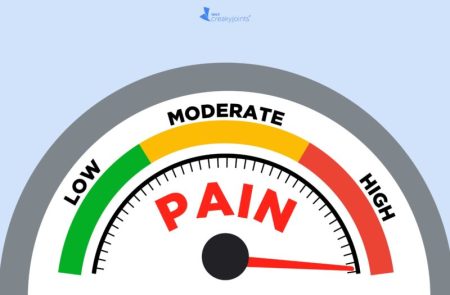
How do you handle pain as a believer? What do you do when you want to curl up in a ball and want to die? Understand that pain isn’t in God’s original plan. We who are hurt have got to be very much aware of this.
There are many different kinds of pain: post-surgical, chronic, and self-inflicted. The pain of separation or divorce or misguided children can get pretty destructive. There’s the pain of misunderstanding or something inflicted by a bad relationship with someone.
There are far too many possibilities and far too much hurt to go around.
At times you can’t even imagine how you’re going to handle another day. Sometimes the doctors have the arrogance to tell you that you need to get used to it because it’s never going to get better. So now you must sort things out–and apart from a miracle, it’s only going to get worse. I understand this. Truly.
Here are ten thoughts that come to my mind. They’re not in any order. (Maybe they should be? IDK.)
One
Treat false humility as a worse disease than you’re facing physically. You’ll be very tempted to milk your pain for all its worth. You’ll try to take advantage of others, and you’ll put yourself in the best possible light. But pain and ego were never meant to mix–especially as a disciple of Jesus. Renounce them now. Turn from it constantly.
Two
Never find fault with God. He’s not to blame whatever the evil one tells you. Our Father loves you deeply, and He will carry you all the way through this. Satan always tells lies. You must take a stand against him. Put on your armor! Super-glue Ephesians 6:19-18 into your thought life–and never let go!
Three
You can never lose track of a very real eternity. My special verse is Revelation 21:4, “And God shall wipe away all tears from their eyes; and there shall be no more death, neither sorrow, nor crying, neither shall there be any more pain: for the former things are passed away.” Please keep this front and center. It’ll help a lot!
Four
You’ll start to learn to see others differently. There’ll always be another who has it worse. Think about them, and all that they must deal with. It helps a lot. Also, you’ll discover that your pain will be like new glasses for a strange source of spiritual astigmatism. You’ll see things far more clearly now.
Five
Your walk will deepen. You’ll learn to be joyful when all you want to do is cry. The littlest things become a cause of great joy. God values your singing more now, especially when you’re singing out of excruciating pain. The Word, and worship music, all seem to be more meaningful. Surround yourself with music (and preaching too), anything that builds you up inside.
Six
You’ll discover the art of weaving your pain into your discipleship. Sleepless nights become diving boards for prayer, reading, and worship. You’ll change and deepen, and that’s always good. Also, be open to new ways of ministry. Look for doors to open up. (They may be different than you think.)
Seven
You’ll discover that there can be solace in medications and treatment. I know that this, but sometimes a handful of Motrin or other pain meds will be a real relief. Also, listen closely to your doctor and therapist. Pray for them, pray they’ll have special wisdom for your situation.
Eight
You start to see that you’ll never be able to do this alone. God is giving you a gift. He will give you insight. You’ll also start to see people less in terms of ‘rank’ and more in the light of what they’ve had to suffer. As you begin to see pain and sorrow as odd friends, they’ll often show you who your true brothers and sisters are.
Nine
You’ll understand the Father’s love in a new way. Like an old-style pharmacist who measured out powder instead of pills, we find God measures out exactly what we need. He never gives you a single grain of medicine more than is necessary. Trust him. All that happens to you has come through nail-pierced hands. He understands pain and He understands you.
Ten
You must learn to laugh again. Little things become a source of real joy. The smallest things will make you laugh. Get a joke book, that may help, especially when you get sour and withdrawn. “A cheerful disposition is good for your health; gloom and doom will leave you bone-tired” (Pro. 17:22, MSG).
(This list is not complete. I apologize, there are many others that really should be added, but maybe this is a start.)
Also–just one more (number 11 maybe?) Be easy on yourself. You’ll find that you’ve much to learn. And that’s okay. Just open up your heart, and look to Jesus.
We must be aware that our pain allows us access to His careful grace. Our trials, properly received, endow us with special abilities.
They’re now our new ‘superpowers.’ 😁
You should learn to embrace your pain and your sorrows, and not many can do this. Our own suffering comes to us at too high of a cost to us. They’re precious and way too valuable to neglect. Squeeze them and extract all that they can give.
Here’s a quote that has always sustained me. It’s really good for me to remember, and it may help you.
“Some Christians are called to endure a disproportionate amount of suffering. Such Christians are a spectacle of grace to the church, like flaming bushes unconsumed, and cause us to ask, like Moses: Why is this bush not burned up?'”
–John Newton

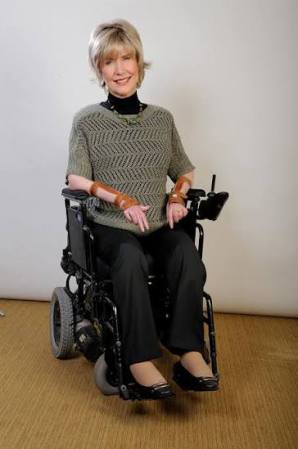
A good site is Joni Eareckson Tada. She’s a believer who has suffered a great deal and has a ministry to the afflicted, Joniandfriends.org.
I have another site you might want to checkout: alaskabibleteacher.com.

A terrific study is finding the people who fell at Jesus’ feet. Tucked in the Gospels you’ll find stories of those who despair. You’ll also see them come to Jesus in brokenness and humility, without any other recourse. I call these the feet-finders.
They came to Jesus because they had no hope otherwise. They were people who were hopeless and wretched, they had long ago run out of options. They came to Jesus, falling down in front of Him. They were all feet-finders.
They were men and women who were truly desperate.
“Now when Mary came to where Jesus was and saw him, she fell at his feet, saying to him, “Lord, if you had been here, my brother would not have died.”
John 11:32
One of the classic scenes in the Gospels is when Mary meets Jesus after her brother’s death. She doesn’t understand Jesus’ delay, Lazarus has been very ill and Jesus could have healed him. She is grieving and confused. But she only has one posture and one place in her heart to be– at the feet!
There are some common characteristics that feet-finders have:
The following 3 verses are just a small selection of those who fell at Jesus feet.
“And great crowds came to him, bringing with them the lame, the blind, the crippled, the mute, and many others, and they put them at his feet, and he healed them.”
Matthew 15:30
“But immediately a woman whose little daughter had an unclean spirit heard of him and came and fell down at his feet.“
Mark 7:25
“Then people went out to see what had happened, and they came to Jesus and found the man from whom the demons had gone, sitting at the feet of Jesus, clothed and in his right mind.”
Luke 8:35
But there are several other instances where people came to sit at Jesus’ feet:
In every case we find people consciously coming and kneeling at the feet of the Lord Jesus. It was a deliberate action that came from their hearts. Each had a terrible need, and each was without hope.
Formality and religious politeness are jettisoned. Brokenness and true humility takes their place. A foot-finder is no longer operating on spiritual niceties. Religion is comfortable, noble, and respectable, but it cannot heal or change people deeply.
Feet-finders know that they need Jesus desperately and will go to any length just to be touched by Him. They defy what is conventional and proper. They are not what we call respectable. You can find them at the feet of Jesus. They are feet-finders. Foot-finders weep, kneel, beg, shout. Too many tears and maybe some snot.
Hardly decent to religious people.
Are you really that desperate yet? Have you seen your need, and do you realize how lost you would be without His healing touch?
Often when I do pray, I sometimes think of the woman who was unclean. She speaks to me about approaching Jesus. I see myself in a crushing crowd of people, and I’m reaching out just to touch the hem of His robe. I know only Jesus can stop my own uncleanness. (Matthew 9.)
I’m convinced only Jesus can make me clean and whole.
I’ve tried to be holy and acceptable to Him. But I felt like a juggler, trying to keep my balls in the air all at the same time, and I could never pull it off. So I tried again and again. I was the unofficial master of religious effort.
But I found my rightful place at His feet. It’s where I belong. I love Him.
I’m not ashamed to be found kneeling.


*

“One Sabbath day as Jesus was teaching in a synagogue, 11 he saw a woman who had been crippled by an evil spirit. She had been bent double for eighteen years and was unable to stand up straight. 12 When Jesus saw her, he called her over and said, “Dear woman, you are healed of your sickness!” 13 Then he touched her, and instantly she could stand straight. How she praised God!”
Luke 13:10-13
When we read through the Gospels we see that Jesus never laid His hands on those who were demon possessed, rather He would first command the demon to leave. (Interesting.)
The text tells us that the woman had been bent over for 18 years. (That’s a long, long time.) The cause was being “demonized” which is very different than being possessed.
There is a difference. Demons can oppress people and influence their lives, especially if that person is living in sin and rebellion.
“The physical cause of her inability to straighten up has been examined by J. Wilkinson, who identified the paralysis as the result of spondylitis ankylopoetica, which produces the fusion of the spinal bones.”
14 But the leader in charge of the synagogue was indignant that Jesus had healed her on the Sabbath day. “There are six days of the week for working,” he said to the crowd. “Come on those days to be healed, not on the Sabbath.”
That is absurd. There’s a truth here that this “leader” is covering up. The woman is instantly healed, and this so-called leadertries to nullify what has just happened. Rather than rejoicing, he renounces what has just happened, and claims that the Sabbath law has been violated. He declares the Law is greater than this woman’s healing.
Jesus never once asserts His authority. Rather He points to this woman’s healing as being truly the very essence of the Law. In spite of what the Law means legalistically, it can never invalidate mercy.
“For eighteen years she had not gazed upon the sun; for eighteen years no star of night had gladdened her eye; her face was drawn downward towards the dust, and all the light of her life was dim: she walked about as if she were searching for a grave, and I do not doubt she often felt that it would have been gladness to have found one.”
CH Spurgeon
Her private agony was never to be found again. She was free. The pain she lived with was no more. The captivity was gone, and she was freed. The biblical text seems to ignore this and concentrates on the synagogues leader’s response, and that’s well and good. Perhaps though we should focus on this woman’s healing from an awful terrible darkness.
She is free. The stoop is gone. The pain is gone. Jesus has set her free, she gazes at the sun after many years. She stands erect, and though everything now seems different, she now knows her deliverer, and her healer.
“Bent,” brokenbelievers.com, Bryan Lowe

World Bipolar Day (WBD) – an initiative of the Asian Network of Bipolar Disorder (ANBD), the International Bipolar Foundation (IBPF), and the International Society for Bipolar Disorder (ISBD).
The vision of WBD is to bring world awareness to bipolar disorders and to eliminate social stigma. Through international collaboration the goal of World Bipolar Day is to bring the world population information about bipolar disorders that will educate and improve sensitivity towards the illness.
Bipolar Disorder (also called manic-depressive illness) is a mental illness affecting up to 2% of the population worldwide. It represents a significant challenge to patients, their family members, health care workers, and our communities.
While growing acceptance of bipolar disorder as a medical condition, like diabetes and heart disease, has taken hold in some parts of the world, unfortunately the stigma associated with the illness is a barrier to care and continues to impede recognition and effective treatment.
Despite the alarming number of people affected with a mental illness, statistics show that only one-third of these individuals seek treatment. According to Dr. Thomas Insel, Director of the NIMH (USA), psychiatry is the only part of medicine where there is actually greater stigma for receiving treatment for these illnesses than for having them.

I really hope that these thoughts might help. We face challenges and difficulties. Just maybe this post will strengthen your walk? I chose each thought purposefully and every one contains something helpful (I hope).
These each speak wisdom as we try to understand what’s happening to us.
“It is doubtful whether God can bless a man greatly until He’s hurt him deeply.” (Roots of Righteousness, Chapter 39)
“Hurt is the essential ingredient of ultimate Christ-likeness.” (Quoted in Christianity Today, July 2007, p41)
“Brokenness isn’t so much about how bad you’ve been hurt but how you’ve sinned in handling it.” (Christianity Today, A Shrink Gets Stretched, May 1, 2003)
“Shattered dreams are never random. They are always a piece of a piece in a larger story. The Holy Spirit uses the pain of shattered dreams to help us discover our desire for God, to help us begin dreaming the highest dream. They are ordained opportunities for the Spirit to first awaken, then to satisfy our highest dream.” (Shattered Dreams, 2001)
“When God wants to do an impossible task, he takes an impossible person and crushes him.” (Quoted by Gary Preston, Character Forged from Conflict: Staying Connected to God During Controversy. The pastor’s soul series, (Minneapolis, MN: Bethany House, 1999)
“Are you praying for God’s superabundant blessings and pleading that He will make you more like His Son? If so, then you are asking for the shears.” (Secrets of the Vine, 60.)
“Someone put it this way, ‘Whoever desires to walk with God, walks right into the crucible.’ All who choose godliness live in a crucible. The tests will come.” (Moses, Great Lives from God’s Word, 285.)
“Being stripped of all substitutes is the most painful experience on earth.” (David, p70)
“The surrender of our heart’s deepest longing is perhaps as close as we come to an understanding of the cross… our own experience of crucifixion, though immeasurably less than our Saviour’s nonetheless furnishes us with a chance to begin to know Him in the fellowship of His suffering. In every form of our own suffering, He calls us into that fellowship.” (Elisabeth Elliot, Quest For Love, (Grand Rapids, MI: Fleming H. Revell, 1996), 182.)
“No words can express how much our world ‘owes’ to sorrow. Most of the Psalms were conceived in a wilderness. Most of the New Testament was written in a prison. The greatest words of God’s Scriptures have all passed through great trials. The greatest prophets have “learned in suffering what they wrote in their books.” So take comfort afflicted Christian! When our God is about to make use of a person, He allows them to go through a crucible of fire.”
“Character cannot be developed in ease and quiet. Only through the experience of trial and suffering can the soul be strengthened, vision cleared, ambition inspired, and success achieved.” (Quoted in Leadership, Vol. 17, no. 4.)
“No-one enters into the experience of entire sanctification without going through a ‘white funeral’ — the burial of the old life. If there has never been this crisis of death, sanctification is nothing more than a vision… Have you come to your last days really? You have come to them often in sentiment, but have you come to them really?… We skirt around the cemetery and all the time refuse to go to death… Have you had your ‘white funeral’, or are you sacredly playing the fool with your soul? Is there a place in your life marked as the last day, a place to which the memory goes back with a chastened and extraordinary grateful remembrance–’yes, it was then, at that ‘white funeral’ that I made an agreement with God.” (Oswald Chambers, My Utmost for His Highest, January 15, (Uhrichsville, OH: Barbour and Company, Inc., 1963).)
“God can never make us wine if we object to the fingers He uses to crush us with. If God would only use His own fingers, and make me broken bread and poured-out wine in a special way! But when He uses someone whom we dislike, or some set of circumstances to which we said we would never submit, and makes those the crushers, we object. We must never choose the scene of our own martyrdom. If ever we are going to be made into wine, we will have to be crushed; you cannot drink grapes. Grapes become wine only when they have been squeezed.” (Chambers, O. (1993, c1935). My utmost for his highest : Selections for the year (September 30). Grand Rapids, MI: Discovery House Publishers.)
“Jesus Christ had no tenderness whatsoever toward anything that was ultimately going to ruin a person in his service to God…. If the Spirit of God brings to your mind a word of the Lord that hurts you, you can be sure that there is something in you that He wants to hurt to the point of its death.” (Oswald Chambers, My Utmost for His Highest, September 27, (Uhrichsville, OH: Barbour and Company, Inc., 1963.)
Does God purposefully allow suffering? “The comfortable, but theologically incorrect, answer is no. You will find many people preaching and teaching that God never sends an ill wind into a person’s life, but that position can’t be justified by Scripture. The Bible teaches that God does send adversity – but within certain parameters and always for a reason that relates to our growth, perfection, and eternal good.” (*Stanley, C. F. 1997, c1996. Advancing through adversity (electronic ed.). Thomas Nelson: Nashville, TN.)


Psalm 32:8
In April 2002, I was sitting in a cavernous waiting room at King’s Cross in London, England. I was waiting for a bus to Cambridge, UK. I sat all alone and stared at the tiled floor at my feet. The doctors had warned me not to travel alone, but I ignored their advice.
Depression had followed me all the way from Alaska to England. I had pushed my limits and was completely drained and was becoming very confused. I began to cry out to the Lord, very desperately. Sometimes madly. (Read Psalm 88.)
As I sat there staring intensely at the floor, several pigeons seemed to put on a show, just for me. They were fat little guys, apparently scratching out a good living. Several very large windows were open, and these pigeons seemed to have no fear as they took advantage of a meal from bored travelers.
A pigeon came across the floor and “presented” himself, right square in front of me. I watched him intently and saw that he was crippled, one of his feet was nothing more than a twisted claw. He had been profoundly injured in such a way, that he would never be the same. He was damaged, and yet somehow he was surviving, but even more, and he was thriving!
I saw that pigeon, and I saw myself, and it was a moment of clarity, a shining grace. In the mega-hustle of 13.6 million people in London, and in the midst of my own profound mental crisis, I knew God’s caring touch and it gave me real grace, love, and goodness–far greater than all my sin and confusion. He was just letting me know that He was very, very close. (See Psalm 34:18.)
I started to call out to the Father out of my confusion. Within a few minutes, I found myself sitting on the top level of a double decker bus, with the driver aware of my problems and who specifically drove me to the place I was staying.
I was being cared for. Between a crippled pigeon and the dutiful ministrations of a bus driver, I’d finally found my hotel. (See Matthew 6:26.)
I have come to realize that this trip to England was not for me to see Big Ben, Parliament, or wander the academic schools of Cambridge University. Rather I was brought there to make contact with a certain pigeon, who was waiting to meet me and pass on vital instructions.
The Father shared things that I need to know. British castles and churches are beautiful and worth seeing but I must admit I’ve forgotten much. I hope I can return someday.


It was November 13th, in the year of our Lord 1999, was unlike any day I have ever experienced. A beating with a baseball bat would seem preferable. On this cold afternoon, hell was unleashed on my wife and I. What we encountered was soul-wrenching and profoundly tragic.
On this day we lost Elizabeth Grace. She was stillborn, which is rare these days– or so I have been told. She entered this world fully formed, a beautiful baby girl. Today, she would have been 24 years old, and maybe married, planning a family of her own?
2 Samuel 12:23, (When David’s newborn son died.)
Plenty of families have suddenly lost a child. I can truly commiserate with them. Somehow we are connected in a perverse way. It seems like an exclusive club, that requires a secret handshake, or something. Suddenly without warning, you are thrown into personal chaos, and very little is remotely decipherable, even to a believer.
The book of Ecclesiastes that there is a definite “time to mourn.” Matthew tells us, “Blessed are those who mourn.” He does go on to say. “for they shall be comforted.” This comfort is available for any who chooses to take it, but you can refuse it if you really want to.
I can’t imagine meeting life without his care and comfort. He has been outstandingly gracious to this family. Sure there was pain, but there was also tenderness and a kind grace. Still, sometimes it may have felt like a “kick in the head.” (But I assure you– it was grace.)
What I still can’t understand is simply this. What would it have cost God to allow Elisabeth to live? I mean, what ‘skin off His nose’ would’ve it taken to let her live? To this day I still have questions, but I have decided to trust. (I trust Him after all, to save my soul.)
But we can only take what we are dealt. The sadness is there, but so is His comfort. Make no mistake, His love matches (and even exceeds) the pain and the loss of a child. Truly, God is wonderful and He is good.
I do know that He loves me, a weirdly rascalish, struggling disciple. He holds me close to His precious heart, and I will have no other gods except Him. I will not take up umbrage with Him on this. But I must believe that someday soon, I will truly and completely understand this.
Lynn and I celebrate her birthday every year.


___________

“Their purpose is to teach people wisdom and discipline, to help them understand the insights of the wise.”
Proverbs 1:2
Clyde Kilby, who is now with the Lord in heaven, was a teacher in English Literature at Wheaton. He did as much as any other teacher I have had to open my eyes to the ministry of God in the skies.
– Pastor John Piper, DesiringGod.org


2 Corinthians 1:8
John Piper
It is my deliberateness, and not the impulsiveness that scares me. I know despair. I know what it is like to be ‘backed into a corner’ and then feel a totally empty desperation. But you must understand, there can also be a weird seductiveness to ‘being lost,’ a strange sort of nobility, a twisted kind of weird honor when it comes to despair.
Some people are convinced they are never going to change. They embrace the ‘dark certainties’ of knowing they are profoundly flawed and therefore damned. It’s these dear ones that Jesus especially came for.
Now, this really seems rather bizarre, that people could do this intentionally, deliberately. But I’m afraid to tell you that it happens all the time. Despair is chosen over the option of life. This is the ‘lostness’ of the race of Adam.
Perhaps suicide begins before the action? Perhaps it starts days, weeks or months before we actually do the deed?
Pop culture has given us words, albeit in a rather simplistic form. I just happened to think right now of an old AC/DC song, ‘Highway to Hell‘. The lyrics are pretty basic and very simple, but the lead singer seems to really have a chronically, decided dedication to being one of the irretrievably lost.
The songwriter formats a ‘certain glory’ to being part of the damned. This is a simplistic approach to the next stop– a more advanced case of stark-white despair, suicide. (We can call this ‘spiritual hubris,’ or even, “sex, drugs, and rock-n-roll.”)
In dealing with sin we can make two mistakes. One is to make light of it. The other is to be overwhelmed, throw up our hands, and surrender.
When we decide to live this kind of living, we’re pulled into a vortex of a black melancholy with a dash of fatalism, which makes it reasonable and weirdly heroic in some perverse way. We love the dark, and we embrace a fatal life–it becomes our identity.
To escape this ‘drowning despair’ we must first dethrone our right to personal sovereignty. And secondly, we need to grab the concept that God’s grace has an ultimate power that supersedes our notions of a ‘deserved’ love. (It’s completely undeserved.)
We must believe that somehow, someway, God chooses us out of a pile–a pile of the worst and ugliest that has ever existed. And somehow, He delights in doing this, and after all, He is the Lord.
Our problems, our addictions, force us to clearly renounce our evil folly of despair. Our issues make us vulnerable. I’ve discovered that there is a seductiveness to giving up and taking up the sin of despair. There can be a ‘weird romance’ that lures those who walk out this living DEATH.
Psalm 42:5-6


Anxiety (panic) attack symptoms can feel awful, intense, and frightening. The good news is that while they can seem serious, anxiety attack symptoms aren’t harmful in and of themselves. That is something to remember.
Because there are many medical conditions that can cause ‘anxiety-like’ symptoms, it’s wise to discuss your symptoms with your doctor. If your doctor has attributed your symptoms to stress and anxiety, you can feel confident that your doctor’s diagnosis is correct. Anxiety attack disorder is relatively easy to diagnose and isn’t easily confused with more serious medical conditions.
Anxiety attack symptoms are NOT always indications of a serious medical condition. They are simply dramatic responses to being afraid. Being afraid causes the body to stimulate stress hormones. Since stress hormones are designed to prepare the body for action, the changes stress hormones bring about can cause the body to exhibit “symptoms” of this biochemical change. Anxiety attack symptoms are simply “sensory sensations” of this biological change. Again, they aren’t harmful, but they are letting you know that your body’s stress hormone levels are elevated.
Common anxiety attack symptoms include:
There is a long list of anxiety symptoms. But because each body is somewhat chemically unique, anxiety affects each person differently. Consequently, anxiety symptoms vary from person to person in type or kind, number, intensity, and frequency. If your symptoms don’t exactly match this list, that does not mean you don’t have anxiety. It simply means that your body is responding to anxiety slightly differently.
For example, one person may experience only a few minor symptoms, while another person may experience the majority of symptoms to great intensities. All combinations are possible and common.
Anxiety attack symptoms can range from mild to severe, from only one symptom to all of them, and can be sporadic, frequent, and persistent. Again, all combinations are possible and common. My own attacks are intense, but I know they’ll go away in time.
Sometimes all we can do is accept the issues that anxiety brings. We must understand that the Holy Spirit knows us fully and that He will bring us through. Be confident in His grace and receive His mercy. Panic attacks can be quite difficult, they’re not fatal. You’ll survive, but at the time you feel like you’re going to die. You won’t. But do ask God to give you His peace. He will.
Philippians 1:6
I am certain that Jesus will carry you the distance.
If your anxiety gets really bad a good number to call is 1-800—NEED-HIM. I believe they’re up 24/7. It’s a good number to remember.
Much of this post has been gleaned from Mayo Clinic.

Much of this particular post came from the internet and I can’t remember the address.
It is a bad habit to try to teach without personal knowledge. We can preach, and yet we do not possess. This is one of the occupational hazards of those of us in our profession. It also seems to carry a horrible curse of spiritual sterility, that the wise believer can discern.
It’s been over 30 years since a diagnosis of severe clinical depression was made. I believe I was BP in my teens. Life is a roller-coaster for me, up and down, with a twist or two along the way. I am now fairly aware at 65 that much of my earthly existence has already been lived. Life can become such a grind. I’m tired and broken and ready for eternity.
But my scars have taught me so much. I understand, and I’m more aware of others. As a teacher, a pastor, it is a very good thing I believe. I also now have a profound desire to step into eternity. That will be a wonderful day. A moment of all moments. The ultimate moment.
“‘One should go to sleep as homesick passengers do, saying, “Perhaps in the morning we shall see the shore.”
–Henry Ward Beecher
Billy Bray was an illiterate Cornish evangelist in the 1850s. He was heard to pray this: “Lord, if any have to die this day, let it be me, for I am ready.” By faith, I think I do understand these sentiments. I am ready to go as well.
I love collecting good quotes. But here’s two more good ones:
Sorry if I’m being too maudlin. But the battle is so long, and it doesn’t ever let up, does it? We all can become weary after a while. What we need is to be ‘shut in’ with the Lord. The Word reminds us:
”Strengthening the souls of the disciples, encouraging them to continue in the faith, and saying that through many tribulations we must enter the kingdom of God”
Acts 14:22
“Tribulations” are common, and each must battle through them. And without being melodramatic, we each must walk through the blazing furnace. But I can also boldly attest that there is more than enough grace for each of us. We just need to become desperate enough. (Which shouldn’t be too hard).
Armor is given. Wearing it means you’ll survive (and thrive) to see another day. Those who may suggest that the Christian life is a “bed of roses,” I would say that they haven’t read Ephesians 6. If there is no war, why would the Holy Spirit tell us to put it on?
“Finally, be strong in the Lord and in the strength of his might. 11 Put on the whole armor of God, that you may be able to stand against the schemes of the devil.”
Ephesians 6:10-11
We are just starting to learn we must fall in love with Jesus. He receives us with a massive kind of love. And His mercy meets us at every doubtful corner. You have His Word on it. Simply ask Him to come to you.

To Manning, every person is redeemable, none are too far gone. Brennan Manning was a strong voice to the weak, the lame, the mentally challenged, and for the prodigal.
I blame him for the theme of this post–that brokenness is our path out of depression: Bipolar, Schizophrenia, OCD, PTSD, Schizoaffective disorder, and addictions.
*******
***********
I really hope some of these quotes have connected. Brennan Manning has authored several books all of which I can heartily recommend.


1 Corinthians 14:20
Those of us who are broken have to think through lots of stuff. But Jesus is our Teacher, and He fully intends to educate His disciples. Following Him is to be vibrantly alive, and yet I still must deal with the issues of living, and of having a growing faith that is becoming real at long last.
The Bible describes a slow growth into the image of Jesus– -painstakingly learning about our frosty hearts, and how God keeps pouring His “super-heated” grace on the broken. We’re finally becoming ‘poor in Spirit’ and we’re learning to ‘mourn’ over our sins, perhaps we realize that we’ve fallen quite short of His will for us. (Matt. 5:3-4).
“And when those who belonged to Him (His kinsmen) heard it, they went out to take Him by force, for they kept saying, He is out of His mind (beside Himself, deranged)!” Mark 3:21, Amplified.
Title I of the Americans with Disabilities Act (ADA) and Section 501 of the Rehabilitation Act of 1973 (Section 501) are the federal laws that protect people with disabilities, including mental health disabilities, from discrimination at work.
This is a formidable task. But the Helper, the Holy Spirit stands ready to give us His wisdom. He graces us with intense spiritual power. The battle rages and times get tough. Perhaps “grittiness” should we should add to the fruits of the Holy Spirit? I’ve now walked with Him for over 40 years now, and I know Jesus has never left me alone. He never lets me ‘twist in the wind.’ He promised, I’m never alone. No matter what.
He always does this for His children. No believer is ever overlooked or forgotten. He is constantly aware of you. What comfort and peace that brings.
— Alan Redpath
These are some of the areas that are affected by your mental illness. A wise spouse, pastor, elder, friend, or therapist can do wonders when things get difficult. Sometimes we need a new perspective as we sort things out. God will often use others to bandage and heal us. That’s the way He works.
Philippians 1:6, Message


FYI. I have another site up and running, alaskabibleteacher.com.
The decision to make decisions that will please God is in itself a monumental step. It means you have come to the place where it matters. It’s coming to the place where I say “Yes” to all that God says yes to and “No” to everything He has forbidden. The willingness to be guided is itself a powerful thing.
A fundamental principle to begin with: Every heart has a throne, the question is– who sits on it?
In part you have already done this just by your eagerness to do His will. You have made a deliberate decision to honor and esteem Him by letting God be completely God. It is likely that God will withhold His direction if you have no real intention of doing it. You will just sputter around in the dark. Your life will be painfully empty.
For me, to commence praise & worship is like firing up the nuclear power plant that I have in my backyard. It is a source of unlimited energy that I have at my disposal, but it’s not about me at all. When I start to worship, it must be all about Him. It’s His character, attributes, love and grace I lift up to be examined by all.
“But the time is coming—indeed it’s here now—when true worshipers will worship the Father in spirit and in truth. The Father is looking for those who will worship him that way.”
John 4:23
Guidance often comes when we turn to the Bible for light. Each part or style of my “leather bound Book” is a purposeful and deliberate unveiling of truth. After 25 years since I became a Christian, the Bible has shown itself over and over to be important. The Life of David has been rich, and Daniel as well. I needed to discern the difference between:
“Your word is a lamp to my feet
and a light for my path.”
Psalm 119:105
The Church has this big ‘brain-trust’ at her disposal whenever she needs it. There is accumulated wisdom and insight that often is ignored or not even considered. My life has changed because of my contact with these older saints. Most of them never really recognized the imprint they were having on me, my marriage, or my ministry. I realize that I stand on the shoulders of giants, that I only see further because they were willing to raise me higher. We will fail in decision making if we will not involve our elders.
“Plans fail for lack of counsel,
but with many advisers they succeed.”
Prov. 15:22
The scripture is jam-packed with people who had to have faith. They are everywhere and they are doing everything! But, all through faith. I got to thinking about Noah, and his faith. Directed to construct an ark, which took him years and years.
“It was by faith that Noah built a large boat to save his family from the flood. He obeyed God, who warned him about things that had never happened before.”
Heb. 11:7
Faith is defined as trusting God to carry out His unseen promises.
“Faith is the confidence that what we hope for will actually happen; it gives us assurance about things we cannot see.”
Heb. 11:1
I have heard it said, that this life is very short, and only what is done for Christ will last. I believe this. Matthew also tells us to seek first the kingdom of God, and everything else will be given to you.
It is the kingdom that must be paramount. The kingdom is carried around in our hearts; it is the place where the King dwells and rules.
These are not just noble and lofty thoughts to be smiled at, humored and regarded as quite quaint. This is for real, these are concrete realities that we choose. God’s will is not some abstract, it is as specific as the believer wants or needs it to be.
I honestly believe that you and I can know deep inside us what constitutes a Godly decision. It very often is on the path of greatest humility. And when you meet up with humility, you will find faith– and then follows goodness. And as you accrue these qualities it becomes much easier to make Godly decisions.
Recommended Book
“Decision Making and the Will of God,” by Garry Friesen, J. Robin Maxson

Psalm 91:3-4, NKJV
I believe that there is great opposition to living free. Satan contests every square inch. His modus operandi parallels the predator. He likes to hunt human beings. We see his power and influence all around us.
I’m being quite careful not to be melodramatic when I say this, but Satan has a terrible plan for your life. He often uses human ‘lackeys’ to carry out his wishes. They will use deception, lies, and foolishness to snare people’s souls. They [he] will even resort to brute force. As a result, many believers are being persecuted for their faith.
And there is plenty more where this comes from. And we haven’t even got to the New Testament yet, where there are substantial references to this kind of attack. The doctrine of Satan is developed further there. Perhaps it is because we encounter the person of Jesus Christ and the act of personal redemption He made for each of us. Through this, we discover that we have an enemy that we were never really aware of before. And guess what— he hates us!
Just as we have a personal savior in Jesus, we find we also have an antagonist and a sworn enemy. We didn’t ask for it, and it would be really swell if he didn’t exist at all. But the world’s evil around us has a source and we dare not minimize it.
CS Lewis
Our fealty to Jesus becomes critical at times like this. Spiritual warfare has an ebb and a flow to it, sometimes the battles can be intense, and at other times less so. But we can do nothing at all apart from the blood of Christ. We must defend ourselves, by calling out to God, or else we will become a casualty.
Probably the capstone is the following verse. This pretty much sums up this ‘act of resistance’ we are all called to do. I wanted to emphasize it because it is critical:
1 Peter 5:8

“In this you rejoice, though now for a little while, if necessary, you have been grieved by various trials,”
1 Peter 1:6, ESV
So much has been written already from the perspective of suffering Christians. We live in a painful world; there are plenty of cuts and bruises to go around. Yet each blow we take is disturbing. I’ve met so many who have been unfairly brutalized and must walk through mental or physical disabilities.
Some things are just plain brutal.
We may not fully understand this, but suffering provides us with incredible advantages and blessings. The bruises which hurt us, can also bring us wisdom. We learn many things, but only when we hurt. The challenge is not to waste our sorrows.
Suffering offers us great benefits:
-John MacArthur
If you have ever been attacked, it can change you. Spiritually, our vision clears and we will no longer be short-sighted people. We are now able to see things much clearer and with more discernment and wisdom. But the choice today is yours to make.
Will you make suffering work for you?
“IF YOU HAD NEVER KNOWN PHYSICAL PAIN IN YOUR LIFE, HOW COULD YOU APPRECIATE THE NAIL SCARRED HANDS WITH WHICH JESUS CHRIST WILL MEET YOU?”
The pain is real. No question about it. However, I honestly beg of you to make this transaction with the Holy Spirit. Exchange your anger and fear and doubt– for peace and confidence and joy.
God will use your pain to bless others.


Circus performers have my enthusiastic admiration– especially the tightrope walkers! They move with such grace and courage. Their work above the crowds must be perfect, or else. I don’t even want to consider their failure. (I hope they can bounce).
To be a mentally ill or disabled Christian is just as formidable. We must walk out our condition 24/7, 365 days a year. It is relentless. We struggle with a weakness that pits us against symptoms and gravity of a spiritual kind. We get little support from others– sometimes criticism. It often is a very solitary feeling. We are often overlooked or scorned.
My particular rope is depression. Everyday I mount up and walk out on to it, holding my breath. I still fall a lot, but have a good safety net, and the Holy Spirit is my strength. Losing my balance happens. I pick myself up and climb up the ladder for another go at it.
There is a stigma to having weakness or disabilities. Things are usually ‘slanted’ against us. We are not truly welcomed in many venues, even the Church, I grant you that. In 2 Cor. 12:8-19 we catch the higher perspective.
God’s program includes my weakness– it actually demands it! Sometimes we chose to seek a deliverance or a healing at the expense of the Kingdom. Scripture over and over tells us that the Lord uses weakness. That’s when it’s best.
2 Corinthians 1:9-11, NLT
We must rely on God. It is His “job” to keep us, repeatedly. So day by day I “walk the line.” My meds are my balance pole, and I don’t need any special attention. I do whatever the day brings, and even that is from His hand.

Exodus 20:26
1 Peter 4:8
While I lived in the SOS Ministry house in the Mission district of San Francisco, a dear brother taught me this principle. Living in a Christian community is a really wonderful thing. But it also could be a challenge at times. Our purpose there was evangelism. What Michael shared on a communal level, allowed my understanding to grow to truly grow. It has guided me through the years.
The principle is this, it’s simple but fairly profound:
We are called to cover up our brother’s nakedness.
Throughout the scripture “being naked, or nakedness” is always a shame. It comes welded to the concept of being vulnerable or exposed to the sight of everyone else. It also carries the idea of sin; it is sin that everyone can see; it is very obvious.
For those of us who sin often, we evolve the idea of keeping a lid on it, and being secretive. There will be people who will never know, and it seems that is better than full disclosure. Often sex sin, drug and alcohol sin, both are kept hidden from view of family and friends, and the Church.
“Noah became a farmer and planted a vineyard. When he drank wine made from his grapes, he became drunk and lay naked in his tent. Ham, the father of Canaan, looked at his naked father and told his brothers outside. Then Shem and Japheth got a coat and, carrying it on both their shoulders, they walked backwards into the tent and covered their father.”
“They turned their faces away so that they did not see their father’s nakedness.”
Genesis 9:20-24
However, in all fairness Noah had lost everything in the flood, so perhaps we should be gentle with him. On the other hand, people who cover up the nakedness of others seem to be gentle and humble. They would never, ever dream of making a scandal. They are trustworthy and understand to a great degree the things that make a man or woman of God. This is a gentle patience that knows God is still working on our stumbling brother.
We are pretty much told over and over in this chapter, not to ever uncover another. The idea of nakedness in Leviticus 18 is pretty emphatic and the chapter is somewhat redundant. But I think the Lord wanted it repeated this way.
Our vulnerabilities are there for all to see. But there are also men and women who go out of their way to protect and shield. They are safe people, in the classic sense of the word. They cover-up, but never in negative way, but in love and blessing. (If it is a serious crime, the police should be involved.)
Quite often we are exposed, open to attack on our weaknesses. Mature believers will step forward and protect the open areas of others. They will refuse to judge or point out sins. But they will stand in the gap, shielding and protecting.
God’s final word on nakedness is in Revelation 3:18, and this is a good place to conclude this post.
You need to cover a brother’s nakedness. This just maybe your next step in your own growth as a disciple.


Luke 17:7-10
“Which one of you having a servant tending sheep or plowing will say to him when he comes in from the field, ‘Come at once and sit down to eat’? 8 Instead, will he not tell him, ‘Prepare something for me to eat, get ready, and serve me while I eat and drink; later you can eat and drink’?”
9 “Does he thank that servant because he did what was commanded? 10 In the same way, when you have done all that you were commanded, you should say, ‘We are unworthy servants; we’ve only done our duty.’”
“The will of God for your life is simply that you submit yourself to Him each day and say, “Father, Your will for today is mine. Your pleasure for today is mine. Your work for today is mine. I trust You to be God. You lead me today and I will follow.”
Really now. What little we give determines so much, since we owe him so much. The service that we can give to our master is just a small repayment for everything. Settle that now and God will use you.
Question: Is the master unfair? Does he lord his authority over the servant–taking advantage of him? Every time I read this passage, questions like this always comes up.
#1, the Holy Spirit really hasn’t taught me yet. That’s very possible. Until he does, the parable isn’t truly understood.
#2, I’m a product of my country, no such things like slaves, we’re a democracy. Equal rights and all that jazz.
#3, It’s purposefully constructed to create issues in my mind and heart. Something that “irritates” me–but in a good way.
And maybe they’re all true. But no matter how I “squeeze” out this parable, I always hit this spiritual speed bump. But I like it, and I love reading it, no matter what it does to me.
We owe everything to him. Plain and simple.
Jesus wants to be my master. I’m his servant (at least I really want to be). Reading this parable puts this idea into a real perspective. I do like this verse, 1 Corinthians 6:20, in the CEV:
“God paid a great price for you. So use your body to honor God.”
A transaction has been made for your soul. God has intervened, and he’s given you salvation. We have a life now that will give us life, eternally. Since he is our master, we can no longer direct our own lives. Like the “unworthy servant” in verse 10, we now walk forgiven and very much redeemed. And we owe it all to him, he’s our savior and our master.
“The question in salvation is not whether Jesus is Lord, but whether we are submissive to His lordship.”
y

r
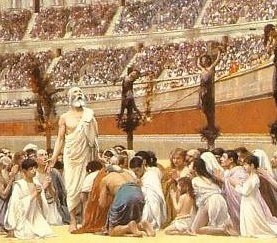
Art by Eugène Burnand
For those on the mat and wrestling, things can move very fast. Our own adversary is strong, and he knows us too well. He is quite aware of the sequence of moves needed to pin us to the floor, and crush us. He is spiritually dangerous. He is lethal.
I get bewildered and rattled by his attacks. He knows how to pressure me at just the right time, and he refuses to follow the rules. He is no gentleman, he is both a cheater and a liar.
Of course I am talking about Satan and his team of demons. I will not dispute their reality with you. There is almost as much scriptural support for his existence as there is for Jesus’. His hostility is toward God and His people, and his viciousness cannot be camouflaged. Evil is real, and believe this–
As a Christian, who has bouts of depression it quickly morphs into despondency and despair. When I sink to that level I start to lose all hope. It’s like I’m in a lifeboat and decide that I should abandon it and tread water on my own. Despondency is not rational and just a little bit is deadly.
He had been chased by his enemies, and maneuvered into the most difficult of situations. To observe him at a distance we would say that “there is no hope for him in God.” Even God can’t save him, for he is reprobate. We would be convinced that there is nothing for him in God’s thinking.
David was a moral failure; he was an adulterer and a brazen killer. You can debate this, but it seems that David had sinned deeper and more intensely than Saul ever had. Join with the logic of the crowd, “There is no hope for him in God!” No hope, none, nada, zero.
“Yet I am always with you;
you hold me by my right hand.
You guide me with your counsel,
and afterward you will take me into glory.
Whom have I in heaven but you?
And earth has nothing I desire besides you.
My flesh and my heart may fail,
but God is the strength of my heart
and my portion forever.”
David defied the theology of his day. He embraced the Lord God with a desperate passion. It was not orthodox or logical. You could say it was disturbing for many who didn’t understand the infinite mercy of God. But David would not let go of God! He hung on, and continued to sing in faith, even though most wouldn’t agree he had the right to.
I encourage you besieged brother, and embattled sister. Hold on to Him, even if it baffles all logic or theology. Renounce your sin, but seek His promises with a fervency, open your heart to Him with a passion. Remember that sin can and will destroy you. It is part of Satan’s stratagem.
Sing in your cave, and never lose hope of God’s love for you.
C.S. Lewis
“Despondency and David’s Theology,” brokenbelievers.com, Bryan Lowe

Related articles

“A woman suffering from bleeding for twelve years, who had spent all she had on doctors and yet could not be healed by any, approached from behind and touched the end of his robe. Instantly her bleeding stopped.
45 “Who touched me?” Jesus asked.
When they all denied it, Peter said, “Master, the crowds are hemming you in and pressing against you.”
Luke 8:43-45, (Matthew 9:20-22)
I just had to touch Him.
I had to reach out and somehow get His attention. It was no longer an option. I bled all the time and it wouldn’t stop. It was constant, and it had been 12 miserable years. No one or nothing could cure this, no doctor, no medicine. I was so desperate. It had to stop, you must understand, I was dying.
I had spent so much money, on so many doctors.
I had nothing left. Each doctor promised a cure and my hopes were always dashed. But then I heard about a teacher named Jesus, I was told He had the power to raise the dead and heal every disease He encountered. I don’t really know why, but instantly I knew only He could heal me.
I had an issue of blood, that meant I was ritually unclean and all that I touched became unclean. The temple was off-limits to me, I had been cut off from sacrifice and any kind of personal forgiveness for my sins. In my darker moments, I really wondered if God really had forsaken me? Was I damned?
It had been 12 terribly exhausting years.
What I had to do must be done secretly and quietly. I knew I just somehow had to touch this man. I would have to wriggle my way through the crowd to get close enough. I would be violating ritual law, if I got caught and I’d be harshly censured and condemned.
But I was always tired. Sometimes I barely could walk without fainting.
The crowds were packed all around Him, but honestly, I knew all I needed was just a simple touch. I knew Jesus had the power. I just knew it. I needed somehow to get close enough; I knew that everything depended on me somehow connecting with Him.
So I waited and watched. I tried to jockey myself and get in the right position. The crowds were tightly surrounding Jesus, I had to push, drive and squeeze. Sometimes I had to get on my hands and knees. But in that split second when He passed, I just managed to grab just the very outside corner of the tassel of His head covering.
And immediately the flow stopped. Just like that! I felt it inside, and immediately knew what happened. Finally I knew, deep down, I had been healed! I was clean.
Please understand dear one, only Jesus can free you. If you can only reach out and touch Him, He will change you– forever.
“Christ is the Good Physician. There is no disease He cannot heal; no sin He cannot remove; no trouble He cannot help.”


“And Jesus said to him, “Go your way; your faith has made you well.” And immediately he recovered his sight and followed him on the way.”
Mark 10:53, ESV
God has touched you in a profound way, (at least I hope so.) Only He could’ve done this. You’re not the same person now. Just like Jesus healed blind Bartimaeus, you too can really see. The beggar becomes a follower. (Mark 10:46-53.)
So what’s next?
There is always another step to take as we follow Jesus. Everyday there is something new. Our salvation is given freely, but we discover that it’s something active–more like a flowing stream and less like a stagnant pool. If we truly have been “healed,” we’ll want to follow. And now each day is a joyous adventure.
After all, we’ve been terribly blind for a long, long time.
Bartimaeus would never be able to truly explain what had happened to him, at least not in a perfect or complete way to the others–but no matter, it really wasn’t necessary. (But I must believe he tried.) He could see!
Notice the sequence of events in verse 53—
He was now a true follower. No longer a blind beggar, but he now was a true companion of Jesus and the “church.” He now walked with other believers in the Master’s band of disciples. (Having been blind and instantaneously given sight changed him forever.)
So what happened next?
I suspect Bartimaeus followed the Lord all the way. Although scripture doesn’t say what happened, I believe this ‘ex-blind’ man was now a visible witness to any with eyes to see. Bartimaeus became an authentic witness–God’s megaphone to the power and mercy of Jesus Christ.
I can’t say exactly. Each believer has a different story.
But I do know tomorrow’s life episode is going to be something fantastic, and a challenge. The fruit of the Holy Spirit is given to each who are truly being discipled to follow. The road in front of you just might be excruciatingly hard, but truly there is joy in our journey with Jesus.
“You called, You cried, You shattered my deafness, You sparkled, You blazed, You drove away my blindness, You shed Your fragrance, and I drew in my breath, and I pant for You.”

t


1 John 3:17-18, ESV
Love is a noble idea, it’s admired and extolled by practically everyone–we see it in our music and poetry, ethics and religion. For the most part it’s a word for something decent and virtuous and honorable. It’s a good thing, but I’m afraid it’s not always scriptural.
It labors and sweats and works. Bible love has chores to do, and it actively looks and sees what needs to be done. 1 John 3 tells us that we shouldn’t deceive ourselves and only see the world’s definition. That love a believer has is to be different.
Love, in John’s eyes, is most assuredly “doing.” It burns spiritual calories as it labors to serve our brothers and sisters. Love finds things it can do–it doesn’t just talk but it gets busy. Love sees the need and then gets down to serve.
1 Peter 1:22
Working (serving) has nothing to do with our salvation, that is a free gift. We’re saved by grace through the blood of Jesus–that’s a given. But this love isn’t drudgery, as a matter of fact, working and serving each other is a joy. The deepest kind of joy there is.
Our words, although important, are really an insufficient way of proving our authenticity. The love we serve another with isn’t “pretty poetry” kind of love. It’s so easy to just shout out truth and never ever show a working, serving kind of love. That sort of love is impressive, and can’t ever be duplicated.
Our prayer and intercession really begins when we go to work for someone else. (Our lunch box is our Bible.) We read it and it energizes us to work for one another. When we pray we truly are loving another brother or sister. It’s work that they can’t or won’t do for themselves. At least not yet. So we pray.
Dear reader–I really do pray for you. Your love impacts so many.


In the late 1990s, my wife Lynn and I were based in a mission station about 200 miles south of Tijuana, Mexico. We would be working in Baja in the sleepy little village of San Telmo. It was hard work, but sometimes we would take day trips to a beach on the Pacific Ocean. One beach in particular, was a favorite place for surfers.
One day we headed out for some sand, surf and sea. Little did I know that day, that I would almost drown. Yes, the waves were bigger then usual, but we set up camp and our two children combed the beach, under our watchful eyes. After a while, I gathered up my ‘boogie board’ and headed for the water.
I had caught several nice waves, and was having a wonderful time. But all of a sudden things got scary. I was working the waves on the north side of the beach, when suddenly– I lost control. The current began to pull me away from the shore. I doubled my paddling efforts, but still I was being pulled out.
I became really afraid. The beach was getting very small, and I still was being pulled out. It was at this point, I began to pray. I had never experienced a rip tide before. I really wasn’t sure what was happening.
In retrospect, I was being ‘schooled.’ I learned more in 15 minutes of stark terror, then in many months of classroom teaching.
1) I learned that I’m not in control of my life, there are things completely beyond me. I had zero control over what was happening. But often life is like that.
2) God can take my life whenever He chooses. He decides when I leave this earthly existence. “My times are in His hands,” the psalmist declared.
3) I needed to admit my profound ignorance of many things that are intensely important to know. These gaps in my knowledge will often take me where I don’t want to go.
4) Stay on your board! Cling to it. You WILL drown if you get separated from it. You can also use it to rest on when your arms feel like they are going to fall off.
5) And finally start to swim parallel with the beach, NOT toward it! The current is very likely 30-40 yards wide. The rising panic will probably keep you focused on the beach. You cannot overcome a riptide by trying to paddle harder.
6) If you make it through this, the beach is beautiful. You will be exhausted. Your friends will not grasp how close you came to drowning. They have no idea what has just transpired, and you realize you can’t explain what just happened. But all of a sudden, you have lost all enthusiasm for the board and the waves.
Often it feels like my depression a massive riptide. To fight it directly is disastrous, and pulls me away. I look back and realize that my experience has given me valuable things, an understanding that nothing can replace.
You really start to gather them when you’re middle-aged. I’m 63 now and am surprised (and somewhat disturbed) by my memories of things gone by. I guess this is one of the job hazards of getting old. But that’s the deal.
I wonder what life could have been like if I had accepted Christ at a younger age. A lot of pain would’ve been averted and perhaps I might have loved Jesus deeper than I do now. Some of us come to love Jesus late in life. There is so much time frittered away.
I regret the years spent in rebellion and disobedience. I remember the words of a 70-year-old man who had just received Christ, “Why did I wait so long for this to happen?”
Philippians 3:13
Paul learned to adjust his vision to his calling. He no longer lets his past sin and regret define him, choosing rather forget the past and press into the future. He did understand his sin and guilt. He also knew that his sin was atoned for by Jesus’ blood.
Paul clearly saw what lay ahead of him. Heaven was his destination, and, it’s our calling as well; it’s where we truly belong, made righteous in the loving presence of Jesus.
Peter tells us that our past sin was enough. We have wasted enough time doing evil. I don’t know about you, but I had a bellyful of sin, and it’s time for me to lay aside all my foolishness and rebellion and instead live for God. Enough is enough.
1 Peter 4:3
Thinking about my past keeps me humble and broken (which is no small thing)! But it also cements me into the joy of His marvelous amazing grace. I now know Jesus’ love.
David, that great sinner-king, also understood the joy of forgiveness. He wanted us to believe in it as well:
Psalm 32:1-2


John 9:1-7
As he was walking along, he saw a man blind from birth.
2 “Master,” his disciples asked him, “why was this man born blind? Was it a result of his own sins or those of his parents?”
3 “Neither,” Jesus answered. “But to demonstrate the power of God. 4 All of us must quickly carry out the tasks assigned us by the one who sent me, for there is little time left before the night falls and all work comes to an end. 5 But while I am still here in the world, I give it my light.”
6 Then he spat on the ground and made mud from the spittle and smoothed the mud over the blind man’s eyes, 7 and told him, “Go and wash in the Pool of Siloam” (the word Siloam means “Sent”). So the man went where nd washed and came back seeing!
Up to now I’ve tried to approach these posts from the first person viewpoint. Ihoped to understand those who met face-to-face with Jesus. I wanted to grasp what they were seeing through their own eyes. But I intend with this post to revert back to a more traditional approach to this passage.
First, we’re introduced to a man who is blind from birth.
I can’t even imagine what that would be like (just as he probably could imagine having sight). I’ve been told that he probably didn’t have a “dream” life–that requires having seen images (a dog, a tree, a mean person) and this wasn’t available to him. He never saw the color red, or seen a mountain. (He didn’t have the circuitry.)
I suppose we can only imagine what blindness like this would be.
Somehow I’ve come to an idea that this represents fallen men–we’re spiritually blind to the workings and truths of Jesus’ Kingdom. It seems a pretty good explanation of each of us–“blind from birth.”
Secondly, notice the response of the disciples who first met this unfortunate man. They don’t see his needs, rather they want to know the theology behind this. Perhaps that’s how we respond much of the time–we don’t see the needs, we only want to know the reasons. We’re not wise or discerning enough to see what’s going on–in short we’re not equipped to love or show mercy. (We haven’t got the circuitry.)
Perhaps this is how we operate as immature Christians.
We don’t engage the need, but rather we like having great theology over understanding compassion. If we really don’t love needy people, we miss so much. We don’t ever grow up. It’s easy to philosophize–it’s hard to get down and serve and really love others.
It’s funny but Jesus declares Himself to be the light of the world while speaking to the man who is born blind.
Third, we discover the gentle mercy that Jesus has when He meets needy people. Now the Lord does accommodate His followers, but not at the expense of engaging the need of the moment. Jesus is full of compassion–most especially when He meets broken people–and as His followers, we must grasp this.
Good theology is not the primary calling of Jesus’ followers.
As I mature in Christ I’m learning (slowly) that people are His real focus. He has come, not to theologize or philosophize, but to meet needs! Sure the reasons why become clearer, but that really isn’t Jesus’ primary goal. People are, not having impeccable theology.
Classes in systematic theology are good, but soup kitchens are better.
The miracle happens, and Jesus’ love and desire to restore this man is ‘front and center.’ The Lord’s methodology is interesting. Spit and mud, wiped on the blind man’s eyes. In Genesis we discover that God made man out of dirt and dust of the ground. Perhaps what He’s doing here mirrors that work.
And it’s also important to understand that Jesus never performs the exact same healing in the exact same way. For some reason He ‘tailors’ His work to the individuals deepest need. I suppose He doesn’t want us to grab a hold of a formula, as that’s what we want to have.
The story is primarily about a blind man’s healing.
It’s not theology, and it certainly isn’t about what is proper and acceptable. We really must understand this, and we really need to understand the tremendous mercy and power of God to both heal and restore.

Image: MCCC. Text from the “Living Bible,” published by Tyndale House

–John Piper
John 15:15
Yes, the idea of being a slave to anyone is repugnant. We chafe at this, and yet man was never meant to be seperated from the Lordship of Jesus. We’re instructed repeatedly with the New Testament idea that “our life is not our own” Over and over God proclaims Himself as the King.
Not so much when life is fairly good, granted, but in those hard moments when a decision must be made between enjoying the titillating “lusts of the flesh,” or accepting the fruits of the Spirit. This is one of those “lordship moments.” They come, and go, and they show us exactly who we are.
If you’re really going to be authentic–a legitimate and real disciple, then you must determine who is going to be “boss.” This isn’t one of those casual decisions. You must securely fix it in your heart.
The thief on the cross knew salvation, he was promised an eternity with God simply by faith. But I submit to you that he had put himself under the Lordship of Jesus, simply by recognizing the sign, “the King of the Jews.” I believe he saw and understood its imlications. Jesus was King!
I know this first-hand. It can be a monumental struggle. You must admit to not only having Jesus as your Savior, but you also must put your life under His total Lordship. You need to pick up your cross daily in order to follow. You need to learn how to kneel.
I’ve chosen a crown to open up this post–it’s done on purpose. I simply want you to to understand the supreme call He has on your life.
“The question in salvation is not whether Jesus is Lord, but whether we are submissive to His lordship.”


They tell me that courage is to do something that frightens you. That it is being strong in the face of pain and suffering. If that’s true (and I suspect that it is) then I haven’t arrived yet. I’m a spiritual “chicken.” I’m no eagle yet.
It seems at times I’ve been ‘gifted’ with cowardice! 😁
I struggle at times with chronic depression, and am physically handicapped. I have lost the use of my right arm and hand. I no longer have any balance and must use a cane. This is due to a brain tumor I had in 2002. I’ve had over a dozen head injuries which only has compounded the ataxia.
I admit I sometimes get angry with God. I also get spiritually confused as I try to walk like Jesus wants me too. My frustration with Him is all foolishness when I think of all He has given me. I pretend at these times, and I do it well I think.
I’m also afflicted with a terrible disease called “Facebookitist.”
I find that this blog I write sometimes covers up a multitude of my own sins. You see and read what I want you to see. I polish up things to preserve a modicum of spiritual decency. I want you to see me as faithful and triumphant. A real disciple, (but alas, that’s often a bit of a stretch).
“When I get honest, I admit I am a bundle of paradoxes. I believe and I doubt, I hope and get discouraged, I love and I hate, I feel bad about feeling good, I feel guilty about not feeling guilty. I am trusting and suspicious. I am honest and I still play games.”
“To live by grace means to acknowledge my whole life story, the light side and the dark. In admitting my shadow side I learn who I am and what God’s grace means.”
“As Thomas Merton put it, “A saint is not someone who is good but who experiences the goodness of God.”
Brennan Manning
I once was confronted by a younger believer, “I don’t know you, brother, you’re like two different people.” And honestly I’m sure he was right. I am, and it disturbs and saddens me.
And what is the truth often scares me. I’m often a spiritual coward who tries to speak the things that are real and true. (A clown trying very hard to play “Hamlet.”) I occasionally realize I will write something that’s spiritually false, and that scares me. “Kyrie Eleison.” God have mercy on me, a sinner.
I think all I want is God’s stamp of approval. “Well done, good and faithful servant.”
And perhaps yours as well?
I realize that I end up wanting truth which is no small thing. Many lies must be stripped away and that seems to take time. It’s like scraping away layers of varnish on a table you’re working on. I’m pretty much coated with sin. I desperately need the truth to survive.
All I really know is that I love Jesus, and I seek to be filled with His Spirit. I keep coming, over and over, to Him. He holds on to me.
“If you look for truth, you may find comfort in the end; if you look for comfort you will not get either comfort or truth only soft soap and wishful thinking to begin, and in the end, despair.”
“Jesus comes not for the super-spiritual but for the wobbly and the weak-kneed who know they don’t have it all together, and who are not too proud to accept the handout of amazing grace.”
Brennan Manning


17 Jesus heard this and said to them, “It is not the healthy people who need a doctor, but the sick. I did not come to invite good people but to invite sinners.”
Mark 2:17, NCV
“The true Christian’s nostril is to be continually attentive to the inner cesspool.”
–C.S. Lewis
How ironic! Today, religious people are seen as a sort of an elite, an upper crust. The seem like they have it together, or at least they think so. Somewhat superior to those of us who live hard, and know all about sin. The hearts of the lower level don’t make any pretension to any kind of spirituality.
They understand that they are the ‘dregs.’ They have adapted to living in an ugly and twisted world that gives nothing. There is a sense that they know they are on ‘the highway to hell.’ They aren’t surprised by this.
The gross sinner, and the spiritually debilitated, have been brought into a very special place. Jesus intends to escort us into glory, even in spite of our and unsightly infection. He is wonderful, and yet we see that He really does specialize in losers. He ‘homes in’ on them and then connects with those who have no ‘religious’ sense to speak of.
This seems quite counter-intuitive, especially if you’re trying to start a religious movement. It is quite necessary to have a strong base, to seek out good people, and with finances– obviously. And ‘the sick’ have blown it all on sex, drugs and rock & roll. They will never finance the ministry of Jesus. The disciples all have grasped this, especially Judas. They are full of practicality. They approach discipleship as a business. (And truly, these are the dangerous ones.)
The sick, the defective, and the infirm have now been elevated by Jesus’ new focus. They have ‘zero spiritual’ value, with absolutely nothing to contribute — they are more of a liability then anything. People like us who are very ill really can’t contribute to what is really happening. More often then not, they require intensive care from the healthy and whole, sapping the strength of the work. Truly God is not against us because of our sin. He is with us against our sin.
I have a blue handicapped placard. This really helps and gives me preferential parking. And in much the same way spiritually, if you are a loser– you have dibs. Jesus shines on you specifically (even if the Church won’t.)
There is a kind of a loving triage that He uses as He draws people into His domain and influence. Hearts and lives that are black receive His eager attention. Of course, there will be voices that object to this perceived inequity.
But Jesus has no favorites, only intimates. Remember this, the sinner who has been “forgiven much, loves much.”
*


by Terry PowellI am not a Christian because my faith “works” for me. Talk to a devout Mormon, Muslim, or Buddhist and he’ll extol the here-and-now benefits of his faith. He’ll cite a serenity of spirit, or a sense of order that believing brings to his life. Yet his belief system contradicts mine, so logically these various faiths cannot all be true!
If I were a Christian just because faith has utility for me, because my days are more likely to unfold in a smooth, trouble-free manner, I’d be a pragmatist, pure and simple. And I’d be prone to shuck my commitment to Christ the moment a different philosophy or religion appeared to offer me more.
Don’t get me wrong. Following Christ is not without rewards in the present. My faith often sustains me, provides perspective for decision-making, and injects happiness rooted in a biblical worldview.
But not all the time.
There’s the inevitable warfare with the world, the flesh, and the devil to contend with. And in my case, either chronic depression or other weaknesses of temperament sometime get the best of me. I’ll keep praying for relief and I’ll strive for sound mental health, yet I don’t want to be among the growing number of Christians who expect God to give them on earth what He only promised for heaven.
From a theological perspective, I’m a Christian because God chose me and initiated a relationship with me (Eph. 2:1-10). From a human perspective, my faith is in Christ not because it works, but because I believe Christianity is true. And truth is objective reality, not a subjective experience. No matter how I feel, or how my day goes, truth doesn’t change. Truth just is. I wrote this poem to convey this point.
In the long run, faith works in the sense that I’ll enjoy eternity with my Savior (thanks to His works, not mine). But being a Christian doesn’t shield me from affliction in the here and now. It does assure me of God’s compassion and healing presence: “He heals the brokenhearted, and binds up their wounds” (Ps. 147:3).

Check out his blog at https://penetratingthedarkness.com/. His ministry is focused on Christians experiencing clinical depression and other mental issues.

John 5:5
That’s an incredibly long time to be sick. It must be difficult to be an invalid year after year, with no real hope of ever being healed. This passage describes the scene, (see John 5:1-15). Apparently there was a large group of invalids waiting for the stirring of the waters. That misplaced hope was all they had.
I’ve often wondered why Jesus didn’t heal them all. Why just one when there were so many?
Perhaps the issue was their spiritual state. Most were focused on the pool, they felt that this was their only hope. They could see nothing else. So many today are distracted, we look at those things that might save us instead of looking at Jesus.
Perhaps Jesus would return to the Pool of Bethesda on another day. We’re not told but we know Jesus did quite a few miracles that aren’t recorded. (John 21:25.)
It was the Sabbath, and the healing violated the religious rules of the Pharisees. Jesus refused this man-made edict, and did the will of God. This decision meant healing this paralyzed man.
God doesn’t make mistakes in dealing with His own children.
Our Father does His will, and as believers we must trust in Him and what He promises. By faith, we however believe in His goodness and love. We reject the lies the evil one tells us about our spiritual Father.
My confidence is that He knows in which school I will learn the best lessons
He knows what experiences are necessary for me to grow up. Knowing this doesn’t make it easier, but it does make it eternal. There’s a graduation day coming soon.
We have no power in ourselves to do Christ’s will, but if we do begin to obey what He asks the needed grace is given. Young people often say that they are afraid to enter into a Christian life because they can not do what will be required. In their own strength, they cannot. Plain and simple.
Human strength in itself is basically inadequate for what life throws at us.
I’m convinced that sick-rooms should be seen as holy places, especially set apart for believers who are becoming more like Jesus everyday. It’s hard, but we remember that God has summoned us there for some special work upon our souls. We must be very careful here or we will miss the good He wants us to receive.
It’s really only those who are trusting Christ and crying out for grace that become blessed by their sickness. I hate to say it but as a believer I’ve found pain to be the best teacher I ever had. I’ve also wasted these opportunities.
But even in that hard place, look for His lessons.
“Too many invalids grow discontented, unhappy, sour, and fretful. Sickness oftentimes fails to do good to those who suffer. There are few experiences in which we so much need to be watchful over ourselves and prayerful toward God.
Be sure to keep the sickness out of your heart, and keep Christ there with His love and peace.”
—JR Miller


Luke 7:34
God, in some profound way accommodates Himself to your ‘sickness.’ He will never turn away from you.
We discover that Jesus has a beautiful quality–He becomes quite tender and gentle around any spiritual disease. He gravitates to the broken and sinful. His love for sinners is a fact we must consider over and over. It’s absolutely critical that we recognize this.
And if we can only understand this, it’ll change us forever.
In his book Mortal Lessons (Touchstone Books, 1987) physician Richard Selzer describes a scene in a hospital room after he had performed surgery on a young woman’s face:
But if you think somehow you are getting to be a great kisser, or you think maybe you’re looking desirable, I feel sorry for you. For it’s He who wraps himself around our hurts, our brokenness, and our ugly and our ever-present sin. He loves the unlovable. He kisses those who shouldn’t be kissed.
I need Jesus so much to love me like I really am: brokenness, memories, wounds, sins, addictions, lies, death, fear….all of it. (Take all it, Lord Jesus.) If I don’t present this broken, messed-up person to Jesus, my faith is dishonest, and my understanding of it will become a way of continuing the ruse and pretense of being “good.”
He is passionate about those who have been disfigured by sin. And for those playing “make-believe” and are trying to find some sort of ‘spiritual Botox’ are not being truthful. Only by clinging to Him can find real healing and true acceptance.
For some reason, and I don’t really understand quite why, but He delights in kissing lips that are crooked.
I’m glad because that is really who I am.
“God pardons like a mother, who kisses the offense into everlasting forgiveness.“


~Barbara Bloom
I believe God loves you (it’s not a cliche) and has a tremendous plan for you. Scripture tells us that we will reign with Him (and the last time I looked, there is no disqualification for being mentally or physically ill).
Those of us who struggle with depression, mania, and paranoia know a lot about cracks and brokenness. Mixed states, anxiety, and social withdrawal all have taken their toll. Some of us hear voices. Addictions and suicide attempts have made up our past life (and even sometimes try to intrude on the present.)
Some of us have physical disabilities. We come to worship from our wheelchairs and walkers. Some of us are deaf, and others are blind. But we come still. Our hope is in the coming King who promises us a new and fully redeemed Kingdom. There will be no more pain.
I once had a dear friend with advancing Alzheimers She understands little of what is happening to her, but she still worshiped God with the rest of the congregation. Before dementia, she was a dynamic spiritual marvel. Without a doubt one of the astonishing women I had ever met.
I just realized this–the angels understand worship, they really do. Praise seems to be their specialty. Each angel that surrounds the throne has a PhD in “worshipology.”
*

2 Corinthians 1:9
To be chronically ill often means living with awful frustration. We can’t do what we want, we are ‘trapped’ by a disease we never asked for, and we’re held hostage by our minds and bodies. We once had a job– a career… and our time was occupied by that.
We wanted something else, anything more than being very sick.
I once was a pastor of a small church. I also taught Gospels for several years in a local Bible Institute. I loved ministry very much. I enjoyed helping people and teaching the Word. I endeavored to be faithful in the ministry. I hope I did.
With the sudden onset of a brain tumor, followed up by a diagnosis of severe depression, my life more or less exploded. I had extensive memory loss. I knew I had to step out of the ministry. I simply could not function. It was a hard thing to leave it behind.
The post-op recovery following the tumor was an ordeal, as I had to relearn much. A few years later I ended up on disability; I was unable to work, and my symptoms were so unpredictable. I dealt with profound depression and a solid dose of paranoia and fear.
My depression grew even more profound with the stillborn death of our third child just 3 days before her delivery, Things suddenly ground to a standstill as my wife and I tried to process all of this. I guess I just couldn’t understand and more or less just shut down. I spent months in bed, unable to function.
The isolation of being ill seems worse than the pain. We wonder why this is happening to us, and we hear lies about our own unworthiness or God’s anger. We think that the Church has abandoned us. We can feel cursed, forgotten, or even worse. (Maybe even irrevocably lost?)
Satan craves our spiritual destruction, and he snares unsteady souls.
I admit I have been slow to learn this– but God brings good things out of the dark. I’m embarrassed by my personal lack of acquiring all of this. Now I’m starting to learn finally, and I want His words to reflect these truths.
I’m learning how to walk in brokenness.
His light will shine, and the treasure is found in clay vessels. Brokenness only means the treasure is now seen clearly. It’s important to note–jewels lose none of their value by being surrounded by broken clay. Our weaknesses are being turned into goodness, understanding, and love for our brothers and sisters.
Troubles of many varieties will pay us a visit. Count on it.
“We are pressed on every side by troubles, but we are not crushed. We are perplexed, but not driven to despair. We are hunted down, but never abandoned. We get knocked down, but we are not destroyed.”
2 Corinthians 4:8-9

Visit my new site: alaskabibleteacher.com

Before I entered college I hardly gave a thought to cancer and terminal illness. But ever since those college days death by disease has walked beside me all the way. Two of my college acquaintances died of leukemia and cancer of the lymph glands before they were 22. At seminary I watched Jim Morgan, my teacher of systematic theology, shrivel up and die in less than a year of intestinal cancer. He was 36. In my graduate program in Germany my own “doctor-father,” Professor Goppelt, died suddenly just before I was finished. He was 62—a massive coronary. Then I came to Bethel, the house of God! And I taught for six years and watched students, teachers, and administrators die of cancer: Sue Port, Paul Greely, Bob Bergerud, Ruth Ludeman, Graydon Held, Chet Lindsay, Mary Ellen Carlson—all Christians, all dead before their three score and ten were up. And now I’ve come to Bethlehem and Harvey Ring is gone. And you could multiply the list ten-fold.
What shall we say to these things? Something must be said because sickness and death are threats to faith in the love and power of God. And I regard it as my primary responsibility as a pastor to nourish and strengthen faith in the love and power of God. There is no weapon like the Word of God for warding off threats to faith. And so I want us to listen carefully today to the teaching of Scripture regarding Christ and cancer, the power and love of God over against the sickness of our bodies.
You need to know where your pastor stands on the issues of sickness, healing, and death. If you thought it was my conception that every sickness is a divine judgment on some particular sin, or that the failure to be healed after a few days of prayer was a clear sign of inauthentic faith, or that Satan is really the ruler in this world and God can only stand helplessly by while his enemy wreaks havoc with his children—if you thought any of those were my notions, you would relate to me very differently in sickness than you would if you knew what I really think. Therefore, I want to tell you what I really think and try to show you from Scripture that these thoughts are not just mine but also, I trust, God’s thoughts.
So I would like everyone who has a Bible to turn with me to Romans 8:18–28. There are six affirmations which sum up my theology of sickness, and at least the seed for each of these affirmations is here. Let’s read the text:
I consider that the sufferings of this present time are not worth comparing with the glory that is to be revealed to us. For the creation waits with eager longing for the revealing of the sons of God; for the creation was subjected to futility, not of its own will but by the will of him who subjected it in hope; because the creation itself will be set free from its bondage to decay and obtain the glorious liberty of the children of God. We know that the whole creation has been groaning in travail together until now; and not only the creation, but we ourselves, who have the first fruits of the Spirit, groan inwardly as we wait for adoption as sons, the redemption of our bodies. For in this hope we were saved. Now hope that is seen is not hope. For who hopes for what he sees? But if we hope for what we do not see, we wait for it with patience.
Likewise the Spirit helps us in our weakness; for we do not know how to pray as we ought, but the Spirit himself intercedes for us with sighs too deep for words. And he who searches the hearts of men knows what is the mind of the Spirit, because the Spirit intercedes for the saints according to the will of God.
We know that in everything God works for good with those who love him, who are called according to his purpose. (RSV)
My first affirmation is this: the age in which we live, which extends from the fall of man into sin until the second coming of Christ, is an age in which the creation, including our bodies, has been “subjected to futility” and “enslaved to corruption.” Verse 20: “The creation was subjected to futility.” Verse 21: “The creation will be freed from slavery to corruption.” And the reason we know this includes our bodies is given in verse 23: not only the wider creation but “we ourselves (i.e., Christians) groan in ourselves awaiting sonship, the redemption of our bodies.” Our bodies are part of creation and participate in all the futility and corruption to which creation has been subjected.
Who is this in verse 20 that subjected creation to futility and enslaved it to corruption? It is God. The only other possible candidates to consider would be Satan or man himself. Perhaps Paul meant that Satan, in bringing man into sin, or man, in choosing to disobey God—perhaps one of them is referred to as the one who subjected creation to futility. But neither Satan nor man can be meant because of the words “in hope” at the end of verse 20. This little phrase, subjected “in hope,” gives the design or purpose of the one who subjected creation to futility. But it was neither man’s nor Satan’s intention to bring corruption upon the world in order that the hope of redemption might be kindled in men’s hearts and that someday the “freedom of the glory of the children of God” might shine more brightly. Only one person could subject the creation to futility with that design and purpose, namely, the just and loving creator.
Therefore, I conclude that this world stands under the judicial sentence of God upon a rebellious and sinful mankind—a sentence of universal futility and corruption. And no one is excluded, not even the precious children of God.
Probably the futility and corruption Paul speaks of refers to both spiritual and physical ruination. On the one hand man in his fallen state is enslaved to flawed perception, misconceived goals, foolish blunders, and spiritual numbness. On the other hand, there are floods, famines, volcanoes, earthquakes, tidal waves, plagues, snake bites, car accidents, plane crashes, asthma, allergies, and the common cold, and cancer, all rending and wracking the human body with pain and bringing men—all men—to the dust.
Paul said this same thing in another place. In 2 Corinthians 4:16 he said, “We do not lose heart, but though our outer man (i.e., the body) is decaying (i.e., being corrupted) yet our inner man is being renewed day by day.” The word Paul uses for decay or corrupt here is the same one used in Luke 12:33 where Jesus said, Make sure your treasure is in heaven “where thief does not come near and moth does not corrupt.” Just like a coat in a warm, dark closet will get moth eaten and ruined, so our bodies in this fallen world are going to be ruined one way or the other. For all creation has been subjected to futility and enslaved to corruption while this age lasts. That is my first affirmation.
My second affirmation is this: there is an age coming when all the children of God, who have endured to the end in faith, will be delivered from all futility and corruption, spiritually and physically. According to verse 21, the hope in which God subjected creation was that some day “The creation itself also will be set free from its slavery to corruption into the freedom of the glory of the children of God.” And verse 23 says that “We ourselves groan within ourselves waiting eagerly for our adoption as sons, the redemption of our bodies.” It has not happened yet. We wait. But it will happen. “Our citizenship is in heaven from which we await a Savior, the Lord, Jesus Christ, who will transform the body of our lowliness to be like the body of his glory” (Philippians 3:20, 21). “In a moment, in the twinkling of an eye, at the last trumpet, for the trumpet will sound and the dead will be raised incorruptible and we shall be changed” (1 Corinthians 15:52). “He will wipe away every tear from our eyes, and there shall be no longer any death; and there shall be no longer any mourning or crying or pain; the first things have passed away” (Revelation 21:4).
There is coming a day when every crutch will be carved up, and every wheelchair melted down into medallions of redemption. And Merlin and Reuben and Jim and Hazel and Ruth and all the others among us will do cartwheels through the Kingdom of Heaven. But not yet. Not yet. We groan, waiting for the redemption of our bodies. But the day is coming and that is my second affirmation.
Third, Jesus Christ came and died to purchase our redemption, to demonstrate the character of that redemption as both spiritual and physical, and to give us a foretaste of it. He purchased our redemption, demonstrated its character, and gave us a foretaste of it. Please listen carefully, for this is a truth badly distorted by many healers of our day.
The prophet Isaiah foretold the work of Christ like this in 53:5–6 (a text which Peter applied to Christians in 1 Peter 2:24):
But he was wounded for our transgressions, he was bruised for our iniquities; upon him was the chastisement that made us whole, and with his stripes we are healed. All we like sheep have gone astray; we have turned every one to his own way; and the Lord has laid on him the iniquity of us all. (RSV)
The blessing of forgiveness and the blessing of physical healing were purchased by Christ when he died for us on the cross. And all those who give their lives to him shall have both of these benefits. But when? That is the question of today. When will we be healed? When will our bodies no longer be enslaved to corruption?
Quarantines are a real possibility, even in this day. A quarantine is imposed when disease is contagious enough that it would harm a society: Measles, Smallpox, and the recent COVID-19 are just a few physical diseases where isolation must be imposed. It can be severe— an epidemic, with desperate consequences if not adhered to; in some rare cases, the use of deadly force have been authorized to maintain a quarantine until the disease is no longer communicable.
This may surprise you, but there are examples of ‘quarantines’ in the Bible. The term ‘unclean’ was used for ‘leprosy.’ Those afflicted had to isolate themselves; they had to ‘announce’ their presence when in contact with society. Lepers lived in groups away from the general populace, as a result of their disease.
In Paul’s epistle to the Corinthian he addresses another kind of ‘quarantine.’ The situation was dire; the church had advocated a Christian living with his father’s wife.
Found in God’s pantry are lots of pots and pans of various uses. Paul writes Timothy about the ‘large house’ which is the Church inclusive. Look around Timothy, there are gold ones, and there are silver ones. They have a noble purpose fitting for such a great house. These are the ones the guests will use; they befit the significance of the Lord himself. These vessels have great value for they are made of precious metals.

There are vessels of a different category. These are the ones made of wood, and of clay. These are part of the household, make no mistake about it. But their use is one of function, they’re utilized in common and ignoble ways. (A clay ‘bed-pan’ perhaps?!)
2 Timothy 2:21
Paul, the author of New Testament doctrine of grace emphasizes the place of personal holiness. We are to ‘cleanse’ ourselves to become a vessel of honor. There is good news here:
Some sin is contagious. It affects believers, and the Church becomes compromised by our sin. And then sometimes we are quarantined by the Holy Spirit–until the contagion passes. This spiritual disease must not be permitted.
I have experienced this several times in my own discipleship. These are not pleasant times, but there is no condemnation. I’m still His servant, His love for me stays outrageously constant. He has never turned away a sinning child who repents of their sin.


Circus performers have my enthusiastic admiration– especially the tightrope walkers! They move with such grace and courage. Their work above the crowds must be perfect, or else. I don’t even want to consider their failure. (I hope they can bounce).
To be a mentally ill or disabled Christian is just as formidable. We must walk out our condition 24/7, 365 days a year. It is relentless. We struggle with a weakness that pits us against symptoms and gravity of a spiritual kind. We get little support from others– sometimes criticism. It often is a very solitary feeling. We are often overlooked or scorned.

My particular rope is depression. Everyday I mount up and walk out on to it, holding my breath. I still fall a lot, but have a good safety net, and the Holy Spirit is my strength. Losing my balance happens. I pick myself up and climb up the ladder for another go at it.
2 Corinthians 1:9-11, NLT

We must rely on God. It is His “job” to keep us, repeatedly. So day by day I “walk the line.” My meds are my balance pole, and I don’t need any special attention. I do whatever the day brings, and even that is from His hand.


(Exodus 3:2-3)
— John Newton, author of “Amazing Grace”
All of us know a brother or sister who seems to be a target of an undue amount of suffering. It seems like they’re always in the furnace. All we can do really is to shake our heads and then give them double honor for their faith in God’s grace and providence.
What can we say to those who seem to be always on “God’s anvil?” How can we bless those who are in pain? At times I have no idea.
Perhaps a simple word of calm encouragement is the most effective. In the midst of some awful difficulties, I once had a dear brother who gently and carefully quoted Philippians 1:6 to me over and over whenever we met and whenever we parted:
Philippians 1:6
It was a precious thing that he did. I didn’t mind it all, as a matter of fact I grew to like it. At first, I’ll admit it was strange, but my faith began to ‘mix’ with the Word and I began to believe it. That was 50 years ago, and it’s now my favorite verse in the Bible.
He had the maturity to see what God was doing and to make himself available to God on my behalf. Perhaps that patience he showed should be for us the method of choice for us today? (I look forward to seeing him someday, and thanking him.)
Romans 5:3
It’s a good reminder that the pain we feel is not the end. These trials have a limited duration, (although it seems far away). There is coming a day when we can navigate through these issues and come out on the other side. “We will shine like the stars” (Daniel 12:3).
“He will wipe away every tear from their eyes, and death shall be no more, neither shall there be mourning, nor crying, nor pain anymore, for the former things have passed away.”
Revelation 21:4
Much wisdom is needed in our ministry to disproportionate sufferers. We should have a fear of intruding on the work the Lord is doing. We must be patient and humble in this matter. There is no rushing God, after all, it’s His work. Most importantly we must be very much ‘present’ for our friend.
Romans 5:3
A “word” spoken out of place can cause even more ‘heartache’ for the sufferer. Let us be careful. At times it’s better not to say anything, and that’s alright. Job’s friends were best sitting in the ash heap, saying no word.
I have another site at alaskabibleteacher.com.


Nehemiah 4:17-18, ESV
Nehemiah was supervising the rebuilding of Jerusalem’s walls. He gathered the men and assigned them to various parts of this. His focus was on building as fast as possible.
But there was enemies who threatened to disrupt the work. There was a conspiracy that directly threatened the work that was taking place.
Nehemiah had to act. He prayed and then posted protection among the men in strategic places, These stood guard to defend the workers. Nehemiah then ordered those who labored to wear swords while they worked.
We who are building God’s kingdom need to arm themselves against our spiritual enemies. We are called to give diligent attention to this, and defend God’s people.
Ephesians 6:17
Furthermore we are “may be able to stand against the schemes of the devil” (Eph. 6:11). We’re not working against “flesh and blood.” but the “spiritual forces in the high places.” This is an unseen war that really does exist.
God’s Word is our powerful defense. We’re called to handle it skillfully. This is a mark of maturity. The sword must be engaged to help those who aren’t really aware of this present darkness.
Nehemiah understood. He was diligent and very aware of the evil that swirled around him and his people. He wouldn’t minimize this problem, but met it head on.
We must be like him. We are to be aggressive defenders of our brothers and sisters in Christ. We cannot afford to look away or pretend the enemy is not resisting us. We see his work daily.
“Father, thank you for the Bible. The Word is alive and active as we yield it. Teach us to overcome the enemy as we protect our selves and our loved ones with it. In Jesus’ name, Amen.


Psalm 27:14
The Bible describes people’s interaction with God. Almost always they end up waiting for God to fulfill His promises to them. They wait and wait. Often God takes them right to 11:59, and then shows up in some miraculous way. That is just the way it is.
Waiting is quite beneficial to us. Like a slow stream, it takes time for things to settle, we are often turbulent, and waiting helps us calm down. Slowly the stream becomes clear and clean. When our faith is tested; we develop patience and submission. And when the blessing comes to us, we will savor it even more.
‘Waiters’ are actually reflectors on the promises of God yet to be. It’s promised, but not yet. Hebrews 11 is this very powerful statement of people waiting in faith. Read this chapter and look at them waiting. Each one is looking for a promise yet to come. Some wait well, and others, not so much.
We should weave that into the fabric of our hearts. Waiting is not like sitting in a room for your to see the doctor. When I sit in a waiting room, I browse through old and tattered copies Newsweek and four year old National Geographics. I study the other people who are also waiting, sometimes like a detective trying to understand the story of their lives up to this point. I look at my watch a lot.
Waiting on God is not supposed to be like this. When the Word speaks to us of waiting, it has a great deal to say about humility. When we wait well, we start softening. God’s waiting room is the place where we spend a large percentage of our lives. But it’s an active spot where we put ourselves in the sovereignty of God. We see ourselves on His timetable, not ours.
Heb. 11:1