“Some Christians are called to endure a disproportionate amount of suffering. Such Christians are a spectacle of grace to the church, like flaming bushes unconsumed, and cause us to ask, like Moses: ‘Why is this bush not burned up?’
The strength and stability of these believers can be explained only by the miracle of God’s sustaining grace. The God who sustains Christians in unceasing pain is the same God — with the same grace — who sustains me in my smaller sufferings. We marvel at God’s persevering grace and grow in our confidence in Him as He governs our lives.”
— John Newton, 1725-1807, Author of “Amazing Grace”
God has said that He protects and sustains every born again believer. His personal honor is at stake. Knowing this, we can overcome religious fear and anxiety which can be crippling. We must constantly look in the Word and combine the promises with saving faith.
Each believer must have an experience with God. Very often this will mean we will be barefoot and standing before our own burning bush. It’s in this holy place we see His love and grace, toward us and toward other people. What He reveals will change the trajectory of our life.
Do you really want to be changed? Your own “bush” is waiting for you. God is waiting as well.
“The angel of the Lord appeared to him in a blazing fire from the midst of a bush; and he looked, and behold, the bush was burning with fire, yet the bush was not consumed.”
Once I was punched in the face while preaching. At the time I was an evangelist with SOS Ministries in 1987. I was leading a group to Haight/Ashbury St. in San Francisco. I remember it was really busy, and it was a good team, and they were excited to take their church to the streets.
Haight/Ashbury was the place the “summer of love” kicked off, it peaked in 1968. It has a certain sense of notoriety, and even in 1983 it still had a dubious reputation as a center of the counter-culture. “A cult a day is born in San Francisco,” a pastor friend once shared with me.
Normally the neighborhood where I took a team would direct me on how to preach. Tonight especially I focused on God’s love for sinful people.
That message seemed appropriate for this place, especially on this street. God loves these people very much.
A young man came forward. He told me that he was a backslidden Christian, and his father was an Assembly of God pastor. He had run away from home. Suddenly he began to weep. The entire team seemed to lean forward and I know they were praying earnestly for him. It seemed to me that he was teetering on the brink.
His punch however came unexpectedly.
His fist hit me square in the nose. My eyes began to water. Oddly enough he took a step back and began to really cry out. My team wasn’t quite sure how to respond, but I hoped they prayed even harder. I sort of gasped and tried to shake it off. Someone must have called the police.
The Holy Spirit was very much present, both convicting and comforting each of us.
One or two minutes went by and suddenly he stopped sobbing and he became really angry. He took a step and then tried to kick me in the stomach, but I dropped the mic and caught his foot. I was ready for him this time.
About 20 minutes went by before SFPD showed up and asked if I wanted to press charges. I thought for a bit, but deep down I knew that wasn’t the will of my Father. Maybe I should of, I don’t know. But I thought about my own sin and couldn’t judge no one.
The Father was reaching him while teaching me!
God loves His prodigal children very much, He understands the guilt and shame (and frustration) they feel. The Father however is always watching and waiting. He works through life’s circumstances to lead them home. Each belongs to Him. He continues far past what we think is possible. He will never give up.
“We know what real love is because Jesus gave up his life for us. So we also ought to give up our lives for our brothers and sisters.”
1 John 3:16
I suddenly saw a “wounded” brother, very confused and quite angry. Not with me, the team, or the music–but with God who created him, and died for him.
At that moment I just happened to be God’s love for this prodigal.
“How did Jesus expect His disciples to react under persecution? (In Matthew 5:12 He said), “Rejoice and be glad!” We are not to retaliate like an unbeliever, nor sulk like a child, nor lick our wound in self-pity like a dog, nor just grin a bear it like a Stoic, still less pretend we enjoy it like a masochist. What then? We are to rejoice as a Christian should and even “leap for joy” (Luke 6:23).”
I’ve gone through many awful things—stuff that should have destroyed me. Things so bitter and hard it’s a wonder that I’ve even survived. I’m not overstating and not melodramatic. I know that I’m still standing because of grace and mercy that God has given.
The other day I stepped into a gym where a Church potluck was happening. Now I’ve been in constant pain for several months and it’s been terribly hard. Standing and waiting on the line to get shorter, I distinctly heard something that seemed to come out of the blue.
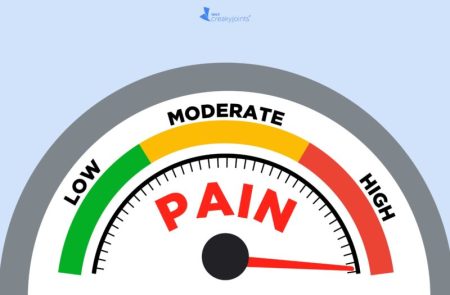
“Pain is now your friend.”
That thought definitely did NOT originate from me. Initially, it was absurd. Bizarre. I stood in that crowd, rocked by that idea, “pain is now your friend.” I can’t explain it, nor can I diminish it. Obviously, the idea was not conjured up or produced by my conjecture or reasoning. It is exactly what it is.
A day later I came across this thought.
“I have learned to kiss the wave that throws me against the rock of ages.”
C.H. Spurgeon
Can I kiss that wave? Can I discount all the difficulties that pain has caused in my life? Now I admit I had been praying quite earnestly for God to take me. That may be a shock to some, I know. But I’ve had enough of this misery. Enough! Bring me home. I’m so tired of this.
What crushed me did not crush God’s purposes for me.
Much could be said about this, but what could not destroy me needs to make me aware. I have been given a “hard” gift. I have endured much hurt. And even now, as I typed out this post, I still am in pain. Why?
There is a definite purpose why. That pain is my friend, my companion. For how long, I do not know. But I do know that I will kiss that wave, for it presses me to my Savior. I cannot explain it, because it’s foolish and counterintuitive. I’m not trying to ignore its presence, nor am I trying to paint “a happy face” on it.
“During this time now, we have troubles and pain. But I am sure that these troubles are not really very great. One day God will show us all the great things he has prepared for us. That will make the troubles that we have now seem very small.”
Romans 8:18, RB
Yes, dear one, pain is one of my best friends. Nothing else could have reached me, I needed some hard “medicine” because I could not understand this any other way.
“Blessed be the God and Father of our Lord Jesus Christ, the Father of mercies and God of all comfort, 4 who comforts us in all our affliction, so that we may be able to comfort those who are in any affliction, with the comfort with which we ourselves are comforted by God.”
2 Corinthians 1:4, ESV
I think I now know why.
Some will not understand, that’s ok. I’m glad they don’t.
“Suffering is unbearable if you aren’t certain that God is for you and with you.”
“Simon, Simon, Satan has asked to sift each of you like wheat. But I have pleaded in prayer for you, Simon, that your faith should not fail.”
“So when you have repented and turned to me again, strengthen your brothers.”
Luke 22:31-32
I’ve been thinking about failure; it is something that I am really, really good at. In my over 40 years of walking with Jesus, I realized that I’ve experienced more weak moments then strong. I have easily failed more than I have succeeded. I am embarrassed by this.
I’ve sinned, and failed more as a Christian, than I ever did as a pagan sinner. And things sometimes show little sign of improving.
Simon Peter is about to undergo a trial so intense and difficult, that unless Jesus intervenes it will probably destroy Peter!
(The only other blatant attack where Satan seeks permission is in the life of Job. It is reasonable to believe that the forces of hell are concentrated on Peter.)
You and I undergo some of this onslaught ourselves. We go through periods of intense trial. Everything just falls apart, and we lose hope. I’ve had several periods like that, it’s like a tornado from hell bears down upon my life.
But there is something remarkably good in all of this.
First, Jesus is praying for me to endure. He is the faithful intercessor for my soul.
Second, He gives us a modicum of understanding by warning us of the approaching storm. Peter is told ahead of time of what was going to happen.
Third, the wheat will be sifted. Sifting or winnowing of the grain is necessary, it’s a good and godly work of the Holy Spirit. It is a good thing, as it builds your faith.
Four, you will survive to strengthen your brothers and sisters.
All pain and failure gives us a mandate to serve others. Our weakness gives us a spiritual license to become a shepherd of mercy and hope. (You could say that you are now a licensed minister.)
We can ask for nothing more; it is a good and profound work to serve others.
In love’s work, only sifted people can truly serve.