Life with Thorns

From desiringgod.org

Finding Strength in Physical Weakness

It’s easy to romanticize physical suffering — especially when you’re not the one experiencing it.

Saints like Amy Carmichael, who spent over twenty years bedridden, and Joni Eareckson Tada, a quadriplegic who lives in constant pain, can evoke peaceful images of unbroken communion with God. We may imagine that it’s easier for them to endure pain and weakness than it is for the rest of us.

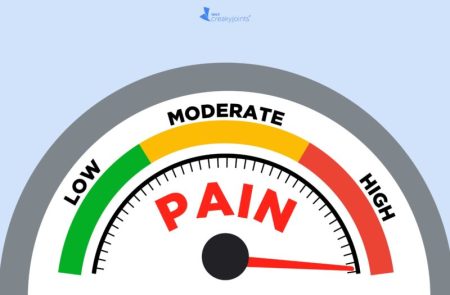
Yet the reality of physical suffering is that it’s insistent and intrusive. No one gets used to it. Pain demands our attention. Time slows to a crawl, particularly in the middle of the night, when we’re begging God for the relief of sleep. We feel alone and isolated. No one else can enter the prison that our bodies have become.

Pain Accumulates

If that weren’t enough, physical pain rarely exists in isolation — it’s usually accompanied by loss, weakness, and dependence. Often, we require help with basic daily needs, and we worry about the burden we’re putting on others. We second-guess every request, not wanting to bother someone one more time. Will people get tired and think we’re “too much”? Do they resent their lack of freedom?

We longingly remember the carefree days before our physical struggles altered our lives, when we could do what we wanted. Now we measure our energy in teaspoons rather than buckets. We weigh every decision, every action. Saying yes to one activity means saying no to many others. It is hard not to envy those with fit bodies, who seem to have no cares.

Pain, loneliness, and longing can give way to depression and despair. We cry out to the Lord for relief, but relief doesn’t come. The cancer spreads. Sleep eludes us. The pain intensifies. The medicine stops working. The side effects multiply. Our caregivers grow weary. Our friends stop checking in. Our resources run dry.

Doubt Advances

The vibrant faith we once had begins to fade — which is exactly what Satan wants to happen as we suffer. He wants us to doubt and fall away from God, convinced that he is indifferent to our cries. Satan knows that we’re susceptible to discouragement when we’re physically depleted, so that’s when he attacks. As physical needs scream for attention, Satan whispers to us, “Does God even hear you, let alone really care for you? If he does, why isn’t he delivering you?”

Insidious doubts slip in, making us question beliefs we once held rock-solid: Are we deeply loved by an all-powerful Father? As soon as we recognize the mental shift, we need to stop and cry out to God, asking him to meet us in our sorrow, to deliver us from our pain, and to show us evidence of his goodness and love. Are we fixating on all that we’ve lost, on how God hasn’t delivered us, on how hopeless we feel? Or do we recognize that God is with us, working for our good, and caring for us each moment?

What we think about in the moments of our deepest pain is critical. Our mindset will determine how we approach the questions that bombard us. Here are three common questions I’ve asked:

  1. How can God be “for me” if I’m still suffering?
  2. How can God use my weakness for good?
  3. What good can come in moments of overwhelming pain?

How can God be ‘for me’ if I’m still suffering?

Sometimes God miraculously delivers us when we plead for relief, like at the parting of the Red Sea. Other times he sustains us, as he did with manna in the wilderness. The Red Sea deliverance freed the Israelites, but their need for manna kept them dependent on God. In gathering manna, they had a harder time forgetting their reliance on God. And if God’s greatest blessing is himself, then perhaps sustenance is a more precious gift than deliverance, since it can keep us in constant communion with him.

Take the apostle Paul. He begged God for deliverance from his thorn in the flesh, but instead he received grace — grace to bear the thorn, grace to be content with weakness, grace that would carry him through other trials as well (2 Corinthians 12:7–10).

When we realize that we can depend on God in our weakness, we learn to trust him in everything. Anyone can thank God for quick deliverance from physical suffering, but we often forget him until the next crisis. Yet when he sustains us in our pain, we’re confident that he is with us always.

How can God use my physical weakness for good?

We may think our physical weakness is keeping us from maximum fruitfulness, but that’s impossible. Our weaknesses are a part of God’s plan for our lives; they are intertwined with our calling. Paul thought his thorn was hampering his ministry, but God knew that it was the key to his strength: it forced Paul to be wholly dependent on God. When we are depleted and exhausted, lacking any resources of our own — it is then that we fully rely on God.

And in that reliance, we discover the power of God flowing through us — the same power that raised Jesus from the dead (Ephesians 1:19–20). This power keeps us enduring when we want to give up; it showcases God’s glory and brings lasting change. Because Paul relied on God’s provision, he accomplished more for the kingdom with his thorn than he could have without it. His greatest strength lay in his submission to Christ.

Even Jesus’s greatest strength appeared in his greatest physical weakness.

Throughout his ministry, Jesus impacted others by his actions. He calmed the storm with a word. He fed five thousand with a few loaves and fish. He cast out demons, healed the sick, and raised the dead. He turned the world upside down.

But at the end of his ministry, from the Last Supper on, Jesus allowed others to act upon him: he was led away, he was whipped and mocked, he was beaten and crucified. When he submitted to his captors, the crowds saw weakness rather than what was really there: Jesus’s strength and power.

Just before these horrific events, Jesus begged God to take the cup of suffering from him. But it was through Christ’s submission to the will of the Father — to torture and humiliation, to physical abuse and carrying his own cross — that God brought about the most astonishing display of his power and grace.

Article by Vaneetha Rendall Risner

Notice Her Eyes, [Disability]

Stuck in the wonders of scripture we read about Leah and her sister Rachel. We see the two daughters of Laban have become Jacob’s wives. We must step into Genesis 29 to see more.

Jacob longs for Rachel. She is his “soul mate” and because he’s in love, the customs and technicalities of the day somehow get by him. Because of this, he will have to take on Laban’s subtle trickery, where daughters get exchanged, and we must sort out who is who.

Laban’s deception creates a huge crisis for everyone. 

But it seems Jacob just rolls with it. I suppose deception has always been Jacob’s strong suit. (But when we see a deceiver like Jacob gets deceived, that can’t be all bad).

But it’s Leah that I tend to think about. Her own issues are unique. Genesis 29 explains it a bit cryptically,

“Leah’s eyes were weak, but Rachel was beautiful in form and appearance.” 

Genesis 29:17

You must know that there is confusion by commentators about the “weak eyes.” Some take it literally (as in, she is very “near-sighted,”) while others who look at the original Hebrew find the words to be a bit looser and vague. They tend to think that this is a polite way of saying she really wasn’t pretty.

The text also states that Leah was “hated.”

Genesis 29:30-31.

She is wounded, and life requires that she live as unwanted. She is a woman of tragedy and broken hopes and dreams. She will always live as a reject. At best, she will always be a distant second, and perhaps a bit scorned and neglected for this.

I conclude that Leah is the champion for the challenged.

I love Leah and I think I understand her. Her life is a long tragedy and very full of sadness. For the next 30-40 years she will always be a cast-off, someone who has been broken on life’s bitter vagaries. She’s a fellow struggler, and a survivor.

Her sad life is comparable to us who have to fight so hard over our own illness or handicaps.

She must’ve been challenged by her terrible weakness. I understand this. My own life has been “topsy-turvy” and a really hard struggle. Somehow it seems we must work through these things way too much.

It doesn’t seem fair. 

For those of you who are confined to a wheelchair, or must use a cane, or who deal with a physical or mental illness. Leah should be our hero. For those who have been betrayed by addiction, or who have felt rejected through a bitter divorce– Leah speaks to us.

She is for every loser and for failures of all stripes. But through all of our setbacks and messes, we must realize that God does love us– even as we weep.

We may have Leah’s eyes, but we also have His grace.

I’m currently working on a new teaching site: KingDavid101.com

I’m Such a Fool

They tell me that courage is to do something that frightens you. That it is being strong in the face of pain and suffering. If that’s true (and I suspect that it is) then I haven’t arrived yet. I’m a spiritual “chicken.” I’m no eagle yet.

It seems at times I’ve been ‘gifted’ with cowardice! 😁

I struggle at times with chronic depression, and am physically handicapped. I have lost the use of my right arm and hand. I no longer have any balance and must use a cane. This is due to a brain tumor I had in 2002. I’ve had over a dozen head injuries which only has compounded the ataxia.

I admit I sometimes get angry with God. I also get spiritually confused as I try to walk like Jesus wants me too. My frustration with Him is all foolishness when I think of all He has given me. I pretend at these times, and I do it well I think.

I’m also afflicted with a terrible disease called “Facebookitist.”

I find that this blog I write sometimes covers up a multitude of my own sins. You see and read what I want you to see. I polish up things to preserve a modicum of spiritual decency. I want you to see me as faithful and triumphant. A real disciple, (but alas, that’s often a bit of a stretch).

Brennan Manning

I once was confronted by a younger believer, “I don’t know you, brother, you’re like two different people.” And honestly I’m sure he was right. I am, and it disturbs and saddens me.

And what is the truth often scares me. I’m often a spiritual coward who tries to speak the things that are real and true. (A clown trying very hard to play “Hamlet.”) I occasionally realize I will write something that’s spiritually false, and that scares me. “Kyrie Eleison.” God have mercy on me, a sinner.

I think all I want is God’s stamp of approval. “Well done, good and faithful servant.”

And perhaps yours as well?

I realize that I end up wanting truth which is no small thing. Many lies must be stripped away and that seems to take time. It’s like scraping away layers of varnish on a table you’re working on. I’m pretty much coated with sin. I desperately need the truth to survive.

All I really know is that I love Jesus, and I seek to be filled with His Spirit. I keep coming, over and over, to Him. He holds on to me.

     C.S. Lewis

Jesus comes not for the super-spiritual but for the wobbly and the weak-kneed who know they don’t have it all together, and who are not too proud to accept the handout of amazing grace.”

Brennan Manning

Christians in Pain

No longer do I call you servants, for a servant does not know what his master is doing; but I have called you friends, for all things that I heard from My Father I have made known to you.”

John 15:15

I believe that the purpose of life is not to find our freedom. It’s really meant to find our Master.

Yes, the idea of being a slave to anyone is repugnant. We chafe at this, and yet man was never meant to be seperated from the Lordship of Jesus. We’re instructed repeatedly with the New Testament idea that “our life is not our own”  Over and over God proclaims Himself as the King.

That troubles us somewhat.

Not so much when life is fairly good, granted, but in those hard moments when a decision must be made between enjoying the titillating “lusts of the flesh,” or accepting the fruits of the Spirit. This is one of those “lordship moments.” They come, and go, and they show us exactly who we are.

If you’re really going to be authentic–a legitimate and real disciple, then you must determine who is going to be “boss.” This isn’t one of those casual decisions. You must securely fix it in your heart.

Your decision must become a settled issue.

The thief on the cross knew salvation, he was promised an eternity with God simply by faith. But I submit to you that he had put himself under the Lordship of Jesus, simply by recognizing the sign, “the King of the Jews.” I believe he saw and understood its imlications. Jesus was King!

This is a very hard word for some, but many of our personal issues hinge on this.

I know this first-hand. It can be a monumental struggle. You must admit to not only having Jesus as your Savior, but you also must put your life under His total Lordship.  You need to pick up your cross daily in order to follow.  You need to learn how to kneel.

I’ve chosen a crown to open up this post–it’s done on purpose.  I simply want you to to understand the supreme call He has on your life.

“The question in salvation is not whether Jesus is Lord, but whether we are submissive to His lordship.”

    John MacArthur

You must learn here and now how to kneel before the Sovereign King.