The Micro and the Macro: An Understanding

10piper
John Piper, Pastor of Bethlehem Baptist Church, Minneapolis. Writer and Speaker, DesiringGod.org

Originally dated, July 14, 2008 | By: John Piper 

One of the reasons God rarely gives micro reasons for his painful providences, but regularly gives magnificent macro reasons, is that there are too many micro reasons for us to manage, namely, millions and millions and millions and millions and millions. God says things like:

  1. These bad things happened to you because I intend to work it together for your good (Romans 8).
  2. These happened so that you would rely more on God who raises the dead (2 Corinthians 1).
  3. This happened so that the gold and silver of your faith would be refined (1 Peter 1).
  4. This thorn is so that the power of Christ would be magnified in your weakness (2 Corinthians 12).

But we can always object that there are other easier ways for God to accomplish those things. We want to know more specifics: Why now? Why this much? Why this often? Why this way? Why these people?

The problem is, we would have to be God to grasp all that God is doing in our problems. In fact, pushing too hard for more detailed explanations from God is a kind of demand that we be God.

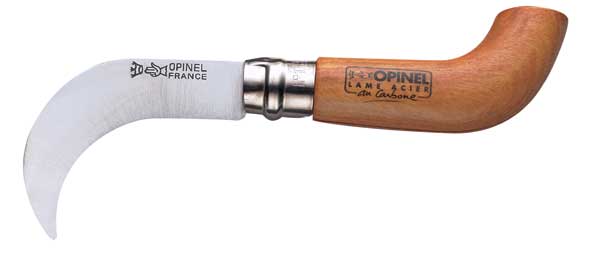
horseshoe-anvil-clipartThink of this, you are a blacksmith making horseshoes. You are hammering on a white hot shoe and it ricochets off and hits you in the leg and burns you. In your haste to tend to your leg you let the shoe alone unfinished. You wonder why God let this happen. You were singing a hymn and doing his will. Your helper, not knowing the horseshoe was unfinished gathered it up and put it with the others.

Later there was an invasion of your country by a hostile army with a powerful cavalry. They came through your town and demanded that you supply them with food and with shoes for their horses. You comply. Their commander has his horse shod by his own smith using the stolen horseshoes, and the unfinished shoe with the thin weak spot is put on the commander’s horse.

In the decisive battle against the loyal troops defending your homeland the enemy commander is leading the final charge. The weak shoe snaps and catches on a root and causes his horse to fall. He crashes to the ground and his own soldiers, galloping at full speed, trample him to death. This causes such a confusion that the defenders are able to rout the enemy and the country is saved. Now you might say, well, it would sure help me trust God if he informed me of these events so that I would know why the horseshoe ricocheted and burned my leg. Well maybe it would help you. Maybe not.

God cannot make plain all he is doing, because there are millions and millions and millions and millions of effects of every event in your life, the good and the bad. God guides them all. They all have micro purposes and macro purposes. He cannot tell you all of them because your brain can’t hold all of them.

Trust does not demand more than God has told us. And he has given us immeasurably precious promises that he is in control of all things and only does good to his children. And he has given us a very thick book where we can read story after story after story about how he rules for the good of his people. Let’s trust him and not ask for what our brains cannot contain.


http://www.desiringgod.org/Blog/1307_why_god_doesnt_fully_explain_pain/

Need Immediate Help? Call 1-888-NeedHim

The Art of Being Seen

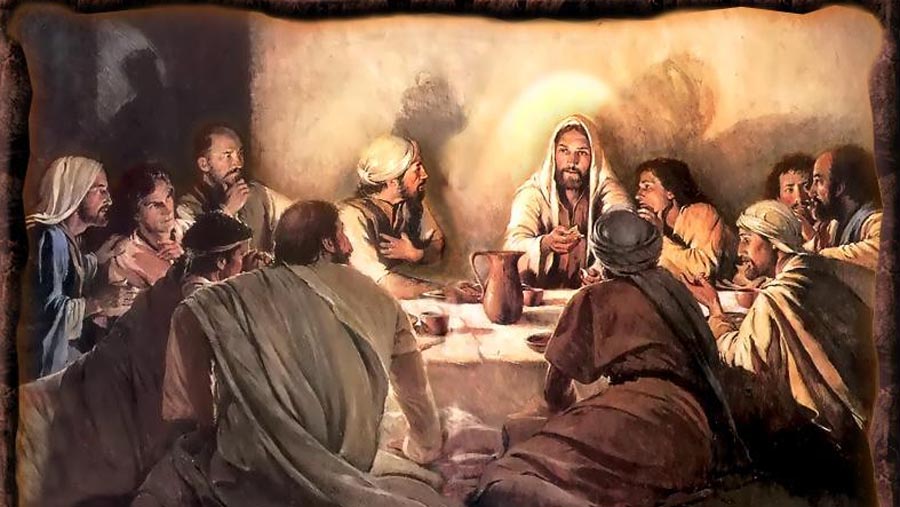
Jesus entered Jericho and made his way through the town. There was a man there named Zacchaeus. He was the chief tax collector in the region, and he had become very rich. He tried to get a look at Jesus, but he was too short to see over the crowd. So he ran ahead and climbed a sycamore-fig tree beside the road, for Jesus was going to pass that way.

When Jesus came by he looked up at Zacchaeus and called him by name.“Zacchaeus!” he said. “Quick, come down! I must be a guest in your home today.” Zacchaeus quickly climbed down and took Jesus to his house in great excitement and joy. But the people were displeased. “He has gone to be the guest of a notorious sinner,” they grumbled.

Meanwhile, Zacchaeus stood before the Lord and said, “I will give half my wealth to the poor, Lord, and if I have cheated people on their taxes, I will give them back four times as much!” Jesus responded, “Salvation has come to this home today, for this man has shown himself to be a true son of Abraham. 10 For the Son of Man came to seek and save those who are lost.”

Luke 19:1-10, NLT

Zacchaeus was a resourceful man.  Jericho was a prime toll center in the entire area, and Zacchaeus would’ve been the richest man in the entire region. He was very wealthy, being an overseer of other tax collectors (the region with a major export of balsa wood.) He was well on his way to becoming a millionaire at least, the ancient Judean version of it.

We should know two things about Zacchaeus:
  1. His Hebrew name meant “pure.” This was an ironic moniker for a despised man who had sold out to the Roman tax business. (Perhaps he had had a ‘godly mother?)
  2. He was very short in stature. I suppose we could call him ‘vertically challenged’?

I suppose there is one other thing, my guess is it’s the main one. He simply wanted to see Jesus. He was so short that he couldn’t see over the crowds. Perhaps he could’ve bribed his way to the curb, but apparently, there wasn’t enough time. Jesus was coming this way! He must make a decision.


He looks and sees a tree. It grew on the side of the road, its branches hanging over the well-traveled path. He clumsily climbs up (in a robe!) and finds a clear spot to get a good look at Jesus. He is a simple man, and this is all he wants is just to see Jesus!

Within the Christian faith over the many centuries, there has always been a heart’s desire to get closer to Jesus. Many of the established ‘disciplines’ such as:

  • prayer
  • the study of scripture
  • fasting
  • evangelism
  • simplicity
  • solitude
  • service
  • confession
  • worship
Think of this list as simply branches of the tree.
Each discipline comes as one of several. But they are futile, or worse if they don’t lead us to Jesus Christ. 

It is critical to grasp the end result; they are merely the methods we use to see Jesus clearer. Its folly to climb the tree, just for the sake of climbing. No. The branch we are sitting on is just a means to an end. To behold our Lord, to somehow get closer to Him is priceless.

For example, I usually don’t pray for ‘prayers sake.’ I must pray like Zacchaeus climbed;  I just to see Jesus. I know He is always watching and yet I want Him to see me.

But we also are not to build tree houses. Rather we’re meant to see Jesus, come down, and have a wonderful time with Him in close fellowship.

aabryscript

Flourish-61

Living Tethered to the Cross

We live in this place.

 “The devil never rejoices more than when he robs a servant of God of the peace of God.”
Sometimes I think I’ve made the devil dance far too many times.

I confess that peace has never been real high on my list. Love, joy, kindness and even goodness are clear priorities. Peace–well… not so much. Until it’s not there. And then I get frantic by its absence, and look for it with manic bewilderment. (Not again!) It seems that peace matters.

I’m panting for some real peace, some sign that God still loves me. Anxiety eats at me. I beat myself up by my last failure. The guilt of my latest sin grows until it looms larger than the blood that saved me. Someone once told me that religious people have the most neurosis. And that could be true.

Perhaps it’s a legalistic Christian that gets strangest?

I’m afraid that we are taking “the present tense’ out of the Gospel.

The past tense is far preferable to us as we manage the Christian life. We like to make check marks on our list. Repentance– check. Baptism– check. Bible study– check. I think it gives me a definite feeling of ‘maturity.’ I think that somehow I am holy.

The closer I move toward the light the more I see my sinfulness. I haven’t arrived, and it seems I’m still the sinner I always was. I cannot pretend otherwise, trying hard changes nothing. I still desperately need God’s grace.


I know, I’ve tried to produce godliness, and I just can’t do it. Discipleship starts in earnest but it ends up only disappointing me, and maybe even annoys God, ( but I’m not always sure of that). I know forgiveness, and I do walk in its wonderful light. When I read the Word it’s so good, and I know that it’s true. But, that’s not the issue.

I read Luther 30 years ago. (And Bonhoeffer would say something similar.)  “When our Lord and Master Jesus Christ said, ‘Repent,’ he willed the entire life of believers to be one of repentance.” Luther once wrote.

There is a present tense here we can’t ignore. I don’t just repent over smoking, or fornication, or of hypocrisy, once and done. But my entire way of living is meant to be one of repenting!

Repentance needs to be a moment-by-moment grace.

As I read the Beatitudes I cannot evade the sense that they are present tense. Read them, they’re obviously not a spiritual checklist. Each verse seems to speak of the time being, the present moment. No list here, guys. Discipleship is not a simple list to check-off spiritual growth.


“God blesses those who are poor and realize their need for him,
    for the Kingdom of Heaven is theirs.
4 God blesses those who mourn,
    for they will be comforted.
5 God blesses those who are humble…


Matthew 5:3-5

All of the Christian life is repentance. Turning from sin and trusting in the good news that Jesus saves sinners aren’t merely a one-time inaugural experience but the daily substance of Christianity. The gospel is for every day and every moment. Repentance is to be the Christian’s continual posture.”

John Piper

Luther’s last words, laying on his deathbed wrote on a scrap of paper these words, “We are beggars! This is true.” Thirty years before, he was only echoing his first thesis that he nailed on that door. It seems dear ones, we are to live at the foot of the cross. Everyday. Because we desperately need to.

And perhaps the biggest reason is this: Jesus only comes for ‘sinners.’

I want to suggest that we will always be beggars, I think that this is true. But I also believe that someday, I will shine with the glory of God and be changed into  the likeness of my Savior.

That dear one is true.

&bry-signat (1)

Why is This Bush Not Burned Up?

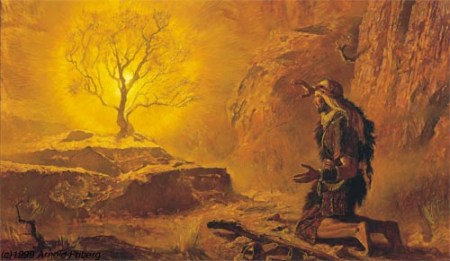
“Some Christians are called to endure a disproportionate amount of suffering. Such Christians are a spectacle of grace to the church, like flaming bushes unconsumed, and cause us to ask, like Moses: ‘Why is this bush not burned up?’

(Exodus 3:2-3)

“The strength and stability of these believers can be explained only by the miracle of God’s sustaining grace. The God who sustains Christians in unceasing pain is the same God — with the same grace — who sustains me in my smaller sufferings. We marvel at God’s persevering grace and grow in our confidence in Him as He governs our lives.”

— John Newton, author of “Amazing Grace”

All of us know a brother or sister who seems to be a target of an undue amount of suffering. It seems like they’re always in the furnace. All we can do really is to shake our heads and then give them double honor for their faith in God’s grace and providence.

Ministering to these sufferers can be a challenge.

What can we say to those who seem to be always on “God’s anvil?” How can we bless those who are in pain? At times I have no idea.

Perhaps a simple word of calm encouragement is the most effective. In the midst of some awful difficulties, I once had a dear brother who gently and carefully quoted Philippians 1:6 to me over and over whenever we met and whenever we parted:

 “And I am certain that God, who began the good work within you, will continue his work until it is finally finished on the day when Christ Jesus returns.”

Philippians 1:6

It was a precious thing that he did. I didn’t mind it all, as a matter of fact I grew to like it. At first, I’ll admit it was strange, but my faith began to ‘mix’ with the Word and I began to believe it. That was 50 years ago, and it’s now my favorite verse in the Bible.

He had the maturity to see what God was doing and to make himself available to God on my behalf. Perhaps that patience he showed should be for us the method of choice for us today? (I look forward to seeing him someday, and thanking him.)

He refused to preach or try to counsel me. He only prayed. And that was enough.

“We can rejoice, too, when we run into problems and trials, for we know that they help us develop endurance.”

Romans 5:3

A keyword in this verse is “rejoice.”

It’s a good reminder that the pain we feel is not the end. These trials have a limited duration, (although it seems far away). There is coming a day when we can navigate through these issues and come out on the other side. “We will shine like the stars” (Daniel 12:3).

Revelation 21:4

Much wisdom is needed in our ministry to disproportionate sufferers. We should have a fear of intruding on the work the Lord is doing. We must be patient and humble in this matter. There is no rushing God, after all, it’s His work. Most importantly we must be very much ‘present’ for our friend.

“But not only that! We even take pride in our problems, because we know that trouble produces endurance.”

Romans 5:3