“He saw the disciples straining at the oars because the wind was against them.”
Mark 6:48
It’s good to know that Jesus sees our labor. He truly understands all that concerns us, and he understands every issue that concerns us. Attentive and keenly aware He comes to our boat. It’s quite common for us to think that he isn’t aware, and we may feel that He’ll pass us by without a word.
Jesus watches over us all the time.
He knows all about our battles, the fight we have with our flesh, the difficulty we have with the challenging people in our lives. I often struggle to steer my boat. Jesus knows when and why I labor like I do. And He doesn’t condemn me.
The disciples were straining hard to keep the boat afloat.
Every oar was being used and every man had his seat. They must work together. Some were frantically bailing, and a couple gripped the tiller. A lot of effort was being expended but nothing was working. The wind continued to push harder against them.
This is really quite perplexing. If you remember, they’re simply trying to obey the command of Jesus to cross the sea. They were being obedient, and yet they were starting to sink.
Why do things have to be so difficult?
I’m intrigued by believers who expect sunshine, blue sky, and red roses just because they are doing God’s will. They don’t seem to think through the issues of conflict and challenge, weakness and humility. That’s not how it’s suppose to work.
“It is necessary to go through many hardships to enter the kingdom of God.”
Acts 14:22
Doing the will of God will often mean that there will be a headwind directly at us.
The seas will become impossible, and we may even be driven back. But special comfort comes when we realize we’re being watched. Jesus is doing constant surveillance on us, and He sees our toil on the oars. And then He comes to us, walking on the water.
Even in our storm, our hearts should trust and rejoice.
“Lo, I am with you always, even to the end of the age”
Jesus called out to them, “Come, follow me, and I will show you how to fish for people!”
–Matthew 4:19
The invitation to these fishermen was a ‘call’ to Himself.
This is critical for us to note. Jesus is not directing them to a broad set of religious ethics. He is calling them to follow Him. He is the exclusive Savior of everyone who needs a Savior. We follow a man, not an idea.
There is also the intertwining of two distinct issues: That of evangelism, and that of discipleship. The church for centuries has split these two, allowing them to be seen separately, and it hasn’t been healthy. These two distinct callings are to be welded together as one.
Typically we are focused on one or the other.
People will gravitate to their own gifting or temperament. But there is a potent strength when discipleship is paired with evangelism. We need disciples who can evangelize; and evangelists who are also disciples.
There is a sense of the comedic here in His call. Jesus is suggesting that He will be teaching these veteran fisherman how to fish. It’s apparent that these wizened men of the sea, had been fishing since they were mere boys. Jesus essentially orders that Peter and Andrew stop what they were doing and follow, now. Jesus would teach them “human fishing”– catching men!
By following, their old way would be forfeited.
They could not do both, (but they did try and once even followed Peter back to the old life). But a separation happens as hearts and minds become set apart on the invitation, and then jump out of the boat on to the beach.
Jesus would teach these men. They would learn the most critical and vital truths ever communicated on this planet. Their classroom would follow them, and their instructor was eminently qualified and supremely gifted. These new followers will ‘rock’ their world. They would truly become, ‘Fishers of Men’.
“The greatest form of praise is the sound of consecrated feet seeking out the lost and helpless.”
It’s easy to romanticize physical suffering — especially when you’re not the one experiencing it.
Saints like Amy Carmichael, who spent over twenty years bedridden, and Joni Eareckson Tada, a quadriplegic who lives in constant pain, can evoke peaceful images of unbroken communion with God. We may imagine that it’s easier for them to endure pain and weakness than it is for the rest of us.
Yet the reality of physical suffering is that it’s insistent and intrusive. No one gets used to it. Pain demands our attention. Time slows to a crawl, particularly in the middle of the night, when we’re begging God for the relief of sleep. We feel alone and isolated. No one else can enter the prison that our bodies have become.
Pain Accumulates
If that weren’t enough, physical pain rarely exists in isolation — it’s usually accompanied by loss, weakness, and dependence. Often, we require help with basic daily needs, and we worry about the burden we’re putting on others. We second-guess every request, not wanting to bother someone one more time. Will people get tired and think we’re “too much”? Do they resent their lack of freedom?
We longingly remember the carefree days before our physical struggles altered our lives, when we could do what we wanted. Now we measure our energy in teaspoons rather than buckets. We weigh every decision, every action. Saying yes to one activity means saying no to many others. It is hard not to envy those with fit bodies, who seem to have no cares.
Pain, loneliness, and longing can give way to depression and despair. We cry out to the Lord for relief, but relief doesn’t come. The cancer spreads. Sleep eludes us. The pain intensifies. The medicine stops working. The side effects multiply. Our caregivers grow weary. Our friends stop checking in. Our resources run dry.
Doubt Advances
The vibrant faith we once had begins to fade — which is exactly what Satan wants to happen as we suffer. He wants us to doubt and fall away from God, convinced that he is indifferent to our cries. Satan knows that we’re susceptible to discouragement when we’re physically depleted, so that’s when he attacks. As physical needs scream for attention, Satan whispers to us, “Does God even hear you, let alone really care for you? If he does, why isn’t he delivering you?”
“If God’s greatest blessing is himself, then perhaps sustenance is a more precious gift than deliverance.”
Insidious doubts slip in, making us question beliefs we once held rock-solid: Are we deeply loved by an all-powerful Father? As soon as we recognize the mental shift, we need to stop and cry out to God, asking him to meet us in our sorrow, to deliver us from our pain, and to show us evidence of his goodness and love. Are we fixating on all that we’ve lost, on how God hasn’t delivered us, on how hopeless we feel? Or do we recognize that God is with us, working for our good, and caring for us each moment?
What we think about in the moments of our deepest pain is critical. Our mindset will determine how we approach the questions that bombard us. Here are three common questions I’ve asked:
How can God be “for me” if I’m still suffering?
How can God use my weakness for good?
What good can come in moments of overwhelming pain?
How can God be ‘for me’ if I’m still suffering?
Sometimes God miraculously delivers us when we plead for relief, like at the parting of the Red Sea. Other times he sustains us, as he did with manna in the wilderness. The Red Sea deliverance freed the Israelites, but their need for manna kept them dependent on God. In gathering manna, they had a harder time forgetting their reliance on God. And if God’s greatest blessing is himself, then perhaps sustenance is a more precious gift than deliverance, since it can keep us in constant communion with him.
Take the apostle Paul. He begged God for deliverance from his thorn in the flesh, but instead he received grace — grace to bear the thorn, grace to be content with weakness, grace that would carry him through other trials as well (2 Corinthians 12:7–10).
When we realize that we can depend on God in our weakness, we learn to trust him in everything. Anyone can thank God for quick deliverance from physical suffering, but we often forget him until the next crisis. Yet when he sustains us in our pain, we’re confident that he is with us always.
How can God use my physical weakness for good?
We may think our physical weakness is keeping us from maximum fruitfulness, but that’s impossible. Our weaknesses are a part of God’s plan for our lives; they are intertwined with our calling. Paul thought his thorn was hampering his ministry, but God knew that it was the key to his strength: it forced Paul to be wholly dependent on God. When we are depleted and exhausted, lacking any resources of our own — it is then that we fully rely on God.
And in that reliance, we discover the power of God flowing through us — the same power that raised Jesus from the dead (Ephesians 1:19–20). This power keeps us enduring when we want to give up; it showcases God’s glory and brings lasting change. Because Paul relied on God’s provision, he accomplished more for the kingdom with his thorn than he could have without it. His greatest strength lay in his submission to Christ.
Even Jesus’s greatest strength appeared in his greatest physical weakness.
Throughout his ministry, Jesus impacted others by his actions. He calmed the storm with a word. He fed five thousand with a few loaves and fish. He cast out demons, healed the sick, and raised the dead. He turned the world upside down.
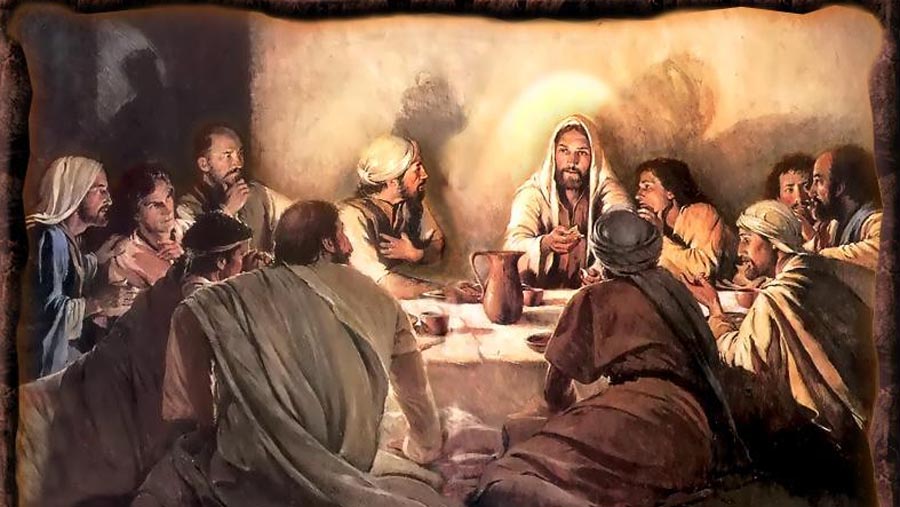
But at the end of his ministry, from the Last Supper on, Jesus allowed others to act upon him: he was led away, he was whipped and mocked, he was beaten and crucified. When he submitted to his captors, the crowds saw weakness rather than what was really there: Jesus’s strength and power.
Just before these horrific events, Jesus begged God to take the cup of suffering from him. But it was through Christ’s submission to the will of the Father — to torture and humiliation, to physical abuse and carrying his own cross — that God brought about the most astonishing display of his power and grace.
“Nothing in the church makes people in the church more angry than grace. It’s ironic: we stumble into a party we weren’t invited to and find the uninvited standing at the door making sure no other uninviteds get in.
Then a strange phenomenon occurs: as soon as we are included in the party because of Jesus’ irresponsible love, we decide to make grace “more responsible” by becoming self-appointed Kingdom Monitors, guarding the kingdom of God, keeping the riffraff out (which, as I understand it, are who the kingdom of God is supposed to include.)”
— Michael Yaconelli
*****
Things seem this way at times.
Often there can be a frustrated hostility simmering just below the veneer of a religious person. It can be seen in sudden outbursts of irritation that seems to come from nowhere. It is often encountered when they feel the ‘spigot of grace’ has been open too long, too much water is being used, and the people are getting a little wild in showing their enthusiasm. “They’re acting like ungodly pagans.”
Regulating the watering hole becomes a compulsion, and a necessary work of the “Church.” Jesus’ love is for all is a confirmed fact, but we must have some standards of decorum and appropriate levels of conduct and respect. “We the keepers-of-the- spigot are called to take some responsibility in this,” we end up saying.
Celebratory shouts of joy are simply not acceptable. Dancing in the mud is way ‘out-of-line.’ But there is an outrageous element to grace. It is preposterous and disturbing. It is untamed and wild, and not at all logical. “We definitely prefer the thinking side of our faith,” we say.
Judas rebuked Jesus as he was getting a foot massage from the ungodly woman. She had no business to be there in the first place. And secondly, she has just poured this incredible fortune on the feet of Jesus! Judas said, “way out-of-line!”
But there is a irrepressible love that always pushes its way forward.
For those of us who have first experienced God’s love and grace we must keep an alert out for our hard hearts. First, He is in charge of how the water is utilized. Second, [and we MUST believe this] when a man or woman connect with the water, there can be spontaneous displays of joy!
The dance of grace
We must change our thinking, e.g. repent, and insist that we ‘cease and desist’. Our attitude is not acceptable or true to the Spirit of Christ. We are the ones way “out-of-line” and we have not been good witnesses about his grace and love. We had better turn from this sin, and ask Jesus to free us again.
“And ye shall know the truth, and the truth shall make you free.”