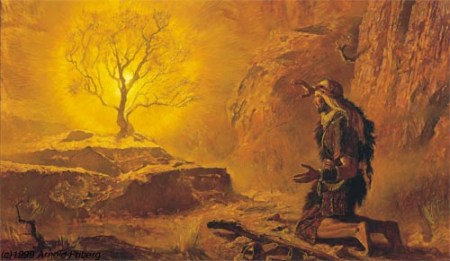
“Some Christians are called to endure a disproportionate amount of suffering. Such Christians are a spectacle of grace to the church, like flaming bushes unconsumed, and cause us to ask, like Moses: ‘Why is this bush not burned up?’
The strength and stability of these believers can be explained only by the miracle of God’s sustaining grace. The God who sustains Christians in unceasing pain is the same God — with the same grace — who sustains me in my smaller sufferings. We marvel at God’s persevering grace and grow in our confidence in Him as He governs our lives.”
— John Newton, 1725-1807, Author of “Amazing Grace”
God has said that He protects and sustains every born again believer. His personal honor is at stake. Knowing this, we can overcome religious fear and anxiety which can be crippling. We must constantly look in the Word and combine the promises with saving faith.
Each believer must have an experience with God. Very often this will mean we will be barefoot and standing before our own burning bush. It’s in this holy place we see His love and grace, toward us and toward other people. What He reveals will change the trajectory of our life.
Do you really want to be changed? Your own “bush” is waiting for you. God is waiting as well.
“The angel of the Lord appeared to him in a blazing fire from the midst of a bush; and he looked, and behold, the bush was burning with fire, yet the bush was not consumed.”
“A woman suffering from bleeding for twelve years, who had spent all she had on doctors and yet could not be healed by any, approached from behind and touched the end of his robe. Instantly her bleeding stopped.
Who touched me?” Jesus asked.
When they all denied it, Peter said, “Master, the crowds are hemming you in and pressing against you.”
Luke 8:43-45
I had to touch Him. I had to reach out and somehow get His attention. It was no longer an option. I bled all the time and it wouldn’t stop. It was constant, and it had been 12 miserable years. There was no one else who could stop this, no doctor, no medicine. I was so desperate. It had to stop, it was killing me.
I had spent so much money on so many doctors.
I had nothing left. Each doctor promised a cure and my hopes were always dashed. A few days ago I heard about Jesus, I heard about His power to raise the dead and heal every disease. I don’t really know why, but I somehow knew He could heal me.
Perhaps this was really it, I thought. There was a big problem though, I was ritually unclean and all that I touched was unclean. The temple was off-limits and I had been cut off from sacrifice and forgiveness. In my darker moments, I remember thinking that perhaps God really had forsaken me?
After all, it had been 12 long years.
What I had to do must be done secretly. I knew I just had to touch this man. I would have to wriggle my way through the crowd to get close enough. This wasn’t right and if I couldn’t get close enough I somehow knew I’d be taken to task for my foolishness.
But oh I was so sick and weak.I was unclean.
Just a touch was all I needed. I knew the He had the power. I just knew it. So I listened and tried to understand His busy itinerary. I must figure out how to get to Him, you see, everything depended on that connection.
It somehow worked. I just managed to grab just the tassel of His ceremonial Pharisee-approve head covering (ironic isn’t it).
And immediately the flow stopped. Just like that! I felt it and knew what happened.
“Christ is the Good Physician. There is no disease He cannot heal; no sin He cannot remove; no trouble He cannot help.”
I’ve gone through many awful things—stuff that should have destroyed me. Things so bitter and hard it’s a wonder that I’ve even survived. I’m not overstating and not melodramatic. I know that I’m still standing because of grace and mercy that God has given.
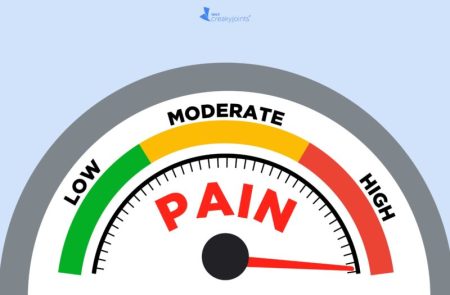
The other day I stepped into a gym where a Church potluck was happening. Now I’ve been in constant pain for several months and it’s been terribly hard. Standing and waiting on the line to get shorter, I distinctly heard something that seemed to come out of the blue.
“Pain is now your friend.”
That thought definitely did NOT originate from me. Initially, it was absurd. Bizarre. I stood in that crowd, rocked by that idea, “pain is now your friend.” I can’t explain it, nor can I diminish it. Obviously, the idea was not conjured up or produced by my conjecture or reasoning. It is exactly what it is.
A day later I came across this thought.
“I have learned to kiss the wave that throws me against the rock of ages.”
C.H. Spurgeon
Can I kiss that wave? Can I discount all the difficulties that pain has caused in my life? Now I admit I had been praying quite earnestly for God to take me. That may be a shock to some, I know. But I’ve had enough of this misery. Enough! Bring me home. I’m so tired of this.
What crushed me did not crush God’s purposes for me.
Much could be said about this, but what could not destroy me needs to make me aware. I have been given a “hard” gift. I have endured much hurt. And even now, as I typed out this post, I still am in pain. Why?
There is a definite purpose why. That pain is my friend, my companion. For how long, I do not know. But I do know that I will kiss that wave, for it presses me to my Savior. I cannot explain it, because it’s foolish and counterintuitive. I’m not trying to ignore its presence, nor am I trying to paint “a happy face” on it.
“During this time now, we have troubles and pain. But I am sure that these troubles are not really very great. One day God will show us all the great things he has prepared for us. That will make the troubles that we have now seem very small.”
Romans 8:18, RB
Yes, dear one, pain is one of my best friends. Nothing else could have reached me, I needed some hard “medicine” because I could not understand this any other way.
“Blessed be the God and Father of our Lord Jesus Christ, the Father of mercies and God of all comfort, 4 who comforts us in all our affliction, so that we may be able to comfort those who are in any affliction, with the comfort with which we ourselves are comforted by God.”
2 Corinthians 1:4, ESV
I think I now know why.
Some will not understand, that’s ok. I’m glad they don’t.
“Suffering is unbearable if you aren’t certain that God is for you and with you.”
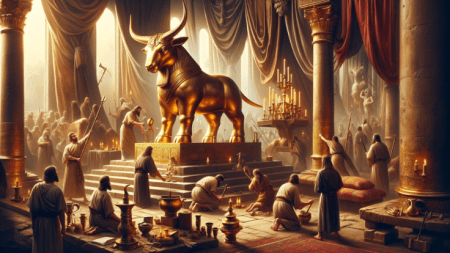
God’s temple was now filled with an evil darkness. King Manasseh made the Lord’s holy place a fountain of sin and filth. Instead of holiness, it was an evil place.
He brought in dark things that were twisted, perverted and clearly forbidden.
“Manasseh led Judah and the inhabitants of Jerusalem astray, to do more evil than the nations whom the Lord destroyed before the people of Israel.”
2 Chronicles 33:9, ESV
His own darkness was now encouraged by others, it became accessible, available and promoted:
The high places were rebuilt throughout the land.
Altars to Baal rebuilt, using images of wood.
In the holy temple, altars to the “starry host,” astrology, plain and simple.
Human sacrifice of his own sons to Molech, a false god. Murder.
He practiced soothsaying, used witchcraft and sorcery, and consulted mediums and spiritists.
Evil was being encouraged and something wicked was replacing all that was good and true. The analysis of Manasseh’s policies was way beyond disturbing. Of all the kings of Judah, he was the most sinful and the most corrupt. He was at the bottom of the barrel.
The Hebrew word for “led astray” can be translated seduced.
Manasseh was an incredibly immoral man, a king who ruled for 40 years. “He did all he could to pervert the national character, and totally destroy the worship of the true God; and he succeeded.” (Clarke)
It’s believed that he put Isaiah to death by cutting him in two.
Moreover Manasseh shed very much innocent blood, till he had filled Jerusalem from one end to another, besides his sin by which he made Judah sin, in doing evil in the sight of the LORD.
1 Kings 21:16
But then something happened.
And the LORD spoke to Manasseh and his people, but they would not listen. Therefore the LORD brought upon them the captains of the army of the king of Assyria, who took Manasseh with hooks, bound him with bronze fetters, and carried him off to Babylon.
2 Chronicles 33:10-11
Assyria came knocking on Manasseh’s door. I think there was a certain mercy here, but also discipline. Manasseh had “hooks,” inserted through his jaw and out of his mouth. Like a fish he was led to Babylon, a trophy of the power of the army of Babylon.
It was from a dark dungeon that Manasseh cried out to the Lord and repented.
There’s a Jewish fable that when Manasseh cried out to God the angels boarded up the windows in heaven. They wanted to block out his prayer so God wouldn’t be able to hear. But God, rich in mercy, bored a hole in front of His throne to hear Manasseh’s desperate cry.
The Lord’s intention was to forever show His kindness and grace given to the most awful repentant sinner.
I believe that Manasseh was the “Prodigal Son” of the Old Testament.
God is not at a loss when He moves to bring us back to Himself. He can woo or whip. He can draw or drive. He can work rapidly or slowly, as He pleases. In other words, He is free to be God! And in His own way, at His own pace, He brings us back.
God is wildly in love with you. Yes, the sin you’ve committed is awful, but the Lord wants you to come back. He may discipline you, but He forgives everything if you’ll turn and repent.
No matter how awful your sin, He forgives and restores. Manasseh is proof of that.