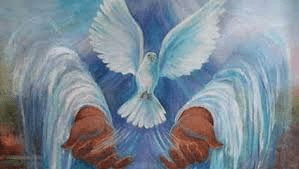
The Hallesby 23—All About Prayer

Prayer

I really want to bless you today on the subject of simple prayer. I recall reading O. Hallesby way back in my Bible school days. Back then, it was assigned reading for a class, but today it is a close treasure. Here are 23 quotes I put together. 

flourishx

  1. Helplessness is the real secret and the impelling power of prayer.

  2. Helplessness becomes prayer the moment that you go to Jesus and speak candidly and confidently with him about your needs. This is to believe.

  3. A humble and contrite heart knows that it can merit nothing before God, and that all that is necessary is to be reconciled to one’s helplessness and let our holy and almighty God care for us, just as an infant surrenders himself to his mother’s care.

  4. Listen, my friend! Your helplessness is your best prayer. It calls from your heart to the heart of God with greater effect than all your uttered pleas. He hears it from the very moment that you are seized with helplessness, and He becomes actively engaged at once in hearing and answering the prayer of your helplessness.

  5. When we go to our meeting with God, we should go like a patient to his doctor, first to be thoroughly examined and afterwards to be treated for our ailment. Then something will happen when you pray.

  6. When you enter your secret chamber, take plenty of time before you begin to speak. Let quietude wield its influence upon you. Let the fact that you are alone assert itself. Give your soul time to get released from the many outward things. Give God time to play the prelude to prayer for the benefit of your distracted soul.

  7. Jesus is moved to happiness every time He sees that you appreciate what He has done for you. Grip His pierced hand and say to Him, “I thank Thee, Saviour, because Thou has died for me.” Thank Him likewise for all the other blessings He has showered upon you from day to day. It brings joy to Jesus.

  8. Jesus wills of His own accord to come into us and, in His own power, to deal with our needs. It is not necessary for us to constrain Him by our prayers to take an interest in us.

  9. There come times when I have nothing more to tell God. If I were to continue to pray in words, I would have to repeat what I have already said. At such times it is wonderful to say to God, “May I be in Thy presence, Lord? I have nothing more to say to Thee, but I do love to be in Thy presence.”

  10. When prayer is a struggle, do not worry about the prayers that you cannot pray. You yourself are a prayer to God at that moment. All that is within you cries out to Him. And He hears all the pleas that your suffering soul and body are making to Him with groanings which cannot be uttered.

  11. If God does not give you something you ask for, wait on Him. He will speak with you tenderly and sympathetically about the matter until you yourself understand that He cannot grant your prayer.

  12. As impossible as it is for us to take a breath in the morning large enough to last us until noon, so impossible is it to pray in the morning in such a way as to last us until noon. Let your prayers ascend to Him constantly, audibly or silently, as circumstances throughout the day permit.

  13. By prayer we couple the powers of heaven to our helplessness, the powers which can capture strongholds and make the impossible possible.

  14. My praying friend, continue to make known your desires to God in all things. … Let Him decide whether you are to receive what you ask for or not.

  15. Notice carefully every word here. It is not our prayer which draws Jesus into our hearts. Nor is it our prayer which moves Jesus to come in to us. All He needs is access. He enters in of His own accord, because He desires to come in. To pray is nothing more involved than to let Jesus into our needs, and permitting Him to exercise His own power in dealing with them. And that requires no strength. It is only a question of our wills. Will we give Jesus access to our needs?

  16. The air which our body requires envelops us on every hand. The air which our souls need also envelops all of us at all times and on all sides. God is round about us in Christ on every hand, with his many sided and all-sufficient grace. All we need to do is to open our hearts.

  17. You can use your time to no better advantage than to pray whenever you have a moment, either alone, or with others, while at work, at rest, or walking down the street! Anywhere!!

  18. As white snow flakes fall quietly and thickly on a winter day, answers to prayer will settle down upon you at every step you take, even to your dying day. The story of your life will be the story of prayer and answers to prayer.

  19. Pray a little each day in a childlike way for the Spirit of prayer. If you feel that you know, as yet, very little concerning the deep things of prayer and what prayer really is, then pray for the Spirit of prayer. There is nothing He would rather do than unveil to you the grace of prayer.

  20. Prayer is a fine, delicate instrument. To use it right is a great art, a holy art. There is perhaps no greater art than the art of prayer. Yet the least gifted, the uneducated and the poor can cultivate the holy art of prayer.

  21. Our prayer life will become restful when it really dawns upon us that we have done all we are supposed to do when we have spoken to Him about it. From the moment we have left it with Him, it is His responsibility.

  22. We should say to God as we mingle with our dear ones each day, “God, give them each Thy blessing. They need it, because they live with me, and I am very selfish and unwilling to sacrifice very much for them, although I do love them.”

  23. Prayer can assume very different forms, from quiet, blessed contemplation of God, in which eye meets eye in restful meditation, to deep sighs or sudden exclamations of wonder, joy, gratitude or adoration.

_____________

hallesby-picOle Hallesby
1879-1961

Ole Kristian O. Hallesby was a Lutheran pastor who taught at the Free Faculty of Theology from 1909 to 1952.

He was an outspoken opponent of the Nazi occupation of Norway and was for a time detained at a concentration camp.

Hallesby wrote over 60 books, mostly on theology and ethics, but is known for his devotional writings. His book on prayer is one of the best written on the subject.

*

What Happens to the Anointed?

Luke 4:18-19

The Trinity is seen at work redeeming man in these two verses–the Spirit anoints, Jesus proclaims, God pours out His favor. The ‘three-in-one’ is active and moving, and He is incredibly involved in each one’s salvation. This quotation is taken directly from Isaiah 61:1 and it completely defines the ministry of the messiah.

The focal point here is on the needy and desperate. The poor, captives, blind, and all of the oppressed become the chosen ones of Jesus’ ministry. His specialty is neglected and the needy, that is His work and I believe that those are still the specific ones He has had His eye on all along. His mind hasn’t changed in 2000+ years.

The Holy Spirit is critically needed to do this work.

The word “anoint” means to rub or sprinkle on; apply an unguent, slather with an ointment.

That is how the Holy Spirit came to Jesus. This was intense, but heartfelt, and it came to energize Jesus to do what was necessary.

Oppressed: Marginalized, depressed, discouraged, downtrodden, broken-hearted, captives.

If Jesus needed to be consecrated for this task, how very much more do we. The message is always one of healing, the needy, and the beaten down. That really must be our M.O. We must do the work in God’s way, with God’s power. We must be energized to reach the very lost with the presence of God. This is His heart cry.

“Truly, truly, I say to you, whoever believes in me will also do the works that I do; and greater works than these will he do, because I am going to the Father.”

John 14:12

Twisted and Bent

Luke 13:10-13

When we read through the Gospels we see that Jesus never laid His hands on those who were demon possessed, rather He would first command the demon to leave. (Interesting.)

The text tells us that the woman had been bent over for 18 years. (That’s a long, long time.) The cause was being “demonized” which is very different than being possessed.

There is a difference. Demons can oppress people and influence their lives, especially if that person is living in sin and rebellion.

“The physical cause of her inability to straighten up has been examined by J. Wilkinson, who identified the paralysis as the result of spondylitis ankylopoetica, which produces the fusion of the spinal bones.”

That is absurd. There’s a truth here that this “leader” is covering up. The woman is instantly healed, and this so-called leadertries to nullify what has just happened. Rather than rejoicing, he renounces what has just happened, and claims that the Sabbath law has been violated. He declares the Law is greater than this woman’s healing.

Jesus never once asserts His authority. Rather He points to this woman’s healing as being truly the very essence of the Law. In spite of what the Law means legalistically, it can never invalidate mercy.

CH Spurgeon

Her private agony was never to be found again. She was free. The pain she lived with was no more. The captivity was gone, and she was freed. The biblical text seems to ignore this and concentrates on the synagogues leader’s response, and that’s well and good. Perhaps though we should focus on this woman’s healing from an awful terrible darkness.

She is free. The stoop is gone. The pain is gone. Jesus has set her free, she gazes at the sun after many years. She stands erect, and though everything now seems different, she now knows her deliverer, and her healer.

“Bent,” brokenbelievers.com, Bryan Lowe

Christ and Cancer

NIH illustration
illustration by NIH

by John Piper

Before I entered college I hardly gave a thought to cancer and terminal illness. But ever since those college days death by disease has walked beside me all the way. Two of my college acquaintances died of leukemia and cancer of the lymph glands before they were 22. At seminary I watched Jim Morgan, my teacher of systematic theology, shrivel up and die in less than a year of intestinal cancer. He was 36. In my graduate program in Germany my own “doctor-father,” Professor Goppelt, died suddenly just before I was finished. He was 62—a massive coronary. Then I came to Bethel, the house of God! And I taught for six years and watched students, teachers, and administrators die of cancer: Sue Port, Paul Greely, Bob Bergerud, Ruth Ludeman, Graydon Held, Chet Lindsay, Mary Ellen Carlson—all Christians, all dead before their three score and ten were up. And now I’ve come to Bethlehem and Harvey Ring is gone. And you could multiply the list ten-fold.

What shall we say to these things? Something must be said because sickness and death are threats to faith in the love and power of God. And I regard it as my primary responsibility as a pastor to nourish and strengthen faith in the love and power of God. There is no weapon like the Word of God for warding off threats to faith. And so I want us to listen carefully today to the teaching of Scripture regarding Christ and cancer, the power and love of God over against the sickness of our bodies.

I regard this message today as a crucial pastoral message.

You need to know where your pastor stands on the issues of sickness, healing, and death. If you thought it was my conception that every sickness is a divine judgment on some particular sin, or that the failure to be healed after a few days of prayer was a clear sign of inauthentic faith, or that Satan is really the ruler in this world and God can only stand helplessly by while his enemy wreaks havoc with his children—if you thought any of those were my notions, you would relate to me very differently in sickness than you would if you knew what I really think. Therefore, I want to tell you what I really think and try to show you from Scripture that these thoughts are not just mine but also, I trust, God’s thoughts.

Six Affirmations Toward a Theology of Suffering

So I would like everyone who has a Bible to turn with me to Romans 8:18–28. There are six affirmations which sum up my theology of sickness, and at least the seed for each of these affirmations is here. Let’s read the text:

I consider that the sufferings of this present time are not worth comparing with the glory that is to be revealed to us. For the creation waits with eager longing for the revealing of the sons of God; for the creation was subjected to futility, not of its own will but by the will of him who subjected it in hope; because the creation itself will be set free from its bondage to decay and obtain the glorious liberty of the children of God. We know that the whole creation has been groaning in travail together until now; and not only the creation, but we ourselves, who have the first fruits of the Spirit, groan inwardly as we wait for adoption as sons, the redemption of our bodies. For in this hope we were saved. Now hope that is seen is not hope. For who hopes for what he sees? But if we hope for what we do not see, we wait for it with patience.

Likewise the Spirit helps us in our weakness; for we do not know how to pray as we ought, but the Spirit himself intercedes for us with sighs too deep for words. And he who searches the hearts of men knows what is the mind of the Spirit, because the Spirit intercedes for the saints according to the will of God.

We know that in everything God works for good with those who love him, who are called according to his purpose. (RSV)

1. All Creation Has Been Subjected to Futility

My first affirmation is this: the age in which we live, which extends from the fall of man into sin until the second coming of Christ, is an age in which the creation, including our bodies, has been “subjected to futility” and “enslaved to corruption.” Verse 20: “The creation was subjected to futility.” Verse 21: “The creation will be freed from slavery to corruption.” And the reason we know this includes our bodies is given in verse 23: not only the wider creation but “we ourselves (i.e., Christians) groan in ourselves awaiting sonship, the redemption of our bodies.” Our bodies are part of creation and participate in all the futility and corruption to which creation has been subjected.

Who is this in verse 20 that subjected creation to futility and enslaved it to corruption? It is God. The only other possible candidates to consider would be Satan or man himself. Perhaps Paul meant that Satan, in bringing man into sin, or man, in choosing to disobey God—perhaps one of them is referred to as the one who subjected creation to futility. But neither Satan nor man can be meant because of the words “in hope” at the end of verse 20. This little phrase, subjected “in hope,” gives the design or purpose of the one who subjected creation to futility. But it was neither man’s nor Satan’s intention to bring corruption upon the world in order that the hope of redemption might be kindled in men’s hearts and that someday the “freedom of the glory of the children of God” might shine more brightly. Only one person could subject the creation to futility with that design and purpose, namely, the just and loving creator.

Therefore, I conclude that this world stands under the judicial sentence of God upon a rebellious and sinful mankind—a sentence of universal futility and corruption. And no one is excluded, not even the precious children of God.

Probably the futility and corruption Paul speaks of refers to both spiritual and physical ruination. On the one hand man in his fallen state is enslaved to flawed perception, misconceived goals, foolish blunders, and spiritual numbness. On the other hand, there are floods, famines, volcanoes, earthquakes, tidal waves, plagues, snake bites, car accidents, plane crashes, asthma, allergies, and the common cold, and cancer, all rending and wracking the human body with pain and bringing men—all men—to the dust.

As long as we are in the body we are slaves to corruption.

Paul said this same thing in another place. In 2 Corinthians 4:16 he said, “We do not lose heart, but though our outer man (i.e., the body) is decaying (i.e., being corrupted) yet our inner man is being renewed day by day.” The word Paul uses for decay or corrupt here is the same one used in Luke 12:33 where Jesus said, Make sure your treasure is in heaven “where thief does not come near and moth does not corrupt.” Just like a coat in a warm, dark closet will get moth eaten and ruined, so our bodies in this fallen world are going to be ruined one way or the other. For all creation has been subjected to futility and enslaved to corruption while this age lasts. That is my first affirmation.

2. An Age of Deliverance and Redemption Is Coming

My second affirmation is this: there is an age coming when all the children of God, who have endured to the end in faith, will be delivered from all futility and corruption, spiritually and physically. According to verse 21, the hope in which God subjected creation was that some day “The creation itself also will be set free from its slavery to corruption into the freedom of the glory of the children of God.” And verse 23 says that “We ourselves groan within ourselves waiting eagerly for our adoption as sons, the redemption of our bodies.” It has not happened yet. We wait. But it will happen. “Our citizenship is in heaven from which we await a Savior, the Lord, Jesus Christ, who will transform the body of our lowliness to be like the body of his glory” (Philippians 3:20, 21). “In a moment, in the twinkling of an eye, at the last trumpet, for the trumpet will sound and the dead will be raised incorruptible and we shall be changed” (1 Corinthians 15:52). “He will wipe away every tear from our eyes, and there shall be no longer any death; and there shall be no longer any mourning or crying or pain; the first things have passed away” (Revelation 21:4).

There is coming a day when every crutch will be carved up, and every wheelchair melted down into medallions of redemption. And Merlin and Reuben and Jim and Hazel and Ruth and all the others among us will do cartwheels through the Kingdom of Heaven. But not yet. Not yet. We groan, waiting for the redemption of our bodies. But the day is coming and that is my second affirmation.

3. Christ Purchased, Demonstrated, and Gave a Foretaste of It

Third, Jesus Christ came and died to purchase our redemption, to demonstrate the character of that redemption as both spiritual and physical, and to give us a foretaste of it. He purchased our redemption, demonstrated its character, and gave us a foretaste of it. Please listen carefully, for this is a truth badly distorted by many healers of our day.

The prophet Isaiah foretold the work of Christ like this in 53:5–6 (a text which Peter applied to Christians in 1 Peter 2:24):

But he was wounded for our transgressions, he was bruised for our iniquities; upon him was the chastisement that made us whole, and with his stripes we are healed. All we like sheep have gone astray; we have turned every one to his own way; and the Lord has laid on him the iniquity of us all. (RSV)

The blessing of forgiveness and the blessing of physical healing were purchased by Christ when he died for us on the cross. And all those who give their lives to him shall have both of these benefits. But when? That is the question of today. When will we be healed? When will our bodies no longer be enslaved to corruption?

Continue reading “Christ and Cancer”