


“Death Be Not Proud, Holy Sonnets, no. 10 ” by John Donne
Death be not proud, though some have called thee
Mighty and dreadful, for thou art not so;
For those whom thou think’st thou dost overthrow
Die not, poor death, nor yet canst thou kill me.
From rest and sleep, which but thy pictures be,
Much pleasure, then from thee much more must flow,
And soonest our best men with thee do go,
Rest of their bones, and souls’ delivery.
Thou art slave to fate, chance, kings, and desperate men,
And dost with poison, war, and sickness dwell,
And poppy, or charms can make us sleep as well,
And better than thy stroke; why swell’st thou then?
One short sleep past, we wake eternally,
And death shall be no more; death, thou shalt die.
U

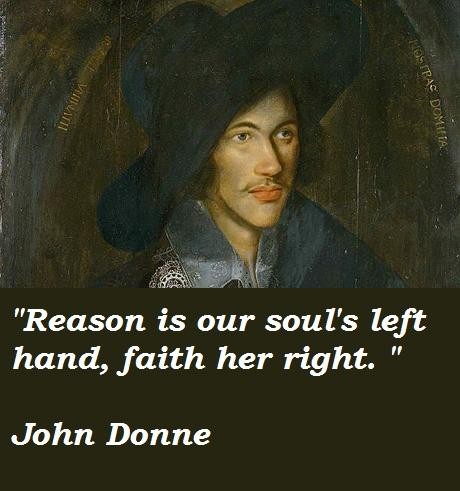
 John Donne (/ˈdʌn/ dun) (between 24 January and 19 June 1572[1] – 31 March 1631) was an English poet, satirist, lawyer and a cleric in the Church of England. He is considered the pre-eminent representative of the metaphysical poets. His works are noted for their strong, sensual style and include sonnets, love poetry, religious poems, Latin translations, epigrams, elegies, songs, satires and sermons. His poetry is noted for its vibrancy of language and inventiveness of metaphor, especially compared to that of his contemporaries.
Donne’s style is characterised by abrupt openings and various paradoxes, ironies and dislocations. These features, along with his frequent dramatic or everyday speech rhythms, his tense syntax and his tough eloquence, were both a reaction against the smoothness of conventional Elizabethan poetry and an adaptation into English of European baroque and mannerist techniques. His early career was marked by poetry that bore immense knowledge of British society and he met that knowledge with sharp criticism.
–from Wikipedia
88
Bonus—
Related articles
- The Works of John Donne (studyel.wordpress.com)
- Metaphysical Analysis of Death be not proud (slideshare.net)
- “death be not proud” . . . (mulberryshoots.com)
- “The Sun Rising”… Critical Analysis (2) for Waec/neco Literature Exams (lagosbooksclub.wordpress.com)

 Broken Believers
One thought on “Two O’ Clock in the Morning Poetry, #2”
Comments are closed.