Christianity Today interviews Steven Curtis Chapman as he opens up about losing his daughter, their family’s arduous journey, and a new album of songs chronicling the path of pain and hope.
Interview by Mark Moring | posted 11/02/2009
It’s been a year and a half since Steven Curtis Chapman lost his youngest daughter, 5-year-old Maria Sue, to a tragic accident at the family’s Tennessee home. Maria’s death rocked her father’s world, causing Steven and his wife, Mary Beth, to question God and their faith, while also clinging to the hope of things to come. The grieving process brought Steven, like King David, to his knees, simultaneously shouting at God while also desperately grasping for hope. Chapman journaled the journey, which he likens to penning his own Psalms—and not surprisingly, many of them turned into songs, and now his first album since Maria’s passing, “Beauty Will Rise.”
Chapman spoke with CT about losing his daughter, the “black hole” of pain and despair, and the glimmers of life they’ve clung to through the last 18 months—including the opening of Maria’s Big House of Hope, a healing home in China for special needs children. The Chapmans had already adopted two Chinese girls before Maria, so returning to China over the summer to open Maria’s Big House was a bittersweet time to both mourn Maria yet again, but to celebrate her life and legacy.
“Being a borderline feels like eternal hell. Nothing less. Pain, anger, confusion, hurt, never knowing how I’m gonna feel from one minute to the next. Hurting because I hurt those who I love. Feeling misunderstood. Analyzing everything. Nothing gives me pleasure. Once in a great while I will get “too happy” and then anxious because of that. Then I self-medicate with alcohol. Then I physically hurt myself. Then I feel guilty because of that. Shame. Wanting to die but not being able to kill myself because I’d feel too much guilt for those I’d hurt, and then feeling angry about that so I cut myself or O.D. to make all the feelings go away. Stress!”
Therapists use a book called “Diagnostic and Statistical Manual” (DSM) to make mental health diagnoses. They’ve outlined nine traits that borderlines seem to have in common; the presence of five or more of them may indicate BPD. However, please note the following: Everyone has all these traits to a certain extent. Especially teenagers. These traits must be long-standing (lasting years) and persistent. And they must be intense.
Be very careful about diagnosing yourself or others. In fact, don’t do it. Top researchers guide patients through several days of testing before they make a diagnosis. Don’t make your own diagnosis on the basis of a WWW site or a book!
Many people who have BPD also have other concerns, such as depression, eating disorders, substance abuse — even multiple personality disorder or attention deficit disorder. It can be difficult to isolate what is BPD and what might be something else. Again, you need to talk to a qualified professional.
DSM-IV Definition of BPD
A pervasive pattern of instability of interpersonal relationships, self-image, and affects, and marked impulsivity beginning by early adulthood and present in a variety of contexts, as indicated by five (or more) of the following:
Frantic efforts to avoid real or imagined abandonment. Note: Do not include suicidal or self-mutilating behavior covered in (5).
A pattern of unstable and intense interpersonal relationships characterized by alternating between extremes of idealization and devaluation. This is called “splitting.” Following is a definition of splitting from the book “I Hate You, Don’t Leave Me” by Jerry Kreisman, M.D. From page 10:
“The world of a BP, like that of a child, is split into heroes and villains. A child emotionally, the BP cannot tolerate human inconsistencies and ambiguities; he cannot reconcile good and bad qualities into a constant coherent understanding of another person. At any particular moment, one is either Good or EVIL. There is no in-between; no gray area….people are idolized one day; totally devalued and dismissed the next.”
“Normal people are ambivalent and can experience two contradictory states at one time; BPs shift back and forth, entirely unaware of one feeling state while in the other. When the idealized person finally disappoints (as we all do, sooner or later) the borderline must drastically restructure his one-dimensional conceptionalization. Either the idol is banished to the dungeon, or the borderline banishes himself in other to preserve the all-good image of the other person.”
“Splitting is intended to shield the BP from a barrage of contradictory feelings and images and from the anxiety of trying to reconcile those images. But splitting often achieves the opposite effect. The frays in the BP’s personality become rips, and the sense of his own identity and the identity of others shifts even more dramatically and frequently.”
Identity disturbance: markedly and persistently unstable self-image or sense of self.
Impulsivity in at least two areas that are potentially self-damaging (e.g., spending, sex, substance abuse, reckless driving, binge eating). Note: Do not include suicidal or self-mutilating behavior, already covered.
Recurrent suicidal behavior, gestures, or threats, or self-mutilating behavior.
Affective instability due to a marked reactivity of mood (e.g., intense episodic dysphoria, irritability, or anxiety usually lasting a few hours and only rarely more than a few days).
Chronic feelings of emptiness.
Inappropriate, intense anger or difficulty controlling anger (e.g., frequent displays of temper, constant anger, recurrent physical fights).
Transient, stress-related paranoid ideation or severe dissociative symptoms.
Dissociation is the state in which, on some level or another, one becomes somewhat removed from “reality,” whether this be daydreaming, performing actions without being fully connected to their performance (“running on automatic”), or other, more disconnected actions. It is the opposite of “association” and involves the lack of association, usually of one’s identity, with the rest of the world.
There is no “pure” BPD; it coexists with other illnesses. These are the most common. BPD may coexist with:
Post traumatic stress disorder
Mood disorders
Panic/anxiety disorders
Substance abuse (54% of BPs also have a problem with substance abuse)
Gender identity disorder
Attention deficit disorder
Eating disorders
Multiple personality disorder
Obsessive-compulsive disorder
Statistics about BPD/ BPs comprise:
2% of the general population
10% of all mental health outpatients
20% of psychiatric inpatients
75% of those diagnosed are women
75% have been physically or sexually abused
Learn about the causes and treatment of BPD. Contact BPD Central at tel: 1-888-357-4355 or 1-800-431-1579 or check out this web link: http://www.bpdcentral.com/index.php
Out in mid-November: Randi Kreger’s new book “The Essential Family Guide to Borderline Personality Disorder!” If you care about someone with BPD, you must have this book. Get an excerpt and/or order from BPD Central web site.
This is a list of books that I can recommend to people who have a need, or just want to be informed. The majority of these on the list are for Christians who have a mental illness.
Grace for the Afflicted- Matthew S. Stanford, PHD*
Manic, A Memoir- Terri Cheney
Exuberance, The Passion for Life- Kay Redfield Jamison
When the Darkness Will Not Lift- John Piper*
Darkness is My Only Companion- Kathryn Greene-McCreight*
The Noonday Demon- Andrew Solomon
*denotes Christian emphasis
All of these books can be ordered online at www.amazon.com.
The Lord moves in mysterious ways. As a good evangelical, I never thought I would be using prayer beads and saying the Jesus Prayer. It started when an old friend decided he wanted to make me a set of beads. It surprised me, but I said, “Why not?”
In my thinking, I laid down a single stipulation, I wasn’t open to a Catholic rosary, and wanted nothing to do with devotion to Mary. So, he scrounged up his materials and fashioned me an Orthodox, or Anglican chaplet of 33 beads. And they are beautiful. I have other friends who are Orthodox and I’ve always had an affinity for their faith and practice.
Of course, I didn’t know how to blend them in my prayer times. It seemed to be a tad peculiar for this “evangelical-charismatic” pastor to be using them. I felt like a grown man getting caught trying to ride his toddler’s tricycle. But since I was already familiar with the “Jesus Prayer”, and since I knew God wasn’t going to strike me down with lightning, I forged on ahead.
For many, the “prayer of the heart” or the “Jesus prayer” is understood as a practice of personal devotion, a response to Paul’s admonition to “pray unceasingly,” a prayer said with the lips which descends from the head into the heart. Our prayer is to become eventually so much a part of us that our very breathing, our very living becomes prayer. At least that was the theory. But, since I was unhappy with my prayer life on my own, I decided I had nothing to lose and so I gave it the green light.
The Jesus Prayer is this, “Lord Jesus Christ, Son of God, have mercy on me, the sinner.” It is based on Mark’s account of the Pharisee and the Tax Collector. I certainly could relate to the tax collector, especially with my battles with depression and bipolar disorder nipping at my heels.
I began praying, using the beads and the Jesus prayer. Instinctively, I knew that I was about to learn something valuable. But at first it was awkward. I did not want it to become formal or religious. I was wary of praying religiously. I did not want to parrot a phrase to get some kind of “religious buzz”. I was really cautious, with a somewhat skeptical eye on the whole affair.
What I found was a considerable breakthrough! Using the prayer beads and focusing on just talking to the Lord began to be something I really, really wanted to do. I found, improvising, I could adapt it to what was right for me. I found that rather then being repetitive, it infused my time with insight and blessing. The whole thing was like a track, a train track, that for the first time gave my prayer time structure and continuity.
As depressed and mentally ill Christians, we can be a bit unstructured and vague when it comes to praying and meditating on the Word. For the most part, we can be pretty undisciplined people. We require something a little different to help us in a relationship with the Lord. I guess I want to challenge you, to experiment with this.


 It’s been a year and a half since Steven Curtis Chapman lost his youngest daughter, 5-year-old Maria Sue, to a tragic accident at the family’s Tennessee home. Maria’s death rocked her father’s world, causing Steven and his wife, Mary Beth, to question God and their faith, while also clinging to the hope of things to come. The grieving process brought Steven, like King David, to his knees, simultaneously shouting at God while also desperately grasping for hope. Chapman journaled the journey, which he likens to penning his own Psalms—and not surprisingly, many of them turned into songs, and now his first album since Maria’s passing, “Beauty Will Rise.”
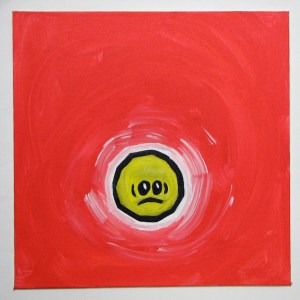

 Broken Believers