The Story Behind the Story, of “In His Steps”

by Chuck Neighbors

A book that may have changed more lives than any other outside of the Bible has a fascinating history. In His Steps is a novel written by Charles M. Sheldon in 1896. As it celebrates the one hundredth anniversary of its publication, experts have ranked it as the tenth-most-read book in the world.

In simple style, In His Steps tells the story of self-satisfied congregants of a midwestern church who are challenged by a tramp during a Sunday service to live up to their declaration of faith. The tramp then dies in their midst. So moved are the minister and his parishioners that they pledge to live their lives for one year asking themselves, “What would Jesus do?” Their example how they suffered, faced ridicule and emerged victorious inspires other churches throughout the country to do the same.

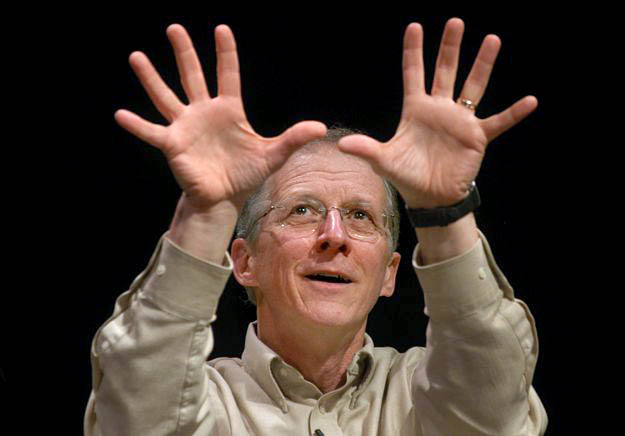
Reading In His Steps wrought such a profound change in my own life that I, being an actor, was inspired to adapt the book to the stage. I was also driven to delve into the background of this classic. Fortunately, I found a recent biography of Charles Sheldon called Following ln His Steps, written by Timothy Miller (University of Tennessee Press). Much of the information in this article is taken from Millerts fascinating book. I was deeply moved by the life of Charles Sheldon and his remarkable influence.

Continue reading “The Story Behind the Story, of “In His Steps””

Recommended Study Book: Ryken’s Bible Handbook

Ryken’s Bible Handbook

Amazon’s Price: $13.58
This book gives students of the Bible a quick overview of every book in the Bible. Leland Ryken’s distinctive trait is a literary approach to the Bible–understanding the Bible as literature. The three authors help shed light on understanding the Bible as the inspired Word of God and as literature by looking at the Bible’s different literary genres: poetry, narrative, wisdom literature, story, parables, and more.  This is a top-notch Bible Handbook and it is worth its weight in gold.  For a great Bible introduction, a class or Bible study it is the best.

Practical Steps to Kill Sin

Keeping in line with yesterday’s post, I decided to haul out some practical teaching on “holiness”.  I for one need to understand how a person changes into the image of Jesus Christ.  The following transcript was taken from an audio teaching by John Piper, a man I trust throughly.  I hope this blesses. –B. 

Practical Steps to Kill Sin

By John Piper, originally on November 9, 1987

 ——————————————————————————–

Relief: All true believers have sin remaining in them in this life. Romans 7:23 – “I see in my members another law at war with the law of my mind and making me captive to the law of sin which dwells in my members.”

Therefore we are commanded to constantly kill this sin (Romans 8:13; Colossians 3:5).

How Is This to Be Done?

1) Take heart from the truth that the old sinful you is decisively already dead (Romans 6:6; Colossians 3:3; Galatians 5:24). This means three things:

1.the mortal blow to our “old man” has been struck;

2.he will not succeed in domination now;

3.his final obliteration is certain.

2) Consciously reckon the old man dead; that is, believe the truth of Scripture about the old man’s death, and seek to live in that freedom (Romans 6:11).

3) Cultivate enmity with sin! You don’t kill friends (Romans 8:13). Ponder how it killed your best friend, dishonors your Father, and aims to destroy you for ever.

4) Rebel against sin’s coup. Refuse to be bullied by his deceits and manipulations (Romans 6:12). Fight your sinful impulses with all your might like a boxer fights an opponent and like a marathon runner fights fatigue (1 Corinthians 9:27; 2 Timothy 4:8).

5) Declare radical allegiance to the other side—God—and consciously put all your mind and heart and body at his disposal for righteousness and purity (Romans 6:13).

6) Don’t make any plans that open the door for sin’s entry (Romans 13:14). Don’t prove your purity in a pornography shop.

7) Develop mental habits that continually renew the mind in God-centeredness (Romans 12:2; 2 Corinthians 4:16). Fix attention daily on “the things of the Spirit” (Romans 8:5), “things that are above” (Colossians 3:2), “whatever is true, honorable, just, pure, lovely, gracious, excellent, praiseworthy” (Philippians 4:8).

8) Admit failure and confess all known sin every day (1 John 1:9). Ask for forgiveness (Matthew 6:12).

9) Ask for the Spirit’s help and power in all these things (Romans 8:13; Galatians 5:17, 22; Ezekiel 36:27; Isaiah 26:12).

10) Be part of a larger and smaller fellowship where you are exhorted often to beware of the deceitfulness of sin (Hebrews 3:13).

11) Beware of “works of law”; but let all your warfare be “the work of faith” (2 Thessalonians 1:11). That is, let your fight against sin spring from your confidence in the superior pleasures of closeness to Christ.

Pastor John Piper

——————————————————————————–

© Desiring God

Permissions: You are permitted and encouraged to reproduce and distribute this material in any format provided that you do not alter the wording in any way and do not charge a fee beyond the cost of reproduction. For web posting, a link to this document on our website is preferred. Any exceptions to the above must be approved by Desiring God.

Please include the following statement on any distributed copy: By John Piper. © Desiring God. Website: desiringGod.org

Living as a Sexual Abuse Survivor

The problem of childhood sexual abuse is not new. Millions of adults bear the emotional scars, and continue to secretly carry the emotional burden, of abuse that occurred twenty, thirty, or even forty years ago. It is common for clients in their 40’s to come to counseling and say “I have never told this to anyone before…”.

Children are, by nature, innocent, trusting, and vulnerable. When a child is abused, the abuse is NEVER the child’s fault, but children — in an attempt to use their limited understanding of the world to make sense of what has happened to them — almost always believe that they either caused or deserved the abuse. Many of them carry their misguided sense of shame and guilt into adulthood. Many successful, seemingly well-adjusted adults continue to suffer the far-reaching effects of abuse: low self-esteem or lack of confidence, difficulty trusting others, isolation, or alienation, depression, anxiety, anger, chronic relationship problems, difficulty with emotional or physical intimacy, promiscuity, self-injury, alcohol or drug use, or overeating.

A history of childhood sexual abuse does not automatically mean a life full of suffering, however. The extent to which abuse affects an individual varies significantly, depending on the severity of the abuse, the duration of the abuse, and the relational context of the abuse (who the abuser was). Many people who were abused as children struggle with spiritual isses as well as the psychological and emotional ones. They may question how a loving God could allow something like that to happen to a child, may be angry with God for allowing it to happen, or may even believe that God intentionally inflicted the abuse on them as punishment. Part of the healing journey may include looking at these spiritual questions and finding a deeper spiritual understanding of yourself, God, and the world.

Regardless of how childhood abuse has affected your life, you can experience both healing from your past and growth for your future. If you have been silently suffering the pain or shame of past abuse, a confidential relationship with a caring professional counselor can help you find freedom and relief. If painful memories from the past are robbing you of a life of happiness and meaningful relationships, counseling can help you face the past, find healing in the present, and claim abundant life for your future.

Sexual abuse can effect a marriage is so many ways: emotionally, spiritually and sexually. Sexual abuse is traumatic not only for the survivor but also for the survivor’s spouse if he/she doesn’t understand the impact of sexual abuse. I believe sex is a huge part in healing also. Having a healthy sex life after being sexually abused can happen. Separating the abuser from someone who loves you is a part of healing. Un-training yourself from what your abuser taught you is what it takes to make this happen. Your body is just that “your body” and you have the say in what does or doesn’t happen.

My sexual abuse is only part of me, not my whole life anymore. Victims and survivors have to change the way society deals with and handles sexual abuse. The truth shall set you free, the truth of sexual abuse. Once the truth comes out it sets you free of the bondage you have been in for so many years. Stare your sexual abuse straight in the eyes and let it know “you don’t scare me anymore”. It is such an awesome feeling!!

A question to ask oneself is, “Do you see yourself as God sees you?” God sees you as a child He made for a specific purpose and not one of those purpose’s was for any one of His children to be abused in any way, shape, or form. Reach out to Him and let him replace your pain with joy, your shame with sharing, your anger with forgiveness, your ugliness with beauty and your silence with your voice.

Source- New Reflections Counseling:  http://www.newreflectionscounseling.com/

——————————————————————————–