Just Fling It

A man scatters seed on the ground. Night and day, whether he sleeps or gets up, the seed sprouts and grows, though he does not know how. All by itself the soil produces grain—first the stalk, then the head, then the full kernel in the head.”  –Mark 4:26-28, NIV


The insurmountable potential of a single seed!  It is scattered without a whole lot of conscious effort, hundreds of seeds in a handful scattered out on the dry ground.  It doesn’t get the dignity of individual effort, but is simply flung out.

I became a Christian believer partly through some indiscriminate seed flinging.  I was being escorted by Temple security in Salt Lake City off the grounds.  It may have been because I was shirtless and smoking, and being hammered as well.  As I was being thrust through the gates, I ran into Christians who were sowing their tracts.  These tracts landed on good soil. And I’m indeed thankful.

We simply do not know about any individual seed that leaves our bag.  We can not predict what is going to happen.  Jesus chose this particular metaphor to emphasize the supernatural nature of spiritual growth,  it grows whether we sleep or stay awake.  We don’t understand how things grow.  A tiny, dry seed comes to life, and grows up to be something amazing.

Dropping seeds; that is it.  We drop without taking responsibility for what may or may not happen next.  We scatter seed without contemplating what will follow.  It may grow, and it may not.  The believers standing in the baking sun outside of the Mormon Temple in SLC were simply sowing seed.  It fell on my heart, and I cannot tell you what happened to that seed.  All I know, is it started to live, and grow and eventually was harvested.

Buy some tracts, Christian books, DVDs, CDs.  Build an interesting website.  Sow seed.  You cannot harvest unless you sow something.  You must be faithful to your part, and God is faithful to do the rest.  Growing things is beyond our comprehension and ability.  I cannot tell you the dynamics or the process of spiritual growth.  Bible college did not have a class for that.  It is imponderable and  mysterious.

Be faithful, and sow.  Fling the seed.  Don’t mind the hot sun, or the thorns or the hungry birds.  Be faithful, and fling it.  Psalm 126:5-6 

 5 Those who sow in tears
       will reap with songs of joy.

 6 He who goes out weeping,
       carrying seed to sow,
       will return with songs of joy,
       carrying sheaves with him.

Photo: How We Learn to Love

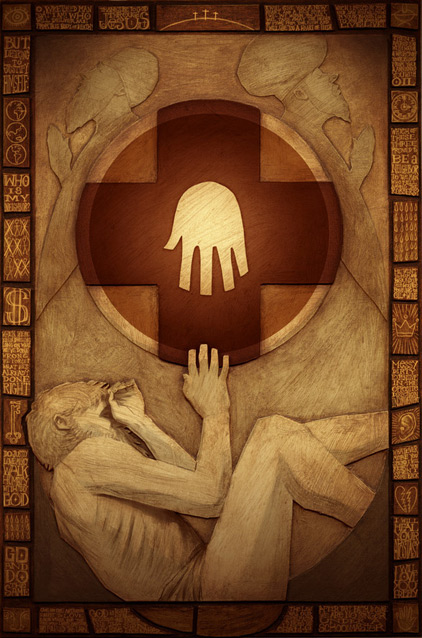
There are times when we are driven to a most desperate place.  We can go no lower.  Jesus meets us, He does not forsake us.  He stands up and intercedes for our souls.  He bends over to pick us up, speaking wonderful things to our confused and misguided hearts.  He loves us, and the purpose of our trials teach us that critical truth.  We learn it in no other way.

A Serious Case of JDD

I have a syndrome called JDD.  It afflicts me in several different ways.  My psychiatrist can give me no meds that would help me.  It weakens me and makes me vulnerable to a host of enemies.  I have Jesus Deficit Disorder.

I wonder about this thing called “Christianity”.  After over 2000 years, have we veered off course?  Is the Church of Jesus founded even resemble the one we have in the US? As I ponder about these questions, I honestly am not sure anymore.

Being a Christian without the presence of Jesus is a frightening possibility.  We don’t realize that we have shifted to another track, things seem so ordinary and smooth.  It is spiritually disturbing that we are diverted so easily.  We end up with the Christian religion, but without Christ.  How did this happen?

When you have Jesus Deficit Disorder (JDD) you end up with a Christianity without Christ; a form of religion, but without its inherent power.  It all appears legit and acceptable, but it is a sham.  It is not what Jesus intended for us.  The intimacy has lifted. We speak about Him, but not to Him. 

There is a deficiency in a heart that does not claim Him as an intimate friend.  It frightens us so that we avoid the presence of the Lord.  The children of Israel had absolutely no desire to meet with God face-to-face.  They insisted that Moses should go on without them.  What prompted this?

We have an untamed God.  On any given Sunday, out ushers seating us should be handing out life vests, and issuing flares and whistles.  We would be tied to our chairs.  For we are in the presence of a God who is awesomely loving, and faithfully unpredictable.  He is a Lion, wild and untamed, and hanging out with Him also turns us into a wild disciple, who is a bit edgy and untamed.

Having JDD will revert us to a soft domestic soul, disengaged from a spiritual authenticity.  Oh, we travel to what we believe the general direction of good religion.  We are missing the attitude of “more Jesus”.  It’s old hat stuff, but I must say it anyway– more Jesus–less religion.  

In His Steps, Reading #52

“What would Jesus do in the center of a civilization that hurries so fast after money that the very girls employed in great business houses are not paid enough to keep soul and body together without fearful temptations so great that scores of them fall and are swept over the great boiling abyss; where the demands of trade sacrifice hundreds of lads in a business that ignores all Christian duties toward them in the way of education and moral training and personal affection? Would Jesus, if He were here today as a part of our age and commercial industry, feel nothing, do nothing, say nothing, in the face of these facts which every business man knows?

“What would Jesus do? Is not that what the disciple ought to do? Is he not commanded to follow in His steps? How much is the Christianity of the age suffering for Him? Is it denying itself at the cost of ease, comfort, luxury, elegance of living? What does the age need more than personal sacrifice? Does the church do its duty in following Jesus when it gives a little money to establish missions or relieve extreme cases of want? Is it any sacrifice for a man who is worth ten million dollars simply to give ten thousand dollars for some benevolent work? Is he not giving something that cost him practically nothing so far as any personal suffering goes? Is it true that the Christian disciples today in most of our churches are living soft, easy, selfish lives, very far from any sacrifice that can be called sacrifice? What would Jesus do?

Continue reading “In His Steps, Reading #52”