Tigger Meets With a Therapist

Image result for tigger

from the Internet–


A Therapists Consultation: TIGGER

(Winnie the Pooh’s Irrepressible Friend.)

Diagnosis:

Attention deficit hyperactive disorder (ADHD): Tigger’s continual bouncing, hyperactivity and irresponsible attitude cause problems for him and those with whom he lives, as well as those he interacts with in the wider community.

Physical presentation:

Rarely sits still. He’s always running, climbing, or fidgeting.

Diet:

Having tried – and firmly rejected – honey, haycorns and thistles, Tigger settles on extract of malt as his food of choice. While this particular substance is unlikely to exacerbate his condition, a more balanced diet would almost certainly benefit him and perhaps contribute to an improvement in his behaviour.

Family background:

No information is available on Tigger’s life before his arrival at Pooh’s house. Nothing is known of his previous address or his family of origin, although it has been said that he is the only Tigger.

Patient notes:

Tigger’s arrival at Pooh’s house in the middle of the night is evidence of his inability to control his impulses. A less disordered individual would have known that it is more appropriate to visit people during the day, especially when dropping in on someone one scarcely knows or has never met.

Impulsive behaviour, interrupting and intruding are at the heart of Tigger’s problems. Soon after their first meeting, for example, Tigger suddenly interrupted Pooh, climbed on to the table, wrapped himself in his host’s tablecloth and brought everything crashing to the floor.

When questioned by Pooh about his behavior, rather than accepting responsibility for his actions, Tigger accused the tablecloth of trying to bite him. Tigger makes bold statements, such as declaring that he is only bouncy before breakfast. He proclaims impulsively that whatever food he is offered is what Tiggers like best, then gulps down large mouthfuls of the food in question, only to find he dislikes it very much.

More evidence of Tigger’s recklessness and poor impulse control is displayed by his belief that he can do anything. He has no sense of fear or responsibility. This was apparent when he climbed up a high tree with Roo on his back before he had ascertained whether he was able to climb a tree in the first place. Inevitably, they then got stuck when he realised he had no idea of how to get down.

On one occasion, Tigger grabbed Roo’s medicine from Kanga, which he proceeded to swallow, almost devouring the spoon as well. Obviously the medicine might have proved dangerous to him. Tigger never learns from his mishaps, bouncing back almost immediately after a frightening and potentially hazardous incident. As a result, Tigger’s behaviour causes concern to those around him.

——————————————-

Living with someone suffering from ADHD can be trying. Perhaps this is why Rabbit suggested the rather extreme measure of taking Tigger into the forest and losing him in the mist. Rabbit and his friends believed the shock of being lost might cause Tigger to calm down a little on his return, a strategy that backfired…

“ADHD is a disorder that makes it difficult for a person to pay attention and control impulsive behaviors. He or she may also be restless and almost constantly active.” –National Institute of Mental Health

Try out: https://www.nimh.nih.gov/health/publications/attention-deficit-hyperactivity-disorder-adhd-the-basics/index.shtml#pub5


cropped-christiangraffiti1-2


Medication: An Interview with Andrew Solomon

What domedications you say to people who ask if you’ll eventually stop taking medication?

“I say to people that they don’t expect a diabetic to stop taking insulin, or someone with a heart condition to stop taking blood thinners. I have a chronic, lifetime disease and the only responsible thing for me to do is stick with my medications.

People wonder about medications’ long-term effects on the brain. I explain that while the medications’ effects appear to be reversible as soon as you stop taking them, the long-term effects of having repeated depressive episodes appear to be absolutely dire. There is lesioning of the hippocampus, and brain cells die. And this is in addition to the havoc that such repeated episodes cause in your daily life.

Imagine you have heart disease. You’re prescribed medication, you do better for a while, so you stop the meds. Then you have another heart attack, so you go back on the medication to get better. Twelve heart attacks later, what kind of shape are you in? It’s obviously crazy. If you have recurrent depression, you are not being “courageous” or “genuine” to go off your medication. You’re being foolish.

Can you explain the importance of balancing therapy and medication?

Different treatments work for different people, and I am open to the endless possibilities out there. But for most people, a combination of medication and therapy is the surest-fire way to handle depression.

The medication alleviates the worst symptoms and lets you function again. It makes life and the world bearable. But once you have emerged from the horror, you need to learn skills for managing the illness. You need to understand where it comes from. You need to make your peace with the idea that you cannot be fully yourself without the use of medications or other support structures.

And you need someone capable who can keep an eye on you. Ideally, you also need to understand the structure of your own personality and who you are; this gives you a feeling of peace and allows you to get through a difficult time with dignity.

…………………………………….

AndrewsolomonBy his mid-twenties, Solomon established himself as a multi-disciplinary wunderkind, earning international accolades for his work as a novelist, journalist and historian. After the death of his mother, the then 31 year old Solomon descended into a major depression, rendering him unable to work or even care for himself. He was helped by a combination of medications and talk therapy. This experience formed the bedrock for his National Book Award-winning “Noonday Demon: An Atlas of Depression”, a tour de force examining the disorder in personal, cultural, and scientific terms.


flourish1


A couple of decent websites:

http://www.pbs.org/wgbh/takeonestep/depression/faces-andrew.html

http://www.noondaydemon.com/biography.html


cropped-christiangraffiti1 (3)

That Awful Wasteland of Alzheimer’s

alzheim

What is Alzheimer’s disease (AD)?

Alzheimer’s disease (AD) is an irreversible, progressive brain disease that slowly destroys memory and thinking skills and, eventually, the ability to carry out the simplest tasks of daily living. In most people with AD, symptoms first appear after age 60. AD is the most common cause of dementia among older people, but it is not a normal part of aging. Dementia refers to a decline in cognitive function that interferes with daily life and activities.

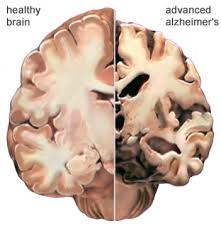
AD starts in a region of the brain that affects recent memory, then gradually spreads to other parts of the brain. Although treatment can slow the progression of AD and help manage its symptoms in some people, currently there is no cure for this devastating disease. AD is named after Dr. Alois Alzheimer, a German doctor. In 1906, Dr. Alzheimer described changes in the brain tissue of a woman who had died of an unusual mental illness. He found abnormal clumps (now called amyloid plaques) and tangled bundles of fibers (now called neurofibrillary tangles). alzheimers-brain

Today, these plaques and tangles in the brain are considered hallmarks of AD. The third main feature of AD is the gradual loss of connections between nerve cells (neurons) in the brain. This loss leads to diminished cell function and cell death. We don’t know what starts the AD process, but we do know that damage to the brain begins as many as 10 to 20 years before any obvious signs of forgetfulness appear. As nerve cells die throughout the brain, affected regions begin to shrink. By the final stage of AD, damage is widespread, and brain tissue has shrunk significantly.

How many Americans have AD?

According to recent estimates, as many as 2.4 million to 4.5 million Americans have AD. Unless the disease can be effectively treated or prevented, the number of people with AD will increase significantly if current population trends continue. That’s because the risk of AD increases with age, and the U.S. population is aging. The number of people age 65 and older is expected to grow from 39 million in 2008 to 72 million in 2030, and the number of people with AD doubles for every 5-year interval beyond age 65. In the years to come, AD is expected to pose physical and emotional challenges for more and more families and other caregivers, in addition to those with the disease. The growing number of people with AD and the costs associated with the disease also will put a heavy economic burden on society.

How long can a person live with AD?

AD is a slow disease that starts with mild memory problems and ends with severe brain damage. The time from diagnosis to death varies—as little as 3 or 4 years if the person is older than 80 when diagnosed to as long as 10 or more years if the person is younger. Other factors that affect how long a person will live with AD include the person’s sex, the presence of other health problems, and the severity of cognitive problems at diagnosis.

What is dementia?

Dementia is a general term that refers to a decline in cognitive function so extensive that it interferes with daily life and activities. This loss in the ability to think, remember, and reason is not a disease itself, but a group of symptoms that often accompanies a disease or condition. Many conditions and diseases cause dementia. Two of the most common causes of dementia in older people are AD and vascular dementia, which is caused by a series of strokes or changes in the brain’s blood supply. Other conditions that cause memory loss or dementia include:

•medication side effects

•chronic alcoholism

•certain tumors and infections in the brain

•blood clots in the brain

•vitamin B12 deficiency

•dehydration

•high fever

•some thyroid, kidney, or liver disorders

Many of these conditions are temporary and reversible, but they can be serious and should be treated by a doctor as soon as possible. Emotional problems, such as stress, anxiety, or depression, can make a person more forgetful and can be mistaken for dementia. Someone may feel sad, lonely, worried, or bored when facing retirement or coping with the death of a spouse, relative, or friend. Adapting to these changes leaves some people feeling confused or forgetful. Supportive friends and family or professional help from a doctor or counselor can help older adults adjust to big changes.

Source: National Institute of Aging, http://www.nia.nih.gov/

“Fine, I’ll Do It Broken” Link

Fine, I’ll Do It Broken

“Fine, I’ll Do It Broken

If you want a woman torn apart inside, weeping at the drop of a pin, confused in her own identity, disqualified in every sense of a leader…you got it!

A great link to a special teaching by Cheryl Meakins. This will bless you.

Fine, I’ll Do It Broken