More Bumble Than Believer, [Aging]

It’s strange getting older. It’s not for the faint of heart. 

A whirlwind of days and nights swirl from this human drama, and I think I may be starting thinking about my exit— Lord willing, stage right.

I’m supposed to be a ‘veteran’ now– a mature believer.  I’m not supposed to get stressed.  However, age is a brutal teacher– and it seems we have to learn so dang fast, it’s like trying to drink from a fire hose. (Just the other day three teeth almost came out from the blast.)

Getting old is great in some ways. I only wish I could do it more gracefully.

On top of it all, it seems to me like my sin has poisoned the air that others must breathe.  I have contaminated so much. You might just say, I have ‘soured’ everyone’s milk.  “Learning to live with the  regrets” is a class that we should add to the local high school’s curriculum. It certainly would be useful.

A old friend is celebrating her birthday so I volleyed a semi serious “tongue and cheek” regret at her.  But then, I suddenly realized that there is a point when we realize that behind every older person, is someone else wondering what the hell has happened, and how did it get this way so fast? It would be funny if it weren’t so serious.

As a Christian, I tentatively believe that this world I’m in, has folded open for me, and God has specified a direction.  I do contend though, unbelief is easier on a certain level, but I do not intend to take any detours.  Perhaps the real trick about reading a map in the car is that you most likely won’t get it folded back the same way ever again.  You must learn to accept this. And as a rule, maps seldom reveal the best detours.

“Even as you grow old and your hair turns gray,
    I’ll keep carrying you!
    I am your Maker and your Caregiver.
    I will carry you and be your Savior.”

Isaiah 46:4

I must admit to having a connection to “Bumble”, that crazy, loveable, abominable snowman in one of those schlocky, animated children TV classics from my youth.  I guess I identify with that ‘misfit’ yeti– someone who finally sees the light, but only when all his teeth are pulled!  Somewhere in that show he seemed almost good,  but didn’t we all wonder for a while if he would come around or not?

I  also wonder about the thief on the cross who got his ticket punched by Jesus at the last possible moment.  When we finally make it to heaven, we will find him there laughing and celebrating like everyone else, just like he belonged.  I guess grace does that to a person.

That Awful Wasteland of Alzheimer’s

alzheim

What is Alzheimer’s disease (AD)?

Alzheimer’s disease (AD) is an irreversible, progressive brain disease that slowly destroys memory and thinking skills and, eventually, the ability to carry out the simplest tasks of daily living. In most people with AD, symptoms first appear after age 60. AD is the most common cause of dementia among older people, but it is not a normal part of aging. Dementia refers to a decline in cognitive function that interferes with daily life and activities.

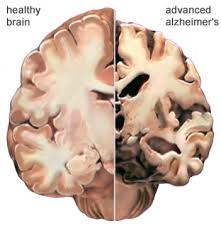
AD starts in a region of the brain that affects recent memory, then gradually spreads to other parts of the brain. Although treatment can slow the progression of AD and help manage its symptoms in some people, currently there is no cure for this devastating disease. AD is named after Dr. Alois Alzheimer, a German doctor. In 1906, Dr. Alzheimer described changes in the brain tissue of a woman who had died of an unusual mental illness. He found abnormal clumps (now called amyloid plaques) and tangled bundles of fibers (now called neurofibrillary tangles). alzheimers-brain

Today, these plaques and tangles in the brain are considered hallmarks of AD. The third main feature of AD is the gradual loss of connections between nerve cells (neurons) in the brain. This loss leads to diminished cell function and cell death. We don’t know what starts the AD process, but we do know that damage to the brain begins as many as 10 to 20 years before any obvious signs of forgetfulness appear. As nerve cells die throughout the brain, affected regions begin to shrink. By the final stage of AD, damage is widespread, and brain tissue has shrunk significantly.

How many Americans have AD?

According to recent estimates, as many as 2.4 million to 4.5 million Americans have AD. Unless the disease can be effectively treated or prevented, the number of people with AD will increase significantly if current population trends continue. That’s because the risk of AD increases with age, and the U.S. population is aging. The number of people age 65 and older is expected to grow from 39 million in 2008 to 72 million in 2030, and the number of people with AD doubles for every 5-year interval beyond age 65. In the years to come, AD is expected to pose physical and emotional challenges for more and more families and other caregivers, in addition to those with the disease. The growing number of people with AD and the costs associated with the disease also will put a heavy economic burden on society.

How long can a person live with AD?

AD is a slow disease that starts with mild memory problems and ends with severe brain damage. The time from diagnosis to death varies—as little as 3 or 4 years if the person is older than 80 when diagnosed to as long as 10 or more years if the person is younger. Other factors that affect how long a person will live with AD include the person’s sex, the presence of other health problems, and the severity of cognitive problems at diagnosis.

What is dementia?

Dementia is a general term that refers to a decline in cognitive function so extensive that it interferes with daily life and activities. This loss in the ability to think, remember, and reason is not a disease itself, but a group of symptoms that often accompanies a disease or condition. Many conditions and diseases cause dementia. Two of the most common causes of dementia in older people are AD and vascular dementia, which is caused by a series of strokes or changes in the brain’s blood supply. Other conditions that cause memory loss or dementia include:

•medication side effects

•chronic alcoholism

•certain tumors and infections in the brain

•blood clots in the brain

•vitamin B12 deficiency

•dehydration

•high fever

•some thyroid, kidney, or liver disorders

Many of these conditions are temporary and reversible, but they can be serious and should be treated by a doctor as soon as possible. Emotional problems, such as stress, anxiety, or depression, can make a person more forgetful and can be mistaken for dementia. Someone may feel sad, lonely, worried, or bored when facing retirement or coping with the death of a spouse, relative, or friend. Adapting to these changes leaves some people feeling confused or forgetful. Supportive friends and family or professional help from a doctor or counselor can help older adults adjust to big changes.

Source: National Institute of Aging, http://www.nia.nih.gov/