When You Lose [Faith]

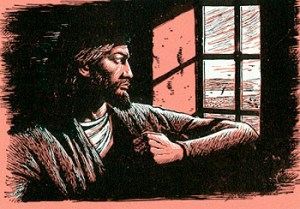
…”calling two of his disciples to him, sent them to the Lord, saying, “Are you the one who is to come, or shall we look for another?” Luke 7:19


Here we have John the Baptist locked away in Herod’s prison.  We read of his wavering, but that shouldn’t alarm us.  There has always been difficulties for those who follow without diluting their love for Jesus.  It’s very likely that John had preconceptions about Jesus’ ministry.  But that certainly doesn’t mean he was apostate or backslidden.  He still believed, as he looked out through the bars.

We walk in a greater light and have surer promises that John did.  And in that light we still have our difficult moments.  We can falter and shake and doubt.  And John only had a 100th of understanding that we have.  Often we are amazed by another’s confusion and struggles, it is so clear to us that they are falling short.  It is frustrating.  Moses once went ballistic, beat his rod on a rock and had some choice words.  His anger spilled all over him and made a mess.  We read of his provocation, and miss our own faults, sins and weaknesses. 

We need to understand the depth of our own depravity.  There are those who have proceeded us, who have had their moments of despondency and doubt.  We see them, as it were, from a distance and criticize and challenge what we see.  Noah’s drunkenness and Lot’s vacillation.  The flakiness of Samson, Peter’s denial and Mark’s timidity, and much more.

Today, let us resolve to be gentle with each other. “For we all stumble in many ways”, James 3:2.

A Serious Case of JDD

I have a syndrome called JDD.  It afflicts me in several different ways.  My psychiatrist can give me no meds that would help me.  It weakens me and makes me vulnerable to a host of enemies.  I have Jesus Deficit Disorder.

I wonder about this thing called “Christianity”.  After over 2000 years, have we veered off course?  Is the Church of Jesus founded even resemble the one we have in the US? As I ponder about these questions, I honestly am not sure anymore.

Being a Christian without the presence of Jesus is a frightening possibility.  We don’t realize that we have shifted to another track, things seem so ordinary and smooth.  It is spiritually disturbing that we are diverted so easily.  We end up with the Christian religion, but without Christ.  How did this happen?

When you have Jesus Deficit Disorder (JDD) you end up with a Christianity without Christ; a form of religion, but without its inherent power.  It all appears legit and acceptable, but it is a sham.  It is not what Jesus intended for us.  The intimacy has lifted. We speak about Him, but not to Him. 

There is a deficiency in a heart that does not claim Him as an intimate friend.  It frightens us so that we avoid the presence of the Lord.  The children of Israel had absolutely no desire to meet with God face-to-face.  They insisted that Moses should go on without them.  What prompted this?

We have an untamed God.  On any given Sunday, out ushers seating us should be handing out life vests, and issuing flares and whistles.  We would be tied to our chairs.  For we are in the presence of a God who is awesomely loving, and faithfully unpredictable.  He is a Lion, wild and untamed, and hanging out with Him also turns us into a wild disciple, who is a bit edgy and untamed.

Having JDD will revert us to a soft domestic soul, disengaged from a spiritual authenticity.  Oh, we travel to what we believe the general direction of good religion.  We are missing the attitude of “more Jesus”.  It’s old hat stuff, but I must say it anyway– more Jesus–less religion.  

Photo: Night Sky

The heavens tell us about the Glory that God has.  We look up and see a universe that was created, and is now on display.  I remember on an isolated beach in Mexico.  One night, the entire Milky Way was revealed.  I laid on the sand transfixed by it all.  Suddenly, I got afraid and had the sensation of being very, very small.  That awareness has never left me.

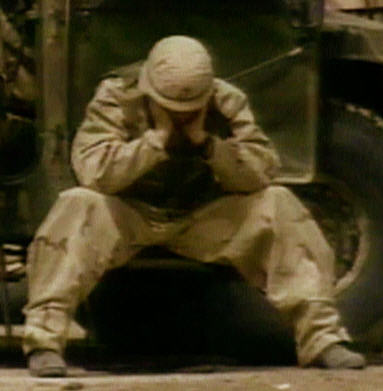
Combat’s Hidden Toll: 1 in 10 Soldiers Report Mental Health Problems

Soldiers Report PTSD Symptoms and Other Mental Health Problems
 
By KIM CAROLLO
ABCNews Medical Unit
June 9, 2010

Even though he’s retired from active military duty, CSM Samuel Rhodes still suffers from deep emotional wounds.

“I had to take this afternoon off from work today because of anxiety,” he said. “And sometimes, if I’m going through a really tough time, I think about suicide.”

He spent nearly 30 years in the Army and recently spent 30 straight months deployed in Iraq where he, like many soldiers, witnessed some of the horrors of war.

“In April 2005, it started to eat me up because I started losing one soldier after another,” Rhodes said. “We lost 37 soldiers that were in my unit.”

He was in charge of the brigade of 37 soldiers, and as time wore on, the loss of life wore him down.

“In April 2007, it came full circle. I considered suicide as an option. I felt guilty about losing those soldiers, even though I had no control over it,” he said.

“And I was sleepwalking. I had to tie myself to my cot to prevent it,” he added.

Later, during his 24th month in Iraq, he was found unconscious, and doctors diagnosed him with exhaustion. At that time, the combat stress doctor told him he was also suffering from post-traumatic stress disorder.

“He started explaining it to me, and I realized he was right,” Rhodes said.

And according to a new study conducted by researchers at Walter Reed Army Institute of Research, Rhodes’ mental health problems are common among soldiers returning from Iraq.

Between 2004 and 2007, researchers gave out anonymous surveys to four active duty brigade combat teams and two National Guard combat team three months and 12 months after deployment. The surveys screened soldiers for PTSD, depression, alcohol misuse and aggressive behavior and asked them to report whether these problems impacted their ability to get along with others, take care of things at home or perform their job duties.”A high number of those that had symptoms of PTSD and depression also reported some aspect of impairment,” said Jeffrey L. Thomas, one of the study’s co-authors. “The range was about 9 to 14 percent.” Depression rates ranged from 5 percent to 8.5 percent.

But by using a less stringent definition of PTSD, they found between 20 and 30 percent of soldiers showed symptoms of PTSD, while they found between 11.5 to 16 percent of them were depressed.

Full article, please go to:  http://abcnews.go.com/Health/MindMoodNews/10-soldiers-fought-iraq-mentally-ill/story?id=10850315&page=2