Hello Darkness, We Meet Again

It’s a Psalm written in black ink on black paper. I can’t find a glimmer of light in its 18 verses. Psalm 88 is the worst psalm in Scripture. Strangely enough in Hebrew, the last word of the last sentence is “darkness.” I suppose that explains a lot about its content and significance.

Within its dark words, we see and hear much that we’d rather not.

A commentator describes Psalms 88 as “the public confession of persons excommunicated.” Others suggest that the writer has discovered he has the physical disease of leprosy. This Psalm is bitter and hard. Its companions are the book of Job and Lamentations. They’re part of the Word of God we would rather forget.

As believers in Jesus Christ, how do we deal with such awful darkness?

I dare you to read verses 3-5 of Psalm 88. They pronounce the depth of the afflicted:

I’ve had my fill of trouble;
    I’m camped on the edge of hell.
I’m written off as a lost cause,
    one more statistic, a hopeless case.
Abandoned as already dead,
    one more body in a stack of corpses,
And not so much as a gravestone—
    I’m a black hole in oblivion.
You’ve dropped me into a bottomless pit,
    sunk me in a pitch-black abyss.

Psalm 88 is nothing less than a scream of pain directed at God.

It’s the almost animal screech of the human heart that encounters the worst. Some would suggest that a believer is immune from this kind of darkness, that as a believer in Christ’s victory we’re exempt and delivered from these things.

Explain that to the man who loses his family in a car crash, or to the woman who has just been told she has leukemia. What about the young girl who has just been brutally attacked and raped? Where is God then?

Is there room in your personal theology for such terrible darkness?

We’re not immune from tragedy as believers. It’s a part of living in a fallen world. If anything at all, pain teaches us things we’ll never learn in the sterility of a classroom. If we’re going to survive this suffering it will mean we’ll need to throw ourselves on God like never before.

God has not suddenly lost control of the universe, or, of your life.

If we turn to God in faith, like a little child, we will be led (far too slowly it seems) through our hard (impossible?) things. And we’ll understand what faith really is, and we’ll learn how to love like never before.

We are following Jesus and He has led us to this grief for His reasons.

Most jewelers will display their most precious diamonds on a black background. Perhaps that helps us sort this out. Hebrews 12:5-13 is a bit of a challenge. In theory, we grasp it, but in reality, it’s bittersweet. The sweet part is His closeness–we’re sons and daughters!

 “Endure suffering as discipline: God is dealing with you as sons. For what son is there that a father does not discipline?” 

Hebrews 12:7, CSB

Bring your pain and suffering into His tender light, and do so repeatedly. Let the gentle arms of the crucified One hold you close. Pour your heart out to Him-if you’re broken then bring Him the pieces. I encourage you to not waste your sorrows.

God’s Red Bull

We are told to press in, and to reach. 

We’re to be energized by contact with God’s Spirit.  He fills us up, enables us to run full tilt, stretching and straining.  The muscles in the neck popping out, and lunging for the tape. This is Paul’s understanding of his daily walk.

Paul was an athlete in the Spirit.

These days, developing a spiritual athleticism would not be such a bad idea.  We live in a society where we sit and watch the NFL: there are 22 men on the field, desperately in need of rest, and they’re surrounded by 50,000 people desperately in need of exercise.  We have become a society of observers and that is a shame. 

God loves us, sent his only Son to die for us.  God sets us up with a energy-packed, Red Bull. And I respond with an anemic, 2% milk religion.  And that perhaps is the real tragedy.

There’s a real tendency for entropy as a follower of Jesus.  Things have a real tendency to wind down, and start moving in the opposite direction.  I think all of us can relate to the “Sunday Syndrome.” In this truly wonderful world of fellowship, worship and the Word we seem to come together.  Life is good on a Sunday morning.  And it should be.

But we wind down, and by Thursday we have sinned and compromised a hundred times or more.  Life is not good on a Thursday afternoon.  Because of our mental illness this degradation downward is usually worse.  We experience a whole lot of shame and guilt. And that poisons our spirits.  

Throw into the mix some depression, anxiety, or OCD and it makes consistency even harder.  It’s a challenge to maintain a credible Christian walk. It’s kind of the deflated feeling  four hours after downing three Red Bulls.

Paul, always an interesting fellow, described his own personal walk with Jesus in Philippians 3:10f. in the Message Bible.

10-11I gave up all that inferior stuff so I could know Christ personally, experience his resurrection power, be a partner in his suffering, and go all the way with him to death itself. If there was any way to get in on the resurrection from the dead, I wanted to do it.

 12-14 I’m not saying that I have this all together, that I have it made. But I am well on my way, reaching out for Christ, who has so wondrously reached out for me. Friends, don’t get me wrong: By no means do I count myself an expert in all of this…

“...but I’ve got my eye on the goal, where God is beckoning us onward—to Jesus. I’m off and running, and I’m not turning back. 

Can you really tap into all of that energy? 

Paul is downright aggressive here, he models a “muscular Christianity” that pushes through every obstacle, whether within or without.  Most of our translations use the word “work” when translating “effort”.  The Church fathers used the word “energy” instead.  There is a distinction. 

Energy, or “energize” denotes an outside source for power.  I energize my electric razor when I plug it in at night.  It takes a charge and runs accordingly on demand.

We are told to press in, and to reach. 

We’re to be energized by contact with God’s Spirit.  He fills us up, enables us to run full tilt, stretching and straining.  The muscles in the neck popping out, and lunging for the tape. This is Paul’s understanding of his daily walk.

Paul was an athlete in the Spirit.

These days, developing a spiritual athleticism would not be such a bad idea.  We live in a society where we sit and watch the NFL: there are 22 men on the field, desperately in need of rest, and they’re surrounded by 50,000 people desperately in need of exercise.  We have become a society of observers and that is a shame. 

God loves us, sent his only Son to die for us.  God sets us up with a energy-packed, Red Bull. And I respond with an anemic, 2% milk religion.  And that perhaps is the real tragedy.

The Scum of the Earth

“But when some of the Jewish religious leaders saw him eating with these men of ill repute, they said to his disciples, “How can he stand it, to eat with such scum?'”

Mark 2:16

“When reviled, we bless; when persecuted, we endure; 13 when slandered, we entreat. We have become, and are still, like the scum of the world, the refuse of all things.”I do not write these things to make you ashamed, but to admonish you as my beloved children.”

I Corinthians 4:12-13

My ministry is “Scum of the Earth Teaching Ministry.”

Here is the teaching I gave on “How Scum Hear His Voice” given at a home fellowship group given on February 9, 2020, Homer, Alaska.

The video teaching can be found here.

It was a bitterly cold night, with lots of wind, but the fellowship was very good. and the wood stove was a blessing. After this teaching, we had a good time praying and took communion.

I really hope this blesses you.

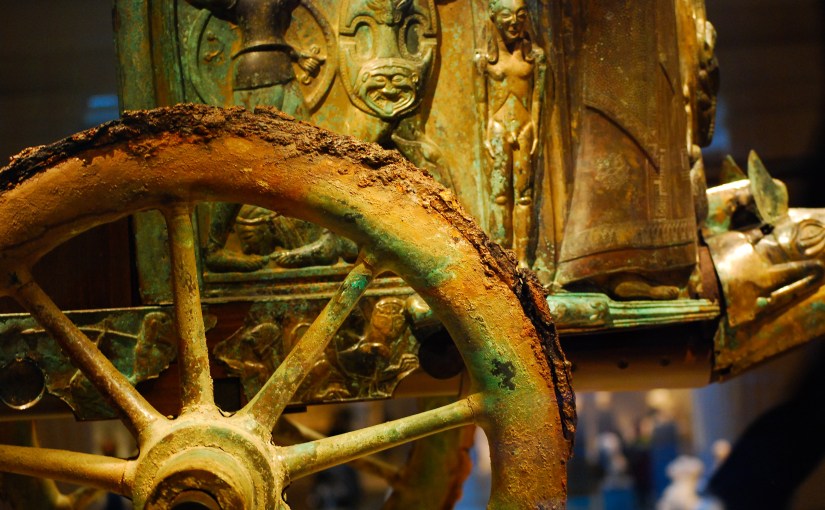
When Teachability Rides a Chariot

I think this post will wander around a bit, we’ll see if the Father will speak to us somehow.

I really think our lives are made up of the decisions we’re making. At least, it sometimes sees that way.

Some decisions are like ‘forks’ in the road.  They’re made and then they shunt us in another direction. Most are minor–(will it be McDonalds or Pizza Hut?) But the biggies really alter us–very quickly we see that the road is going to take us in a radically different path.

Sometimes, if we’re honest, we will admit to backtracking; retracing our route back to the point we turned.  A lot of time it’s too late, and the moment has past. But we will sometimes learn that sometimes even our detours are part of the journey. (Amazing, isn’t? But He controls it all, and that’s comforting.)

I think I’m starting to learn how to receive correction from others. 

I’ve been mulling over the decision of the Ethiopian eunuch in Acts 8:30-31, he wanted to understand the truth:

“So when Philip ran toward the chariot, he heard the man reading from Isaiah the prophet [on his Kindle]. Philip asked, “Do you understand what you are reading?”
 31 He answered, “How can I understand unless someone explains it to me?” Then he invited Philip to climb in and sit with him.”

We see here such a very ‘thoughtful humbleness’– a teachableness of the heart that this eunuch seems to have learned.  He is confident enough in himself to acknowledge that he just doesn’t know. He invites Philip to a Bible study in the chariot.

We are responsible for our receptivity to truth. 

It’s our personal decision to either seek or not seek, to learn, or not to learn.  No one else can do this for us.  We come to a decision point and we go the way things seem to direct us, or we don’t. Again, we must choose.

Sometimes to not make a decision, is a decision.

The book of Proverbs is saturated with ideas on being guided by our humility when it comes in contact with truth.  Furthermore, there are many warnings about receiving correction and reproof gracefully.  For me, I’m learning slowly to receive hard counsel.

When my wife and I made the decision to work in the migrant camps in Mexico there was one elder who kept saying “no!” At first it was a real issue for us. We sort of resented it. But we began to see the blessing of his resistance. It caused us to really analyze our decision, and “count the cost.” We were stepping into a very hard place, and we needed that voice. We were being called to break in “new ground.” It was to be a challenge.

It seems that scriptural truth is almost always negative when it’s first encountered. It often irritates more than it comforts.

It often will not sit well, and I will try to shake it off.  But truth can be remarkably persistent.  ‘Forgive your brother’, the Holy Spirit says.  And you say right away, ‘Not a chance!’  But, give it time, and the Word will soften rock.  If you respond properly, humbly, you be able to make the right decision.

One more thing, Jesus told us in Matthew 18:3,

“I promise you this. If you don’t change and become like a child, you will never get into the kingdom of heaven.”

We’ll need to be a complete alteration in our hearts if we are to accommodate His command.  Becoming a child is more difficult as an adult– then becoming an adult is for a child.  Becoming small again takes a great amount of brokenness and it’s never really mastered.

God fully intends to work with you in this. 

God wants you to learn teachableness. He brings others to direct you. The Holy Spirit ignites the Word that’ll light your path. He doesn’t seem to ever give up.  He is wonderfully persistent–He never really does give up.

“The intelligent man is always open to new ideas. In fact, he looks for them.”

Proverbs 18:15, LB