Dying to Self

You will never have resurrection power unless there is crucifixion weakness. 

In this particular post, we’re looking at an element of Christian discipleship that ties us all together. It’s our common denominator as His disciples. We must learn to die to ourselves to be faithful. There can be no obedience unless we choose to carry our cross to a place of death.

“Those who belong to Christ Jesus have nailed the passions and desires of their sinful nature to his cross and crucified them there.”

Galatians 5:24

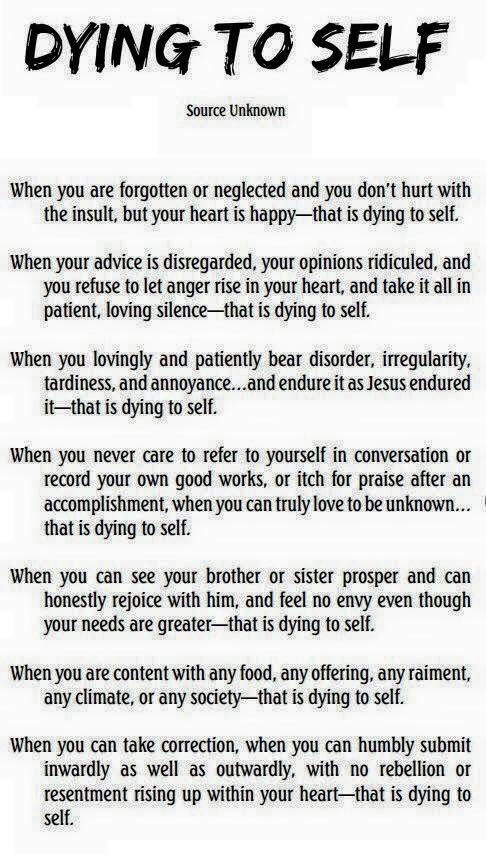
But what does that look like? How can I know that I’m really doing this? Maybe this will guide you. I think it’s worth prayerful consideration
 

dying-to-self

By no means is this list exhaustive. Hardly. But you know that may be good. The principle of crucifying self then has the room to fit all areas of your life–the core idea of self-renunciation becomes the way your spirit operates.

“Then Jesus told his disciples, “If anyone would come after me, let him deny himself and take up his cross and follow me.”

Matthew 16:24

“If anyone would come after me, let him deny himself and take up his cross and follow me.

Mark 8:34

“And he said to all, “If anyone would come after me, let him deny himself and take up his cross daily and follow me.”

Luke 9:23

“Whoever does not bear his own cross and come after me cannot be my disciple.”

Luke 14:27

We deny ourselves so real life can begin. There isn’t any other way to follow Him.

We must go to the cross daily in order to find our life. That is the way. “This is a trustworthy saying: If we die with him we will also live with him.”

2 Timothy 2:11

bry-signat (1)


Growing Up in Jesus

Mark 4:26-29

 “The kingdom of God is like this,” he said. “A man scatters seed on the ground. 27 He sleeps and rises night and day; the seed sprouts and grows, although he doesn’t know how.” 

“The soil produces a crop by itself—first the blade, then the head, and then the full grain on the head. 29 As soon as the crop is ready, he sends for the sickle, because the harvest has come.”

From a seed to a plant. We have no idea how this happens, it just does. This is a “kingdom” parable, one of several that explain what God’s realm is, and how it happens. In this particular story, we’re told how the Holy Spirit works. It also explains our role in this (which isn’t a whole lot).

The farmer puts the seed in the ground—and that’s it. He’s done his work, there’s nothing more he can do. He doesn’t do anything else from this point, and honestly, he can’t. And yet the soil needs to be prepared—plowed, fertilized, and tilled again. You might say he creates the conditions (that’s what makes a good farmer, I guess) for something to happen.

He doesn’t massage the seed, coaxing it to grow. He doesn’t sing to it or tells it about the wonders of being lush and green. He does zero. The seed grows on its own. He goes to bed and gets up. After several days, bingo! That seed turns into a plant—something green and alive. He doesn’t do a thing. Life occurs without his work.

The point is this. God’s work is done invisibly within us (and that’s a relief)!

“The secret of growth is in the seed, not in the soil nor in the weather nor in the cultivating. These all help, but the seed spontaneously works according to its own nature.”

Robertson’s Commentary

God’s kingdom works pretty much like this. The farmer doesn’t cause the seed growth, all he does is go to bed! He sleeps and waits and watches. It grows and he hasn’t the slightest. It’s a complete mystery. He has done everything he can, and God has done the rest. He “shares” in this amazing transformation, but the father has done it all.

We trust in a process we cannot see, or really understand.

We don’t dig the seed up every morning to see what’s happening. We just let the (super)natural happen. And it does!

The farmer has faith in the process (after all, he did plant the seed), but that’s it. There’s a verse in 2 Thessalonians 1:3 that should be considered. It gives us confidence and definite trust in this process of growth. The Apostle Paul understands this “principle of growth.”

“We ought to thank God always for you, brothers and sisters, and rightly so, since your faith is flourishing and the love each one of you has for one another is increasing.”

We must trust God completely to grow. We’re responsible for tilling and planting. But you need to understand what happens after that is up to him. The kingdom of God is supernatural. It’s exactly how the kingdom happens—and we must be patient and wise.

“The key to everything is patience. You get the chicken by hatching the egg, not by smashing it.”

Arnold Glascow

The Smiles of God

sun-1443875842olr

“Heaven is where the unveiled glories of the Deity shall beat full upon us, and we forever sun ourselves in the smiles of God.”

Ezekiel Hopkins, “A Puritan Golden Treasury”


Jesus said to them, “The wedding guests cannot fast while the groom is with them, can they? As long as they have the groom with them, they cannot fast. (Mark 2:19)

This was Jesus’ idea.  He was bringing correction to the lives of those who were very serious, and especially those who felt the most religious.  Often, our native tendency is asceticism.  We evaluate ourselves religiously by our prayers and our fasts.

For serious people, we have a serious religion, and we focus on doing a serious religious activity, for that is what our serious faith demands.

Jesus pointed out that mournful faces are not indicators of a pious life.  How can His disciples mourn when Jesus the bridegroom is nearby? His disciples are going to a wedding, not a funeral!

Without question, the New Testament believers are to know repentance and self-examination.  We should grieve over our sins, but that grief is to be based on hope and joy.  Jesus changed everything.

If you are saddened by sin, that sadness must be tethered to joy and not to despair.  

The disciples could not mourn and fast while Jesus was present.   He does not wish His disciples to go mourning and fasting when they have no occasion for such exercises. His words are a defense of Christian joyfulness. Christ wants His friends to be glad. There is an utter incongruity in a sad and mournful Christian life.  It does not make sense in light of what Jesus has done.

Our sins have been forgiven–erased, cleansed, and washed away.  We have been dipped into the righteousness of the Son of God.  The fierce enemies of our souls have been eradicated by Jesus.  All of this is to bring out a song from a grateful heart.  We revel in the smile of Jesus and walk under the banner of beautiful love.  We have His forgiveness and have been given His favor.  We should be radiant!

 I pray that you will rejoice in this wonderful day He has made.


Setting Yourself on Fire

Difficulty and pain sometimes come from others, and challenges to the Lordship of Jesus often come from our unique circumstances.

But what if it was something we’ve done?

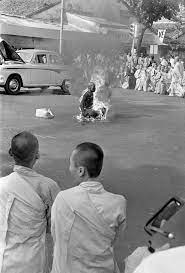
I remember the classic picture of a Buddhist monk who sat in the middle of a street. He was serene as he soaked himself with gasoline, and lit himself on fire as a protest against a war he believed was wrong and evil. He burned himself in front of the cameras.

All too often we’re pretty much responsible for our own self-immolation. It is we (and we alone) that set ourselves ablaze. Sin affects our minds and hearts. We set ourselves on fire.

When we sin– when we walk in ‘known’ disobedience we always put ourselves in an awful place. We love it but learn to hate it too. But we continue to do it regardless of the awful death that ensues.

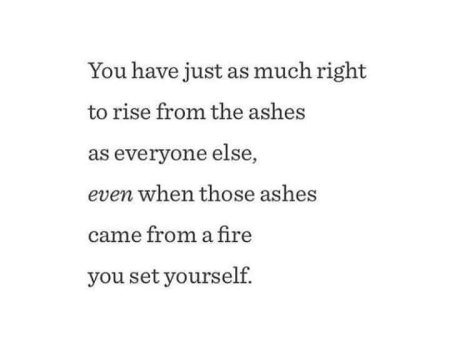
God promises to forgive us. Out of our ashes, He keeps bringing us life and hope.

You can be forgiven. You can find life again, even if you’re fully responsible for the evil we’ve done to yourself. Yes, we all sin, and yes we walk in our own personal rebellion. But Jesus knows it all. These awful things we’ve all done can be forgiven.

As a man and a preacher of the Gospel, I realize that I often choose to sin. In spite of all I know and teach I realize that I can live in the ashes of my own making. As one who also struggles with bipolar, I understand that I’m even more susceptible to doing awful things. I understand that I choose darkness even though others will call me “a man of God.”

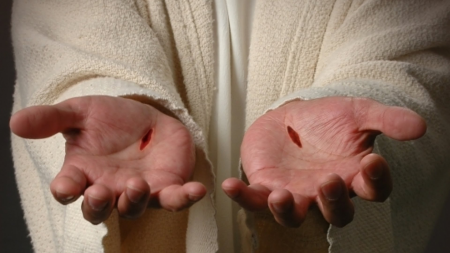
As you read this I’m praying that you find His forgiveness and mercy. You’ve come a long way it seems, but you must see His blood that was ‘released’ from His veins and arteries for you.

He desperately loves you–even if you’ve set yourself on fire, and sit in the ashes of your doing.

“To appoint unto them that mourn in Zion, to give unto them beauty for ashes, the oil of joy for mourning, the garment of praise for the spirit of heaviness; that they might be called trees of righteousness, the planting of the Lord, that he might be glorified.“

Isaiah 61:3