


Psalm 13, For the choir director: A psalm of David.
Five Questions
1 “O Lord, how long will you forget me? Forever?
How long will you look the other way?
2 How long must I struggle with anguish in my soul,
with sorrow in my heart every day?
How long will my enemy have the upper hand?”
Nothing is as stretching and painful as the belief that God has given up on you. I have personally experienced this misbelief. It was like my entire nervous system was ripped out of my body. Suicide seemed a logical thing to do.
Sometimes, the struggle to remain a believer is difficult. It is a war, often accentuated by depression and sadness. It’s relentless and its arena of conflict is in our hearts. David asks five questions. They are the questions of the besieged heart when our abandonment seems possible.
3 “Turn and answer me, O Lord my God!
Restore the sparkle to my eyes, or I will die.
4 Don’t let my enemies gloat, saying, “We have defeated him!”
Don’t let them rejoice at my downfall.”
David recognizes that he needs God’s answer. He also needs meaning to be restored to him. The “sparkle”, or that joy of having a purpose is what gives life meaning. Once you taste it, nothing else will satisfy. Verse 3 tells us that David saw this as a “life or death” matter.
Furthermore, David could see that the enemies of his soul had gathered. They spoke with a common voice, reflecting a unified purpose, “We have defeated him!” We must be cognizant of the reality of evil around us. God has a will for your life, but so does Satan. It involves your corruption and destruction.
5 “But I trust in your unfailing love.
I will rejoice because you have rescued me.
6 I will sing to the Lord
because he is good to me.” ~~New Living Translation
We fast-forward ahead to David’s deliverance. He has an uncommon confidence in the character of God. David’s declaration, He rescued me and He is good to me! Both verses 5-6 illustrate that worship finds its root in times of personal emancipation.


 Through God’s unfailing grace, our sorrows become easier to bear. In His divine plan, our sufferings can be sanctified. It can purify us, draw us closer to Him and make us stronger instruments in sanctifying the world. Christ Himself chose suffering as the divine means of saving mankind. We should pray, therefore, for the courage that can only come from Him who died for our sins. By looking at sorrow as a blessing in disguise, we shall regard it not as a sign of failure but as small prices to pay for the everlasting peace and joy of heaven.”
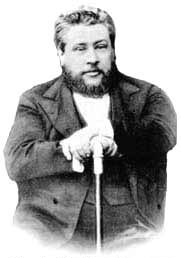 “Any man can sing in the day. When the cup is full, man draws inspiration from it. When wealth rolls in abundance around him, any man can praise the God who gives a plenteous harvest… The difficulty is for music to swell forth when no wind is stirring. It is easy to sing when we can read the notes by daylight; but he is skillful who sings when there is not a ray of light to read by—who sings from the heart… Lay me upon the bed of languishing, and how shall I then chant God’s high praises, unless He Himself give me the song? No, it is not in man’s power to sing when all is adverse, unless an altar-coal shall touch his lip… Then, since our Maker gives ‘songs in the night,’ let us wait upon Him for the music”
 “It is a great thing to see physical courage, and greater still to see moral courage, but the greatest to see of all is spiritual courage; oh, to see a person who will stand true to the integrity of Jesus Christ no matter what he or she goes through!”
  Broken Believers