Serving Rascals, Clumsy Disciples, and Physically and Mentally Ill Believers with the Unconditional Love of Jesus Christ
Author: Linda L. Kruschke
I am a Jesus Freak, and I don't care who knows it. I write candid memoir and fearless poetry, and delve into hard issues others tend to avoid. I want others to know God’s redemption and healing are just a story away.
Living in darkness no color I see a hint of deep blue maybe red– but no, only blackness
Tears flood the darkness trying to wash away the blackness to reveal the color I know must be near
I’ve heard stories of vibrant yellow sunshine smiling green trees happiness in rainbows streaming across a pale blue sky
But in the darkness these colors are but myths draped in blackness obscured by the pain I feel
Then suddenly the Light comes dim colors revealed to my eyes for my heart to see
The Light drawn by my tears came to wash away the blackness tears alone could never heal
The colors of my world brighten day by day as the Light illuminates the truth of colors that were always just outside the darkness
“Land of Zebulun and land of Naphtali, the way to the sea, along the Jordan, Galilee of the Gentiles— the people living in darkness have seen a great light; on those living in the land of the shadow of death a light has dawned.”
Matthew 4:15-16 (NIV).
This poem was originally posted on my blog, Linda Kruschke’s Blog, about my own struggles with major depression and the Light who has helped me see the beautiful colors depression had obscured.
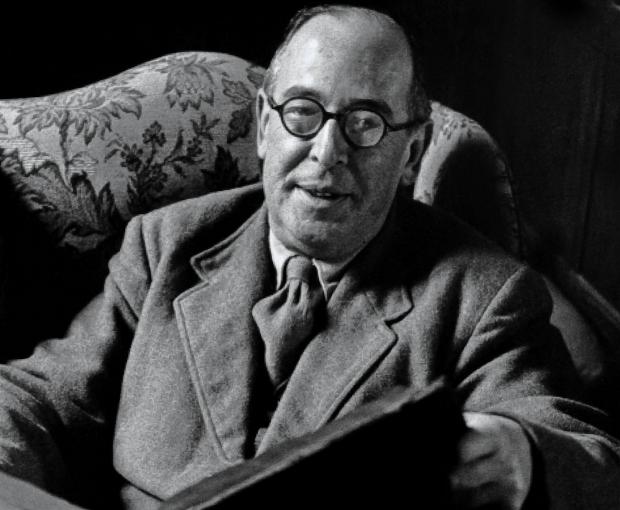
C.S. Lewis is one of my favorite Christian authors.
It can take some thought to get the point he is making in some of his writings, but the effort is well worth the understanding that I gain. Some time ago I bought a journal that consisted of various C.S. Lewis quotes followed by about a page and a half to write my own thoughts about the quote. This blog entry is a quote and journal entry from that journal.
I come back to St. John: “if our heart condemn us, God is greater than our heart.” And equally,”if our heart flatter us, God is greater than our heart.” I sometimes pray not for self-knowledge in general but for just so much self-knowledge at the moment as I can bear and use at the moment; the little daily dose.
Have we any reason to suppose that total self-knowlege, if it were given us, would be for our good? Children and fools, we are told, should never look at half-done work; and we are not yet, I trust, even half-done. You and I wouldn’t, at all stages, think it wise to tell a pupil exactly what we thought of his quality. It is much more important that he should know what to do next.
I like Lewis’ prayer, for just so much knowledge of my own failings and successes as God deems to be appropriate for my spiritual growth today. If I was aware of all that God must do to complete the good work that He has begun in me, then I would be overwhelmed and feel completely hopeless at the enormity of my need. On the other hand, if I were in one single moment to be aware of all the good that He has accomplished in me, then I might become vain and think myself better than others whose canvas is still bare.
I am like an unfinished painting, more than just the bare canvas, but not a finished work fit for hanging in God’s art gallery. I feel as though my underlying sketch has been completed with Christ as its foundation, and some of the paint has been applied, but all the colors and the detail are not there.
What I need and hope is for God to help me see myself as He deems appropriate, not as He sees me (for He sees all that was, is, and is yet to be in me). If I saw myself as God sees me, that would be too much for me to bear. But I am thankful He knows what is best for me, and allows me to see just what I need.
You, dear broken believer, are also an unfinished painting.
You’re a masterpiece in the making. I pray He shows you just so much of your failures and successes, your weaknesses and strengths, as is beneficial to you this day so that the next brush strokes may be perfectly applied by the Master Painter.
I’m working my way through Ezekiel in the Old Testament, and before that I was reading Jeremiah. These are challenging books to read and to apply to our daily lives. Here and there is a nugget with direct – and easy – application, but I think these books are there for a much bigger purpose. The Old Testament prophets show us what is important to God. As I read, I find that God is concerned with two things:
That His people trust in Him, and not in idols of their own making. This seems reasonable, since He alone is trustworthy. An idol made of stone or gold – or as we often trust in these days, of paper in the form of money and stocks – cannot protect us or provide a sure and trustworthy future. Only God can do that.
That His people care for the “widow and the orphan,” that is, the less fortunate of society who are in need of a helping hand. This seems reasonable, too, since those of us who have been blessed should not find it a burden to bless others in return.
These are simple principles. When asked what the greatest commandment was, Jesus echoed these two principles when He answered, “’Love the Lord your God with all your heart and with all your soul and with all your mind.’ This is the first and greatest commandment. And the second is like it: ‘Love your neighbor as yourself.’”
Matthew 22:37-38 (NIV).
And yet the prophets were hated and ridiculed for telling the Israelites that they would suffer and were suffering exile and death, war and famine, because they failed to follow these two simple principles. Instead of loving and trusting the God who had seen them through so much and protected them, they trusted in idols and the ways of their neighbors. Instead of loving their neighbors and caring for the downtrodden, they cared only for their own gain and gluttony. The Israelites were warned over and over by the prophets. I believe that the message of the prophets – that these two principles are paramount – is just as relevant for our world today as it was for ancient Israel.
The other day I received this wonderful quote in my Quotemeal email from Heartlight.org. I believe it illustrates not only the struggle the Old Testament prophets faced, but also the struggle those who trust in Christ alone for salvation and seek to share His expectation that we love our neighbors with the world face today.
“To be forged upon the anvil of God’s purpose, to be at once His hammer, His tongs, and His molten iron; to hear words that rend the heart, see visions that pierce the chest; to be emptied like an urn, again and again and again until one desires only rest, only an end to the refilling — and to know one cannot live without the refilling. To be given words that one dare not speak, and to feel those words churning and boiling in the belly until one must speak them aloud, or die. To be despised, soon or late, by everyone except Adonai — and to desire it so, while hating it. This is to be a prophet.”
— Thom Lemmons
I’m not suggesting that I am a prophet, but there have been times in my life when I was compelled to speak, or to write, words I did not wish to say or write. I have had words churn and boil in my mind and in my heart, felt the fear of saying or writing them, but had to push through that fear and let those words fly and land wherever God desires.
Just writing that last paragraph makes it seem all so dramatic, but really it just is. Sometimes I don’t push through the fear and I fail to share the words that are on my heart. Although I have not yet died as a result, a small part of my spiritual growth does whither. Perhaps my faith would be stronger and more souls would have been saved if I had always spoken up.
But, in the end, I know that God loves me and knows I am being sanctified daily, though sometimes more slowly than I would like.
Love, Linda
Linda’s blog is at http://lindakruschke.wordpress.com/. Please check out all she has to say. Linda tells me that it is absolutely guaranteed to bless, or your money back!
Words matter. Our choice of words, whether speaking or writing, makes a difference.
And words have meaning. That’s what dictionaries are for—to tell us what words mean. When we try to use words to mean something other than what they really mean, it causes confusion.
Sometimes people do this on purpose. One such misuse of a word that I have encountered lately is the use of the word “true” to substitute for “believe.” A person will say “such and such is true for me” when what they really mean is “I believe such and such.”
According to the dictionary, the word “true” means “being in accordance with the actual state or conditions; conforming to reality or fact.” Truth is not relative and is not affected by what any one person believes. Truth is external, and belief is internal, in origin.
Many years ago, when I was suffering from major clinical depression, there were a number of things I believed about myself. I believed I would always be depressed based on how long I had been depressed already and my doctor telling me I would always have bouts of major depression for the rest of my life. I also believed I would never be able to hold down a full-time job. I believed no one liked me and that I was worthless. In the parlance of relativism, these things were true for me.
But they weren’t true. They aren’t true and they never were, no matter how deeply I believed them.
And trust me, I deeply believed these things about myself.
But here I am, 18 years later, and I haven’t had a bout of major depression since God showed me how to be free. I’ve had the same good-paying full-time job for almost 12 years, and I had a different full-time job that paved the way for this one for 5 1/2 years before that. On top of my full-time job, I’m actively involved in my church and Bible Study Fellowship, have self-published two poetry books, and take care of my family. And I have a lot of friends, people who like me (and some who even love me).
As I look back over the past 20 years, I see God’s hand in my life, lifting me up and leading me to see the truth. I believe that. But it’s not my belief that makes it true. In fact, I could be dead wrong, but I don’t believe I am.
Whether God is real and cares about His creation enough to do all I believe He has for us is either true or not. It can’t be true for me and not for you, or vice versa. Truth is. As humans, our greatest purpose is to seek the truth. To say that truth is relative—that what is objectively true for me is different from what is objectively true for you—negates that essential human drive to know truth, to know our Creator, to know where we come from, and to know our reason for being.






 Broken Believers