Tourette Syndrome [Awareness]

To understand and name something is often half the battle.  An understanding of Tourette Syndrome can help us to serve people who painfully struggle with this particular challenge.

What is Tourette syndrome?

Tourette syndrome (TS) is a neurological disorder characterized by repetitive, stereotyped, involuntary movements and vocalizations called tics. The disorder is named for Dr. Georges Gilles de la Tourette, the pioneering French neurologist who in 1885 first described the condition in an 86-year-old French noblewoman.

The early symptoms of TS are almost always noticed first in childhood, with the average onset between the ages of 7 and 10 years. TS occurs in people from all ethnic groups; males are affected about three to four times more often than females.

It is estimated that 200,000 Americans have the most severe form of TS, and as many as one in 100 exhibit milder and less complex symptoms such as chronic motor or vocal tics or transient tics of childhood. Although TS can be a chronic condition with symptoms lasting a lifetime, most people with the condition experience their worst symptoms in their early teens, with improvement occurring in the late teens and continuing into adulthood.

What are the symptoms?

Tics are classified as either simple or complex. Simple motor tics are sudden, brief, repetitive movements that involve a limited number of muscle groups. Some of the more common simple tics include eye blinking and other vision irregularities, facial grimacing, shoulder shrugging, and head or shoulder jerking.  Simple vocalizations might include repetitive throat-clearing, sniffing, or grunting sounds.

Complex tics are distinct, coordinated patterns of movements involving several muscle groups. Complex motor tics might include facial grimacing combined with a head twist and a shoulder shrug. Other complex motor tics may actually appear purposeful, including sniffing or touching objects, hopping, jumping, bending, or twisting. Simple vocal tics may include throat-clearing, sniffing/snorting, grunting, or barking. More complex vocal tics include words or phrases.

Perhaps the most dramatic and disabling tics include motor movements that result in self-harm such as punching oneself in the face or vocal tics including coprolalia (uttering swear words) or echolalia (repeating the words or phrases of others). Some tics are preceded by an urge or sensation in the affected muscle group, commonly called a premonitory urge. Some with TS will describe a need to complete a tic in a certain way or a certain number of times in order to relieve the urge or decrease the sensation.

Tics are often worse with excitement or anxiety and better during calm, focused activities. Certain physical experiences can trigger or worsen tics, for example tight collars may trigger neck tics, or hearing another person sniff or throat-clear may trigger similar sounds. Tics do not go away during sleep but are often significantly diminished.

What is the course of TS?

Tics come and go over time, varying in type, frequency, location, and severity.  The first symptoms usually occur in the head and neck area and may progress to include muscles of the trunk and extremities. Motor tics generally precede the development of vocal tics and simple tics often precede complex tics.  Most patients experience peak tic severity before the mid-teen years with improvement for the majority of patients in the late teen years and early adulthood. Approximately 10 percent of those affected have a progressive or disabling course that lasts into adulthood.

Can people with TS control their tics?

Although the symptoms of TS are involuntary, some people can sometimes suppress, camouflage, or otherwise manage their tics in an effort to minimize their impact on functioning. However, people with TS often report a substantial buildup in tension when suppressing their tics to the point where they feel that the tic must be expressed. Tics in response to an environmental trigger can appear to be voluntary or purposeful but are not.

What causes TS?

Although the cause of TS is unknown, current research points to abnormalities in certain brain regions (including the basal ganglia, frontal lobes, and cortex), the circuits that interconnect these regions, and the neurotransmitters (dopamine, serotonin, and norepinephrine) responsible for communication among nerve cells. Given the often complex presentation of TS, the cause of the disorder is likely to be equally complex.

What disorders are associated with TS?

Many with TS experience additional neurobehavioral problems including inattention; hyperactivity and impulsivity (attention deficit hyperactivity disorder—ADHD) and related problems with reading, writing, and arithmetic; and obsessive-compulsive symptoms such as intrusive thoughts/worries and repetitive behaviors. For example, worries about dirt and germs may be associated with repetitive hand-washing, and concerns about bad things happening may be associated with ritualistic behaviors such as counting, repeating, or ordering and arranging.

People with TS have also reported problems with depression or anxiety disorders, as well as other difficulties with living, that may or may not be directly related to TS.  Given the range of potential complications, people with TS are best served by receiving medical care that provides a comprehensive treatment plan.
1brobry-sig4 (2)


cropped-christiangraffiti1-3-1

Source for this post: http://www.ninds.nih.gov/disorders/tourette/detail_tourette.htm#147223231

Great site at: http://tsa-usa.org/

He Will Come and Find You

“The Blind Beggar” by Jules Bastien-Lepage

When Bartimaeus heard that Jesus of Nazareth was nearby, he began to shout, “Jesus, Son of David, have mercy on me!”

Mark 10:47

What a gritty, hard life Bartimaeus lived.  How terribly desperate and lost he must have felt.  He has spent years and years without any real hope.  The future to him had been emptied of all purpose and meaning.  Life, from his point-of-view was worse than non-existence.  It was brutal and vicious, and when he had bad times he could barely look up.

He had a customary spot beside the busy road.  Routine had become his coping skill.  As a blind man knew that routine kept him from really losing it.  Seated on a dirty mat, he focused in on the voices of the passing crowds.  There seemed many more than usual and Bartimaeus began to try to piece together what was happening.

Someone to the right of him, shouted “Hosanna, Son of David”!  In that stark moment Bartimaeus jumped up and began to shout himself.  He shouted and shouted until he was hoarse.  He waved his hands, desperate to be seen.  There were those around him who told him to sit-down and shut-up.  There were hundreds of people reaching for Jesus, arms outstretched and pleas being made.  In this crazy and confusing scene Bartimaeus will not comply, he must speak, he must, he is desperate!

Jesus doesn’t walk alone, but is mobbed by well-wishers.  But suddenly He stops, Jesus can hear the voice of Bartimaeus.  Jesus wades partly into the jumbled mass and asks someone to bring Bartimaeus into the open.  We see him wriggle through the crowd, he is shaking and he is filthy.  His hair is matted and he has rotting teeth.  He hasn’t bathed for several months.  A filthy rag is wrapped over his eyes.

Is Jesus passing by?  Do you call out for Him? Does he call for you?  He often touches His most needy disciples, outside of the confines of the Church.  Jesus’ travels wherever He wants, He goes where He wills.  Jesus passes by us as we sit in our youth meeting, our marriage counseling or on a short-term missions project to Mexico.  He interrupts and pulls you out of the crowd.  All to heal you, for Himself.

1brobry-sig4 (2)


cropped-christiangraffiti1-3-1

Life in the Fast Lane, [Rest]

“Surely I have calmed and quieted my soul, Like a weaned child with his mother; Like a weaned child is my soul within me.”

Psalm 131:1

“We are going as fast as we can, living life at a dizzying speed, and God is nowhere to be found. We’re not rejecting God; we just don’t have time for him. We’ve lost him in the blurred landscape as we rush to church. We don’t struggle with the Bible, but with the clock. It’s not that we’re too decadent; we’re too busy. We don’t feel guilty because of sin, but because we have no time for our spouses, our children, or our God. It’s not sinning too much that’s killing our souls, it’s our schedule that’s annihilating us. Most of us don’t come home at night staggering drunk. Instead, we come home staggering tired, worn out, exhausted and drained because we live too fast. “

— Michael Yaconelli

We have a problem.  We cannot hide it anymore.  It is invasive and a detriment to our lives.  It is called activity, or busy-ness.  It can destroy our souls as much as adultery, or stealing would.

Jesus commanded his disciples to rest, so we must conclude that this is necessary for us as 21st century disciples.  But the current is strong and it seems there is no “slow lanes” anymore.  Our days start early and we are propelled through it by the frantic pace of continual demands.

Can we honestly say that this is the abundant life that Jesus promised us?  Is this the fruitful Christian life?  The verse we must consider, “Be still and know that I am God.”  That word “still” means to be without motion, calm, at rest.

Tozer wrote to his generation with the penetrating question, “Has busy-ness become the new holiness?”  He observed that the Church was partial to activity, and that discipleship was becoming equated to work and movement.  The presence of the Lord was no longer a factor to the modern disciple.

We must return to the Master.  We must become quiet and listen to what he has to tell us. Matthew 11:28 tells us,

“Come to Me, all you who labor and are heavy laden, and I will give you rest.”

1brobry-sig4 (2)


cropped-christiangraffiti1-3-1


“For thus says the Lord God, the Holy One of Israel: “In returning and rest you shall be saved; In quietness and confidence shall be your strength.” But you would not”

Isaiah 30:15


Seeing the Real Thing, [Heroes]

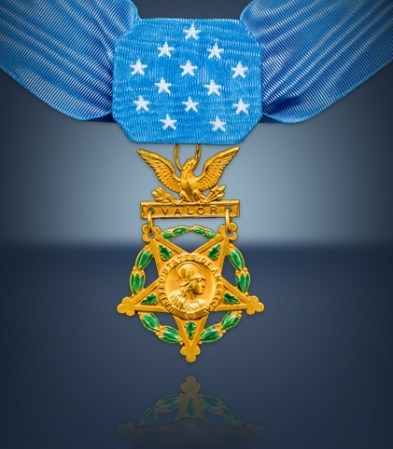
army_moh

“All praise to God, the Father of our Lord Jesus Christ. God is our merciful Father and the source of all comfort. 4 He comforts us in all our troubles so that we can comfort others. When they are troubled, we will be able to give them the same comfort God has given us. 5 For the more we suffer for Christ, the more God will shower us with his comfort through Christ. 6 Even when we are weighed down with troubles, it is for your comfort and salvation!”

2 Corinthians 1:3-6

“Grace is given to heal the spiritually sick, not to decorate spiritual heroes”

Martin Luther

I don’t know if I have ever met a Medal of Honor recipient, and somehow I’m sure that I would’ve remembered.  I most certainly have not met ‘a spiritual hero’.  I imagine them however to be quite dynamic, gushing over with humility and love.  Somewhat like being a ‘Superman of the Soul’.

Through His Holy Spirit, we were chosen not because we are superheroes, but because we are sick.  God doesn’t inspect us for exceptional qualities that we may someday possess.  Instead He is a paramedic, intervening with grace and mercy in our distress and helping us in our desperation.

Perhaps, there are some who secretly want to be ‘decorated’.  They love the attention and covet glory.  Faith is not really a medicine; it is more like a decoration.  It pins on its chest the Medal of Honor.  The highest award you can receive–the holy medallion of faith (with oak leaf clusters, of course).

Having had lived for a few years in a ‘third world country’,  I’ve gotten to observe up close believers who are pathetically poor.  I have seen poverty crush people like a boy crushes a bug on the sidewalk.  The sense I have can be summed up in a phrase, a ‘desperate gratitude’ for His grace.

Jesus has come and gathered up all their sin and shame and evil, and carried it away from them.  Their walk with Him now is in gratitude, not in attainment.  Here in the USA that ‘seeing’ has become myopic.  We struggle to see clearly.  Actually, we can be almost dangerous if we don’t see this.

We cannot envision anything clearly without an adjustment to our eyes.  There has to be a desperation that moves in and heals us.  Something that will pull our faith like a magnet.

We are not collecting ‘merit badges’, but medication and rolled-up bandages.  We hurt– our friends and family hurt, people we haven’t met yet, hurt.

“The mercies of God make a sinner proud, but a saint humble.”   Thomas Watson


cropped-christiangraffiti1-3-1