I Must Do What He Has Taught Me

servant-king

“If I, your Lord and Teacher, have washed your feet, you also should wash each other’s feet.”

John 13:14, NCV

Jesus sets out a lot of things and lays them out on the table.  We gather around to get a closer look.  A significant issue is this deal about  becoming a servant.  It stipulates a certain fact that drives us all ‘very crazy’.  Jesus has stated so much, but now we’re being pushed to the edge.  Afterall, there is only so much we can put up with.

But Jesus fully intends to open up this subject, for us to see.  The idea is beyond bizarre, He is saying things which are very strange.  He dictates that we are to start acting like the lowest slaves in our homes.  These slaves have the gross task of cleaning everyone’s feet.  This is the sole work of the ‘bottom scum’.  This is now the ready place for His followers.

There are many ways we can wash feet in the 21st Century.  But the two stages involve #1, stooping down low, and #2, providing beneficial service to our brother on-the-chair.  These are the two essential thrusts to our new life of servanthood. It is only Biblical servanthood if we connect with both stages.

Jesus sees all of this, this washing business, as something He has done first-hand.  He certainly hasn’t ‘commanded’ us without doing it Himself first.  He leads us, and just doesn’t direct us.  Many leaders have gotten confused on this issue.  But our Lord ‘excels’.  He models it, and we begin to understand its glory.

In essence, He states, “Look at Me, watch how I do this.  And then you must copy Me’.  We believers are always to be looking, spiritually observant.  We see our example cleaning dirty feet, and we find ourselves in that same role.  Understanding the disgusting concept of feet-washing was very close to the level of wiping someone elses butt.  Extremely disagreeably, with zero upside to it.  It would’ve been crude, gross and demeaning.

Jesus is disciplining us, and we look unswerving to Him.  We will follow and not look back.  We are an army made up exclusively of servants.  We will take the lowest spot, and we will love everyone we come in contact with.
1brobry-sig4 (2)


cropped-christiangraffiti1-3

$

Turning Joy Into Strength

Joy becomes strength

“Because you did not serve the LORD your God joyfully and gladly in the time of prosperity,  therefore in hunger and thirst, in nakedness and dire poverty, you will serve the enemies the LORD sends against you. He will put an iron yoke on your neck until he has destroyed you.” 

Deuteronomy 28:47

“…the joy of the Lord will make you strong.  The Levites helped calm the people, saying, “Be quiet, because this is a holy day. Don’t be sad.”

Nehemiah 8:10

Two completely different viewpoints, with two effects on our understanding.  The first passage traces out for us a judgment which could of been adverted by joy.  JOY!  And even though joy is a remarkable thing, most will remove it and replace it with ‘guilt’.  That seems much more suitable for a Christian.  And ‘why’ is that? Is forgiveness that hard to believe?

Austere guilt and sadness seem a better alternative for ‘the sinner saved by grace’.  Any display of any frenetic joy disturbs us, and needs to be most definitely eradicated lest some get the wrong idea of us, and our churches.  Yet in this verse in Deuteronomy we are impressed with the idea that this is one of the reasons ‘judgment’ will come on to our lives.

I get a trifle nervous whenever an ‘iron yoke’ is talked about in scripture.  It means that it is long-lasting.  It is a judgment, but with a permanence.  And people who don’t walk out in joy are soon walking in bondage.  They don’t sing with their hearts out loud.  They choose not to sing, but to suffer.

Nehemiah had to reverse the polarity of his people.  They leaned toward sadness and grimness.  Nehemiah had to change the way these people thought and reasoned.  ‘The Kingdom of God is like a wonderful party’, he said.  It is for feasting, and not at all for fasting.  Nehemiah must reverse the natural direction of the people.

Nehemiah made the connection between joy and strength.  When he linked these two a very critical thing happened.  As people began to sing, they began to get strong.  A transfusion of joy began to work out its magic.  The nation was empowered and energized to do things.  The Levites had a good idea what was happening, and they proceeded to get them on the right track.  When joy is finally added to the mix, the people are prepared to move out in strength.

1brobry-sig4 (2)

cropped-christiangraffiti1-3-1

The Gift of Sight, [Our Blindness]

“Jesus took the blind man by the hand and led him out of the village. Then, spitting on the man’s eyes, he laid his hands on him and asked, “Can you see anything now?”

Mark 8:23

What an amazing and gentle thing for Jesus to do.  He offers his hand in order to guide this one to a better environment for that which he is about to do.  Jesus really is quite considerate, and very aware of the “circus” he causes in the town.

In many ways, we are so like this blind man.  We have no spiritual sight, we stumble and bumble through life.  We are doomed to live this way, blind to anything of significance.  But along comes Jesus, he takes us by our hand.  We walk through the streets, with him leading us.  Little do we know, that in just a moment we are going to see.

This blind man is being led by a stranger, who is leading him down dusty streets to an undisclosed location.  Yet, for some reason, he trusts Jesus, and allows himself to be led.  As he walked holding the hand of Jesus, his faith grows.  By the time they arrive at the spot outside the walls, we just know what is going to happen next.

Jesus spits!  Right into each eye. He puts his thumbs into them and brings a complete reconstruction of each eye.  Jesus is standing right in front of him. He asks, “Now can you see?”  I can see him blinking, and rolling his eyes, squinting and trying very hard to see.  And he does– but only limitedly.  Things are still blurry.

Jesus doesn’t berate the man, or belittle him for not getting a complete healing.  He just repeats this process, and within a minute the blind man now sees the world that before he only staggered through a moment ago..

If you must know, I am that blind man, I walked in spiritual darkness.  Things have not ever been easy.  I have stumbled and tripped through life.  I have been the butt of schoolboy pranks, and I have begged for crusts.  I have gone hungry a lot of the time.

But this man, Jesus found me.  He healed me. And my ugly, pathetic life was changed.  I am now a witness to what he can do–and does!  I added nothing to my healing, it was a miracle. I just opened my eyes.

“Of all the senses, sight must be the most delightful.”

–Helen Keller

1brobry-sig4 (2)


cropped-christiangraffiti1-3


The Tabloids Were Scandalous!

scandalous‘Scandalizing is celebrated openly today. We’ll manipulate and defame so all will pretty much see our enemies as disgraceful or hypocritical. It makes me want to cry when I hear of this intimidation inside the Church. Jesus told us that this would really, truly happen. We shouldn’t be at all disturbed. To be hurt this way is very much part of being his disciple.

In Matthew 11:2-6, 2 Now when John heard in prison about the deeds of the Christ, he sent word by his disciples 3 and said to him, “Are you the one who is to come, or shall we look for another?” 

4 And Jesus answered them, “Go and tell John what you hear and see: 5 the blind receive their sight and the lame walk, lepers are cleansed and the deaf hear, and the dead are raised up, and the poor have good news preached to them. 6 And blessed is the one who is not offended by me.”

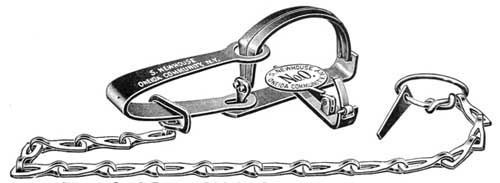
Offended. The word in our Greek N.T. is “skandalon.” It’s used in many ways, but the most amazing one is defined as, “the trigger of a trap, to kill an animal. To be the trap wire or stick used to catch prey; a snare.” We have the word scandalous, or to be involved in a vicious manipulation, scandal. Another metaphor is that it’s like the “fly paper” that’s hung up in the barn to catch those big nasty flies. 

Jesus dug up his dictionary, and chose this very specific word to communicate what he wanted. Of men and women, boys and girls caught in something they can’t get out of without help. John the Baptist, languishing in a dark place, wants to understand Jesus. John seems to expect Jesus to hop on a white stallion, and forcefully exert his messianic role.

Jesus will send his message. “You’re blessed indeed, if you do not stumble” (or get trapped) by the misconceptions. John confined in Herod’s dungeon, would be meticulously praised by Jesus. The Lord honors his own openly.

trap01

It is easy to take up offense, (whether right or wrong.) When we hear a message causing shock, anger, repulsion, or disgust; that is a pretty good indicator that you are being “scandalized.” And turn-around is fair play. We might be the scandalizer, or the victim. It happens all the time.

Are you trapping– or are you trapped? Either way we need to stop it. We can’t continue to trip others up– nor can we allow others to foist their trap on us either. The Gospel regards itself as a ‘stumbling block. For some agnostics’, Jesus is someone they keep tripping over. But for the believer, Jesus is a ‘climbing up’ stone!

Worship is the finest defense. People who stumble, or cause another to stumble are usually…

  • grim,
  • guilty,
  • and grouchy.

They become graceless and sterile in the important matters of the heart. They become rigid and bitter.

The man or woman who stands up for their faith, and who doesn’t fall away or let their zeal ‘leak away,’ is incredibly blessed. God however is ready to forgive all those who backslide and then repent, but is especially pleased with those– like John, who hold firm to the faith.


1brobry-sig4 (2)


cropped-christiangraffiti1-3