We Need More Towels

There are no shortcuts in discipleship

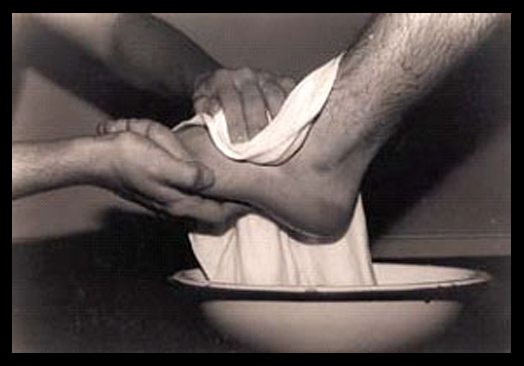
Jesus, knowing that the Father had given all things into his hands, and that he had come from God and was going back to God, rose from supper. He laid aside his outer garments, and taking a towel, tied it around his waist.”

John 13:3-4, ESV

He was always a servant. Nothing  could erode His place or position.  The authority had been His Father’s, and it had been given to Him.  He carried it as a special burden, treasured and separating Him.  Jesus had the freedom to act like the servant.  But it didn’t bother or confuse Him, He understood perfectly who He was. 

Unlike us.

With the supreme authority given to him, He got down on His knees, and began to wash dirty feet.  I can offer no magic or flair to adjust this scene.  All He did was to wash off dirt, He cleaned between toes, making filthy feet clean.  And all of this ‘as God in human flesh’.  This staggered the disciples.

Perhaps a baseball bat on the side of the head would’ve been more preferable.

You see, this was revolutionary, it completely devastated the disciples.  They just couldn’t grasp what was happening.  Jesus, who was ‘God in flesh’, had decided, in a moment of time, to clean their feet.  Outrageous!  Not really happening!  No way! Never!
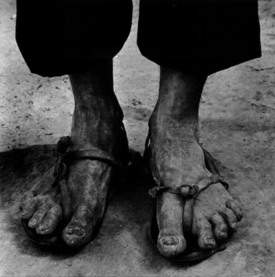
The reality.

Essentially, it buried them.  Jesus Christ, as Servant pounded them into the ground.  Wherever a man turns he can find someone who needs Jesus. Becoming an indentured slave was now the way of Christlikeness.  This servanthood was to now guide us to a point of slavery.

Gone are the days of Zebedee when one can ask for a position, on the right or the left.  We can ask, most certainly, but we haven’t been the first.


So very many have gone before us.  We must become a people who accept and then press into His grace, seeing His supreme beauty, and walk in His presence. Becoming like Jesus, the servant/slave.

Today, the Church needs more towels.

We have got to renounce out ‘need’ for recognition and pick up from the pile the rag of servanthood. We must ‘ask’ our brother/sister if we can “scrub” their feet.  We must get on our knees and do the disgusting, (and yet exalting)


We must find a way to clean off their feet. This dear one, is what you’ve been told to do.

“Wherever a man turns he can find someone who needs him.”

    Albert Schweitzer

Your brother, Bryan


flourish91

Love Wears Work Gloves

 “But if anyone has the world’s goods and sees his brother in need, yet closes his heart against him, how does God’s love abide in him?”

“Little children, let us not love in words or talk but in deeds and in truth.”

1 John 3:17-18, ESV

Love is a noble idea, it’s admired and extolled by practically everyone–we see it in our music and poetry, ethics and religion. For the most part it’s a word for something decent and virtuous and honorable. It’s a good thing, but I’m afraid it’s not always scriptural.

You see, Bible love wears work gloves.

It labors and sweats and works. Bible love has chores to do, and it actively looks and sees what needs to be done. 1 John 3 tells us that we shouldn’t deceive ourselves and only see the world’s definition. That love a believer has is to be different.

Love, in John’s eyes, is most assuredly “doing.” It burns spiritual calories as it labors to serve our brothers and sisters. Love finds things it can do–it doesn’t just talk but it gets busy. Love sees the need and then gets down to serve.

“You must show sincere love to each other as brothers and sisters. Love each other deeply with all your heart.”

1 Peter 1:22

Working (serving) has nothing to do with our salvation, that is a free gift. We’re saved by grace through the blood of Jesus–that’s a given. But this love isn’t  drudgery, as a matter of fact, working and serving each other is a joy. The deepest kind of joy there is.

Our words, although important, are really an insufficient way of proving our authenticity.  The love we serve another with isn’t “pretty poetry” kind of love. It’s so easy to just shout out truth and never ever show a working, serving kind of love. That sort of love is impressive, and can’t ever be duplicated.

That disconnect is a bit disturbing.

But when do we start to realize that this love is really a verb?

Our prayer and intercession really begins when we go to work for someone else. (Our lunch box is our Bible.) We read it and it energizes us to work for one  another. When we pray we truly are loving another brother or sister. It’s work that they can’t or won’t do for themselves. At least not yet. So we pray.

John is calling believers to a more real kind of love. His love is a love that sweats.

“The church is made up of individuals. It can do nothing except as its members work, and work together.”

     James H. Aughey

Dear reader–I really do pray for you. Your love impacts so many.


“Go and Learn” [Discipleship]


“When Jesus heard this, he said, “Healthy people don’t need a doctor—sick people do.” 13 Then he added, “Now go and learn the meaning of this Scripture: ‘I want you to show mercy, not offer sacrifices.’ 

“For I have come to call not those who think they are righteous, but those who know they are sinners.”

Matthew 9:12-13

This passage can be a bit of a challenge. But these two verses fit together like an old watch mechanism, small gears and wheels in precise motion, keeping time in a treasured grace.  My father had an old one, used once by a train conductor.  It was made of gold, and had been used for almost 100 years.

The complexity of these verses were never meant to confuse the disciples.  But for them it is simple, to go and learn.”  Certainly, there are times we will be ‘schooled’ in what we learn.  And really the only way to approach this is in humility.  Trying to extract the truth will take patience and a broken heart.

Jesus states the truth of being a doctor, and there is a singular work that a doctor does.  It is serving all who come to him with sickness or injury.  Jesus clarifies a truth that has to be in place.

“Go and learn what the Scriptures mean when they say, `Instead of offering sacrifices to me, I want you to be merciful to others.’ I didn’t come to invite good people to be my followers. I came to invite sinners.” v.13, CEV

“Go and learn!” This implies that there are lessons for us, classes that we need to take in order to grow-up, how to touch sick and desperate people.  Funny, but it’s all about mercy, and nothing to do with “sacrifices.”  Mercy is what matters. I want you to be merciful to others.”

I admit that I’d rather be right than to be merciful. (It’s good to be both.)  But mercy– and gentleness should be our driving impulse.  These attitudes assist us to move us forward. “Go and learn.”

The last verse reveals the thinking that Jesus has.  He has come to help those of us in trouble.  The good people don’t understand, after all, isn’t their ‘sparkly goodness’ enough?  As his disciples, we share our faith to all; but maybe we should consider the weak, poor and the sick already prepared for the words of Jesus? “Go and learn.”

“Discipleship is a lifelong process and journey rooted in a relationship with Jesus, whereby we become more like Christ.”

Greg Atkinson

1brobry-sig4


cropped-christiangraffiti1 (1)

(

We Are Mere Servants

7–8 Jesus continued, “After a servant has finished his work in the field or with the livestock, he doesn’t immediately sit down to relax and eat. No, a true servant prepares the food for his master and makes sure his master is served his meal before he sits down to eat his own.
Does the true servant expect to be thanked for doing what is required of him? 10 So learn this lesson: After doing all that is commanded of you, simply say, ‘We are mere servants, undeserving of special praise, for we are just doing what is expected of us and fulfilling our duties.’”

Luke 17, TPT

Selfishness is endemic to men of all stripes. It’s in our bloodstream  It taints the most noble of actions and the most wonderful of efforts.

There is an exception for the empowered Christian. The ability to live unselfishly is the believer’s option. We can live above the issues of the worldling. To us is given the joy of obedience. Obeying God’s will is the privilege of redeemed men and women. We have the Holy Spirit’s abilities to meet the situation around us.

We serve because we’ve been served.

But we still are ”mere servants” and we shouldn’t make a big deal of our efforts. Within our most noble efforts is the possibility of falling short of the Lord’s wishes for us.

The only safe place for us is found  in a sacred humility. It is the posture of obedience which generates something enduring. You might say that humility is the wiring that keeps us from ‘shorting out.’ Being a humble person will insulate us from the holy power of any disobedience. 

I’m afraid that is the only way it’ll work.

“We had long known the Lord without realizing that meekness and lowliness of heart should be the distinguishing feature of the disciple.”

–Andrew Murray