
Together, for Each Other

“The Bible knows nothing of solitary religion.” 

–John Wesley

There isn’t really a place for the individual in our walk of discipleship.  This is a most exceptional truth.  You might say that our society here in the U.S. is expressed in the ‘Marlboro Man’ who rides alone.  “High Noon,” (my favorite Western) is based on a solitary man who stands when other won’t.  The message of individualism saturates this movie. Like Gary Cooper, I think I have to face the bad guys alone.

But I think we need to understand that we are connected to other believers.  In fact, I believe that the Holy Spirit works quite distinctly in ‘generations.’  Whether we like it or not, each of us is connected to our generation.  We are responsible for our own time and place. I’m a child of the Sixties, it’s what makes me tick.

Stellar individuals like Charles Spurgeon and D.L. Moody spoke directly to their generation.  They were voices in the late 1800s.  They connected to their particular milieu, but were surrounded by many praying believers.  Their ministries and sermons, were founded upon the prayers of many saints.  Their ministries were an extension of many people. They were surrounded by other believers.

We are connected with others who are also connected. We are organically related and that needs to be understood.  It’s funny about that, we are called a “body.”  This is a difficult concept for us to understand.  But we need to know that you are not so much solitary, but woven into the life of others. The Church is plural and it happens when believers join together.

We need to understand that the Christian life is not solitary.

If this makes you curious, check out the word “together” in New Testament.  We can reflect on this, and think out what that really means. Just a few scriptures:

“From whom the whole body, joined and held together by every joint with which it is equipped, when each part is working properly, makes the body grow so that it builds itself up in love.”  

Ephesians 4:16, ESV

“For, in the first place, when you come together as a church, I hear that there are divisions among you. And I believe it in part.”

1 Corinthians 11:17-19

“Not neglecting to meet together, as is the habit of some, but encouraging one another, and all the more as you see the Day drawing near.”

Hebrews 10:24-26,

And there is at least a dozen or so more.  The idea– ‘together,’ is only a start, and we need to understand that the Christian life is not solitary. The Father melts our independence, and then molds us with each other to make us into something new. 

Whether we like it or not, we are “together.”

The London Underground

“And he said to them, “Come away by yourselves to a desolate place and rest a while.” For many were coming and going, and they had no leisure even to eat.’

Mark 6:31, ESV

Our Savior would never drive us to do things with a whip.  He is not a taskmaster, and He will not insist or impose His will over us.  Nothing about him is brutal or demanding. (He could, really– if he wanted to.)

There are no galley-slaves in the ship of the Kingdom of Jesus – every man chooses to work his oar out of love!

It is interesting that Jesus was very careful and aware of his disciples needs.  No one suggested a break from the work, but Jesus initiated the break from the massive press of the crowds. He knew intensely what his disciples needed.

 “Crowds of people were coming and going so that Jesus and his followers did not even have time to eat. He said to them, “Come away by yourselves, and we will go to a lonely place to get some rest.”

Mark 6:31, NCV

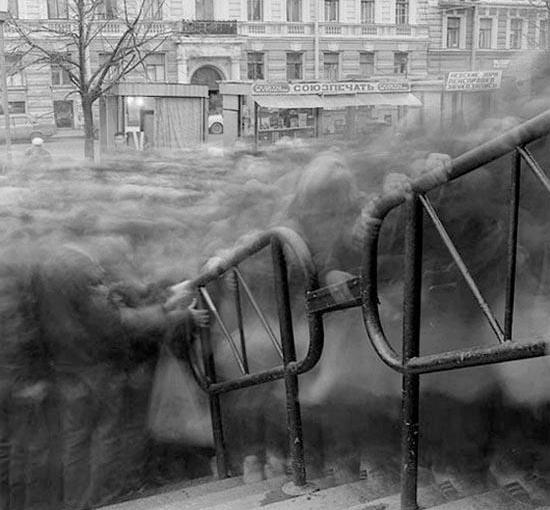
Underground-SymbolThe presence of so many people had put the disciples in a very hard place.  The NCV describes the crowds, as “coming and going.”  If you have ever been on the London Underground you will understand just the sheer number.  Everyday, 2.93 million people ride the trains.  I remember travelling from the backwoods of  Alaska, with just a backpack, and hitting the crowds on “the tube” in London, UK.

The intense masses I saw in London were way beyond anything I ever imagined.  Talk about a “culture shock!  I saw more people in a single minute than in an entire year of living in Alaska.  It was like an amazing giant ant-hill; I would stop, and just stare. Nothing prepared me for this.

Jesus is concerned about the living freshness of his disciples.  He shuts things down in order to rest with his followers.  Often the tendency will be the opposite, especially when the leader is weak and immature.  “Work harder, and even more hours!”  Jesus did not have the need to be available to the crowds 24/7.  And he certainly didn’t expect his disciples to.  His heart is committed to his followers.

He “orders” his disciples, come apart and let’s rest!
“But so many people were coming and going that Jesus and the apostles did not even have a chance to eat. Then Jesus said, “Let’s go to a place where we can be alone and get some rest.”

Mark 6:31, CEV

I don’t know if you can grasp the sensitivity, or see the nuances of Jesus shepherding his disciples.  He has a deep awareness of them; he doesn’t get lost by people pressing in from every side.  He loves the world of men and women, but his followers are his specialty.

He tunes in on their frequency, and knows their spiritual capacity.

What gives his followers strength, is to be close with Jesus, and to separate from the needs that were densely surrounding them.  We can be flattered by being needed, but that can be very corrosive or destructive.

I’m guessing but I believe that a few of the disciples may have been annoyed by this break in the action. They found it hard to remove themselves from the action.  Some may have been frustrated, perhaps maybe even slightly irritated by another “Jesus’ retreat.”

“One time Jesus entered a house, and the crowds began to gather again. Soon he and his disciples couldn’t even find time to eat.”

Mark 3:20

When you are pouring out, you will find there is only a certain capacity before you run dry.  You may think this is “noble and praiseworthy” but it is nothing of the sort.  It is a form of arrogance and pride.  In order to really mature as a believer, we must shake this off and not to entertain our seeming indispensability to the cause.

We must keep on following Jesus into the quiet places.
 “Are you tired? Worn out? Burned out on religion? Come to me. Get away with me and you’ll recover your life. I’ll show you how to take a real rest. Walk with me and work with me—watch how I do it. Learn the unforced rhythms of grace. I won’t lay anything heavy or ill-fitting on you. Keep company with me and you’ll learn to live freely and lightly.”

Matthew 11:28, MSG

Love, Bryan

@

The Art of Being Seen

Jesus entered Jericho and made his way through the town. 2 There was a man there named Zacchaeus. He was the chief tax collector in the region, and he had become very rich. 3 He tried to get a look at Jesus, but he was too short to see over the crowd. 4 So he ran ahead and climbed a sycamore-fig tree beside the road, for Jesus was going to pass that way.

5 When Jesus came by he looked up at Zacchaeus and called him by name.“Zacchaeus!” he said. “Quick, come down! I must be a guest in your home today.” 6 Zacchaeus quickly climbed down and took Jesus to his house in great excitement and joy. 7 But the people were displeased. “He has gone to be the guest of a notorious sinner,” they grumbled.

8 Meanwhile, Zacchaeus stood before the Lord and said, “I will give half my wealth to the poor, Lord, and if I have cheated people on their taxes, I will give them back four times as much!” 9 Jesus responded, “Salvation has come to this home today, for this man has shown himself to be a true son of Abraham. 10 For the Son of Man came to seek and save those who are lost.”

Luke 19:1-10, NLT

Zacchaeus was a resourceful man.  Jericho was a prime toll center in the entire area, and Zacchaeus would’ve been the richest man in the entire region. He was very wealthy, being an overseer of other tax collectors (the region with a major export of balsa wood.) He was well on his way to becoming a millionaire at least, the ancient Judean version of it.

We should know two things about Zacchaeus:
  1. His Hebrew name meant “pure.” This was an ironic moniker for a despised man who had sold out to the Roman tax business. (Perhaps he had had a ‘godly mother?)
  2. He was very short in stature. I suppose we could call him ‘vertically challenged’?

I suppose there is one other thing, my guess is it’s the main one. He simply wanted to see Jesus. He was so short that he couldn’t see over the crowds. Perhaps he could’ve bribed his way to the curb, but apparently, there wasn’t enough time. Jesus was coming this way! He must make a decision.


He looks and sees a tree. It grew on the side of the road, its branches hanging over the well-traveled path. He clumsily climbs up (in a robe!) and finds a clear spot to get a good look at Jesus. He is a simple man, and this is all he wants is just to see Jesus!

Within the Christian faith over the many centuries, there has always been a heart’s desire to get closer to Jesus. Many of the established ‘disciplines’ such as:

  • prayer
  • the study of scripture
  • fasting
  • evangelism
  • simplicity
  • solitude
  • service
  • confession
  • worship
Think of this list as simply branches of the tree.
Each discipline comes as one of several. But they are futile, or worse if they don’t lead us to Jesus Christ. 

It is critical to grasp the end result; they are merely the methods we use to see Jesus clearer. Its folly to climb the tree, just for the sake of climbing. No. The branch we are sitting on is just a means to an end. To behold our Lord, to somehow get closer to Him is priceless.

For example, I usually don’t pray for ‘prayers sake.’ I must pray like Zacchaeus climbed;  I just to see Jesus. I know He is always watching and yet I want Him to see me.

But we also are not to build tree houses. Rather we’re meant to see Jesus, come down, and have a wonderful time with Him in close fellowship.

aabryscript

Flourish-61

“Go and Learn” [Discipleship]


“When Jesus heard this, he said, “Healthy people don’t need a doctor—sick people do.” 13 Then he added, “Now go and learn the meaning of this Scripture: ‘I want you to show mercy, not offer sacrifices.’ 

“For I have come to call not those who think they are righteous, but those who know they are sinners.”

Matthew 9:12-13

This passage can be a bit of a challenge. But these two verses fit together like an old watch mechanism, small gears and wheels in precise motion, keeping time in a treasured grace.  My father had an old one, used once by a train conductor.  It was made of gold, and had been used for almost 100 years.

The complexity of these verses were never meant to confuse the disciples.  But for them it is simple, “to go and learn.”  Certainly, there are times we will be ‘schooled’ in what we learn.  And really the only way to approach this is in humility.  Trying to extract the truth will take patience and a broken heart.

Jesus states the truth of being a doctor, and there is a singular work that a doctor does.  It is serving all who come to him with sickness or injury.  Jesus clarifies a truth that has to be in place.

“Go and learn what the Scriptures mean when they say, `Instead of offering sacrifices to me, I want you to be merciful to others.’ I didn’t come to invite good people to be my followers. I came to invite sinners.” v.13, CEV

“Go and learn!” This implies that there are lessons for us, classes that we need to take in order to grow-up, how to touch sick and desperate people.  Funny, but it’s all about mercy, and nothing to do with “sacrifices.”  Mercy is what matters. “I want you to be merciful to others.”

I admit that I’d rather be right than to be merciful. (It’s good to be both.)  But mercy– and gentleness should be our driving impulse.  These attitudes assist us to move us forward. “Go and learn.”

The last verse reveals the thinking that Jesus has.  He has come to help those of us in trouble.  The good people don’t understand, after all, isn’t their ‘sparkly goodness’ enough?  As his disciples, we share our faith to all; but maybe we should consider the weak, poor and the sick already prepared for the words of Jesus? “Go and learn.”

“Discipleship is a lifelong process and journey rooted in a relationship with Jesus, whereby we become more like Christ.”

Greg Atkinson

1brobry-sig4


cropped-christiangraffiti1 (1)

(