The Father is Running!

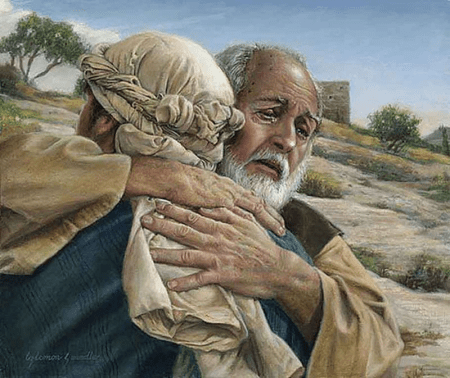
“So he returned home to his father. And while he was still a long way off, his father saw him coming. Filled with love and compassion, he ran to his son, embraced him, and kissed him.”

Luke 15:20, NLT

There comes a time when the prodigal stands up–looks around, and then decides he can’t live this way anymore, it’s now time to return home.  But he is no longer a ‘rich man’s son’, the pig-pen completely crushed that idea.  He returns home, thinking that at least he can be a slave.

The devastated prodigal now understands.

And it’s that which gives him the propulsion to leave the pigs behind, and begin to somehow be received by his father. The trip is a long one, lots of walking, and yes, it’s hard–he’s far from where he’s supposed to be. He is tired, ragged and worn.

But please dear one, you must understand this about Jesus’ parable–the story isn’t so much about the prodigal son, rather I think that the focus should really be on the father. Jesus is teaching us that the love of God is a searching/seeking kind of love, and it cannot be shut down, or go away over time. Not ever.

You see, it is a 24/7/365 day kind of love.

Think of it like high intensity radar that sweeps over extreme distances, it is always looking, seeking, and it won’t be denied.  The Father is seeking for His sons and daughters.  He intends to find them. If we refuse we will continue to feed pigs, over and over, and we will starve.

The running love of the Father is strenuous and reaching

The Father never sits on His backside, calmly watching from His throne. He reaches out and runs to us. God doesn’t sit. He is far from passive, rather He intensely yearns for His son. And God is fully into reclaiming His missing sons and daughters, just like in Jesus’ story.

He continues to search, even in when things get really bad.

Sin disfigures
Sin disfigures, a meth addict’s mug shots over time

The Father recognizes His prodigal son.  It’s funny, but gross sin often has a way that disfigures a person’s countenance. Look at the wino or meth addict on the street.

The boy who abruptly left home is not the son who returns.  There has been damage done.  His face has changed.  The Father understands this, and yes, it has been terribly hard and brutal. But that hardly matters.

I believe that this parable is the greatest of them all. 

Jesus is explaining the deep love the Father has for prodigals like us. This story is so revealing, in it we see that the Father who is running. We must know this about Him. We must internalize it and understand the compassion He has. If we stall in our discipleship it’s because we don’t grip the awesome depth of His love.

There seems to be very few people who understand a running God.

The prodigal son is a timeless parable that transcends generations, holds within it a profound message of forgiveness, redemption, and unending love. As we delve deeper into the intricate layers of this tale, we discover a powerful metaphor that illuminates the human experience and the unwavering compassion of the Father.

As the prodigal hits bottom he realizes the futility of his choices and yearns to return to the forgiving embrace of his father. Overwhelmed by guilt and shame, he makes the long journey back to the home he once took for granted. Little does he know it, behind the scenes, his father has been watching, waiting, and hoping for his return.

And then, in a moment that encapsulates the beauty of unconditional love, the father catches sight of his boy from afar. Without a second thought, the father runs towards him with outstretched arms, his love insisting on forgiveness.

We see a love that surpasses human understanding.

The parable teaches us about the power of redemption and forgiveness, reminding us that no sin is too great to be forgiven, and no distance is too far for reconciliation. It emphasizes the importance of humbly seeking forgiveness and shows that love is always within reach.

Jesus teaches us a different kind of love. It’s not based on achievements or what society says. This love is given to everyone, regardless of their flaws, but in order to have it, they must leave the pigs behind. Sometimes that isn’t always easy.

This profound depth of His love often leaves us feeling totally doubtful or skeptical.

Our logical minds struggle to grasp how such boundless love can exist, especially when we witness the failings and flaws of human love. Yet, it is precisely because love transcends logic that it is so powerful. It operates on a different plane, bypassing our human limitations and revealing a deeper truth about the nature of God’s infinite compassion.

So, let us tell others about this love that Jesus spoke of.

Let’s begin to see that this compassion will transform lives, heal wounds, and bridge divides. For when we approach Jesus’ parable with humility and faith, we may just catch a glimpse of its power and appreciate its profound beauty in a new way.

If the Church can just keep up with our running God, we will finally understand who He really is. And if we only accept the love of the Father towards prodigals—no matter what the sin—it’s then we will finally understand the white-hot love of the Kingdom of Jesus.

And the Church will finally be doing His will in the world.

Finally.

1brobry-sig4

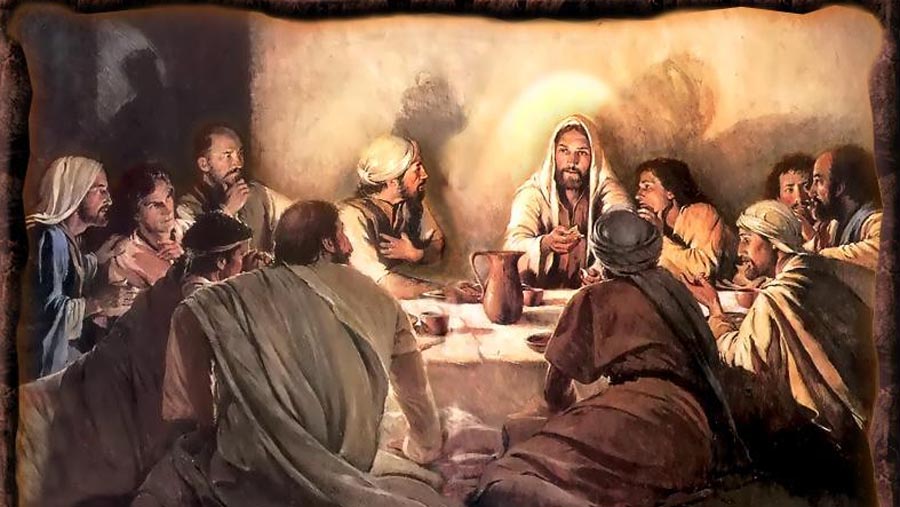
Gather Around Jesus

“The apostles returned to Jesus and told him all that they had done and taught.”

Mark 6:30, ESV

You couldn’t find a more amazed group of disciples on the green hills of Galilee.  Coming from the four points of a compass they gathered at the predetermined time around Jesus. They excitedly told Him of wonders and miracles beyond.

It’s good to share with Him all that we see and experience.

I believe that the Lord desires that we come to Him and share the details of our day.  The things that happened–in His name, and in our heart.  We should tell Him all that we did, how we endured temptations or failed.

Jesus will not condemn or judge you for any sins or mistakes–that is a given.  But as we tell Him about these things, He can transform these things so good will come from them.  Difficulties encountered also are to be communicated.  He is fully absorbed with our sharing, and He devotes Himself to you during these times. I believe that He even understands when we come back carrying nothing.

This “inventory” needs you to be honest, and completely forthright. Jesus is wonderfully attentive; as we share and release things to Him (and in His name), we become more like Him. 

To be a witness is our calling. We probably won’t ever get it right. But we must remember that His treasure is in clay pots.

What God is bringing you through will be your testimony that just might bring someone else to Him. Without your witness of Jesus’ love they may never find Him. That is tragic.

Your story is the key that can unlock someone else’s prison. Touch others with your testimony.

“But you will receive power when the Holy Spirit comes upon you. And you will be my witnesses, telling people about me everywhere—in Jerusalem, throughout Judea, in Samaria, and to the ends of the earth.”

Acts 1:8

Growing Up in Jesus

Mark 4:26-29

 “The kingdom of God is like this,” he said. “A man scatters seed on the ground. 27 He sleeps and rises night and day; the seed sprouts and grows, although he doesn’t know how.” 

“The soil produces a crop by itself—first the blade, then the head, and then the full grain on the head. 29 As soon as the crop is ready, he sends for the sickle, because the harvest has come.”

From a seed to a plant. We have no idea how this happens, it just does. This is a “kingdom” parable, one of several that explain what God’s realm is, and how it happens. In this particular story, we’re told how the Holy Spirit works. It also explains our role in this (which isn’t a whole lot).

The farmer puts the seed in the ground—and that’s it. He’s done his work, there’s nothing more he can do. He doesn’t do anything else from this point, and honestly, he can’t. And yet the soil needs to be prepared—plowed, fertilized, and tilled again. You might say he creates the conditions (that’s what makes a good farmer, I guess) for something to happen.

He doesn’t massage the seed, coaxing it to grow. He doesn’t sing to it or tells it about the wonders of being lush and green. He does zero. The seed grows on its own. He goes to bed and gets up. After several days, bingo! That seed turns into a plant—something green and alive. He doesn’t do a thing. Life occurs without his work.

The point is this. God’s work is done invisibly within us (and that’s a relief)!

“The secret of growth is in the seed, not in the soil nor in the weather nor in the cultivating. These all help, but the seed spontaneously works according to its own nature.”

Robertson’s Commentary

God’s kingdom works pretty much like this. The farmer doesn’t cause the seed growth, all he does is go to bed! He sleeps and waits and watches. It grows and he hasn’t the slightest. It’s a complete mystery. He has done everything he can, and God has done the rest. He “shares” in this amazing transformation, but the father has done it all.

We trust in a process we cannot see, or really understand.

We don’t dig the seed up every morning to see what’s happening. We just let the (super)natural happen. And it does!

The farmer has faith in the process (after all, he did plant the seed), but that’s it. There’s a verse in 2 Thessalonians 1:3 that should be considered. It gives us confidence and definite trust in this process of growth. The Apostle Paul understands this “principle of growth.”

“We ought to thank God always for you, brothers and sisters, and rightly so, since your faith is flourishing and the love each one of you has for one another is increasing.”

We must trust God completely to grow. We’re responsible for tilling and planting. But you need to understand what happens after that is up to him. The kingdom of God is supernatural. It’s exactly how the kingdom happens—and we must be patient and wise.

“The key to everything is patience. You get the chicken by hatching the egg, not by smashing it.”

Arnold Glascow

Flying Lessons

Sometimes it’s best to use bullet points; they help me think.

And I know that nothing good lives in me, that is, in my sinful nature. 

  • I want to do what is right, but I can’t.  

  • I want to do what is good, but I don’t.

  • I don’t want to do what is wrong, but I do it anyway.

But if I do what I don’t want to do, I am not really the one doing wrong; it is sin living in me that does it.”

Romans 7:18-20, NLT

“How can you be so inconsistent? I feel like there are two ‘Bryans,’ I don’t understand how you can live like this.”

This is what a dear friend said to me recently. I was flabbergasted. I didn’t know how to answer. It was a bit embarrassing, but I couldn’t respond. Later, the Spirit ministered to me while praying about it.

The Lord spoke, “He has no idea how bad you really are. Don’t you dare defend yourself!’

I now realize I should have said this to my friend. You’re absolutely right, I am a bit of a flake. But you only see the veneer, deep down  I’m much worse than you will ever know. I can’t defend my actions, and I desperately need a Savior. Would you pray for me to work this out?”

The daily struggle with sin is sometimes more visible than we would like. Even as a believer I can and do sin. That should surprise no one, and yet, I am the most surprised when sin inevitably breaks out. (Inconsistency is a factor in Bipolar disorder, but this is more than that.)

I’ve recently realized that in spite of almost 50 years of following Jesus that I’ve sinned more as a believer than I have ever done as a ‘worldling.’ I’m kinda embarrassed by this.

Image result for old airplane attempting to fly

In Romans 7 we are confronted with a man who is constantly disappointed in himself. It can be wrenching to read– partly because it is so real. It describes us too well. At times the Word is like looking into a mirror.

Romans 7 describes what is wrong with us, for we are attempting to keep the law from our own efforts. We slide from grace when we attempt to stand before God in our self-righteousness. (We have a strong tendency to do this at times.)

“We are all infected and impure with sin.
    When we display our righteous deeds,
    they are nothing but filthy rags.”

Isaiah 64:6

We have a problem when our heart doesn’t match our actions. It gets a little hairy when our sin is visible to others. We feel like hypocrites and our testimony is official ‘toast.’

Sometimes, we’re reasonably certain we’ve shamed Christ in some irrevocable way. But do understand a lot of this can be satanic, for he indeed is “the accuser of the brethren,” (Rev 12:10). 

Whenever we stand before God, we should never come with our list of great things we have recently done for Him. It won’t be accepted. They are at best, filthy rags. They’re not fit for a King’s court. But yet we keep coming, parading our dirty, grimy rags.

I wonder when we boldly ‘strut’ into His presence if the angels don’t ‘roll their eyes?’

We forget that only Christ’s righteousness is accepted. Heaven is satisfied with His atoning blood that covers every sin. The tension we feel in Romans 7 is there because it turns us away from our self-efforts. Our ‘confusion’ over this chapter indicates the depth of our attempt to be righteous on our own.

“The greatest enemy to human souls is the self-righteous spirit which makes men look to themselves for salvation.”

Charles Spurgeon


1brobry-sig4


cropped-christiangraffiti1 (1)