Panic Attacks Understood

tired

Anxiety (panic) attack symptoms can feel awful, intense, and frightening.  The good news is that while they can seem serious, anxiety attack symptoms aren’t harmful in and of themselves. That is something to remember.

Because there are many medical conditions that can cause ‘anxiety-like’ symptoms, it’s wise to discuss your symptoms with your doctor. If your doctor has attributed your symptoms to stress and anxiety, you can feel confident that your doctor’s diagnosis is correct. Anxiety attack disorder is relatively easy to diagnose and isn’t easily confused with more serious medical conditions.

Anxiety attack symptoms are NOT always indications of a serious medical condition. They are simply dramatic responses to being afraid. Being afraid causes the body to stimulate stress hormones. Since stress hormones are designed to prepare the body for action, the changes stress hormones bring about can cause the body to exhibit “symptoms” of this biochemical change. Anxiety attack symptoms are simply “sensory sensations” of this biological change. Again, they aren’t harmful, but they are letting you know that your body’s stress hormone levels are elevated.

Common anxiety attack symptoms include:

  • A feeling of impending doom, that something horrible is about to happen, that you are in grave danger
  • A strong feeling of fear, foreboding, panic
  • An urge to escape, to get out, to run away from danger
  • Blanching, turning white, looking pale
  • Blushing, skin blotches, turning red
  • Burning skin
  • Choking sensation, tightening throat, it feels like your throat is closing
  • Confusion
  • Depersonalization (feeling detached from reality, separate from oneself, separate from normal emotions)
  • Derealization (feeling unreal, in a dream-like state)
  • Dizziness, lightheadedness, unsteadiness
  • Emotional distress
  • Emotional upset
  • Fear of going crazy
  • Fear of losing control, freaking out
  • Fearful thoughts that seem incessant
  • Feels like there is a tight band around your head
  • Hot or cold chills
  • Inability to calm yourself down
  • A knot in the stomach, tight stomach
  • Nausea
  • Numbness, tingling sensations in any part of the body
  • Pins and needles feeling
  • Plugged ear(s), stuffed ear(s)
  • Pounding heart
  • Racing heart
  • Shooting pains in the chest, neck, shoulder, head, or face
  • Shortness of breath, difficulty breathing
  • Sweating
  • Tightness in the chest
  • Trembling, shaking (visibly shaking or just trembling on the inside)
  • Upset stomach
  • Urgent desire to go to the bathroom (urinate, defecate)
  • Vomiting

There is a long list of anxiety symptoms. But because each body is somewhat chemically unique, anxiety affects each person differently. Consequently, anxiety symptoms vary from person to person in type or kind, number, intensity, and frequency. If your symptoms don’t exactly match this list, that does not mean you don’t have anxiety. It simply means that your body is responding to anxiety slightly differently.

For example, one person may experience only a few minor symptoms, while another person may experience the majority of symptoms to great intensities. All combinations are possible and common.

Anxiety attack symptoms can range from mild to severe, from only one symptom to all of them, and can be sporadic, frequent, and persistent. Again, all combinations are possible and common. My own attacks are intense, but I know they’ll go away in time.

Sometimes all we can do is accept the issues that anxiety brings.  We must understand that the Holy Spirit knows us fully and that He will bring us through.  Be confident in His grace and receive His mercy.

 “I’m sure about this: the one who started a good work in you will stay with you to complete the job by the day of Christ Jesus.”

Philippians 1:6, CEB

I am certain that Jesus will carry you the distance.

If your anxiety gets really bad a good number to call is 1-800—NEED-HIM. I believe they’re up 24/7. It’s a good number to remember.

bry-signat (1)

cropped-christiangraffiti1.jpg

Much of this particular post came from the internet and I can’t remember the address. 


Overcoming Darkness: An Interview with Dr. Philip Mitchell

Dr. Philip Mitchell

Professor Mitchell, what is the difference between being depressed and just feeling bad about yourself?

Sometimes it’s easy to tell the difference; sometimes you’re not certain. I look for clinical indicators of depressive illness: whether the person’s life is becoming impaired by these bad feelings, when it’s starting to interfere with people’s sleep, appetite and weight, when it’s interfering with their work and concentration, they’re having suicidal thoughts, they can’t buck up. Those symptoms help me to sort out whether it’s just life problems or whether it’s more.

So depression is an illness?

Yes. Even though there are both psychological and physical parts to it, it makes sense to think of severe depression as an illness. There are good medical and psychological treatments that can help people get out of it.

What proportion of the population is depressed?

Figures vary, but over a lifetime about 15% of the population are prone to getting depression on at least one occasion. So it’s relatively common. Some people only have one episode, but for at least half of those who suffer depression once, it is a recurring experience.

Is depression the sort of thing that certain personality types are likely to suffer?

I think that’s true. Anybody is vulnerable to becoming depressed, if things get difficult for them, but some personality types are more prone than others. For instance, if you tend to look for your own failings and weaknesses, if you expect disasters, you are prone to becoming depressed. People who have fragile self-esteems are prone; people who are excessively perfectionistic can be thrown when things don’t go quite right; people who have long-term high levels of anxiety.

Can you describe what it is like to be depressed?

Patients find it quite hard to describe. They often use analogies, like there is a ‘black cloud’ or a ‘weight’ on them. They say that they just can’t enjoy things any more, that they can’t get the drive to do anything; they stay in bed because they just have no energy or enthusiasm. They tend to ruminate and think about their failings, their hopeless situation. But many people find it hard to communicate the experience; even very articulate people have told me how difficult it is to communicate the experience to other people.

On the other side of the fence, what is it like to be close to someone who is depressed?

I think it’s very wearing. It never ceases to amaze me how couples stay together, particularly when it’s prolonged. Even with the best of good will and human kindness, long-term depression can be a very tiring experience for a spouse or close friend. You may get little response from a depressed person, little enthusiasm, withdrawal. They don’t want to interact socially and sometimes they can be quite irritable. Within a marriage, tension may be increased because the depressed person has no interest in sexual activity. So these things exacerbate the problem.

I sometimes hear it said that depressed people ought to just ‘snap out of it’.  Can they do that?
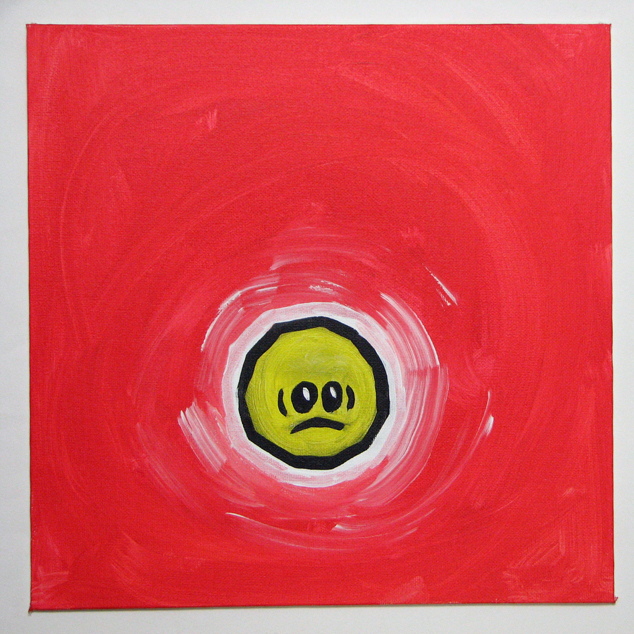
Not when the depression is severe in the way we have been talking about. If someone can snap out of it, usually they have by that stage. In general, a depressed person doesn’t like the experience and if it was a matter of just getting on and doing something, they would have tried it. Sometimes people need to learn psychological ways of getting out of the depressed state. But sometimes there is a biochemical process going on that means the person isn’t physically able to snap out of it, without professional help.

Often there is a mixture of the physical and the psychological. It’s very rarely one or the other. The more I see depression, the more I see a complex interplay between personality, the biology of our brains and our life experience.

So depressed people can’t snap out of it, but they also can’t explain very easily what is actually troubling them. It’s a very frustrating illness!

Absolutely. It’s hard for people who haven’t dealt with it professionally to have any idea what it’s like to be depressed. So people have this difficulty understanding it, and this tendency to think that the person should be able to get out of it, and the depressed person has difficulty explaining the experience and feels frustrated and stigmatized when people are telling them to snap out of it, because they know they can’t snap out of it. There is enormous tension.

I suppose the big question is, for both the depressed person and those around them, can depression be cured?

Most people with depression can either be cured or significantly helped by available treatments. These days, we have very good treatments. We can’t help everybody, but we can help the vast majority of people we see.

Is it always a long-term cure, or can it happen quickly?

It varies. Often within a few weeks many people have benefited significantly. Some forms of depression require more long-term psychological treatment, others respond very quickly to medication. And there are grades in between.

Is depression like alcoholism, where you can get it under control but never really be beyond its reach?

For most people, that’s probably a realistic comparison. I tell people that they are always going to be prone to becoming depressed, so they need to be wary about relapses in the future. They need to be sensible about their medications, learn techniques to help them, think about whether there are aspects of their lives that they need to change. We can’t always prevent future episodes, but we can usually make them less likely.

William Cowper, Poet 1731-1800

The poet Les Murray recently has been very public about coming out of his depression. It’s interesting that some of the best poetry is written by people who have been depressed. Look at William Cowper, a Christian poet and hymn writer who wrote some of his most moving material during periods of profound depression. So depression can be both creative and destructive.

This raises an important issue for Christians. How do we connect our mental and our spiritual lives?

Cowper became very doubting at times, during his depression. One thing many Christian patients say is that God seems very distant during such periods. I’ve come to accept that as part of the depressive experience rather than a problem with their faith. I’ve seen people with a very deep faith, who yearn to be close to God, and who when depressed feel very barren and remote from God. For instance, J. B. Phillips, the Bible translator, was profoundly depressed for much of his adult life. He has described this sense of distance from God.

JB Phillips, 1906-1982

That is very distressing for Christians. They begin to worry that it is a lack of faith or lack of spiritual growth. But having seen it enough, I think it is just an expression of the depressive experience. Many Christians also feel that depression is a sign of weakness, of spiritual inadequacy, and they have a strong sense of guilt. Unfortunately, I think that often the church, explicitly or implicitly, has encouraged that—that if you have depression, it’s a reflection on your spiritual life. This adds an incredible burden to people who are already feeling guilty and self-critical. It’s a bit like Job’s encouragers, who basically made him feel worse.

Why does there seem to be a large number of depressed people in our churches?

It’s often the more sensitive people who become depressed, and there are often a lot of obsessional and sensitive people in churches. My experience is that there is a lot of depression in our congregations and that we don’t handle it at all well. We often infer, explicitly or implicitly, that the Christian shouldn’t have the experience of depression—that it’s not part of the victorious Christian life. And that causes enormous guilt and makes people less likely to talk about it. I think we have a lot of silent suffering going on in our churches. People just aren’t getting helped, because they feel guilty about having depression. We need to bring out into the open the fact that depression is a common experience, even within the church. And that being a Christian doesn’t stop you from getting depression. And that having depression is no more a failing than having diabetes.

In general, the church deals very badly with mental illness. In the middle ages, it was considered demon possession; in the late 20th century it’s considered a symptom of spiritual inadequacy. But it isn’t necessarily either of these things.

Are people in very demanding ministries especially prone?

They are prone; I don’t know about especially. They are in line for so many of the factors that contribute to depression: burn-out, demoralization, excessive demands, not looking after your own emotional needs, not having time to yourself. I see some of the casualties, and often by then it’s too late because someone has resigned from the ministry or become completely disillusioned. And it’s all too hidden, too hush-hush. We’re dealing with it no better than the secular world; in some ways we’re doing worse.

What then are the ways that a depressed person can be helped, both by individuals and by the church?

Well, especially in the early days, one can be supportive, help people get back into their lives—those normal things of friendship and support, being a sounding board, willing to listen to difficulties. These things might be sufficient to alleviate the early experience of depression.

But if we’re looking at a fully formed depression that’s been going on for a while, the person should be encouraged to seek proper professional help. That doesn’t always mean a psychiatrist; it might mean a GP or a counsellor. Just someone with the skills and training to help. So that’s the first thing, when the support networks have been stretched to the limit.

While that process is happening, it’s important to be around for the depressed person, accepting the fact that it might be a frustrating experience until that person picks up. Not feeling that you have to do everything yourself. There has to be a point where a friend accepts that they can’t provide everything the person needs. That point is usually indicated by signs like someone crying constantly, their work falling apart, withdrawing inexplicably, perhaps losing weight. These things indicate that the depression is getting severe.

Finally, do you think depression has become more of a problem today than it used to be?

It’s an area of debate. There’s no doubt that depression has always existed. The old Greek medical writers are clearly describing patients with depression. There was a book written in the 17th century called The Anatomy of Melancholy which described what we would call depressed patients. So it goes back through the ages; it’s part of the general human experience.

The issue is whether it has become more frequent. People have looked at the occurrence of depression in groups of people born in different decades in this century, and the frequency of occurrence seems to go up as the decades continue. People born in the 60s are more prone to depression than those at similar ages, but born in the 30s. Now, the significance of that is debated. It could be that people in recent decades simply have become more willing to admit to their depression, hence the higher rate of reports. Or it could be true that it is becoming a more common experience, and presumably that reflects changes in society. What those changes are is a very difficult question to answer.

So it’s hard to say whether the loneliness of urban living is a major factor?

Well yes, and it’s a very interesting area of debate. The World Health Organization has released predictions of the impact of different illnesses over the next century. They are saying that depression will be the 21st century’s most disabling condition, in terms of the impact on the individual, frequency and cost to society, on a worldwide basis. That survey included all medical conditions, including cancer and heart disease. So there is a recognition that it is a very prevalent condition, and that it is a very disabling condition to have. Whatever is causing it, we’re going to have to deal with it.

flourish-65

Philip Mitchell is a Professor at the School of Psychiatry, Prince Henry Hospital in Sydney, Australia.

This article, quoted in its entirety can be found at “The Briefing” an online Christian magazine- http://matthiasmedia.com.au/briefing/longing/3959/

 

cropped-christiangraffiti1 (3)

Tourette Syndrome [Awareness]

To understand and name something is often half the battle.  An understanding of Tourette Syndrome can help us to serve people who painfully struggle with this particular challenge.

What is Tourette syndrome?

Tourette syndrome (TS) is a neurological disorder characterized by repetitive, stereotyped, involuntary movements and vocalizations called tics. The disorder is named for Dr. Georges Gilles de la Tourette, the pioneering French neurologist who in 1885 first described the condition in an 86-year-old French noblewoman.

The early symptoms of TS are almost always noticed first in childhood, with the average onset between the ages of 7 and 10 years. TS occurs in people from all ethnic groups; males are affected about three to four times more often than females.

It is estimated that 200,000 Americans have the most severe form of TS, and as many as one in 100 exhibit milder and less complex symptoms such as chronic motor or vocal tics or transient tics of childhood. Although TS can be a chronic condition with symptoms lasting a lifetime, most people with the condition experience their worst symptoms in their early teens, with improvement occurring in the late teens and continuing into adulthood.

What are the symptoms?

Tics are classified as either simple or complex. Simple motor tics are sudden, brief, repetitive movements that involve a limited number of muscle groups. Some of the more common simple tics include eye blinking and other vision irregularities, facial grimacing, shoulder shrugging, and head or shoulder jerking.  Simple vocalizations might include repetitive throat-clearing, sniffing, or grunting sounds.

Complex tics are distinct, coordinated patterns of movements involving several muscle groups. Complex motor tics might include facial grimacing combined with a head twist and a shoulder shrug. Other complex motor tics may actually appear purposeful, including sniffing or touching objects, hopping, jumping, bending, or twisting. Simple vocal tics may include throat-clearing, sniffing/snorting, grunting, or barking. More complex vocal tics include words or phrases.

Perhaps the most dramatic and disabling tics include motor movements that result in self-harm such as punching oneself in the face or vocal tics including coprolalia (uttering swear words) or echolalia (repeating the words or phrases of others). Some tics are preceded by an urge or sensation in the affected muscle group, commonly called a premonitory urge. Some with TS will describe a need to complete a tic in a certain way or a certain number of times in order to relieve the urge or decrease the sensation.

Tics are often worse with excitement or anxiety and better during calm, focused activities. Certain physical experiences can trigger or worsen tics, for example tight collars may trigger neck tics, or hearing another person sniff or throat-clear may trigger similar sounds. Tics do not go away during sleep but are often significantly diminished.

What is the course of TS?

Tics come and go over time, varying in type, frequency, location, and severity.  The first symptoms usually occur in the head and neck area and may progress to include muscles of the trunk and extremities. Motor tics generally precede the development of vocal tics and simple tics often precede complex tics.  Most patients experience peak tic severity before the mid-teen years with improvement for the majority of patients in the late teen years and early adulthood. Approximately 10 percent of those affected have a progressive or disabling course that lasts into adulthood.

Can people with TS control their tics?

Although the symptoms of TS are involuntary, some people can sometimes suppress, camouflage, or otherwise manage their tics in an effort to minimize their impact on functioning. However, people with TS often report a substantial buildup in tension when suppressing their tics to the point where they feel that the tic must be expressed. Tics in response to an environmental trigger can appear to be voluntary or purposeful but are not.

What causes TS?

Although the cause of TS is unknown, current research points to abnormalities in certain brain regions (including the basal ganglia, frontal lobes, and cortex), the circuits that interconnect these regions, and the neurotransmitters (dopamine, serotonin, and norepinephrine) responsible for communication among nerve cells. Given the often complex presentation of TS, the cause of the disorder is likely to be equally complex.

What disorders are associated with TS?

Many with TS experience additional neurobehavioral problems including inattention; hyperactivity and impulsivity (attention deficit hyperactivity disorder—ADHD) and related problems with reading, writing, and arithmetic; and obsessive-compulsive symptoms such as intrusive thoughts/worries and repetitive behaviors. For example, worries about dirt and germs may be associated with repetitive hand-washing, and concerns about bad things happening may be associated with ritualistic behaviors such as counting, repeating, or ordering and arranging.

People with TS have also reported problems with depression or anxiety disorders, as well as other difficulties with living, that may or may not be directly related to TS.  Given the range of potential complications, people with TS are best served by receiving medical care that provides a comprehensive treatment plan.

1brobry-sig4 (2)


cropped-christiangraffiti1-3-1

Source for this post: http://www.ninds.nih.gov/disorders/tourette/detail_tourette.htm#147223231

Great site at: http://tsa-usa.org/

The Frustration of Autism

What are Autism Spectrum Disorders?

Autism Spectrum Disorders (ASD), also known as Pervasive Developmental Disorders (PDDs), cause severe and pervasive impairment in thinking, feeling, language, and the ability to relate to others. These disorders are usually first diagnosed in early childhood and range from a severe form, called autistic disorder, through pervasive development disorder not otherwise specified, to a much milder form, Asperger syndrome. They also include two rare disorders, Rett syndrome and childhood disintegrative disorder.

Signs & Symptoms

Parents are usually the first to notice unusual behaviors in their child. In some cases, the baby seemed “different” from birth, unresponsive to people or focusing intently on one item for long periods of time. The first signs of an autism spectrum disorder can also appear in children who had been developing normally. When an affectionate, babbling toddler suddenly becomes silent, withdrawn, self-abusive, or indifferent to social overtures, something is wrong.

Possible Indicators of Autism Spectrum Disorders

  • Does not babble, point, or make meaningful gestures by 1 year of age
  • Does not speak one word by 16 months
  • Does not combine two words by 2 years
  • Does not respond to name
  • Loses language or social skills

Some Other Indicators

  • Poor eye contact
  • Doesn’t seem to know how to play with toys
  • Excessively lines up toys or other objects
  • Is attached to one particular toy or object
  • Doesn’t smile
  • At times seems to be hearing impaired

Social Symptoms

From the start, typically developing infants are social beings. Early in life, they gaze at people, turn toward voices, grasp a finger, and even smile.

In contrast, most children with ASD seem to have tremendous difficulty learning to engage in the give-and-take of everyday human interaction. Even in the first few months of life, many do not interact and they avoid eye contact. They seem indifferent to other people, and often seem to prefer being alone. They may resist attention or passively accept hugs and cuddling. Later, they seldom seek comfort or respond to parents’ displays of anger or affection in a typical way. Research has suggested that although children with ASD are attached to their parents, their expression of this attachment is unusual and difficult to “read.” To parents, it may seem as if their child is not attached at all. Parents who looked forward to the joys of cuddling, teaching, and playing with their child may feel crushed by this lack of the expected and typical attachment behavior.

Children with ASD also are slower in learning to interpret what others are thinking and feeling. Subtle social cues—whether a smile, a wink, or a grimace—may have little meaning. To a child who misses these cues, “Come here” always means the same thing, whether the speaker is smiling and extending her arms for a hug or frowning and planting her fists on her hips. Without the ability to interpret gestures and facial expressions, the social world may seem bewildering. To compound the problem, people with ASD have difficulty seeing things from another person’s perspective. Most 5-year-olds understand that other people have different information, feelings, and goals than they have. A person with ASD may lack such understanding. This inability leaves them unable to predict or understand other people’s actions.

Although not universal, it is common for people with ASD also to have difficulty regulating their emotions. This can take the form of “immature” behavior such as crying in class or verbal outbursts that seem inappropriate to those around them. The individual with ASD might also be disruptive and physically aggressive at times, making social relationships still more difficult. They have a tendency to “lose control,” particularly when they’re in a strange or overwhelming environment, or when angry and frustrated. They may at times break things, attack others, or hurt themselves. In their frustration, some bang their heads, pull their hair, or bite their arms.

Treatment

There is no single best treatment package for all children with ASD. Decisions about the best treatment, or combination of treatments, should be made by the parents with the assistance of a trusted expert diagnostic team.

Transcript of and interview with Dr. Bearman on Autism

Dr. Peter Bearman is the professor of Sociology at the College of Arts and Sciences at Columbia University. He also serves as co- director of the Robert Wood Johnson Foundation Health and Society Scholars program at Columbia. Recently, Dr. Bearman came to the National Institute of Mental Health to talk about the focus of his work, autism prevalence. NIMH’s Director, Dr. Thomas Insel, sat down with Dr. Bearman to discuss autism research and began by referencing recent studies that indicate an increase in autism prevalence.

Dr. Insel:  So, as you look at this that question that everyone is asking is when they see the numbers now from the CDC where it’s gone from 1 in 1500 to 1 in 150 and apparently here in the fall of 2009 the figure that’s emerging is closer to 1 in 100. Meaning, that even since 2002 there has been a very profound increase in the number of children being diagnosed with autism.

Dr. Bearman: And Autism Spectrum Disorders.

Dr. Insel:  Autism Spectrum Disorders?

Dr. Bearman: Well that’s, an important distinction. I mean obviously there’s a profound increase in Autism and Autism Spectrum Disorders.

Dr. Insel: Is there an increase in the number of children with the disorder or with the Autism Spectrum Disorder or does this largely reflect the change in the way the diagnosis is used or some sort of increase in ascertainment?

Dr. Bearman: Well, I think that’s the big million dollar question. Our work which arises from California can, show that changes in diagnostic processing and diagnostic criteria I would say the period from 1992 to 2005 the changes in diagnostic criteria over that period that operate on the border between autism and mental retardation can be associated with about a quarter of the increase prevalence. Over that same period there has been a really fundamental change in the ascertainment, you can see that in lots of ways, but the most obvious way to see the changes in ascertainment, is to see that the social economic status gradient that used to be present for autism, the fact that children living and residing in wealthy communities are more likely to get a diagnosis, and that gradient largely disappears.

Dr. Insel: What seems important Peter in the way you’ve done this rather than you answering the question to say it’s increase, not increased your answering the question by what proportion of increase can be explained by separate factors because everybody’s pointing to changes in diagnosis, changes in ascertainment the way in which services may affect the use of the diagnosis. So what everybody really wants to know at the end of all this, is that actually are more children affected with the disorder or will 100 percent of this increase in prevalence be explained by these other factors?

Dr. Bearman: Our strategy is to try to decompose this increase into its constituent elements. Some component of that is increased ascertainment, some component of that is diagnostic change in diagnostic criteria, some component of that arises from already known risk factors, such as increases in parental age are associated with greater probability of genome mutations that could lead to copy errors that are associated with neurodevelopmental disorders. So social demographic changes that are affecting all western countries, the United States, and also California, can express themselves in increased incidence of autism on top of diagnostic ascertainment dynamics. I think the trick to figuring out how to decompose this increase into its constituent elements is to pay attention to the two dimensions that are important. The first dimension is temporal just the fact of temporal change, we are in the period of increased prevalence and if we’re in a period of increased prevalence and at the same time for example there’s also an increase in older parents. The risk associated with older parents will naturally appear to be greater now than it was a decade ago. So paying attention to temporal heterogenic is important. The other part of our work I think that’s  the most exciting is to pay attention to the spacial heterogenic and the fact that we can observe very strong,  very distinct, very stable clusters of increased risks for autism at very fine spacial resolution. For example, in California, there’s a very clear cluster in about 20 kilometers by 50 kilometers in which the relative risk for autism not, Autism Spectrum Disorders but autism itself is significantly higher over every year of observation that we make than any other place in California. That invites a couple of considerations, first, it invites the recognition that if you observe local spacial clustering whatever causes some components of the increased prevalence in autism it is not a global treatment. Secondly, it invites us to ask, well is there something in that local area that is driving an increased prevalence that could be a shared toxicological environment, it could be a virus that moves through and spreads from person to person and affects children in utero. Or it could be a piece of an ascertainment process which would be the diffusion of information from parent to parent as they learn how to recognize some symptoms for autism which have no biological markers.

Dr. Insel: From what you know now when you add all of those together how much of the increase can you explain?

Dr. Bearman: Well that’s a complicated question, but I think we can pretty uniquely associate about a quarter of the increase from the birth cohorts from 1992 to 2001 which is a lot, to diagnostic change on the border between diagnosis and mental retardation in autism. I think we can associate about 16 percent of the increase on the other border between autism and other neurodevelopmental disorders on the spectrum: Asperger’s, PPDNOS etc. And those are largely non over-lapping components of increase, so that’s about 40 percent. I think the spacial clustering itself adds another few percent. I would say I am confident that 40 percent of the increase I think I know what caused that. That leaves a lot of increase left, 50 percent is a lot to look for still.

Dr. Insel: Any ideas about what’s driving that other 50 percent?

Dr. Bearman: Well, some is genetic. I think that the increased parental age accounts were 11 percent of the increase over this period and that’s a lot and the mechanism by which increased parental ages expressing itself I think likely largely genetic. I think the tricky part is going to recognize that it would be harder now to find that 50 percent. It would look like it should be some toxicological environment that’s shared because of the spacial clustering. Because there’s a very strong process of amplification of the understanding of autism that leads to increased diagnosis as parents learn how to recognize symptoms a very, very, small event that would transform the environment five years ago, ten years ago, even you could imagine, 40 years or 50 years ago, when the moms of children with autism now were in utero as eggs- a very small event could cascade into a larger epidemic now.

Dr. Insel: So what do you tell parents who ask about this if you have friends who have autistic children and they say “What’s going on here? Why this epidemic?” What do you say in response?

Dr. Bearman: Well, I think parents are struggling to just enormously difficult to have a child with autism. It makes it very hard. I think parents are naturally searching for explanations, and I think that the message now is the search for a quick and dirty explanation might not be advancing science.

Dr. Insel: Thank you very much.  Good discussion.

Links on Autism

http://www.nimh.nih.gov/health/publications/autism/index.shtml