Tourette Syndrome: Know The Basics

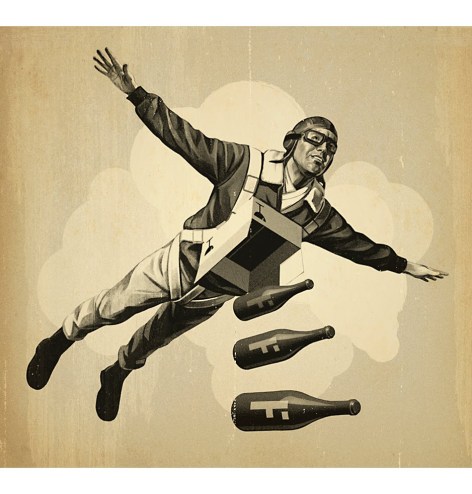
“Dropping F Bombs”

*******

Tourette’s disorder, or Tourette syndrome

(TS) as it is frequently called, is a neurologic syndrome. The essential feature of Tourette’s are multiple tics that are sudden, rapid, recurrent, non-rhythmic, stereotypical, purposeless movements or vocalizations.

 
 What are the symptoms of Tourette syndrome?
 
  • Both multiple motor and one or more vocal tics are present at some time during the illness, although not necessarily simultaneously
  • Occurrence many times a day nearly every day or intermittently throughout a span of more than one year
  • Significant impairment or marked distress in social, occupational, or other important areas of functioning.
  • Onset before the age of 18.

 Symptoms can disappear for weeks or months at a time and severity waxes and wanes.


What are the first tics that may be characteristic of Tourette’s syndrome?

Usually, the facial tic, such as rapid blinking of the eyes or twitches of the mouth, may be the first indication a parent has that their child may have Tourette’s syndrome. Involuntary sounds, such as throat clearing and sniffing, or tics of the limbs may be an initial sign in other children.


Are any other symptoms associated with Tourette’s syndrome?

Approximately 50 percent of patients meet criteria for attention deficit hyperactivity disorder (ADHD) and this may be the more impairing problem. Approximately one-third of patients meet criteria for obsessive-compulsive disorder (OCD) or have other forms of anxiety. Learning disabilities are common as well as developmental stuttering. Social discomfort, self-consciousness and depressed mood frequently occur, especially as children reach adolescence.


Yelling and irrational

What causes these symptoms?

Although the cause has not been definitely established, there is considerable evidence that Tourette’s syndrome arises from abnormal metabolism of dopamine, a neurotransmitter. Other neurotransmitters may be involved.


Can Tourette’s syndrome be inherited?

Genetic studies indicate that Tourette’s syndrome is inherited as an autosomal dominant gene but different family members may have dissimilar symptoms. A parent has a 50 percent chance of passing the gene to one of his or her children. The range of symptomatology varies from multiple severe tics to very minor tics with varying degrees of attention deficit-disorder and OCD.


Are boys or girls more likely to have Tourette’s syndrome?

The sex of the child can influence the expression of the Tourette’s syndrome gene. Girls with the gene have a 70 percent chance of displaying symptoms, boys with the gene have a 99 percent chance of displaying symptoms. Ratios of boys with Tourette’s syndrome to girls with Tourette’s syndrome are 3:1. 


How is Tourette’s syndrome diagnosed?

No blood analysis, x-ray or other medical test exists to identify Tourette’s syndrome. Diagnosis is made by observing the signs or symptoms as described above. A doctor may wish to use a CAT scan, EEG, or other tests to rule out other ailments that could be confused with TS. Some medications cause tics, so it is important to inform the professional doing the assessment of any prescribed, over-the-counter, or street drugs to which the patient may have been exposed.


What are the benefits of seeking early treatment of Tourette syndrome symptoms?

When a child’s behavior is viewed as disruptive, frightening, or bizarre by peers, family, teachers, or friends, it provokes ridicule and rejection. Teachers and other children can feel threatened and exclude the child from activities or interpersonal relationships. A child’s socialization difficulties will increase as he reaches adolescence. Therefore, it is very important for the child’s self-esteem and emotional well-being that treatment be sought as early as possible.


What treatments are available for Tourette syndrome?

Not everyone is disabled by his or her symptoms, so medication may not be necessary. When symptoms interfere with functioning, medication can effectively improve attention span, decrease impulsivity, hyperactivity, tics, and obsessive-compulsive symptomatology. Relaxation techniques and behavior therapy may also be useful for tics, ADD symptoms, and OCD symptoms. 


How does Tourette syndrome affect the education of a child or adolescent with Tourette syndrome?

Tourette syndrome alone does not affect the IQ of a child. Many children who have Tourette syndrome, however, also have learning disabilities or attention deficits. Frequently, therefore, special education may be needed for a child with Tourette syndrome. Teachers should be given factual information about the disorder and, if learning difficulties appear, the child should be referred to the school system for assessment of other learning problems.


What is the course of Tourette syndrome?

Some people with Tourette syndrome show a marked improvement in their late teens or early twenties. However, tics as well as ADD and OCD behavior, may wax and wane over the course of the life span.   


Reviewed by Charles T. Gordon, III, M.D., 2003


For more help go to: http://www.nami.org/   and  http://www.tsa-usa.org/


*******

Scorners Have a Certain Power


I finally broke through and realized that I am a consummate scorner.  I have cultivated this for many years, and especially the last five.  I will tell now, I am to scorning as Tiger Woods is to golf.  I have been diagnosed with Hepatitis C, a durmoid brain tumor, lung issues with a chemical accident, manic-depression requiring extensive hospitalization, and a low thyroid requiring meds.  And, on top of this, the death of a newborn daughter.

My faith has been extremely challenged through all of this.  I have pastored a church and taught classes at a local Bible college, all with a lot of enthusiasm and purpose.  My students and my congregation were being blessed.  But all of this pretty much disintegrated around me and I found myself with a whole lot of nothing. 

Scorn has never been anything I gravitated to.  But it has ‘seeped’ into my thinking, through a slow and steady presence.  It works like mercury poisoning.  It has touched me as a gradual toxin, slowly sickening me with its constant contact.  I haven’t been connected with the light as I should have.  But over an extensive amount of time, a venomous and noxious filth has been introduced into my heart and my thinking.  It must be like watching someone die from ‘radiation sickness’.

To scorn means to become ” ‘competous’, disdainful, scornful, to mock.”  I never, ever dreamed I would be brought to this point.  But life has continuously rolled over me, and I find I just can’t make it work anymore.  I definitely do understand the promises of God.  But I definitely do not understand God’s grace on me.  But you might as well try to explain the color ‘blue’ to a blind man.

I am Bryan, the scorner.  I am also ‘a spiritual beggar’, with a significant mental illness.  I should be on the streets pushing a shopping cart and drinking cheap vodka.  When I start to scorn, I get mean and cynical.  I’m contemptuous and I sneer at whatever crosses my path that day.  I hear voices and ‘tune in’ radio stations.  All I lack is a ‘tin-foil’ hat, which I have seriously considered.

My depression molds my thinking, and my despair rules the rest.  The promises of God are not for me, and they seem to always be out of my reach.  In many ways, I am an ‘unbelieving’ believer (there are many people like us).  My own frosty coldness and hardness never seems to amaze me.  I don’t want to be this way.  God, help me please.

A defining word, for people like me is this: “self-forgiveness“.  I consider myself above average when it comes to forgiving others.  I look forward to forgiving others.  But, I just cannot forgive myself.  I simply can’t let myself  ‘get off the hook’.  At times I do sense a comfort and a peace over these sins, but very soon they begin to rub me raw.  Like blisters, or ‘a stone in my shoe’, I begin to limp again. They are incredibly persistant.

This is not self-pity.  I am not looking for any manner of attention or warm hugs.  I do though want to open up my darkness so the light gets in.  I must learn to forgive myself, if I will ever walk clean.  This is imperative.  The adulteress who fell at Jesus’ feet and wept managed to forgive herself of a great deal of sin.  Those of us with mental illness/addictions have to come to this same point.  Is Jesus’ love enough to cover me?

Victory Over Affliction #4

So we plow on in this miniseries on “Victory in Our Affliction”. 


This is part 4.

****

 Part 1 is here–https://brokenbelievers.com/2010/09/23/victory-in-the-middle-of-affliction/ 

Part 2 is here–https://brokenbelievers.com/2010/10/19/more-victory-in-our-affliction/ 

Part 3 is here–https://brokenbelievers.com/2010/10/26/even-more-victory-in-our-affliction/


Afflictions Help Us Comfort Others

“Blessed be the(B) God and Father of our Lord Jesus Christ, the Father of mercies and(C) God of all comfort, 4(D) who comforts us in all our affliction, so that we may be able to comfort those who are in any affliction, with the comfort with which we ourselves are comforted by God.”   2 Cor. 1:3-4, ESV


Being afflicted with pain and suffering manuevers us into the place of being the source of comfort for others.  God’s comfort energizes us to touch others.  So many hurt.  They are overwhelmed by pain and live in misery. A dynamic is at work here.  My pain brings God’s comfort.  God’s comfort is transmitted to others by me.  They are blessed and are strengthened to go on and touch others.

But its all about the ‘proper use of afflictions’.  Will we ‘turn’ and become active in the special economy of God?  We must accept that God intends our affliction to be the way of blessing for others.  When we hurt so bad, we see that grace flows to those who need Him the most.

How Do We Respond to the Pain?

First of all, we cannot escape affliction.  It is inevitable.  But will it bless us and others?  Pain has an intentionally deliberate purpose for us.  Since we cannot escape the pain, it would behoove us to take it and manufacture comfort for others.  We must learn to make affliction fruitful. 

And we know that for those who love God all things work together(A) for good,[a] for(B) those who are called according to his purpose. 

Rom. 8:28, ESV

Keeping the ‘valves and lines’ open involves special attention to the sins of bitterness and anger.  These two are responsible for a great deal of frustration and impotence in the Christian’s walk.

First, We Need to Praise the Lord.

Coming and then staying in this place is critical.  We need to learn to praise from the ‘ash heap’.  “Whatever happens, keep thanking God because of Jesus Christ. This is what God wants you to do.”  1 Thess. 5:18, CEV.  Your heart must not become bitter, you must keep it sweet and responsive. “My brothers and sisters, when you have many kinds of troubles, you should be full of joy”  James 1:2


Second, We Should Pray.

James 5:13 says, “Is anyone among you suffering? Let him pray.” From the ash heap we should be in prayer.  Praying at this time should be as important as praise.  Our devotional life needs to lift a notch into these dual disciplines.  By the way, prayer is an immense blessing to our our pain.  Its like aloe vera to a bad sunburn.  Prayer has a soothing and restorative effect on our blistered spirit.


Third, We Should Feed at His Word.

We are instructed, “Before I was afflicted I went astray, but now I keep Your word.”  Ps. 119:67.  When you hurt, really bad it will make your time with the Bible and its promises so precious.  When I’m in pain the Word is the most precious thing I can think of.  A topical Bible can be very helpful.

“When I am hurting,  I find comfort in your Word that leads me to life.”  Ps. 119:50

“Unless Your law had been my delight, I would then have perished in my affliction.”  Ps. 119:92


Four, We Should Strive to be Patient and to Have Faith.

This is not a wooden or artificial issue.  We must deliberately choose this direction, daily.  Patience is foundational and fundamental.  With it, you will survive, without it things will get ugly quick.  “Rejoicing in hope, patient in tribulation, continuing steadfastly in prayer.”  Rom. 12:12

Faith and patience will bring us a confidence.  When we ‘believe’ with a dynamic faith, we will be able to absorb some intense issues.  If you have ever driven a car with blown shock absorbers, you will understand.

“But let patience have its perfect work, that you may be perfect and complete, lacking nothing.”  James 1:4

Even More Victory in Our Affliction


Reach for the tape

 So we plow on in this miniseries on “Victory in Our Affliction”. 

This is part 3.

 ***

Part 1 is here–https://brokenbelievers.com/2010/09/23/victory-in-the-middle-of-affliction/ 

Part 2 is here–https://brokenbelievers.com/2010/10/19/more-victory-in-our-affliction/

*****

Can Our Pain Produce Anything Good?

Our pain tells us we are growing in Christlikeness.  When we hurt often the Lord will draw quite close, with pain focusing our eyes to see Him, others and His Kingdom.  It is far from pleasant.  Diamonds are produced in confinement and pressure.  Our faith is like a precious jewel ‘in the making’. Gold has to be refined to make it pure .  “I tested you in hard times just as silver [or, gold] is refined in a heated furnace.” Isa. 48:10.  Both diamonds and precious metals have to be worked on before they are recognized as authentic.  Often, it will be a blast furnace of affliction.

“For our light affliction, which is but for a moment, is working for us a far more exceeding and eternal weight of glory.”  2 Cor. 4:17, NKJV

“These little troubles are getting us ready for an eternal glory that will make all our troubles seem like nothing.” 2 Cor. 4:17, CEV

We can hold a sense that our different afflictions are actually our employees who work for us.  They ‘prompt’ us for what we need at any given moment.  For example, we need to grow in love.  What does God do?  He sends us very difficult and frustrating people for us to love.  He sends us His best for us!  Our lessons are given to guide us into a Christlike identity.

The natural impulse is to regard our affliction as eroding our faith, or degrading it.  But the opposite is true.  Affliction is like the weight bars waiting for us in the gym.  The bar and weights do not have an agenda or impulse to defeat me.  They are there to help me.  The gym is a wonderful metaphor for us to grasp spiritual things.

“And not only so, but we glory in tribulations also: knowing that tribulation worketh patience.”  Romans 5:3, KJV

The word ‘patience’ simply means ‘endurance’.  And it seems we are starting all over in thinking that afflictions are evil, and to be avoided and rejected.  But actually the opposite is true!  We deal with the pain and frustration knowing it is working in us a ‘concentrated form of glory.’

“Knowing that the testing of your faith produces patience.”  James 1:3

Essentially it is all ’cause and effect’ with our provisional acceptance to the Lord’s good intention, we let Him have His way with us.  It hurts, some may call it brutal, but it seems to be the only way for God to make us ready for eternity.