An Astonishing Love

Oh, how He loves you!

By Charles Spurgeon and Bryan Lowe

____

A short conversation about love, grace and sin.

*flourish1

*

“Dost thou know, O saint, how much the Holy Spirit loves thee?”

 “Me? I can’t imagine why. I’m the chief of sinners. I’m rotten to the core. I can bring nothing at all to Him.”

“Canst thou measure the love of the Spirit? Dost thou know how great is the affection of his soul towards thee?”

“So you say. But I really can’t see why He would. I want to believe, I really do. I can only be a liability. My sin is heavy.”

“Go measure heaven with thy span; go weigh the mountains in the scales; go take the ocean’s water, and tell each drop; go count the sand upon the sea’s wide shore; and when thou hast accomplished this, thou canst tell how much he loveth thee.”

“If this is true, then perhaps maybe I am worth something, I suppose. But frankly, my imagination staggers just trying to grasp this.”

“He has loved thee long, he has loved thee well, he loved thee ever, and he still shall love thee; surely he is the person to comfort thee, because he loves.”

“This kind of love is fantastically amazing, isn’t it. I must try to tell others what has happened to me.”

*

From the Daily Help Devotional, and my imagination.

Charles Haddon Spurgeon (1834-92) was England’s best-known preacher for most of the second half of the nineteenth century. In 1854, just four years after his conversion, Spurgeon, then only 20, became pastor of London’s famed New Park Street Church (formerly pastored by the famous Baptist theologian John Gill). The congregation quickly outgrew their building, moved to Exeter Hall, then to Surrey Music Hall. In these venues Spurgeon frequently preached to audiences numbering more than 10,000—all in the days before electronic amplification. In 1861 the congregation moved permanently to the newly constructed Metropolitan Tabernacle.

    Spurgeon’s printed works are voluminous, and those provided here are only a sampling of his best-known works, including his magnum opus, The Treasury of David. Nearly all of Spurgeon’s printed works are still in print and available from Pilgrim Publications, PO Box 66, Pasadena, TX USA 77501.
*

ybic, Bryan

Life Off the Grid

“You used to live in sin, just like the rest of the world, obeying the devil—the commander of the powers in the unseen world. He is the spirit at work in the hearts of those who refuse to obey God.”

Ephesians 2:2, NLT

“We know that we are children of God and that the world around us is under the control of the evil one.”

1 John 5:19

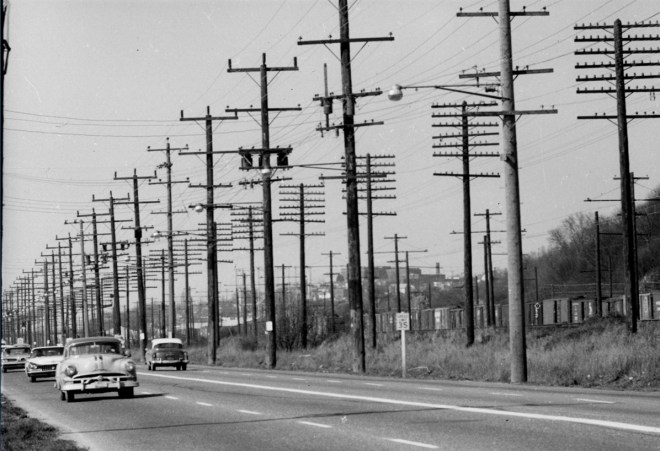
An “off-the-grid” lifestyle is living disconnected from basic utilities (such as electric, water supply, etc.)  It has essentially become a significant movement as many seek a life separated from what is perceived as intrusion.  These new homes are autonomous; they provide an alternative to a “life plugged into society” and choosing to be detached from the popular culture.

From what I’ve read, it seems like it is very similar to what the Old Order Amish and Conservative Mennonites have done for centuries.  It seems to be more than “survivalism” and many off-grid people believe they are experiencing a deeper standard of living by being independent.

The Bible teaches that there is a world system that has us enmeshed.  The system is everywhere you see injustice, disease, bondage, wars and pain.  It seems to have a very comprehensive presence of organized wickedness, and it is quite pervasive–it is seen everywhere.

There is a way however, of disconnecting yourself from this spiritual grid.  But there seems to be a consistent pressure on us as Christians to stay connected to this world system.  Those who desire to live off-grid face a degree of scorn and “rolling-of-the-eyes.”  This should be anticipated.  Humans have a tremendous desire for conformity.

The evil found in this world can be intense.  In Bible narrative we see judgement brought on organized societies for their hatred of godliness and godly people.  Satan’s dark fantasy is to control and determine the destiny of all that he can.  The world as we know it, “is  under the control of the evil one.  The future antichrist will centralize darkness so it does the will of his father, the devil.

The Apostle John had a crisp and clear vision of the spiritual landscape in an extraordinary way.  Many times he speaks clearly.  And at other times John uses symbols and coded information to reveal what is coming.  His writings, especially 1 John and Revelation are embedded with the truths that he saw.

“Don’t love the world or anything that belongs to the world. If you love the world, you cannot love the Father. “

1 John 2:15, CEV

“Off-the-grid” living may have many advantages and appeal, on a physical plane.  (Each of pay a ‘princely’ sum to the electric and water companies.)  But unplugging yourself from this world’s system takes the help of the Holy Spirit.  May the Father guide you in this.

People were eating, drinking, and getting married right up to the day that the flood came and Noah went into the big boat. They didn’t know anything was happening until the flood came and swept them all away. That is how it will be when the Son of Man appears.

Matt. 24:38-39, CEV

 ybic, Bryan

&

&

Extraordinary Bread

“Give us this day our daily bread.”

Matthew 6:11, ESV

“Don’t bargain with God. Be direct. Ask for what you need. This isn’t a cat-and-mouse, hide-and-seek game we’re in. If your child asks for bread, do you trick him with sawdust? You’re at least decent to your own children. So don’t you think the God who conceived you in love will be even better?”

Matthew 7:9, 11, Message

His miracles for us often require some responsiveness on our part.  He truly supplies what we need–but from day-to-day.  He doesn’t just deliver a “pallet” of bread every 2 months.  He simply provides what we need, day by day, contingent on us asking.  If we don’t ask, he won’t provide.  But his ear is very attentive to our cry for provision.

The bread provided is a gift.  We are of the impression that we earn our bread, we work for it.  This verse simply and profoundly says that he gives it.  Bread is an issue of his grace and kindness.  It is something that is given.  You might say that our bread is grace in wheat form.

We must learn to trust him at this basic need.  We need food on a daily level.  We really should be aware of this essential need.  Your supper tonight is infused with His goodness.  He was the provider.  Someone else may have taken certain ingredients and enhanced your dining experience, but he made the provision to your table.

The definitive issue is the “day-by-day” factor.  We must learn that this is the way our Father operates.  We are compelled into His daily care.  Grace comes to us with a day-by-day submission.  That is not a bad thing.  We simply surrender our wills to our Lord.  We must keep coming to him, and asking.

A day’s portion, arriving a day at a time.  It is a profound deception if we believe we can move beyond this.  We accrue wealth and anticipate “protection” from the vagaries of a deity we can’t see.  We want safety and security that is definite and solid.  We feel that if we have worked long enough, and sweated enough, then we will eat well.  It is our privilege.

And we have gone the extra mile, and have developed a “doctrine” that fits our decision-making process.  Theology is important to us, and we try to develop something that will cover us and soothe us, and provide a maximum amount of coverage. However being his disciple is not like buying good car insurance.  But we can’t shake a deep conviction that we have “adjusted” what is real and lasting.

The Father intends that we are to be reliant on him, exclusively.  But that, to be perfectly honest, frightens us. (That maybe why it is done so rarely.)

Being a believer is something quite radical.  It should affect us at the deepest of levels.  We must insist on a way of thinking that propels us into the place of a simple faith.  Our faith in our Father will always be day-to-day.  We can’t think otherwise.  If we try to make it otherwise, we end up in a deep confusion.  The Father has insisted that we depend on Him.

Exodus 16 is the Manna Chapter. To always rely on God daily was for many to be an issue.  When they attempted to get ahead, that extra would become rotten.  If I remember right, the surplus manna produced maggots.

We come to Him hungry.  That is the way he insists.  Our stomachs may growl, but He will always provide all that we need.  Always–our hunger for a day’s provision should move us into a place of grace.  You could say we have a substantial need for His grace.  He will always provide for his children.  And we really do trust Him. (Or do we?)

*

ybic, Bryan

The King Concept

“Power and peace will be in his kingdom
       and will continue to grow forever.
    He will rule as king on David’s throne
       and over David’s kingdom.
    He will make it strong
       by ruling with justice and goodness
       from now on and forever.
    The Lord All-Powerful will do this
       because of his strong love for his people.”

Isaiah 9:7, NCV

Things are now finally falling into place.  Jesus brings with Him a very definite sense of the Kingdom.  Darkness has been tricked.  It has been totally overcome by His presence.  The twin attributes of power and of peace are penetrating everything they touch.  We will no longer have to put up with deception and sin.

This intervention will continue, forever.  All I can do, is witness to its power.  Nothing phases it.  It continues to advance without melodramatics or manipulation.  He fully intends to sit on the throne of David; it is His by right and by deed.  Because, after all, He is the true King.

He is not just a token king, or a king in idea or theory.  He does rule, fully and completely.  He fortifies the kingdom and brings an intentional awareness to His subjects of true love and peace.  The concepts of justice and goodness, which have never really been considered, are released into the lives of the people.

There is a pervasive sense that this will continue and endure.  The King and the kingdom has come  (and there isn’t a thing we can do about it.)  This is not a ‘flash in the pan’.  It has the idea of eternity stamped all over it.  What He is doing is eternal.  It is not temporary or fleeting.  What He is doing is nothing more than revolution in the spiritual realm.

Our verse in Isaiah 9, speaks resoundly about ‘love’.  It is His love that pushes through all this turmoil and confusion.  He loves us to the extent of dying in our place.  Love is what energizes Him, it causes Him to look for us.  Love are the ‘rails’ He moves on, to come to us.  When He finally locates us, He purchases us with His own money off of the slave block.  No questions and no demands.

Because He is all-powerful, He cannot be limited to the status of a ‘quasi-God’. His complete strength allows Him the option of doing whatever He chooses.  There are voices, scattered and strained, that have the audacity to claim that they really rule.  But if we think about, we discover that this is nothing more then a spiritual comedy being played out.

As we think about Isaiah, and his prophetic awareness, we are brought to an understanding that absolutely ‘rocks’ our world.  Jesus flips it all on its head, and the weakest become the strongest. He alone is our hope.  And He has done it all.

&

ybic, Bryan