Hearing Voices


5117230-1x1-700x700

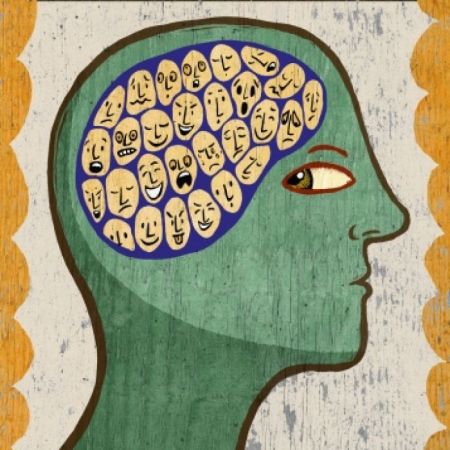
I guess I’m in a wandering/wondering frame of mind.  I’ve been hearing voices off and on.  They are clear, distinct and I suppose  rather commanding.  Previously I’ve dealt with ‘tinnitus’, but this is definitely different.  The voices are not incredibly sophisticated–its usually just one or two words.  Quite simple actually.

Perhaps the full reason of why this is a problem,  because I wonder about some sort of ‘mental degradation’.

  • Am I getting worse?
  • Are the ‘voices’ the sign of the end for me?
  • Will they take over?
  • Will I turn into a blathering idiot?
  • Could they be ‘demonic’ or worse?

I have this image of a stark raving crazy guy, hung up on religion and ‘right-wing extremism’, foaming at the mouth and ‘heading for a bunker up in the mountains.’  But I am none of these things.  Maybe that’s why it scares me so.  I cannot relate to any of this, and I don’t want to.  I am not that person. This is not me.

The voices by themselves, not extrapolating their content, are disruptive enough.  They don’t have to be specific, all they have to be is loud and insistent.  It really doesn’t matter if I obey them.  They disrupt me just by speaking. (I hope they never decide to expand their vocabulary!)

I have a new insight to my brothers and sisters who struggle with schizophrenia/bipolar.  Many are on the streets, and they are desperately homeless.   On almost a ‘medieval’ level they battle with dragons.  Sometimes they push back the beastie, and then sometimes they themselves are slammed back.  But no matter what will happen that day, God’s love meets the warrior, and He lifts them up.

Voices.  These are not dredged up, or manipulated.  I definitely do not ‘manufacture’ them.  I certainly not doing this for attention.  But when they do press me (with an order or command) I do know that it is an alien voice, coming from outside of me.   I know the presence of Jesus pushes them away. I call on His name and they flee.

I have to believe, that God is holding on to me with both hands. 

He will not let me slide into the night, alone.  He has determined that darkness will never claim me.  I turn as I can, to look at Him, face-to-face by faith.  “He has come to heal the broken-hearted.  A bruised reed,  He will not break.  A smoking wick, He will not quench” (Isa. 43:3). What an awesome promise! We serve a gentle and protective God.

There may (or may not) be spiritual warfare issues. I believe that there is a magnificent power in the name of Jesus. The blood and the cross are for my protection. I shelter in all He is and all He has done, If anything, they push me toward the Lord Jesus and He protects me.


1brobry-sig

cropped-christiangraffiti1-2


Schizophrenia Understood

amber_osterhout_painting

Understanding the World of the Schizophrenic

Schizophrenia is a chronic, severe, and disabling brain disorder that has affected people throughout history. About 1 percent of Americans have this illness. People with the disorder may hear voices other people don’t hear. They may believe other people are reading their minds, controlling their thoughts, or plotting to harm them. This can terrify people with the illness and make them withdrawn or extremely agitated.

People with schizophrenia may not make sense when they talk. They may sit for hours without moving or talking. Sometimes people with schizophrenia seem perfectly fine until they talk about what they are really thinking. Families and society are affected by schizophrenia too. Many people with schizophrenia have difficulty holding a job or caring for themselves, so they rely on others for help.

Treatment helps relieve many symptoms of schizophrenia, but most people who have the disorder cope with symptoms throughout their lives. However, many people with schizophrenia can lead rewarding and meaningful lives in their communities. Researchers are developing more effective medications and using new research tools to understand the causes of schizophrenia. In the years to come, this work may help prevent and better treat the illness.

The symptoms of schizophrenia fall into three broad categories:

  1. positive symptoms,
  2. negative symptoms, and
  3. cognitive symptoms.

Positive symptoms

Positive symptoms are psychotic behaviors not seen in healthy people. People with positive symptoms often “lose touch” with reality. These symptoms can come and go. Sometimes they are severe and at other times hardly noticeable, depending on whether the individual is receiving treatment. They include the following:

Hallucinations are things a person sees, hears, smells, or feels that no one else can see, hear, smell, or feel. “Voices” are the most common type of hallucination in schizophrenia. Many people with the disorder hear voices. The voices may talk to the person about his or her behavior, order the person to do things, or warn the person of danger. Sometimes the voices talk to each other. People with schizophrenia may hear voices for a long time before family and friends notice the problem.

Other types of hallucinations include seeing people or objects that are not there, smelling odors that no one else detects, and feeling things like invisible fingers touching their bodies when no one is near.

Delusions are false beliefs that are not part of the person’s culture and do not change. The person believes delusions even after other people prove that the beliefs are not true or logical.

People with schizophrenia can have delusions that seem bizarre, such as believing that neighbors can control their behavior with magnetic waves. They may also believe that people on television are directing special messages to them, or that radio stations are broadcasting their thoughts aloud to others. Sometimes they believe they are someone else, such as a famous historical figure. They may have paranoid delusions and believe that others are trying to harm them, such as by cheating, harassing, poisoning, spying on, or plotting against them or the people they care about. These beliefs are called “delusions of persecution.”

Thought disorders are unusual or dysfunctional ways of thinking. One form of thought disorder is called “disorganized thinking.” This is when a person has trouble organizing his or her thoughts or connecting them logically. They may talk in a garbled way that is hard to understand. Another form is called “thought blocking.” This is when a person stops speaking abruptly in the middle of a thought. When asked why he or she stopped talking, the person may say that it felt as if the thought had been taken out of his or her head. Finally, a person with a thought disorder might make up meaningless words, or “neologisms.”

Movement disorders may appear as agitated body movements. A person with a movement disorder may repeat certain motions over and over. In the other extreme, a person may become catatonic. Catatonia is a state in which a person does not move and does not respond to others. Catatonia is rare today, but it was more common when treatment for schizophrenia was not available. “Voices” are the most common type of hallucination in schizophrenia.

Negative symptoms

Negative symptoms are associated with disruptions to normal emotions and behaviors. These symptoms are harder to recognize as part of the disorder and can be mistaken for depression or other conditions. These symptoms include the following:

  • “Flat affect” (a person’s face does not move or he or she talks in a dull or monotonous voice)
  • Lack of pleasure in everyday life
  • Lack of ability to begin and sustain planned activities
  • Speaking little, even when forced to interact.

People with negative symptoms need help with everyday tasks. They often neglect basic personal hygiene. This may make them seem lazy or unwilling to help themselves, but the problems are symptoms caused by the schizophrenia.

Cognitive symptoms

Cognitive symptoms are subtle. Like negative symptoms, cognitive symptoms may be difficult to recognize as part of the disorder. Often, they are detected only when other tests are performed. Cognitive symptoms include the following:

  • Poor “executive functioning” (the ability to understand information and use it to make decisions)
  • Trouble focusing or paying attention
  • Problems with “working memory” (the ability to use information immediately after learning it).

Cognitive symptoms often make it hard to lead a normal life and earn a living. They can cause great emotional distress.

****************

Much of this article came from an outside source. I’m just the errand boy on this post.

Getting Both Barrels

Dual Diagnosis of Mental Illness and Substance Abuse

Drugs & booze are deadly

Dual diagnosis services are treatments for people who suffer from co-occurring disorders — mental illness and substance abuse. Research has strongly indicated that to recover fully, a consumer with co-occurring disorder needs treatment for both problems — focusing on one does not ensure the other will go away. Dual diagnosis services integrate assistance for each condition, helping people recover from both in one setting, at the same time.

Dual diagnosis services include different types of assistance that go beyond standard therapy or medication: assertive outreach, job and housing assistance, family counseling, even money and relationship management. The personalized treatment is viewed as long-term and can be begun at whatever stage of recovery the consumer is in. Positivity, hope and optimism are at the foundation of integrated treatment.

How often do people with severe mental illnesses also experience a co-occurring substance abuse problem?

There is a lack of information on the numbers of people with co-occurring disorders, but research has shown the disorders are very common. According to reports published in the Journal of the American Medical Association (JAMA):

  • Roughly 50 percent of individuals with severe mental disorders are affected by substance abuse.
  • Thirty-seven percent of alcohol abusers and 53 percent of drug abusers also have at least one serious mental illness.
  • Of all people diagnosed as mentally ill, 29 percent abuse either alcohol or drugs.

The best data available on the prevalence of co-occurring disorders are derived from two major surveys: the Epidemiologic Catchment Area (ECA) Survey (administered 1980-1984), and the National Comorbidity Survey (NCS), administered between 1990 and 1992.

Results of the NCS and the ECA Survey indicate high prevalence rates for co-occurring substance abuse disorders and mental disorders, as well as the increased risk for people with either a substance abuse disorder or mental disorder for developing a co-occurring disorder. For example, the NCS found that:

  • 42.7 percent of individuals with a 12-month addictive disorder had at least one 12-month mental disorder.
  • 14.7 percent of individuals with a 12-month mental disorder had at least one 12-month addictive disorder.

The ECA Survey found that individuals with severe mental disorders were at significant risk for developing a substance use disorder during their lifetime. Specifically:

  • 47 percent of individuals with schizophrenia also had a substance abuse disorder (more than four times as likely as the general population).
  • 61 percent of individuals with bipolar disorder also had a substance abuse disorder (more than five times as likely as the general population).

For the rest of this article, go to NAMIhttp://www.nami.org/Template.cfm?Section=By_Illness&Template=/TaggedPage/TaggedPageDisplay.cfm&TPLID=54&ContentID=23049

*****************

Grade Your State

Our national mental health care system is in crisis. Long fragile, fragmented, and inadequate, it is now in serious peril. In 2003, the presidential New Freedom Commission presented a vision for a life-saving, recovery-oriented, cost-effective, evidence-based system of care. States have been working to improve the system, but progress is minimal.

Today, even those states that have worked the hardest stand to see their gains wiped out. As the country faces the deepest economic crisis since the Great Depression, state budget shortfalls mean budget cuts to mental health services.

The country as a whole was graded D. No states received an A grade, and only six (Connecticut, Maine, Maryland, Massachusetts, New York and Oklahoma) received a B. Eighteen states got C’s, a whopping 21 got D’s – and 6 states (Arkansas, Kentucky, Mississippi, South Dakota, West Virginia and Wyoming) got a failing grade – F.  The state I live in,  Alaska, received a D.

To see your states report card, go to http://www.nami.org/gtsTemplate09.cfm?Section=Grading_the_States_2009

The budget cuts are coming at a time when mental health services are even more urgently needed. It is a vicious cycle that destroys lives and creates more significant financial troubles for states and the federal government in the long run.

One in four Americans experience mental illness at some point in their lives. The most serious conditions affect 10.6 million people. Mental illness is the greatest cause of disability in the nation, and twice as many Americans live with schizophrenia than with HIV/AIDS.

We know what works to save lives and help people recover. In the face of crisis, America needs to move forward, not retreat. We cannot leave our most vulnerable citizens behind.

NAMI was the source of this study, you can see it at: http://www.nami.org/Content/NavigationMenu/Grading_the_States_2009/Overview1/Overview.htm