Are You a Half-Shekel Short?

The Jerusalem shekel
How much money a person has can make a big difference in many things in life. It can mean the difference between shopping for groceries as Whole Foods or WinCo, or not being able to shop at all but having to go to a food bank instead.

Money can mean the difference between driving a BMW, or a 30-year-old “beater car”, or not being able to have a car at all. Money can mean the difference between having designer clothes and a nice house or wearing hand-me-down clothes and living in a one-room shack, or not having but the clothes on your back and a cardboard box to keep you warm at night.

But there is one thing that’s available to all regardless of financial circumstances. The rich have no more claim to it than the poor. And that is the gift of salvation offered through the sacrifice of Jesus on the cross.

Once when I was reading through Luke, I came to the story of when Jesus, after His resurrection, appeared to some disciples on the road to Emmaus. Describing His conversation with them, Luke says, “And beginning with Moses and all the Prophets, he explained to them what was said in all the Scriptures concerning himself.” Luke 24:27.

When I read that, I realized that all of the Old Testament, and not just the New Testament, is about Jesus. He existed before the world began and His story is the story of God’s relationship with His people. At that time, I prayed and asked God to show me where Jesus was revealed in the Old Testament scriptures as I read them.

Another time, in answer to that prayer, God revealed an interesting passage to me in Exodus. Generally, the book of Exodus is considered the story of Moses leading the Israelites out of Egypt and their subsequent wanderings in the desert of Sinai. This is not a book where one normally would think to find reference to Jesus. But it is there nonethless.

Then the LORD said to Moses, ”When you take a census of the Israelites to count them, each one must pay the LORD a ransom for his life at the time he is counted. . . . Each one who crosses over to those already counted is to give a half shekel, according to the sanctuary shekel, which weighs twenty gerahs.

This half shekel is an offering to the LORD. All who cross over, those twenty years old or more, are to give an offering to the LORD. The rich are not to give more than a half shekel and the poor are not to give less when you make the offering to the LORD to atone for your lives.”

Exodus 30:11-15, NIV

<

p>When I read this, it became clear that the price to ransom every person’s life is the same. Whether we are rich or poor, the price to pay for all our sins and redeem us, to reconcile us with God, is the same. And that price was the life of Jesus Christ; He is the half shekel. The price has been paid. Satan seeks to hold us captive, but God paid the kidnapper’s ransom 2000 years ago on Calvary.

The rich are no better off because they could give more; the poor are not at a disadvantage because they cannot pay the price themselves. Standing before God on our judgment day, rich or poor stand in the same position. The only question is whether you and I will claim we have paid the price ourselves by our good deeds and works, or whether we will accept the offer of Jesus to take care of our debt and to pay our ransom price.

So are you feeling like you are a half-shekel short in life? Look to Jesus who is our half-shekel who ransomed us all for God.
ysic, Linda

Please check out Linda’s blog. It’s found at http://lindakruschke.wordpress.com/

No Half Measures

cslewis
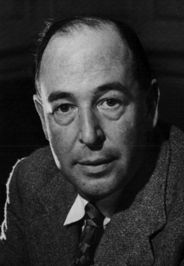
C.S. Lewis (1898-1963)

“Give me all of you! I don’t want so much of your time, so much of your talents and money, and so much of your work. I want YOU! ALL OF YOU. I have not come to torment or frustrate the natural man or woman, but to KILL IT! No half measures will do. I don’t want to only prune a branch here and a branch there; rather I want the whole tree out! Hand it over to me, the whole outfit, all of your desires, all of your wants and wishes and dreams. Turn them ALL over to me, give yourself to me and I will make of you a new self—in my image. Give me yourself and in exchange I will give you Myself. My will, shall become your will. My heart, shall become your heart.”

― ― C.S. LewisMere Christianity

This quote is striking, and a bit biting. As a “halfway” believer, a decision to do this is potentially damaging to my happiness. As I count the cost I start doubting my heart. I say to myself, “who can make this decision?” Can I really renounce my life like this? Perhaps this religion thing has gone too far?!

Then, I have to reflect that the Son of God has died for me. And that changes everything. Such a price, and such an investment was made. How can I resort to half measures? To respond like seems like to diminish His sacrifice.

I demand a religion that doesn’t demand anything. I want convenience, not commitment. (At least not total.) Yet the Lewis quote continues to maul me unmercifully. (How dare Lewis say such a thing?)

And yet I roll this truth around realizing that its logic is valid. The ‘pointy parts’ hook on me as I acknowledge their truth. There is a specific ultimatum that is inherent in this. If I don’t surrender, I will not be saved. Without denying myself, I will not be free. I can’t have it any other way.

I must surrender, and do it over and over again. I believe the basic terms of discipleship are as follows:

  • we must be under Jesus’ authority,
  • we must be seeking to follow His teaching,
  • we must actively be doing what He did.

From a secular viewpoint this is brutally outrageous. It seems I’m being forced into a decision– but after all, He did die for me. (This point cannot be understated.) The Son of God gave Himself so that I could live. Jesus said it best,

26 “If you want to be my disciple, you must hate everyone else by comparison—your father and mother, wife and children, brothers and sisters—yes, even your own life. Otherwise, you cannot be my disciple.”

Luke 14:26. NLT

Can anything so eloquent be so brutal? Jesus consistently demands everything. Perhaps this is the only way Christianity works? We must be renouncers as well as repenters. We must say, “Yes, God” when we want to live forever. In short, God must be all we live for.

A religion of half measures is not Christian, it is merely a convenience. To follow Jesus is to be radical; and perhaps insane (the worlds evaluation). But to love Jesus demands a “first-love” approach. Anything else is hardly adequate.

The gospel is radical, or it is nothing.

aabryscript

CLIVE STAPLES LEWIS (1898–1963) was one of the intellectual giants of the twentieth century and arguably one of the most influential writers of his day. He was a Fellow and Tutor in English Literature at Oxford University until 1954. He was unanimously elected to the Chair of Medieval and Renaissance Literature at Cambridge University, a position he held until his retirement. He wrote more than thirty books, allowing him to reach a vast audience, and his works continue to attract thousands of new readers every year. His most distinguished and popular accomplishments include Mere ChristianityOut of the Silent PlanetThe Great DivorceThe Screwtape Letters, and the universally acknowledged classics The Chronicles of Narnia

A Singular Coal

OLYMPUS DIGITAL CAMERA A young man had come to a decision. “I will not be attending Church. I need to stand on my feet, and be a Christian my own way.” He was quite adamant about this, and his young wife hadn’t the slightest about what to do. It seems he had grown somewhat hard and coarse over the last few months. He had quit attending services for the last few Sundays.

She had made a discreet call to their pastor; she also prayed for her husband. “What else can I do?” she thought. “We really need to go to church.” She went about her busy morning, washing clothes, and tending the fire. “Somethings are best left in God’s hands” she said to no one in particular.

That evening was chilly and a fire was banked up quite nicely. The little house was cozy and ready to be “buttoned-up” for the night, when there was a knock on the door. It was the pastor, smiling and holding his hat. “Good evening. dear ones– someone told me you had a nice fire to sit by.”

“Come in, Reverend; please, come and sit,” the young husband said. He was not really enthused by the pastor’s sudden and unannounced visit, but he was polite. Removing his coat, the pastor sat in big wing-backed chair by the fire. He was quiet. No one said a thing. They just watched the flames.

The silence continued for some time; no one saying a word. Suddenly, the pastor popped up and grabbed the black iron poker from its spot by the fireplace. Poking at the sizable bed of coals, he managed to drag a single coal from the fire bed to the hearth. He separated it from the rest of so it burned on its own.

Still, not a word was spoken. Everyone just sat and watched this isolated coal burning on its own. In just a short time this glowing coal had become a dying ember. No one spoke. The pastor guided the once bright coal back into the hottest part of the firebox where it blazed up immediately. “Well, it’s late and I best be going,” said the quiet guest.

“Thank you, Pastor, for everything. We’ll see you Sunday morning.” said the young man.

flourish-bird

25 “And let us not neglect our meeting together, as some people do, but encourage one another, especially now that the day of his return is drawing near.”

Hebrews 10:25, NLT

“The Greek work for church, ecclesia, is made up of a prefix and a root. The prefix is ek – out of. The root is the verb coleo, to call. The church in the New Testament is made up of those who are called out from the world, from darkness, from damnation, from paganism, to become members of the body of Christ.”

   ~R.C. Sproul

aabryscript

When He Questions You

  1. “But what about you?” he asked.
  2. “Who do you say I am?”

Matthew 16:15, NIV

I would suggest to you, that these two questions are quite pivotal and critical.  Nothing explains a man or woman more.  Nothing means more, or is of greater consequence than how you answer these two questions. One by one, we are led to this particular place, and it is required of us to explain ourselves.  And essentially that is what will happen.  We have to come to a decision.

“What about you?”  The first question asked, reduces us and causes us to come to a place of personal responsibility.  We dare not sidestep, or look for an emergency exit.  The issue, front and center is “you.”  It must be stated that questions like this one is not a way to stay popular.  You don’t win people’s hearts like this.  “What about you?”  In my mind this is a whole lot of personal decision-making.  Commitment is not easy.  (And if it is too easy, be very alert.)

The second question, “Who do you say that I am?” is masterful.  Jesus is speaking to those close disciples.  Essentially he is asking them to decide, once and for all, his placement into their lives. 

  • Is he a good teacher?
  • A healer?
  • A revolutionary or social catalyst?
  • A prophet?

He is all of these–but much more.  It’s interesting that Jesus never took a lesser position.  He was the “Son of God.”  He comes to us, and asks us to decide for ourselves.

The decision awaits us.  When we gather up information to evaluate him, it isn’t “Trivial Pursuit.”  Our decisions are quite significant and defining.  This here are the ultimate “fork in the road.”  Our lives will extrapolate out and then take us to places we never thought we would be.  Jesus knows this, he understands us.

In conclusion, another question.  Are you even ready to be addressed with these two ultimatums?  Are you in a “good place” where you are even approachable?  We all must go through this gauntlet of blazing truth, and decide for oneself.  Truly blessed is the person who will not stumble in this place of decision.

 “Today I have given you the choice between life and death, between blessings and curses. Now I call on heaven and earth to witness the choice you make. Oh, that you would choose life, so that you and your descendants might live!

Deut. 30:19, NLT

recite-25825-95458975-1jznxku