“If iniquity is in your hand, put it far away,
And do not let wickedness dwell in your tents.” NASB
“And give up your sins– even those you do in secret.” CEV
Job 11:14 [in two versions]
***
“When the sentence for a crime is not quickly carried out, people’s hearts are filled with schemes to do wrong.”
Eccl. 8:11, NIV
We know it, deep inside of us. Our sin and iniquity, those things that stick to us, must be renounced and stripped away. I think it’s interesting that Job is working from the assumption that each of us has sin issues. I don’t think scripture is ever really shocked by the depth of our iniquity. We are sinners, and we will sin, but the Holy Spirit is never surprised or caught off guard by our sin and deceit. But we are, most certainly guilty.
This verse in Job emphasizes “renunciation”. That means relinquishing or repudiating the evil that we love doing. I think that in Job’s thinking it means abandoning our sinfulness. We are to let it go, releasing it to the grace of God. We are not to sin in secret.
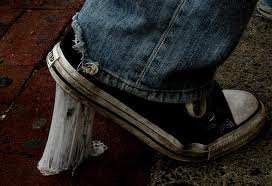
We privatize our favorite sins to make ourselves acceptable. I think that this is a truism: “We care more for what people think of us, then what God thinks of us.” Our sin thrives in solitude, its like a warm and humid greenhouse for our evil. Secretiveness just causes it to grow, our hiddenness is “Miracle Grow” for our darkness and ugliness.
Job is very much concerned I think, by the contagiousness that sin has. We transmit the sin virus to our brothers and sisters in Christ. If we have a hidden darkness, we will most certainly sicken those we touch. Our Churches have been decimated by private and hidden sin. I’m thing of Achan in Joshua 7. He secretly desired nice things, and it destroyed him and his family.
What judgement will you bring on to your loved ones, and your church? What are you hiding? Often, I have heard questions like that, and it temporarily moves me. But it seems the change is not permanent (I desperately wish it was.) But I suggest that you go into your “tent” and bring your deceitfulness out into the full light of day. And then, put it to a merciless death.
(TS) as it is frequently called, is a neurologic syndrome. The essential feature of Tourette’s are multiple tics that are sudden, rapid, recurrent, non-rhythmic, stereotypical, purposeless movements or vocalizations.
What are the symptoms of Tourette syndrome?
Both multiple motor and one or more vocal tics are present at some time during the illness, although not necessarily simultaneously
Occurrence many times a day nearly every day or intermittently throughout a span of more than one year
Significant impairment or marked distress in social, occupational, or other important areas of functioning.
Onset before the age of 18.
Symptoms can disappear for weeks or months at a time and severity waxes and wanes.
What are the first tics that may be characteristic of Tourette’s syndrome?
Usually, the facial tic, such as rapid blinking of the eyes or twitches of the mouth, may be the first indication a parent has that their child may have Tourette’s syndrome. Involuntary sounds, such as throat clearing and sniffing, or tics of the limbs may be an initial sign in other children.
Are any other symptoms associated with Tourette’s syndrome?
Approximately 50 percent of patients meet criteria for attention deficit hyperactivity disorder (ADHD) and this may be the more impairing problem. Approximately one-third of patients meet criteria for obsessive-compulsive disorder (OCD) or have other forms of anxiety. Learning disabilities are common as well as developmental stuttering. Social discomfort, self-consciousness and depressed mood frequently occur, especially as children reach adolescence.
Yelling and irrational
What causes these symptoms?
Although the cause has not been definitely established, there is considerable evidence that Tourette’s syndrome arises from abnormal metabolism of dopamine, a neurotransmitter. Other neurotransmitters may be involved.
Can Tourette’s syndrome be inherited?
Genetic studies indicate that Tourette’s syndrome is inherited as an autosomal dominant gene but different family members may have dissimilar symptoms. A parent has a 50 percent chance of passing the gene to one of his or her children. The range of symptomatology varies from multiple severe tics to very minor tics with varying degrees of attention deficit-disorder and OCD.
Are boys or girls more likely to have Tourette’s syndrome?
The sex of the child can influence the expression of the Tourette’s syndrome gene. Girls with the gene have a 70 percent chance of displaying symptoms, boys with the gene have a 99 percent chance of displaying symptoms. Ratios of boys with Tourette’s syndrome to girls with Tourette’s syndrome are 3:1.
How is Tourette’s syndrome diagnosed?
No blood analysis, x-ray or other medical test exists to identify Tourette’s syndrome. Diagnosis is made by observing the signs or symptoms as described above. A doctor may wish to use a CAT scan, EEG, or other tests to rule out other ailments that could be confused with TS. Some medications cause tics, so it is important to inform the professional doing the assessment of any prescribed, over-the-counter, or street drugs to which the patient may have been exposed.
What are the benefits of seeking early treatment of Tourette syndrome symptoms?
When a child’s behavior is viewed as disruptive, frightening, or bizarre by peers, family, teachers, or friends, it provokes ridicule and rejection. Teachers and other children can feel threatened and exclude the child from activities or interpersonal relationships. A child’s socialization difficulties will increase as he reaches adolescence. Therefore, it is very important for the child’s self-esteem and emotional well-being that treatment be sought as early as possible.
What treatments are available for Tourette syndrome?
Not everyone is disabled by his or her symptoms, so medication may not be necessary. When symptoms interfere with functioning, medication can effectively improve attention span, decrease impulsivity, hyperactivity, tics, and obsessive-compulsive symptomatology. Relaxation techniques and behavior therapy may also be useful for tics, ADD symptoms, and OCD symptoms.
How does Tourette syndrome affect the education of a child or adolescent with Tourette syndrome?
Tourette syndrome alone does not affect the IQ of a child. Many children who have Tourette syndrome, however, also have learning disabilities or attention deficits. Frequently, therefore, special education may be needed for a child with Tourette syndrome. Teachers should be given factual information about the disorder and, if learning difficulties appear, the child should be referred to the school system for assessment of other learning problems.
What is the course of Tourettesyndrome?
Some people with Tourette syndrome show a marked improvement in their late teens or early twenties. However, tics as well as ADD and OCD behavior, may wax and wane over the course of the life span.
When they could not pay, he cancelled the debt of both. Now which of them will love him more?”
Luke 7:42, ESV
We are all in debt. Some owe $10,000. Others owe $500,000. But we are all in debt. And believe me, things are pretty grim. Many lament our huge national debt, they have figured out that each individual owes thousands of dollars. It seems very unfair that so much is owed by just a single person. However, our debt with God and His law is far beyond our ability to pay.
The Father’s intention and focus is to forgive us, it may seem confusing, but He has kicked off a plan that leads to total and comprehensive forgiveness for anyone who will simply believe. It’s amazing, and fantastical, but He has decided to forgive our debt. It doesn’t matter in the slightest what we have done. We may be a mass murdering Satanist, but when we turn at Him, everything is forgiven and then quickly forgotten.
Everyone who looks to Him, and clings to Him, has their debt forgiven. The debt has been cancelled, and we have been released completely. There is no liability, nothing is incurred. We have been incredibily released. Absolutely forgiven. There can be no rebuttal. No one can state otherwise.
There is one solitary issue that remains, although many would argue about its significance. That issue is reciprocal love. In your heart of hearts, you fully know your debt. And you understand its implications. The scripture states that you will love according to your forgiven debt. If you’ve been forgiven much, you will love much.
The degree and severity of your iniquity can be forgiven. But love should fill the vacancy. He looks and anticipates your response to His offer. But love really should be your only response. We love Him and the amazing things He has set in motion. We should be astounded at His incredibly deep generosity. Especially when it concerns us so profoundly.
I am sitting across from one of my best friends in a trendy little café, sipping coffee as we always do. We have been good friends for years; we can tell each other things. We can screw up and make amends. We know each other’s heart. We both love Jesus and came back to our faith after an extended period of wandering away. She is single and wants to be married. I am married and want to have children. There is a lot we can relate to, except for one issue.
My friend is depressed. I have never known her not to be. I’ve never known her to be suicidal, but she suffers from mild depression most of the time. It permeates her life and while she doesn’t see it as a nagging issue, I do. We have never had a conversation in which she does not bring it up. To her credit, she handles it well. In fact, I’d say she handles it better than I do a lot of the time. She is a social bug who constantly thrusts herself into activities, whereas I am more of an isolationist when I’m depressed.
No, the issue is not how she handles her depression. The issue is that she does not want to acknowledge her depression is an illness. She is stuck in the place I was in for so long – believing that if she could be a better person spiritually, she would not be depressed at all. We’ve had “the talk” many times. I’ve told her about my own trials and tribulations and I’ve gone so far as to look up and explain the brain chemistry behind depression. She always insists she can handle it on her own.
It’s a free country and we can’t force anyone to take medication if they don’t want to. I would even go so far as to say that while I think my friend is suffering needlessly, the fact that she is able to “maintain” and lead a productive life shows that medication might not be a dire necessity. I’m hoping that one day she realizes that 25 mgs of something won’t make her any less of a person or any less of a Christian. But it’s not my place to force that pill down her throat.
When does mental illness go from being a nuisance to a life-snatcher?
Throughout my life, I have had my share of strongholds and I would even venture to call some of them addictions. At one point I realized that whenever I was depressed, stressed, or angry I would automatically reach for the wine bottle. 2 Peter 2:19 says, “…people are slaves to whatever has mastered them.” That single verse influenced me to change my behavior, and I believe it can be applied to mental illness, as well.
Jesus Christ came to free us of our sins, but also to free us from all the things this world uses to hold us back and keep us down. That is the beauty of Christ – we don’t have to wait until eternity to reap the benefits of being Christians. Jesus came to give us life and life more abundantly. That abundant life is, however, a choice.
There are different severities of mental illness. Not everyone needs the same thing. I need insulin for my diabetes, but my husband doesn’t take anything at all. Some choose not to seek help for their problem and that is their prerogative, but when does it cross over into foolishness? When someone asks me how I knew it was time to get help and seek a mental health diagnosis, I tell them I knew it was time when my problems ruled my universe and I lost just about everything and everyone I had. I had become a slave to bipolar disorder, and it had mastered me.
I used to believe that mental illness was in no way a spiritual issue, but I’ve come to realize that it is very much a spiritual issue. God never promised that life would be easy for believers. Come to think of it, the Bible tells us the exact opposite. But if you examine the Word of God, you will see that the Holy Spirit gives us gifts and abilities that enable to us to have inexplicable joy in the midst of painful circumstances. Are you facing your circumstances with a sense of hopelessness and despair? That’s not from the Lord.
Does your entire life feel hopeless? Do you despair when you should be having joy? Take a look at 2 Peter 2:19.
“They promise them freedom, but they themselves are not free. They are slaves of things that will be destroyed. For people are slaves of anything that controls them.”
Are you a slave to hopelessness and despair? Then maybe it’s time to reexamine your views on seeking help.
***
Julie Anne Fidler is a contributing writer for Brokenbelievers.com. She comes with a humble and understanding heart for those with a mental illness. Her writing gift is valued greatly. Look for her post weekly, on this blog.
She keeps a personal ministry blog at mymentalhealthday.blogspot.com. Read more there.









 Broken Believers