
Hope in the Darkness

Winter can be a particularly trying time for those who struggle with depression and bipolar disorder. The increased darkness outside can begin to reflect in our hearts and so increase the darkness within.

I know Pr. Bryan has posted here before about the challenge of winters in Alaska where the days are extremely short. But even in the Pacific Northwest, Seasonal Affective Disorder is a big problem. When you drive to work in very little light and drive home again in pitch dark, which is even darker when it is raining, it is hard to remember the long days of summer.

It is during this dark season that we must cling even more to the Light of Christ so that the darkness does not overcome us. We must cling to the faithfulness of our God who brings the sun every morning and the seasons in their turn, so that we know spring and summer will follow the darkness.

Thinking about this one dark night earlier this week, I wrote a poem, which I posted on my blog, Linda Kruschke’s Blog, as a Thankful Thursday post. I hope you like my ode to God’s promise of hope and light that stands firm even in the darkness, and that it reminds you of the hope we have in Jesus.

Hope in the Darkness

Sun sinks below the horizon
Darkness envelopes all life in my view
Each night the darkness comes sooner
Each morning the sun arises anew

This season, winter, brings darkness
It seems to engulf the light of my soul
Sometimes the darkness is deeper
And blacker than the blackest mine of coal

But winter does not last forever
Spring and summer bring sun ever near
Hope of a Light everlasting
Is all that my darkened soul needs to hear

In him was life, and that life was the light of all mankind. The light shines in the darkness, and the darkness has not overcome it.

John 1:4-5 (NIV).

Putting it Under a Microscope

Within our walks, as we attempt to follow Jesus, we need to be seriously evaluating our hearts–and the issues that affect them. If we make a short list, but the make-up would probably be justification, sanctification, glorification and deliverance.

Of this list, perhaps ‘justification’ takes the biggest hit.  Being declared ‘right with God‘ is targeted especially as the most significant .  But justification is quite potent, it will stand when all the other issues will stumble.  Justification is the starting point, and then it carries us quite a bit further. It stands when everything else crumbles.

We come to this place, it almost seems bizarre and garish as it comes to us.  But our simple faith in Jesus Christ has made us righteous.  But it seems, if we start to extrapolate it out, we start  thinking of realities and probabilities. These often confuse and darken our way, when they not really meant to.

“What if?” “But what might happen?” “Isn’t this a bit bizarre?” “Can’t I really make this ‘Christianity’ work?”  And yet at times, we won’t take a solid position, but we operate out of a miasma of thoughts that flit through our hearts.

In the courtroom of heaven, where God sits as a judge, we are given fair hearing. But simply put we aren’t so much as made righteous, but we are declared righteous.  The Greek word in the original is centered on this exclusive sense of “declaration.”

You have been declared righteous!  It is definitely not a feeling, or a sense of being just or righteous– because this changes 24x a day.  It seems I feel that I can never truly accumulate enough to save me.  And since I am always moving, I can never really figure it out.  And this makes me afraid. I become very disturbed. 

We are meant to walk out a sincere justification.  The enemy scrambles it before we can grasp it.  Satan‘s presence must be nullified in this.  There is something radical and decisive here.  And it is here he puts his crack troops.  This is a definite attempt to destroy your witness.

Beauty Sleep

by Julie Anne Fidler, BB Weekly Contributor

Sleep is a beautiful thing, isn’t it?

Of the many bipolar symptoms I’ve dealt with over the course of my life, sleeplessness has been the toughest. Until I started taking a med called Seroquel, I never slept… ever. I remember telling my doctor that I had no recollection of a full night’s sleep. For nearly two years, Seroquel was sedating enough to provide me with rest. Rest isn’t the word for it. I was semi-comatose because of it, not that I’m complaining.

But the sedating effects wore off and for the past few months I have been stuck between three different kinds of insomnia. There are nights I can’t fall asleep at all and I spend the next day feeling like I’m battling the flu. Some nights I fall asleep only to wake up in the wee morning hours, long before the sun has even decided to wake up for the day and I can’t fall back to asleep. And other nights, I can’t fall asleep until the wee morning hours and I end up sleeping during the day.

Last week I could not sleep at all. I tried an over-the-counter sleep med that did squat. I cut out all the caffeine in my diet (I have a pretty bad coffee habit), and nothing would work. The result was a few days of relative instability. The rubber met the road for me, so to speak. I was feeling miserable, both physically and mentally, and the last thing I wanted to do was praise God or crack open my Bible. I didn’t want to do anything. I have a lot of hobbies but none of them appealed to me.

But I knew that if I wanted to pursue this ministry of helping others with mental illness, I had to do the things I told everyone else to do. And, so, I did. Reluctantly. Little bits at a time. I called a dear friend and mentor of mind and she prayed over the phone with me and I began to see the light at the end of the tunnel. Tears still fell, but I knew “mourning may last for the night, but joy comes in the morning.”

Of course, I knew I needed to do more than that. I knew I needed to solve my sleep problem. Man, everyone likes to make fun of Michael Jackson, but I get it. Not that I would ever inject Propofol into my veins, but I understand the exhaustion and frustration he must have been feeling. It’s hard to be human when you feel like a walking zombie.

I am now the proud owner of a bottle of Ambien. I was a little scared when my doctor prescribed it for me, because I have a friend who once hallucinated on it and thought her bed was surrounded by fairies. (At least it wasn’t ninjas, Taliban, or Chuck Norris.) I kept thinking, wow, the last thing I need is to hallucinate. Here’s one symptom I haven’t had yet, and I’d like to keep it that way.

I’m happy to report I have not hallucinated. I’m also happy to report that for the past three nights, when I go to bed, I fall asleep quickly and stay that way until morning. I’m even happier to report that I feel like a real person again – not a zombie, not emotionally unstable, just me. You know – normal crazy.

Far be it for me to leave you without a lesson, so here it goes.
Sleep disturbances are very common in people with mental illness, particularly bipolar disorder. If you’re waiting around for it to get better or avoiding having to take another pill (I’ve been guilty of this), give in. God made separate days for a reason. When you can’t sleep, they all blur into one big, never-ending day and it’s hard to see the newness and fresh hope of morning when every day is just an extension of the last. It makes sense that a malfunctioning brain would make for a malfunctioning body clock.

God wants you to have rest and hope. So, if you are not experiencing that today, make plans to get your life back.

Julie Anne Fidler is a contributing writer for Brokenbelievers.com.  She comes with a humble and understanding heart for those with a mental illness.  Her writing gift is valued greatly.  Look for her post weekly, on this blog.   She keeps a personal ministry blog at www.mymentalhealthday.blogspot.com.  Read more there.
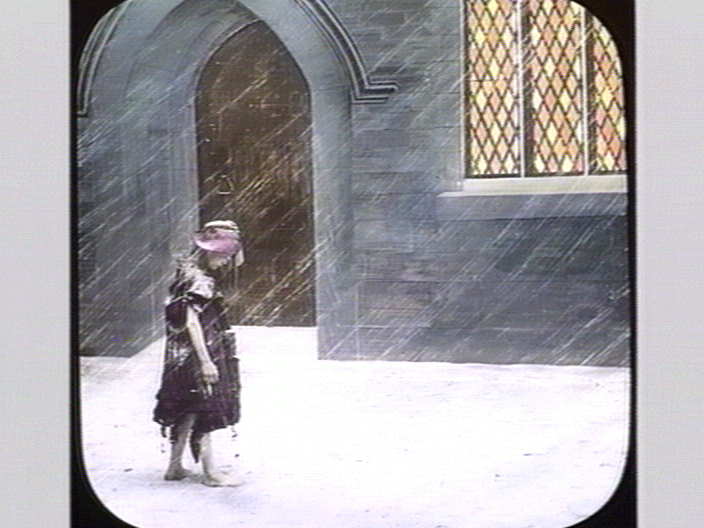
Julie–From the Heart

by Julie Anne Fidler, Contributor to BB

I accepted Christ as my Savior the day before my thirteenth birthday on May 4, 1992. Some people get saved and don’t feel any different than they did in the moments before they said the ‘Sinner’s Prayer‘, but I sensed that my decision was a huge one. I walked around for the next several months in a state of giddiness not unlike what I experienced on Christmas Eve or the night before my big birthday party. My parents enrolled me in a Jewish day camp that summer where I taught swimming to younger children and the staff and campers were kind enough to endure my ‘Jesus t-shirts’, Amy Grant music, and talk of salvation without objection.

I knew nothing about theology, having only gone to church a small handful of times in my life. I read the Bible verses given to me by the woman who said the Sinner’s Prayer with me. Most of them were about God answering prayer and how all we needed to do was ask Him for what we wanted, and believe He would give it to us. At thirteen years old, it seemed like a pretty good theology to me. I went about my life believing that God was a giant vending machine in the sky; just put your wish in the slot, and out comes your answered prayer!

Although I had wrestled with depression as a young child, it didn’t really hit me full-force until the eighth grade. I had been sexually abused by a family friend until I was eleven years old, and my family was troubled. I had reason to be depressed, but that was the year that my depression became so overwhelming that I wasn’t sure I wanted to live life anymore. The hopelessness and despair only worsened as I made my way through high school, a very brief stint in college, and eventually married life.

I have met countless people who credit their faith with getting them through the darkest times in their lives. I credit my faith for the same thing, only, for me, it wasn’t quite so simple. My faith gave me hope to carry on at times, and confused me to no end at others. I was a Christian, but I was not experiencing joy. I was experiencing crushing sadness, wondering how other Christians could be so happy.  I knew the difference between right and wrong. I knew what sin was, and I knew that sin tempted even the best Christians. What I didn’t grasp was why I desperately wanted to do the right things, why I wanted to have a rich relationship with God, but I was so drawn to self-destruction at every turn.

Somewhere in my late teens or early twenties, I had convinced myself that I simply wasn’t holy enough. I was a bad person who didn’t want God enough. I was somehow spiritually flawed, I decided. I questioned the validity of my own salvation. I concluded that someone who really knew Jesus wouldn’t be so miserable or confused all the time.

When I was diagnosed with Bipolar Disorder at twenty-three years old, it was in a last-ditch effort to figure out if my problems really were the result of spiritual deficit. I felt like a failure for having to take medication. But after my diagnosis, I started looking back on my old journals to track how far back my problems went. As I read through hopeless page after hopeless page, I began to see a pattern emerge – periods of days or weeks when I felt on fire for God, followed by weeks or days of being too depressed to make the effort. I began to realize that my walk with God had always followed the patterns of my cycles.

I went through many medications before I finally found Seroquel in 2006. Seroquel all but wiped out my rages and helped me sleep. One beautiful Saturday morning in May of 2006, as I sat beside my husband watching my nephew play his Little League game, I looked around at the budding trees and realized I had joy for the first time in recent memory. The longer I took my meds, the easier my walk with God became.

I worked for a good friend of mine several years ago at a ministry for mentally ill adults. He was well aware of my issues, and I told him how hard it was to follow God when all I wanted to do was hurt myself, or sleep for weeks at a time. He told me, “God will not judge you for what goes on in your bipolar brain.” I don’t know what to make of that theology, whether I agree with it or not. But I got the point – God understands our pain and knows that we have limits.

But does that mean we can just dismiss God when we feel crappy?

The older I get, the more I begin to realized that God will not judge us for being tempted, or for feeling a certain way. Jesus was tempted and He felt everything that you and I feel today. It’s what we do with those things that matter. I have a mental illness, but I still have choices. I can choose to go to church and worship God when I’d rather sleep in and cry all Sunday. I can reach out to a friend for support instead of becoming a hermit until the sun shines again. I can read my Bible instead of wallowing in misery.

What my misfiring brain tells me to do and what I CHOOSE to do are often two different things.

We must choose to seek God when everything in us would rather be sick, lonely, and alone. I realize that some people have very severe mental illness and truly cannot choose these things. But for those of you who are like me – we still have options, and we need to exercise them.

We can’t always choose our circumstances, but even in our sickness, we can choose how we respond to them, through the power of the Holy Spirit.

*** 

Julie Anne Fidler is now a contributing writer for Brokenbelievers.com.  She comes with a humble and understanding heart for those with a mental illness.  Her writing gift is valued greatly.  Look for her post weekly, on this blog.
She keeps a personal ministry blog at mymentalhealthday.blogspot.com.  Read more there.