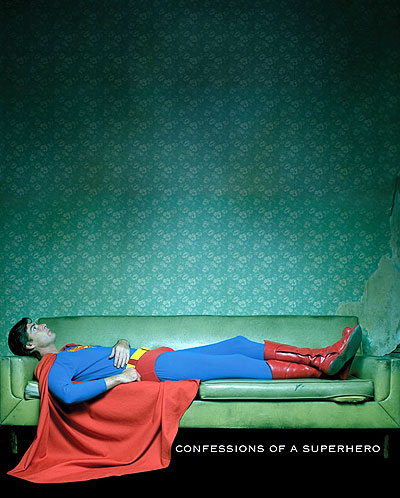
Paranoia & Delusions

superhero_400pxDelusional disorder, (previously called paranoid disorder,) is a type of serious mental illness called a “psychosis in which a person cannot tell what is real from what is imagined. The main feature of this disorder is the presence of delusions, which are unshakable beliefs in something untrue.

People with delusional disorder experience non-bizarre delusions, which involve situations that could occur in real life, such as being followed, poisoned, deceived, conspired against, or loved from a distance. These delusions usually involve the misinterpretation of perceptions or experiences.

In reality, however, the situations are either not true at all or highly exaggerated.

People with delusional disorder often can continue to socialize and function normally, apart from the subject of their delusion, and generally do not behave in an obviously odd or in a bizarre manner. This is unlike people with other psychotic disorders, who also might have delusions as a symptom of their disorder. In some cases, however, people with delusional disorder might become so preoccupied with their delusions that their lives are disrupted.

Types of delusional disorder

There are different types of delusional disorder based on the main theme of the delusions experienced. The types of delusional disorder include:

  • Erotomanic — Someone with this type of delusional disorder believes that another person, often someone important or famous, is in love with him or her. The person might attempt to contact the object of the delusion, and stalking behavior is not uncommon.
  • Grandiose — A person with this type of delusional disorder has an over-inflated sense of worth, power, knowledge, or identity. The person might believe he or she has a great talent or has made an important discovery.
  • Jealous — A person with this type of delusional disorder believes that his or her spouse or sexual partner is unfaithful.
  • Persecutory — People with this type of delusional disorder believe that they (or someone close to them) are being mistreated, or that someone is spying on them or planning to harm them. It is not uncommon for people with this type of delusional disorder to make repeated complaints to legal authorities.
  • Somatic — A person with this type of delusional disorder believes that he or she has a physical defect or medical problem.
  • Mixed — People with this type of delusional disorder have two or more of the types of delusions listed above.

Basic Principles

There are no systematic studies on treatment approaches and results in Delusional Disorder. The patient’s distrust and suspiciousness usually prevents any contact with a therapist.

Hospitalization

Hospitalization is indicated if a potential for danger is present; otherwise outpatient management is advisable. Unfortunately, involuntary hospitalization may increase distrust and resentment and increase the patient’s persecutory delusions.

Antipsychotic Drugs

Antipsychotic medication may be useful, particularly for accompanying anxiety, agitation, and psychosis. Because patients may be suspicious of medication, depot forms may be helpful. Although antipsychotics may have a good response, they are often only marginally effective for specific forms of Delusional Disorder.Other Therapies

Other treatments have been tried (electroconvulsive therapy, insulin shock therapy, and psychosurgery), but these approaches are not recommended.


Copied materials. NO COPYRIGHT INFRINGEMENT INTENDED. All content belongs to its rightful owners. Not for monetary gain. For educational purposes only.
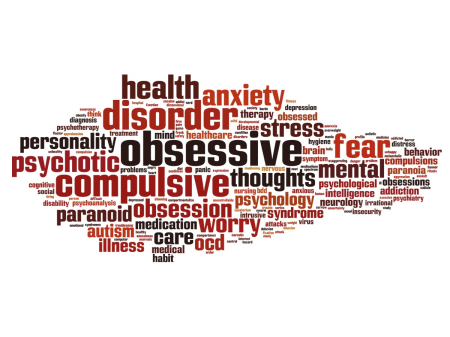
 

OCD: Plain & Simple

The OCD Cloud

A woman visits her dermatologist, complaining of extremely  dry skin and seldom feeling clean. She showers for two hours every day.

A lawyer insists on making coffee several times each day. His colleagues do not realize that he lives in fear that the coffee will be poisoned, and he feels compelled to pour most of it down the drain. The lawyer is so obsessed with these thoughts that he spends 12 hours a day at work — four of them worrying about contaminated coffee.

A man cannot bear to throw anything away. Junk mail, old newspapers, empty milk cartons all “could contain something valuable that might be useful someday.” If he throws things away, “something terrible will happen.” He hoards so much clutter that he can no longer walk through his house. Insisting that nothing be thrown away, he moves to another house where he continues to hoard.

A 10 year old girl keeps apologizing for “disturbing” her class. She feels that she is too restless and is clearing her throat too loudly. Her teachers are puzzled and over time become annoyed at her repeated apologies since they did not notice any sounds or movements. She is also preoccupied with “being good all the time”.

These people suffer Obsessive-Compulsive Disorder (OCD). The National Institute of Mental Health estimates that more than 2 percent of the U.S. population, or nearly one out of every 40 people, will suffer from OCD at some point in their lives. The disorder is two to three times more common than schizophrenia and bipolar disorder.

What is Obsessive-Compulsive Disorder? 

Obsessions are intrusive, irrational thoughts — unwanted ideas or impulses that repeatedly well up in a person’s mind. Again and again, the person experiences disturbing thoughts, such as “My hands must be contaminated; I must wash them”; “I may have left the gas stove on”; “I am going to injure my child.”

On one level, the sufferer knows these obsessive thoughts are irrational. But on another level, he or she fears these thoughts might be true. Trying to avoid such thoughts creates great anxiety.

Compulsions are repetitive rituals such as handwashing, counting, checking, hoarding, or arranging. An individual repeats these actions, perhaps feeling momentary relief, but without feeling satisfaction or a sense of completion. People with OCD feel they must perform these compulsions. Heredity appears to be a strong factor. If you have OCD, there’s a 25-percent chance that one of your immediate family members will have it. It definitely seems to run in families.

Can OCD be effectively treated? Meds might help.

Many of the antidepressant medications known as selective serotonin reuptake inhibitors (SSRIs) have also proven effective in treating the symptoms associated with OCD. The SSRIs most commonly prescribed for OCD are Luvox (fluvoxamine), Paxil (paroxetine), Prozac (fluoxetine), and Zoloft (sertraline). Luvox (fluvoxamine): 

How long should an individual take medication before judging its effectiveness?

Some physicians make the mistake of prescribing a medication for only three or four weeks. That really isn’t long enough. Medication should be tried consistently for 10 to 12 weeks before its effectiveness can be judged.

What is behavior therapy, and can it effectively relieve symptoms of OCD?

Behavior therapy is not traditional psychotherapy. It is “exposure and response prevention,” and it is effective for many people with OCD. Consumers are deliberately exposed to a feared object or idea, either directly or by imagination, and are then discouraged or prevented from carrying out the usual compulsive response. For example, a compulsive hand-washer may be urged to touch an object he or she believes is contaminated and denied the opportunity to wash for several hours. When the treatment works well, the consumer gradually experiences less anxiety from the obsessive thoughts and becomes able to refrain from the compulsive actions for extended periods of time. 

Will OCD symptoms go away completely with medication and behavior therapy?

Response to treatment varies from person to person. Most people treated with effective medications find their symptoms reduced by about 40 percent to 50 percent. That can often be enough to change their lives, to transform them into functioning individuals. A few consumers find that neither treatment produces significant change, and a small number of people are fortunate to go into total remission when treated with effective medication and/or behavior therapy.

Reviewed by Judith Rapoport, MD May 2003

Information Helpline: (800) 950-NAMI


Dog Poop in the Living Room! (Stigma)

One out of five Americans will experience a mental disorder during their lifetime.  But, people can get better.  With proper treatment, most people with a mental illness recover quickly, and the majority do not need hospital care, or have only brief admissions.

Mental illness has traditionally been surrounded by community misunderstanding, fear, and stigma.  Stigma towards people with a mental illness has a detrimental effect on their ability to obtain services, their recovery, the type of treatment and support they receive, and their acceptance in the community.

Often when we discover a pile of dog poop in the living room there can be issues. Frustration, a bit of anger, and some disgust are typical reactions.

Exactly what is stigma?  Stigma means a mark or sign of shame, disgrace or disapproval, of being shunned or rejected by others.  It emerges when people feel uneasy or embarrassed to talk about behavior they perceive as different.  The stigma surrounding mental illness is so strong that it places a wall of silence around this issue.

The effects are damaging to the community as well as to the person will the illness and his/her family and friends. But at Mental Health agencies and many churches are working hard to erase the stigma associated with having a mental illness.

In-House-46638176283_xlarge

The emphasis needs to be on supporting and treating people in their own communities, close to their families, friends and familiar surroundings.

Yet discrimination and community misconceptions remain among the most significant barriers to people with a mental illness being able to actively participate in the community and gaining access to the services they need.

But it is not only people with a mental illness who experience discrimination and stigma.  Rejection of people with mental illness inevitably spills over to the caregiver and family members.

Improving community attitudes by increasing knowledge and understanding about mental illness is essential if people with a mental illness are to live in, and contribute to, the community, free from stigma and discrimination.

People with mental problems are our neighbors. They are members of our congregations, members of our families; they are everywhere in this country. If we ignore their cries for help, we will be continuing to participate in the anguish from which those cries for help come. A problem of this magnitude will not go away. Because it will not go away, and because of our spiritual commitments, we are compelled to take action.”

~Rosalynn Carter

Welcome to Schizophrenia

Do you know someone who seems like he or she has “lost touch” with reality? Does this person talk about “hearing voices” no one else can? Does he or she see or feel things that others can’t? Does this person believe things that aren’t true?

Sometimes people with these symptoms have schizophrenia, a serious illness.

What is schizophrenia?

Schizophrenia is a serious brain illness. Many people with schizophrenia are disabled by their symptoms.

People with schizophrenia may hear voices other people don’t hear. They may think other people are trying to hurt them–we call this paranoia. Sometimes they don’t make any sense when they talk. The disorder makes it hard for them to keep a job or take care of themselves.

Who gets schizophrenia?

Anyone can develop schizophrenia. It affects men and women equally in all ethnic groups. Teens can also develop schizophrenia. In rare cases, children have the illness too.

When does it start?

Symptoms of schizophrenia usually start between ages 16 and 30. Men often develop symptoms at a younger age than women. People usually do not get schizophrenia after age 45.


What causes schizophrenia?

Several factors may contribute to schizophrenia, including:

  • Genes, because the illness runs in families
  • The environment, such as viruses and nutrition problems before birth
  • Different brain structure and brain chemistry.

Scientists have learned a lot about schizophrenia. They are identifying genes and parts of the brain that may play a role in the illness. Some experts think the illness begins before birth but doesn’t show up until years later. With more study, researchers may be able to predict who will develop schizophrenia.

What are the symptoms of schizophrenia?

Schizophrenia symptoms range from mild to severe. There are three main types of symptoms.

Positive symptoms refer to a distortion of a person’s normal thinking and functioning.

They are “psychotic” behaviors. People with these symptoms are sometimes unable to tell what’s real from what is imagined. Positive symptoms include:
  • Hallucinations: when a person sees, hears, smells, or feels things that no one else can. “Hearing voices” is common for people with schizophrenia. People who hear voices may hear them for a long time before family or friends notice a problem.
  • Delusions: when a person believes things that are not true. For example, a person may believe that people on the radio and television are talking directly to him or her. Sometimes people believe that they are in danger-that other people are trying to hurt them.
  • Thought disorders: ways of thinking that are not usual or helpful. People with thought disorders may have trouble organizing their thoughts. Sometimes a person will stop talking in the middle of a thought. And some people make up words that have no meaning.
  • Movement disorders: may appear as agitated body movements. A person with a movement disorder may repeat certain motions over and over. In the other extreme, a person may stop moving or talking for a while, a rare condition called “catatonia.”

Negative symptoms refer to difficulty showing emotions or functioning normally.

When a person with schizophrenia has negative symptoms, it may look like depression. People with negative symptoms may:
  • Talk in a dull voice
  • Show no facial expression, like a smile or frown
  • Have trouble having fun
  • Have trouble planning and sticking with an activity, like grocery shopping
  • Talk very little to other people, even when they need to.

Cognitive symptoms are not easy to see, but they can make it hard for people to have a job or take care of themselves.

Cognitive symptoms include:
  • Trouble using information to make decisions
  • Problems using information immediately after learning it
  • Trouble paying attention.

Helpful Links for Further Thought

The Mayo Clinic: Good, solid and trustworthy, a great introduction.

WebMd: Early Signs to look for.

World Health Organization: More advanced, but still accessible and understandable.