Worshiping With a Knife

 by the Forward

In Genesis 22, we have the story of Abraham and Isaac on Mt. Moriah.

Abraham has tied up his son on an altar to offer him as a sacrifice in obedience to God’s direction (v. 2). This is faith being tested to the ultimate extreme. And Abraham shows us how faith really works.

“Then on the third day Abraham lifted his eyes and saw the place afar off. And Abraham said to his young men, “Stay here with the donkey; the lad and I will go yonder and worship, and we will come back to you.”

Genesis 22:4-5

This is the first time that  the word “worship” is used in the Bible.

It sets the singular tone for all the scriptures on this subject. I guess what is interesting is there were no musical instruments involved. There was just these needful things:

  • stones,
  • wood,
  • rope,
  • fire,
  • a knife,
  • and Isaac, (the would-be ‘lamb.’)

There was just a handmade altar, and a sharp knife.

In the end, Abraham raises his knife, and then suddenly, (to the relief of us all) he is stopped. His faith has withstood the test, and he has truly ‘worshiped.’

But the Angel of the Lord called to him from heaven and said, “Abraham, Abraham!” So he said, “Here I am.” And He said, “Do not lay your hand on the lad, or do anything to him; for now I know that you fear God, since you have not withheld your son, your only son, from Me.”

Gen. 22:11-12

Principle One: There really can’t be worship without sacrifice.

Recovering this truth concerning worship is critical. It seems we delegate ‘worship’ to a select few who are talented and gifted. We probably don’t do this deliberately, but sometimes we feel it makes a better presentation. We all want to look good, even as Christians.

Principle Two: The first worshiper didn’t use a guitar, but a knife.

This difference keeps the idea of sacrifice in its definition. There isn’t worship without sacrifice. The knife thrust that he was ready to wield wasn’t backed up by drums or piano. Yet Abraham understood worship every step to Moriah with the knife in his belt.

So, brothers and sisters, because of God’s mercies, I encourage you to present your bodies as a living sacrifice that is holy and pleasing to God. This is your appropriate priestly service.”

Romans 12:1

Ultimately, we must realize our sacrifice is the Lamb of God. It’s His blood on God’s altar for our sins. As believers, our faith firmly rests in this spiritual fact.

We of all people have cause to really worship.

And no sacrifice should be too great for Him who gave Himself for us.

When There’s No Exit: Psalm 88

  Lord, God of my salvation,
    I cry out day and night before you.
Let my prayer come before you;
    incline your ear to my cry!
For my soul is full of troubles,
    and my life draws near to Sheol.
I am counted among those who go down to the pit;
    I am a man who has no strength,
like one set loose among the dead,
    like the slain that lie in the grave,
like those whom you remember no more,
    for they are cut off from your hand.
You have put me in the depths of the pit,
    in the regions dark and deep.

Psalm 88:1-6, ESV

I definitely needed this Psalm today. Yesterday I went to the doctor and was blindsided by news that really isn’t good, at all.  Of course, I also have this ongoing struggle with depression.  Today I feel like I’m running a marathon with ‘leg weights’ on. 

This particular Psalm is radically different than the others. 

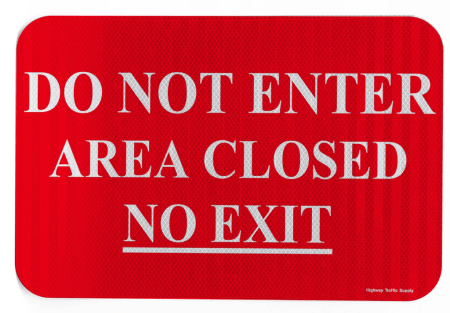
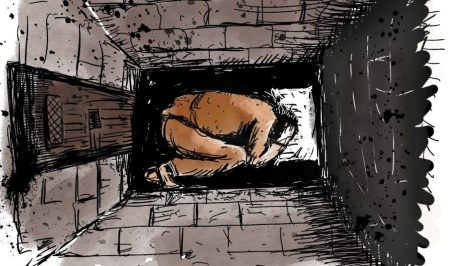
This Psalm has no kind words, and no praise to God for deliverance.  It is a singularly sad song.  Imagine if you will, a huge stone fortress in the mountains.  Every room has a door, and every room a window.  All except one.  No light enters this room.  There is no entrance or exit, no way to get free.  Psalm 88 describes living that torturous experience.

I like my Psalms to be strengthening or encouraging. 

But then comes this one!  Life unravels and frays.  Everything gets confusing. Life comes apart.  The thought of being one who is irretrievably lost and damned, it saturates my thinking.  The despair is beyond belief, I have no words to describe its special variety of darkness. 

Anyone who has walked into this hell will understand.

Am I ‘less’ a Christian because of this vicious despair?  Some would say so.  The writer in verse 1-2, calls out to God.  (I guess this what you are supposed to do).  There is a sense of consistency in his cry.  In verses 3-5, we see him evaluating his position.  Again, there is a underground current of despair. 

There is simply no help, no deliverance for him.

It’s a bitter and painful place to be.  There are no explanations why life has gotten so nasty and bitter and out-of-control.  But one thing that Psalm 88 does quite well, it strips you of any dignity that you have left. 

(Does this make any sense at all?)

There is so much embedded in the book of Psalms.  Comfort, faith, victory and hope are what we find. But in Ps. 88, we find a black pearl, the only one of its kind.  Somehow, we dare not leave it behind, just because we don’t understand it. 

I’m convinced that it has tremendous power to the disciple who is in endless pain.  Just vocalizing this Psalm does something to us.  These real words help.  This Psalm is ours. 

God has provided it for us.


The One Minute Bible Survey

(Taking a break from my serious stuff.)

Found this recently and felt it might bless (or humor) you.  It is almost a Bible survey course, and as about as brief as you can go without losing any kind of comprehension at all.  I so hope  you like this, if just for the novelty of it. I wish I could attribute it to someone. I have no idea. I wish them the best.

bry-signat (1)

One More Night With the Frogs

“You set the time!” Moses replied. “Tell me when you want me to pray for you, your officials, and your people. Then you and your houses will be rid of the frogs. They will remain only in the Nile River.”

“All right,” Moses replied, “it will be as you have said. Then you will know that there is no one like the Lord our God.

Exodus 8:9-10

Often there comes a point in a person’s life that not to make a decision, becomes the decision.

This was the dynamic working in Pharaoh’s mind. God had warned him earlier that he must release the Jews from slavery. But he oscillates, and vacillates after each warning. His stubborn indecisiveness  is remarkable. Pharaoh resists, and becomes more and more obstinate.

There is a deep danger of delay.

God sends 10 plagues– quite dramatic and miraculous. But “the supernatural” really can’t touch certain hearts. There were certain Pharisees in Jesus’ time that they would not believe, no matter what Jesus did. (We call this, “hardness of heart.”)

In this particular ‘show-down’ a plague of frogs is threatened. It’s kind of funny, but Pharaoh doesn’t dispute the possibility of this “green invasion.” He just absorbs the inevitable. Pharaoh simply replies, “I will take one more night with the frogs.”

Within Egyptian mythology the frog was regarded as “holy.” It wasn’t to be harmed or killed. It was regarded as a blessing to the people. But that was hardly the case among the enemies of God’s chosen.

Often there comes a point in a person’s life that not to make a decision, becomes the decision.

Sadly to say, there are so many like that man today. “Lord, I’m going to follow You, but let me have just one more fling, one more trip to Vegas, or the bar, or the Princess cruise, or a new car– just “one more night with the frogs!” And the “one more night” stretches out into a terrible, endless night, in the blackness of darkness forever.

2 Corinthians 6:2

Will you choose to spend another night with the frogs, that is, in your sins? Or will you come to Jesus Christ for salvation today? There are consequences that follow each decision. What will you decide today? Will it be sin or the Savior? Will it be Heaven or Hell? Will it be forgiveness or the frogs? What will you do with the message you have read here today?

Often there comes a point in a person’s life that not to make a decision, becomes the decision.

bry-signat (1)