That Spectacular Sparkle

Trials are hard, and at times they seem to suffocate us and weaken our walk with God. David shares with us his own difficulty in these six verses.

A Very Brief Commentary of Psalm 13

For the choir director: A psalm of David.

Lord, how long will you forget me? Forever?
    How long will you look the other way?
How long must I struggle with anguish in my soul,
    with sorrow in my heart every day?
    How long will my enemy have the upper hand?

V. 1-2, David believes that he has been forgotten. A phrase is repeated an astounding four times, “How long?”  It seems that impatience is a significant issue for him. It makes David ‘human,’ he’s not a marble statue in a museum!

Often when it gets this outrageous, we desperately look around to find anything to fill the gap. Anything. 

Something else struck me. Within these two verses, you’ll find five hard questions. Whenever you find a question in the psalms especially, you must stop reading and take a closer look–why is he asking this?

V. 2, “Anguish…sorrow, every day.” Somehow David is alert enough to recognize (and admit) that his life is saturated with real difficulty. It seems it comes and when it comes there’s  no relief– it’s a constant, gnawing, challenging pain which can be physical, emotional, spiritual (or all three at once).

Turn and answer me, O Lord my God!
    Restore the sparkle to my eyes, or I will die.
Don’t let my enemies gloat, saying, “We have     defeated him!” Don’t let them rejoice at my downfall.

V. 3,  Turn and answer me, O Lord my God! Restore the sparkle to my eyes, or I will die.” (I love this version–“sparkle). David knew that life could be exceptional, it was meant to gleam and shine. There is much more than just breathing to life. He instead speaks of being restored. 

V. 4, Also, he is quite aware that his life is being threatened. The word, “gloat” is an interesting translation. It has the idea of “relishing someone else’s failure.” The dark prince savors your defeat. He has been looking forward to this desperate moment. The enemy rejoices at each of your failures.

But I trust in your unfailing love.
    I will rejoice because you have rescued me.
I will sing to the Lord
    because he is good to me.

V. 5,  But I trust in your unfailing love. I will rejoice because you have rescued me.” The Lord has covered David with His hand. His life has been saved by a love that never falters, weakens. or hesitates. He knows that no matter what happens, God has rescued him.

Notice how David responds to the great trial of his faith and the wonderful goodness of God:

  • I trust. 
  • I rejoice.
  • I sing.

V. 6,  Tremendous. When we finally get to this last verse, we see that we have truly traveled with David. And we have learned how to sing, even if we’ve lost everything and we live in constant pain. It doesn’t really matter any more. What a good teacher David is.

Jewelers display their gems on a black background. The darkness intensifies the brightness of the jewels. They become even more beautiful to look at. David is singing and praising the Lord for His nearness.

The darkness has only strengthened his faith.

Bryan Lowe

The Fellowship of the Saints

The fellowship of the saints

The following is Psalm 16:3 in several different versions.  They differ from each other but all express the same fundamental thought.  The variation is refreshing and allows for a stronger development of thought.

 3 As for the saints who are on the earth,
“They are the excellent ones, in whom is all my delight.” (NKJV)  


3As for the saints who are in the earth,
They are the majestic ones in whom is all my delight. (NASB)


3 The godly people in the land
are my true heroes!  I take pleasure in them! (NLT)
_______________________

No matter how we look at it, the Psalmist knows the value of other believers.  He exults in their companionship and rejoices in their presence in his life.  He knows that they have an excellence in them and about them.  He savours all contact with them.

We could say the psalmist has struck gold.  Whenever he has contact with them, good things start to happen.  A joy is awakened in him and bubbles to the surface. ( This Psalm 16 should be read in its entirety, I am only pulling out a single verse because of the light within it.)

Friendship, or companionship is a critical necessity for us, especially when the momentum of our culture is towards isolation.  I’ve been told of a certain kind of rock will begin to resonate, becoming warm in the presence of a rock of the same type.  (IDK if this is true but it is a great story).

I need brothers and sisters to awaken me.  As a man who struggles with physical and mental illness that connection brings me healing and wholeness.  I in turn through this same connection transmit grace and wisdom to them (or whatever).

There is not a lot of things better, and more invigorating than coffee with a Christian friend.  In heaven, there will be a Starbucks on every other corner serving up Vanilla Lattes for disciples wanting to visit and share their hearts (that is my personal theory anyway.)

The Psalmist puts our relationships into the light and evaluates them by the encouragement they bring.  We need to have that awareness as we contact each other.  As a “closet-hermit” I need that extra push.  I would anticipate or even expect it. 

The Holy Spirit works in the specific area of relationships.  That is His strength and forte’.  I believe that the way the Kingdom of God works, flows and advances is in large part because of godly relationships.  The more we cultivate them, the more the Church grows.

Your Face is Shining on Me: Psalm 67

Your Face is Shining on Me: Psalm 67

For the director of music. With stringed instruments. A psalm. A song.  “Make Your Face Shine Upon Us”

1 May God be gracious to us and bless us
and make his face to shine upon us,
Selah

2 that your way may be known on earth,
your saving power among all nations.
3 Let the peoples praise you, O God;
let all the peoples praise you!

4 Let the nations be glad and sing for joy,
for you judge the peoples with equity
and guide the nations upon earth.
Selah

5 Let the peoples praise you, O God;
let all the peoples praise you!

6 The earth has yielded its increase;
God, our God, shall bless us.
7 God shall bless us;
let all the ends of the earth fear him!

This dear one, is what we call a “liturgical” song, it’s a classic. The author was most likely a Levite, one of the priest’s assistants, but he had a gift for this. The song had been created for Israel, for the profound purpose of bringing and guiding God’s covenant people into a special place of worship. I suppose we all could use the help in this.

Two “Selahs”. I believe this is our first contact with this term in our study. We don’t grasp the meaning, but a Hebrew psalmist would. Actually almost every school boy would understand this. But it keeps everyone aware that we are reading songs (but you don’t read them, you sing them!)  These are lyrics, people. You got to sing them, even if you annoy your neighbors. And so singing is perhaps what we should being doing, and less reading.

Our lives don’t do that, we would vastly prefer reading or studying. The musical part of us, is to a large degree, atrophied and crippled.  Back in the day, I was a student in a small Bible college. One class was something fiendishly called “Music Conducting.” Now I’m tone-deaf, and furthermore have the musical rhythmic acumen of a tree sloth. I passed the class due to the incredible kindness of my instructor, who understood my calling to someday be a pastor; and she couldn’t bear to be the one to fail me.

Commentary

V.1, and bring out the howitzers! No one does this better and more intensely than writer of Ps. 67. Key words are “graciousness and blessing.” If we wake up tomorrow without these two graces,  we would definitely know it. The writer uses the phrase, “make his face to shine upon us”. This is taken from the Priest’s Prayer we find in Numbers 6:24-26, I’m using the Message Bible here.

24 God bless you and keep you,
25 God smile on you and gift you,
26 God look you full in the face
–and make you prosper.

Blessing, and then keeping: Smiling, and then gifting: Caring, and then making you prosper. Additionally the word for “God” is “Jehovah.”  That was the name He chose to use with His own people. The Levitical Blessing was a wonderful place to pray (or sing!) like this.

V. 2-3 places the deep-seated need to take God on a “world tour.”  However v. 1 tells us that this special friendship between God and His people needs to be genuinely figured out first. But the vision is universal– for everyone, everywhere. The joy just oozes out, like a very saturated and soggy sponge.

V. 4 doesn’t seem to have the charismatic personality of its brother in v.1. But neither is it to be trifled with. It places everything God wants to do, with all that He intends. My brother John Piper, has used v. 4 as the title of his book on World Missions, “Let the Nations Be Glad.” Great book, see DesiringGod.org.

V. 5 repeats v.3. It doesn’t compete with it, or supersede it in anyway. Maybe I need two feet to be mobile– a right and a left? Perhaps it made sense lyrically, or even musically?

V. 6 is well done as you would appreciate living in an agrarian society like Israel. It’s often seems like these guys are from Iowa, they know what a manure spreader looks like (and how it smells). Everything in terms of surviving or feasting was from the land. God’s presence, His name, and His deep care was a measurable and tangible blessing. Theology is reduced and perhaps, most appreciated by the poor farmer watching a tornado bypass his property.

V.7, is as sure of itself you could ever get. Boldness, without cockiness. Confidence, without arrogance. Steady, like a rock.

1brobry-sig4 (2)


cropped-christiangraffiti1-3-1

Restrain Them: Psalms 141:8-10

8″ I look to you for help, O Sovereign Lord.
    You are my refuge; don’t let them kill me.
Keep me from the traps they have set for me,
    from the snares of those who do wrong.
10 Let the wicked fall into their own nets,
    but let me escape.”

 Psalms 141:8-10, NLT

Spoken like a man who knows and has experienced a whole lot of trouble. David speaks from the matrix of his heart. In this day of cool indifference and sterile objectivity, you rarely see a passionate life being lived.

Perhaps we need a baptism of trouble and woe. I like softness, and love comfort. I am easily taken in by a menu at my favorite diner, and I adore Starbucks. I seem to have an “instant Christian” mentality. I want patience, and I want it now!

Commentary

V. 8, “I look to you for help, O Sovereign Lord.
    You are my refuge; don’t let them kill me.”

This is one of those deep, “rock-bottom” prayers. There is no flowery elegance in this verse. I can smell the sweat, and see the grime. There is dirt under the fingernails of David. It is a cry of somebody in trouble.

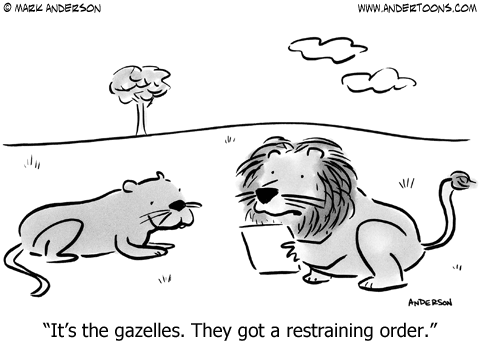
But David’s vision is full of God. He chooses to call on the Lord for the help he must have. People want to kill him, and David needs a temporary restraining order desperately.

As I read these verses, there is an absence of anxiety. This man has taken his refuge in the cave of God’s heart. David will be kept securely and safely in that place. He is aware, but he also trusts.

V. 9, “Keep me from the traps they have set for me,
    from the snares of those who do wrong.”

The nature of traps and snares is that they must be hidden. A snare only works by surprise. They must be stealthy. The psalmist doesn’t rely on his own abilities to detect and escape these traps. Rather he reaches out to his Father, and he relies on God’s abilities.

V. 10,  “Let the wicked fall into their own nets,
    but let me escape.”

What we see around us must be (and will be) reversed. The righteous and the wicked will switch places. We need to believe this. Those who have buried themselves in darkness are the ones caught. We must understand this transforming “swap.” It happens when embattled hearts seek the Lord, just like David has done.

 1brobry-sig4 (2)


cropped-christiangraffiti1-3-1