First, You Die

I tell you the truth, unless a kernel of wheat is planted in the soil and dies, it remains alone. But its death will produce many new kernels—a plentiful harvest of new lives. 25 Those who love their life in this world will lose it. Those who care nothing for their life in this world will keep it for eternity.” 

John 12:24-25, NLT

flourish1

We kick it off with a basic knowledge of farming.  Not every farmer knows this, but all his seed sown in the ground will die.  Now it is possible this fact may discourage some, but the wise farmer accepts the dead seed, knowing that green growth will sprout from this death into a harvest of 1000x times or more for every dead seed.

“He that loves his life will lose it”.  This is one of the first ‘laws of the spirit’ we must learn.  It is the basis of so much that we have to know.  For years I have preached this message just before Easter Sunday.  “There can be no resurrection without a crucifixionThere is simply no resurrection power without crucifixion weakness”.

Alas, we must die before we can live.  There is no way around this, and no waiver can be given to avoid this truth.  You have to die, it is a profound necessity.  But often we become adept at ‘life support’ systems.  Doing what we can do to keep the ‘old man’ alive.  So much of what we find in religion is nothing more than a way to put the ‘old man’ on life support.

Unless we die, we will never, ever live.  If we try to save our life, we will die.  Choosing then to die is really your best option.  But what does that entail?  Every Christian is to submit to carrying his/her cross daily.  That cross is intended, not for a showy display, but to die upon.  Our self-life must choose to die, when we are ‘crossed’ by someone else.  Someone insinuates that something is wrong with us, and we die when we just humbly accept it without rancor or anger.

Resurrection life is what happens when we finally decide to die.  Doing so, we become incredibly fruitful for one.  We start to live the life Jesus had intended for us.  You will start to make the connections that were not possible before, you become spiritually diversified, reaching a very broad spectrum of people.

But most of all, the most of everything, you will connect with others on this fresh level.  Your spirituality will not become a hindrance to others.  In a very real way you’ll become like Jesus.  And that can’t be at all bad.

1brobry-sig

***

Fear God Only

fear god only

“—for you shall not worship any other god, for the Lord, whose name is Jealous, is a jealous God—”

Exodus 34:14

“And remember that the heavenly Father to whom you pray has no favorites. He will judge or reward you according to what you do. So you must live in reverent fear of him during your time as “foreigners in the land.””

1 Peter 1:17, NLT

flourish2

A frequent issue confronted by disciples is that between fear and faith.  The question posed to us concerns “fearing God”, and trusting Him.  Can intimacy be built on the foundation of fear?  Deep within, we understand the need for fear, at least a reverence.

We are now sons and daughters of a loving God who just happens to be holy and just. It’s as if our faith is reduced to an uneasy contact with someone who is quite dangerous. We don’t easily find the balance; it drives us to a false sense of relationship. Often we are either resentful and cower, or we blatantly disregard Him. (Or somewhere in between.)

Yet fear has a place.  Our Father reveals to us that He is not just some mere tribal deity over a specific group of people.  Rather, Jehovah God is the Creator, and the Sustainer of this terrestrial ball, and everything that works itself out in the here-and-now.  We are to fear, but with a legitimate fear.  He is a loving God who happens to hate sin and iniquity. These things continue to destroy His creation. It defiles all that is right and perfect. He would not be just, or right to overlook sin.

I am certain that He loves me with a “crazy-love”.  His affection for me pushes the boundaries of anything logical. He is not reasonable with His intense love.  He directed His Son to come for me, and lift me out of my ugliness, sinfulness and perversity.  His love goes beyond anything rational. But I fear Him. It is a fear that I might offend Him and somehow harm His kingdom. (That is a legitimate possibility, but it also strengthens me to obey Him.)

So, do I fear or do I love?  I think the wrestling with this will work itself into me.  It is fear and love combined, worked into my heart like yeast is worked in bread dough.  There will be a resulting effect. I have a faith that should grow this up. It needs to advance as I mature in Him. I choose to love Him fiercely, and fear Him conclusively.

aabryscript

Accommodating Life

the_game_of_life_dreamcast_002

“How do you know what your life will be like tomorrow? Your life is like the morning fog—it’s here a little while, then it’s gone.”

James 4:14

The story is told of a man who went to a toy store to buy something suitable for his young son. He looked high and low for something just right; he wanted a gift that would be perfect. Perhaps an educational toy? The sales girl was helpful. She steered him to many different toys, but nothing was what he was looking for. He didn’t want just any toy– he wanted a memory maker, and something that would last.

Then at last he saw a rather plain-looking box. It wasn’t shiny or glossy like some. But the description on it was interesting, and it said it was suitable for ages 5 through 95. That kind of intrigued him and he read the fine print. It seemed to be a puzzle or game of some kind or another. He shook the box and heard the pieces rattle inside. It seemed to captivate him.

The box said that it came unassembled. Parental help was helpful. There also was a statement that the contents were designed to teach a person how to deal with life, and required some diligence and intelligence to put it together. But there in the smallest fine print, “this toy was never intended to be put together perfectly.”

The man realized that this was the ideal gift for his son. It would teach him that life really never can be assembled quite right. There will always be something missing, or a critical flaw. And there is very little we can do about it. Perhaps the most significant lesson learned is “humility.”

That is why we must turn to God. He alone can make our lives work. The father wanted to teach his son that critical lesson. He wanted to prepare him for failure and frustration. Life never works out the way we want it to, and we should accommodate that idea.

“All have been given a box of tools, a formless rock and a book of rules. And each must make in his life, a stumbling block or a stepping stone.” 

~unknown

Flourish-61

12 “In the few days of our meaningless lives, who knows how our days can best be spent? Our lives are like a shadow. Who can tell what will happen on this earth after we are gone?”

Ecclesiastes 6:12

aabryscript

No Half Measures

cslewis
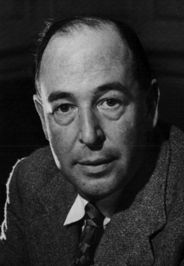
C.S. Lewis (1898-1963)

“Give me all of you! I don’t want so much of your time, so much of your talents and money, and so much of your work. I want YOU! ALL OF YOU. I have not come to torment or frustrate the natural man or woman, but to KILL IT! No half measures will do. I don’t want to only prune a branch here and a branch there; rather I want the whole tree out! Hand it over to me, the whole outfit, all of your desires, all of your wants and wishes and dreams. Turn them ALL over to me, give yourself to me and I will make of you a new self—in my image. Give me yourself and in exchange I will give you Myself. My will, shall become your will. My heart, shall become your heart.”

― ― C.S. LewisMere Christianity

This quote is striking, and a bit biting. As a “halfway” believer, a decision to do this is potentially damaging to my happiness. As I count the cost I start doubting my heart. I say to myself, “who can make this decision?” Can I really renounce my life like this? Perhaps this religion thing has gone too far?!

Then, I have to reflect that the Son of God has died for me. And that changes everything. Such a price, and such an investment was made. How can I resort to half measures? To respond like seems like to diminish His sacrifice.

I demand a religion that doesn’t demand anything. I want convenience, not commitment. (At least not total.) Yet the Lewis quote continues to maul me unmercifully. (How dare Lewis say such a thing?)

And yet I roll this truth around realizing that its logic is valid. The ‘pointy parts’ hook on me as I acknowledge their truth. There is a specific ultimatum that is inherent in this. If I don’t surrender, I will not be saved. Without denying myself, I will not be free. I can’t have it any other way.

I must surrender, and do it over and over again. I believe the basic terms of discipleship are as follows:

  • we must be under Jesus’ authority,
  • we must be seeking to follow His teaching,
  • we must actively be doing what He did.

From a secular viewpoint this is brutally outrageous. It seems I’m being forced into a decision– but after all, He did die for me. (This point cannot be understated.) The Son of God gave Himself so that I could live. Jesus said it best,

26 “If you want to be my disciple, you must hate everyone else by comparison—your father and mother, wife and children, brothers and sisters—yes, even your own life. Otherwise, you cannot be my disciple.”

Luke 14:26. NLT

Can anything so eloquent be so brutal? Jesus consistently demands everything. Perhaps this is the only way Christianity works? We must be renouncers as well as repenters. We must say, “Yes, God” when we want to live forever. In short, God must be all we live for.

A religion of half measures is not Christian, it is merely a convenience. To follow Jesus is to be radical; and perhaps insane (the worlds evaluation). But to love Jesus demands a “first-love” approach. Anything else is hardly adequate.

The gospel is radical, or it is nothing.

aabryscript

CLIVE STAPLES LEWIS (1898–1963) was one of the intellectual giants of the twentieth century and arguably one of the most influential writers of his day. He was a Fellow and Tutor in English Literature at Oxford University until 1954. He was unanimously elected to the Chair of Medieval and Renaissance Literature at Cambridge University, a position he held until his retirement. He wrote more than thirty books, allowing him to reach a vast audience, and his works continue to attract thousands of new readers every year. His most distinguished and popular accomplishments include Mere ChristianityOut of the Silent PlanetThe Great DivorceThe Screwtape Letters, and the universally acknowledged classics The Chronicles of Narnia