“If iniquity is in your hand, put it far away,
And do not let wickedness dwell in your tents.” NASB
“And give up your sins– even those you do in secret.” CEV
Job 11:14 [in two versions]
***
“When the sentence for a crime is not quickly carried out, people’s hearts are filled with schemes to do wrong.”
Eccl. 8:11, NIV
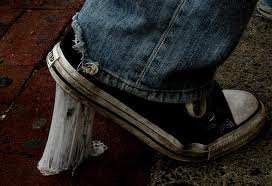
We know it, deep inside of us. Our sin and iniquity, those things that stick to us, must be renounced and stripped away. I think it’s interesting that Job is working from the assumption that each of us has sin issues. I don’t think scripture is ever really shocked by the depth of our iniquity. We are sinners, and we will sin, but the Holy Spirit is never surprised or caught off guard by our sin and deceit. But we are, most certainly guilty.
This verse in Job emphasizes “renunciation”. That means relinquishing or repudiating the evil that we love doing. I think that in Job’s thinking it means abandoning our sinfulness. We are to let it go, releasing it to the grace of God. We are not to sin in secret.
We privatize our favorite sins to make ourselves acceptable. I think that this is a truism: “We care more for what people think of us, then what God thinks of us.” Our sin thrives in solitude, its like a warm and humid greenhouse for our evil. Secretiveness just causes it to grow, our hiddenness is “Miracle Grow” for our darkness and ugliness.
Job is very much concerned I think, by the contagiousness that sin has. We transmit the sin virus to our brothers and sisters in Christ. If we have a hidden darkness, we will most certainly sicken those we touch. Our Churches have been decimated by private and hidden sin. I’m thing of Achan in Joshua 7. He secretly desired nice things, and it destroyed him and his family.
What judgement will you bring on to your loved ones, and your church? What are you hiding? Often, I have heard questions like that, and it temporarily moves me. But it seems the change is not permanent (I desperately wish it was.) But I suggest that you go into your “tent” and bring your deceitfulness out into the full light of day. And then, put it to a merciless death.
Of the many bipolar symptoms I’ve dealt with over the course of my life, sleeplessness has been the toughest. Until I started taking a med called Seroquel, I never slept… ever. I remember telling my doctor that I had no recollection of a full night’s sleep. For nearly two years, Seroquel was sedating enough to provide me with rest. Rest isn’t the word for it. I was semi-comatose because of it, not that I’m complaining.
But the sedating effects wore off and for the past few months I have been stuck between three different kinds of insomnia. There are nights I can’t fall asleep at all and I spend the next day feeling like I’m battling the flu. Some nights I fall asleep only to wake up in the wee morning hours, long before the sun has even decided to wake up for the day and I can’t fall back to asleep. And other nights, I can’t fall asleep until the wee morning hours and I end up sleeping during the day.
Last week I could not sleep at all. I tried an over-the-counter sleep med that did squat. I cut out all the caffeine in my diet (I have a pretty bad coffee habit), and nothing would work. The result was a few days of relative instability. The rubber met the road for me, so to speak. I was feeling miserable, both physically and mentally, and the last thing I wanted to do was praise God or crack open my Bible. I didn’t want to do anything. I have a lot of hobbies but none of them appealed to me.
But I knew that if I wanted to pursue this ministry of helping others with mental illness, I had to do the things I told everyone else to do. And, so, I did. Reluctantly. Little bits at a time. I called a dear friend and mentor of mind and she prayed over the phone with me and I began to see the light at the end of the tunnel. Tears still fell, but I knew “mourning may last for the night, but joy comes in the morning.”
Of course, I knew I needed to do more than that. I knew I needed to solve my sleep problem. Man, everyone likes to make fun of Michael Jackson, but I get it. Not that I would ever inject Propofol into my veins, but I understand the exhaustion and frustration he must have been feeling. It’s hard to be human when you feel like a walking zombie.
I am now the proud owner of a bottle of Ambien. I was a little scared when my doctor prescribed it for me, because I have a friend who once hallucinated on it and thought her bed was surrounded by fairies. (At least it wasn’t ninjas, Taliban, or Chuck Norris.) I kept thinking, wow, the last thing I need is to hallucinate. Here’s one symptom I haven’t had yet, and I’d like to keep it that way.
I’m happy to report I have not hallucinated. I’m also happy to report that for the past three nights, when I go to bed, I fall asleep quickly and stay that way until morning. I’m even happier to report that I feel like a real person again – not a zombie, not emotionally unstable, just me. You know – normal crazy.
Far be it for me to leave you without a lesson, so here it goes.
Sleep disturbances are very common in people with mental illness, particularly bipolar disorder. If you’re waiting around for it to get better or avoiding having to take another pill (I’ve been guilty of this), give in. God made separate days for a reason. When you can’t sleep, they all blur into one big, never-ending day and it’s hard to see the newness and fresh hope of morning when every day is just an extension of the last. It makes sense that a malfunctioning brain would make for a malfunctioning body clock.
God wants you to have rest and hope. So, if you are not experiencing that today, make plans to get your life back.
Julie Anne Fidler is a contributing writer for Brokenbelievers.com. She comes with a humble and understanding heart for those with a mental illness. Her writing gift is valued greatly. Look for her post weekly, on this blog. She keeps a personal ministry blog at www.mymentalhealthday.blogspot.com. Read more there.
(TS) as it is frequently called, is a neurologic syndrome. The essential feature of Tourette’s are multiple tics that are sudden, rapid, recurrent, non-rhythmic, stereotypical, purposeless movements or vocalizations.
What are the symptoms of Tourette syndrome?
Both multiple motor and one or more vocal tics are present at some time during the illness, although not necessarily simultaneously
Occurrence many times a day nearly every day or intermittently throughout a span of more than one year
Significant impairment or marked distress in social, occupational, or other important areas of functioning.
Onset before the age of 18.
Symptoms can disappear for weeks or months at a time and severity waxes and wanes.
What are the first tics that may be characteristic of Tourette’s syndrome?
Usually, the facial tic, such as rapid blinking of the eyes or twitches of the mouth, may be the first indication a parent has that their child may have Tourette’s syndrome. Involuntary sounds, such as throat clearing and sniffing, or tics of the limbs may be an initial sign in other children.
Are any other symptoms associated with Tourette’s syndrome?
Approximately 50 percent of patients meet criteria for attention deficit hyperactivity disorder (ADHD) and this may be the more impairing problem. Approximately one-third of patients meet criteria for obsessive-compulsive disorder (OCD) or have other forms of anxiety. Learning disabilities are common as well as developmental stuttering. Social discomfort, self-consciousness and depressed mood frequently occur, especially as children reach adolescence.
Yelling and irrational
What causes these symptoms?
Although the cause has not been definitely established, there is considerable evidence that Tourette’s syndrome arises from abnormal metabolism of dopamine, a neurotransmitter. Other neurotransmitters may be involved.
Can Tourette’s syndrome be inherited?
Genetic studies indicate that Tourette’s syndrome is inherited as an autosomal dominant gene but different family members may have dissimilar symptoms. A parent has a 50 percent chance of passing the gene to one of his or her children. The range of symptomatology varies from multiple severe tics to very minor tics with varying degrees of attention deficit-disorder and OCD.
Are boys or girls more likely to have Tourette’s syndrome?
The sex of the child can influence the expression of the Tourette’s syndrome gene. Girls with the gene have a 70 percent chance of displaying symptoms, boys with the gene have a 99 percent chance of displaying symptoms. Ratios of boys with Tourette’s syndrome to girls with Tourette’s syndrome are 3:1.
How is Tourette’s syndrome diagnosed?
No blood analysis, x-ray or other medical test exists to identify Tourette’s syndrome. Diagnosis is made by observing the signs or symptoms as described above. A doctor may wish to use a CAT scan, EEG, or other tests to rule out other ailments that could be confused with TS. Some medications cause tics, so it is important to inform the professional doing the assessment of any prescribed, over-the-counter, or street drugs to which the patient may have been exposed.
What are the benefits of seeking early treatment of Tourette syndrome symptoms?
When a child’s behavior is viewed as disruptive, frightening, or bizarre by peers, family, teachers, or friends, it provokes ridicule and rejection. Teachers and other children can feel threatened and exclude the child from activities or interpersonal relationships. A child’s socialization difficulties will increase as he reaches adolescence. Therefore, it is very important for the child’s self-esteem and emotional well-being that treatment be sought as early as possible.
What treatments are available for Tourette syndrome?
Not everyone is disabled by his or her symptoms, so medication may not be necessary. When symptoms interfere with functioning, medication can effectively improve attention span, decrease impulsivity, hyperactivity, tics, and obsessive-compulsive symptomatology. Relaxation techniques and behavior therapy may also be useful for tics, ADD symptoms, and OCD symptoms.
How does Tourette syndrome affect the education of a child or adolescent with Tourette syndrome?
Tourette syndrome alone does not affect the IQ of a child. Many children who have Tourette syndrome, however, also have learning disabilities or attention deficits. Frequently, therefore, special education may be needed for a child with Tourette syndrome. Teachers should be given factual information about the disorder and, if learning difficulties appear, the child should be referred to the school system for assessment of other learning problems.
What is the course of Tourettesyndrome?
Some people with Tourette syndrome show a marked improvement in their late teens or early twenties. However, tics as well as ADD and OCD behavior, may wax and wane over the course of the life span.
“He returned to Nazareth, his hometown. When he taught there in the synagogue, everyone was amazed and said, “Where does he get this wisdom and the power to do miracles?”
Matthew 13:54, NLT
Chapter 13 of Matthew is your very own gold mine. There are veins of precious ore throughout these parables. They will give their riches to anyone humble enough to seek them. They each are concentrated truth–these parables are gold!
Parables are a fascinating way to impart teaching that requires a quiet and gentle heart. Not everyone will gain access to them. The truth in them will only touch the hungry heart, the real seeker. It’s like they are locked up, and the Holy Spirit has the combination, but He will gladly share it with the sincere heart.
At this point in Jesus’ ministry, He arrives in His hometown. He goes to the synagogue and begins to teach. (What an awesome time to be in the congregation.) Their teacher Jesus is absolutely astounding! They stand and watch Him; they are astonished and amazed. The text tells us that Jesus not only taught them, but He performed supernatural healings.
The people in Nazareth who were witnesses in such a direct way, begin to draw false conclusions about Jesus. They can’t deal with His youth and can’t believe what He has come from God–as their Messiah.
However the general consensus was profound; “everyone” was in agreement with what they had just witnessed. For a few, they would never be the same. When we encounter Jesus, and hear His wisdom, and see His wonders–it has the power to change us. And that is no mean feat.










 Broken Believers