Two O’ Clock in the Morning Poetry, #5

Cosette-sweeping-les-miserables-albert-bellenger-1886

~Victor Hugo – Les Miserables 

“Deep hearts, wise minds, take life as God has made it. It is a long trial; An unintelligible preparation for an unknown destiny. This destiny, the true one, begins for man at the first step in the interior of the tomb.”

“There he begins to discern the definite. The definite, think of this word! The living see the infinite; the definite reveals itself only to the dead. Meantime, love and suffer, hope and contemplate. “

“Woe, alas! to him who shall have loved forms, bodies, appearances only. Death will take all from him. Try to love souls, you shall find them again.”

yY

Victor Marie Hugo (French pronunciation: ​[viktɔʁ maʁi yɡo]; 26 February 1802 – 22 May 1885) was a French poet, novelist, and dramatist of the Romantic movement. He is considered one of the greatest and best known French writers. In France, Hugo’s literary fame comes first from his poetry but also rests upon his novels and his dramatic achieveme’
nts. Among many volumes of poetry, Les Contemplations and La Légende des siècles stand particularly high in critical esteem. Outside France, his best-known works are the novels Les Misérables, 1862, and Notre-Dame de Paris, 1831 (known in English as The Hunchback of Notre-Dame).
y

victor-hugo-author-the-human-soul-has-still-greater-need-of-the-ideal-than-of-the

The Man Called Cash

Johnny Cash
1932-2003

My favorite musical artist of all time is Johnny Cash. You will find frequent mention of him on my blog, Linda Kruschke’s Blog.

There are only a handful of his songs that I don’t like. Of course, I love all the gospel music he recorded. But I also love everything from Cry, Cry, Cry to Cocaine to T for Texas to Hung My Head to his rendition of Nine Inch Nails’ Hurt and Depeche Mode’s Personal Jesus. His music covers the whole spectrum of real human existence. Many of his songs bring tears to my eyes every time I hear them.

But as great as his music is, the reason I love Johnny Cash has just as much to do with his life and his witness to the grace and redemptive power of Christ. I have read two of his biographies and several essays about him in a book of collected essays. I also have a graphic novel about his life that I recently purchased (though I haven’t read it yet), and have read the introduction to his novel The Man in White. He lived a fascinating and tumultuous life.

For anyone interested in the life of a legend who is nonetheless an incredibly “real” person with struggles and trials just like the rest of us, I recommend The Man Called Cash: The Life, Love, and Faith of an American Legend by Steve Turner. This book is a meticulously researched and well-written account from which even those who knew Johnny well would likely learn something about him that they didn’t know before. Starting almost at the end, with the death of June Carter, and then winding his way through the early years, the middle years, and everything in between, Turner reveals a man who knew God as only a sinner can.

This book includes two awesome sections of black and white photos from Johnny’s life, as well as the unedited text of an interview Turner conducted with Johnny in 1988, a chronology of June and Johnny’s lives, a complete discography, and an index. But these are all just icing on the cake of a story that will bring tears to your eyes and a smile to your heart.

One of my favorite stories of redemption is about the time Johnny crawled into Nickajack Cave, thirty miles from Chattanooga, with the plan to never come out.

He believed that if he crawled in far enough, he’d be unable to find his way out. When he starved to death it would look like a tragic accident.”

In 1995 he [Johnny] told the writer Nick Tosches:

“It just felt like I was at the end of the line. I was down there by myself and I got to feelin’ that I’d taken so many pills that I’d done it, that I was gonna blow up or something. I hadn’t eaten in days, I hadn’t slept in days, and my mind wasn’t workin’ too good anyway. I couldn’t stand myself anymore. I wanted to get away from me. And if that meant dyin’, then okay, I’m ready. I just had to get away from myself. I couldn’t stand it anymore, and I didn’t think there was any other way. I took a flashlight with me, and I said, I’m goin’ to walk and crawl and climb into this cave until the light goes out, and then I’m gonna lie down. So I crawled in there with that flashlight until it burned out and I lay down to die. I was a mile in that cave. At least a mile. But I felt this great comfortin’ presence sayin’, “No, you’re not dyin’.” I got things for you to do. So I got up, found my way out. Cliffs, ledges, drop-offs. I don’t know how I got out, ‘cept God got me out.

Turner, pg. 119.

And God did have things for Johnny to do. He had to show the world how even someone as strung out on drugs as he was could be redeemed by the grace of God. He had to show that despite our faults and weaknesses – or maybe because of them – God loves each and every one of us. He may have been a music legend, but he was never afraid to use his talent to glorify God and to share the gospel. His was a life of redemption and grace well worth reading about. If you think your life isn’t worth living or that God can’t possibly love you or redeem you, read about the life of one who was chief among sinners but who was saved by grace.

As a bonus to go along with this book review of his biography I want to share this video of the song “Singer of Songs” by Johnny Cash. It is a great synopsis of the purpose God had for his life and how he fulfilled it. He truly was a singer of songs about life, love, death, birth, God, and more. I suspect he’s still singing today at the throne of the King.

Love you, Linda K.

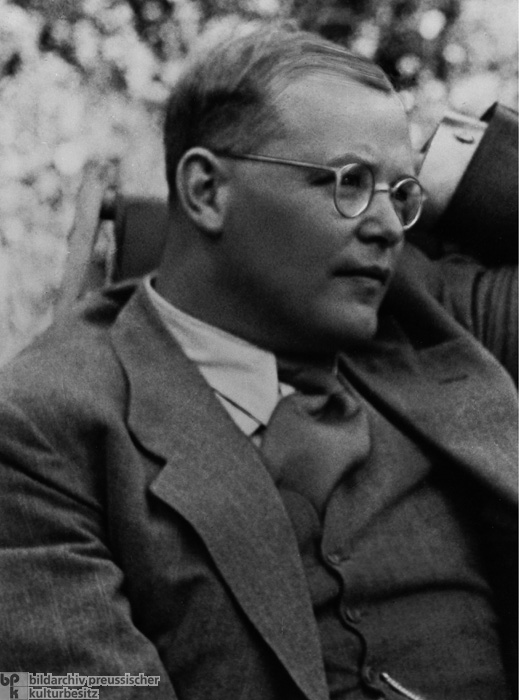
Dietrich Bonhoeffer, A Saint for Today

Dietrich Bonhoeffer (1906-1945) is known for his leadership role in the Confessing Church, efforts on behalf of peace and justice, opposition to antisemitism, and writings on theology and ethics that have been influential far beyond his German Lutheran context. He was was hanged by the Nazis on April 6, 1945 in the Flossenburg concentration camp.

Dietrich Bonhoeffer quotes:

In normal life we hardly realize how much more we receive than we give; life can be rich only with such realization. source: Letters and Papers from Prison

To be silent does not mean to be inactive; rather it means to breathe in the will of God, to listen attentively and be ready to obey. Meditating on the Word

It is not necessary that we should discover new ideas in our meditation. It is sufficient, and far more important, if the Word, as we read and understand it, penetrates and dwells within us. Life Together

When we come to a clearer and more sober estimate of our own limitations and responsibilities, that makes it possible more genuinely to love our neighbor. Letters and Papers…

There is not a place to which the Christian can withdraw from the world, whether it be outwardly or in the sphere of the inner life. Any attempt to escape from the world must sooner or later be paid for with a sinful surrender to the world. Ethics

You have granted me many blessings; let me also accept what is hard from your hand. Prayers from Prison

The first call which every Christian experiences is the call to abandon the attachments of this world. The Cost of Discipleship

Earthly possessions dazzle our eyes and delude us into thinking that they can provide security and freedom from anxiety. Yet all the time they are the very source of anxiety. The Cost of Discipleship

The first service that one owes to others in the fellowship consists of listening to them. Just as love of God begins with listening to his word, so the beginning of love for our brothers and sisters is learning to listen to them. Life Together

From God we hear the word: “If you want my goodness to stay with you then serve your neighbor, for that is where God comes to you.” In the anthology, No Rusty Swords

Judging others makes us blind, whereas love is illuminating. By judging others, we blind ourselves to our own evil and to the grace which others are just as entitled to as ourselves. The Cost of Discipleship

I can no longer condemn or hate a brother [or sister] for whom I pray, no matter how much trouble he causes me. His face that hitherto may have been strange and intolerable to me is transformed through intercession into the countenance of a brother for whom Christ died. Life Together

We have learned a bit too late in the day that action springs not from thought but from a readiness for responsibility. Letters and Papers from Prison

Which of us has really admitted that God’s goodness can also lead us into conflict. In the Anthology, No Rusty Swords

Our enemies are those who harbor hostility against us, not those against whom we cherish hostility… As a Christian I am called to treat my enemy as a brother and to meet hostility with love. My behavior is thus determined not by the way others treat me, but by the treatment I receive from Jesus. The Cost of Discipleship

So long as we eat our bread together, we shall have sufficient even for the least. Not until one person desires to keep his own bread for himself does hunger ensue. Life Together

In a world where success is the measure and justification of all things, the figure of him who was sentenced and crucified remains a stranger. Ethics

 A Prayer written by Bonhoeffer

In me there is darkness,

but with you there is light;

I am lonely, but you do not leave me;

I am feeble in heart; but with you there is help;

I am restless, but with you is peace.

In me there is bitterness, but with you there is patience;

I do not understand your ways, but you know the way for me.

Amen.

Moonlight’s Singular Moment

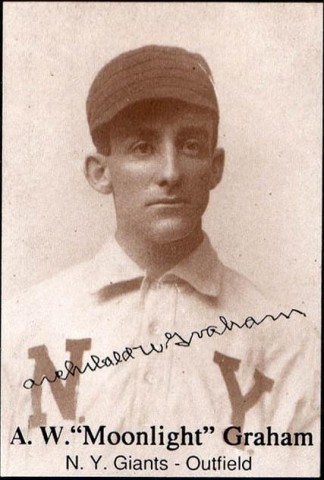
 Archibald Wright “Moonlight” Graham (November 10 1879 – August 25 1965) was an American professional baseball player who appeared as a right fielder in a single major league game for the New York Giants on June 29, 1905.

His story was popularized by “Shoeless Joe,” a novel by W. P. Kinsella, and the subsequent 1989 film, “Field of Dreams.”

On June 29, the Giants were the visiting team against Brooklyn. For the bottom of the eighth inning, Graham was sent in to play right field, replacing George Browne. In the top of the ninth inning, Graham was on deck (scheduled to be the next batter) when his teammate Claude Elliott flied out resulting in the third and final out. Graham played the bottom of the ninth in right field but never came to bat, and that game turned out to be his only appearance in the major leagues.

“Moonlight” Graham got his nickname because the sum total of his career  was that singular fleeting moment, which passed by too quickly.  Technically, I guess he played one game at MLB level, But he never had the chance to bat and never even touched the ball.  He would never again play in the majors, but since he was recorded on an umpire’s ‘batting order’ list, technically he played MLB.

How incredibly sad.  I pulled out my baseball encyclopedia to verify his career and yes he is there.  He had his moment in the moonlight, it passed and left him with no compassion or mercy.  He has been forever marked in baseball as someone “who might have been”.

Dr. Archibald “Moonlight” Graham, went to college and became a physician.  In the movie “Field of Dreams”, Graham (Burt Lancaster) declares this–  “You know we just don’t recognize the most significant moments of our lives while they’re happening. Back then I thought, well, there’ll be other days. I didn’t realize that that was the only day.”

Often, there is just a short window of time to respond to God’s grace. We think we can just put it off, and later make a decisive decision. But this moment maybe all you have.

“God says,

“At the right time I heard your prayers.
    On the day of salvation I helped you.” (Isaiah 49:8)

I tell you that the “right time” is now, and the “day of salvation” is now.

2 Corinthians 6:2, NCV

For some reason we think somehow we have arrived and life will always be this way.  But the only sure thing, the one solid definite fact, is the love of God for our souls.  That is the only thing that will stay with us. Our circumstances are always changing.  But perhaps we need to be faithful in this singular moment.  I think  “Moonlight” Graham would agree.

Carpe Diem.

*Baseball-icon

ybic, Bryan

Here’s a link worth following: http://www.post-gazette.com/pg/05176/528257.stm