Nothing But the Blood


1 John 1:7, ESV

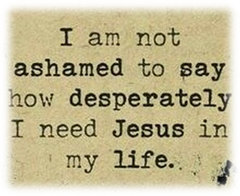
At first glance it seems that the Old Testament is a collection of extremely bloody books. So many sacrifices were made that the levitical priesthood had to sacrifice lambs 24 hours a day. People had this desperate need to cover their sins with an offering. This was instilled in them by the Law and their conscience. The guilt emanating from their sins must be covered by a lamb’s blood.

As our sins mount up (and they will) we have an innate need to cover them up.

Sin is almost never hidden, and never, ever exalted as a virtue. And yet we try to skate though our accumulation of many sins. We forget many, and try to excuse the more heinous. Our guilt condemns us, and we have no choice but to hide it, from ourselves, others, and from God. We can no longer pretend we’re without sin.

“Human beings, all over the earth, have this curious idea that they ought to behave in a certain way, and can’t really get rid of it.”

-C.S. Lewis

The Jewish people no longer sacrifice lambs, and it seems the Gentiles have never caught on. But sin has never gone out-of-style. But yet there is still a way for God to forgive our sin. The New Testament teaches clearly that Jesus has offered His blood as the payment of every sin ever committed. His death wiped our slates clean, forever.

The New Testament is crystal clear on this. I’m not making this up.

The crucifixion of Jesus Christ had enough sufficiency to cover everyone, once, and for all. It seems astonishing, beyond belief and possibility. The blood it seems, has never lost its power. This may be why Christians can’t seem to ‘shut-up’ about their faith.

They ‘see’ something!

“Therefore, brothers and sisters, since we have confidence to enter the Most Holy Place by the blood of Jesus.”

Hebrews 10:19

We are given a ‘backstage pass.’

Simply put, you now have the confidence–sort of like ‘backstage passes,’ into God’s presence, all because of His death. The cross is far, far beyond a gold religious medallion worn around the neck. The cross of Christ, and more precisely His blood, is now regarded as complete righteousness for anyone (who by faith) receives it as his/her own. A brand-new confidence takes hold. “God loves me, and He really has forgiven me.” 

2 Corinthians 5:17

Our sins, from our fallenness, are now smothered in the blood of Jesus. That red blood makes us ‘white as snow’ in God’s analysis. At long last, the tremendous guilt is lifted from the believer, and they want others to know about it. Brokenbelievers’ everywhere are cheering.

We know we aren’t quite right, and we understand our sin, but we have become fans of Jesus Christ. After all, His death has brought us eternal life.


Welcome to Schizophrenia

Do you know someone who seems like he or she has “lost touch” with reality? Does this person talk about “hearing voices” no one else can? Does he or she see or feel things that others can’t? Does this person believe things that aren’t true?

Sometimes people with these symptoms have schizophrenia, a serious illness.

What is schizophrenia?

Schizophrenia is a serious brain illness. Many people with schizophrenia are disabled by their symptoms.

People with schizophrenia may hear voices other people don’t hear. They may think other people are trying to hurt them–we call this paranoia. Sometimes they don’t make any sense when they talk. The disorder makes it hard for them to keep a job or take care of themselves.

Who gets schizophrenia?

Anyone can develop schizophrenia. It affects men and women equally in all ethnic groups. Teens can also develop schizophrenia. In rare cases, children have the illness too.

When does it start?

Symptoms of schizophrenia usually start between ages 16 and 30. Men often develop symptoms at a younger age than women. People usually do not get schizophrenia after age 45.


What causes schizophrenia?

Several factors may contribute to schizophrenia, including:

  • Genes, because the illness runs in families
  • The environment, such as viruses and nutrition problems before birth
  • Different brain structure and brain chemistry.

Scientists have learned a lot about schizophrenia. They are identifying genes and parts of the brain that may play a role in the illness. Some experts think the illness begins before birth but doesn’t show up until years later. With more study, researchers may be able to predict who will develop schizophrenia.

What are the symptoms of schizophrenia?

Schizophrenia symptoms range from mild to severe. There are three main types of symptoms.

Positive symptoms refer to a distortion of a person’s normal thinking and functioning.

They are “psychotic” behaviors. People with these symptoms are sometimes unable to tell what’s real from what is imagined. Positive symptoms include:
  • Hallucinations: when a person sees, hears, smells, or feels things that no one else can. “Hearing voices” is common for people with schizophrenia. People who hear voices may hear them for a long time before family or friends notice a problem.
  • Delusions: when a person believes things that are not true. For example, a person may believe that people on the radio and television are talking directly to him or her. Sometimes people believe that they are in danger-that other people are trying to hurt them.
  • Thought disorders: ways of thinking that are not usual or helpful. People with thought disorders may have trouble organizing their thoughts. Sometimes a person will stop talking in the middle of a thought. And some people make up words that have no meaning.
  • Movement disorders: may appear as agitated body movements. A person with a movement disorder may repeat certain motions over and over. In the other extreme, a person may stop moving or talking for a while, a rare condition called “catatonia.”

Negative symptoms refer to difficulty showing emotions or functioning normally.

When a person with schizophrenia has negative symptoms, it may look like depression. People with negative symptoms may:
  • Talk in a dull voice
  • Show no facial expression, like a smile or frown
  • Have trouble having fun
  • Have trouble planning and sticking with an activity, like grocery shopping
  • Talk very little to other people, even when they need to.

Cognitive symptoms are not easy to see, but they can make it hard for people to have a job or take care of themselves.

Cognitive symptoms include:
  • Trouble using information to make decisions
  • Problems using information immediately after learning it
  • Trouble paying attention.

Helpful Links for Further Thought

The Mayo Clinic: Good, solid and trustworthy, a great introduction.

WebMd: Early Signs to look for.

World Health Organization: More advanced, but still accessible and understandable.


When There’s No Exit: Psalm 88

  Lord, God of my salvation,
    I cry out day and night before you.
Let my prayer come before you;
    incline your ear to my cry!
For my soul is full of troubles,
    and my life draws near to Sheol.
I am counted among those who go down to the pit;
    I am a man who has no strength,
like one set loose among the dead,
    like the slain that lie in the grave,
like those whom you remember no more,
    for they are cut off from your hand.
You have put me in the depths of the pit,
    in the regions dark and deep.

Psalm 88:1-6, ESV

I definitely needed this Psalm today. Yesterday I went to the doctor and was blindsided by news that really isn’t good, at all.  Of course, I also have this ongoing struggle with depression.  Today I feel like I’m running a marathon with ‘leg weights’ on. 

This particular Psalm is radically different than the others. 

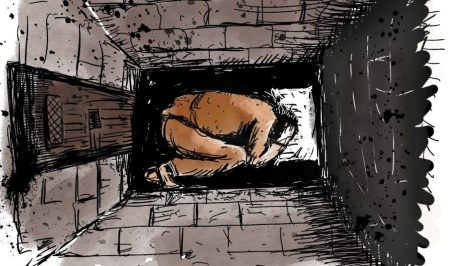
This Psalm has no kind words, and no praise to God for deliverance.  It is a singularly sad song.  Imagine if you will, a huge stone fortress in the mountains.  Every room has a door, and every room a window.  All except one.  No light enters this room.  There is no entrance or exit, no way to get free.  Psalm 88 describes living that torturous experience.

I like my Psalms to be strengthening or encouraging. 

But then comes this one!  Life unravels and frays.  Everything gets confusing. Life comes apart.  The thought of being one who is irretrievably lost and damned, it saturates my thinking.  The despair is beyond belief, I have no words to describe its special variety of darkness. 

Anyone who has walked into this hell will understand.

Am I ‘less’ a Christian because of this vicious despair?  Some would say so.  The writer in verse 1-2, calls out to God.  (I guess this what you are supposed to do).  There is a sense of consistency in his cry.  In verses 3-5, we see him evaluating his position.  Again, there is a underground current of despair. 

There is simply no help, no deliverance for him.

It’s a bitter and painful place to be.  There are no explanations why life has gotten so nasty and bitter and out-of-control.  But one thing that Psalm 88 does quite well, it strips you of any dignity that you have left. 

(Does this make any sense at all?)

There is so much embedded in the book of Psalms.  Comfort, faith, victory and hope are what we find. But in Ps. 88, we find a black pearl, the only one of its kind.  Somehow, we dare not leave it behind, just because we don’t understand it. 

I’m convinced that it has tremendous power to the disciple who is in endless pain.  Just vocalizing this Psalm does something to us.  These real words help.  This Psalm is ours. 

God has provided it for us.


God Loves Misfits

They were a motley collection of misfits.

A tiny purple alyssum and a scraggly white alyssum. Two mini daisies. A wee snapdragon with a single bloom. Each had volunteered in various annual pots left on our deck over the winter. As spring sprung, so did these tenacious sprouts.

We wanted to plant new, healthy flowers in the old pots. But I couldn’t bear to toss my little band of misfits. Somehow I knew they held such promise. They were of hearty stock, small though they were. So I replanted them all in what I dubbed my planter of misfits.

Misfits1

Kind of pitiful, isn’t it? Still, this silly planter grew dear to my heart.

Jesus’s Band of Misfits

The disciples that Jesus called to follow him were a lot like the sprouts in this planter. They were a motley collection of misfits. A few fishermen. A tax collector. A zealot and a thief. None were learned men. Not quite what we would expect the God of the Universe to choose for his followers.

But choose them, he did. And at times they were quite pitiful. They misunderstood his teachings. They jockeyed among themselves for position. They doubted—oh, how they doubted. Then they all scattered when he was arrested.

Still, Jesus knew somehow that they held promise. They had potential. With a little training, some time with the Master, and an infusion of the Holy Spirit, they would become a great band of disciples. Pointing others directly to God and his Messiah, they would start the Church—his Church—that would still exist 2,000 years later.

My Lovely Band of Misfits

I doubt my little planter will still be in existence in 2,000 years, or even two. But with a little care and watering, an infusion of fertilizer and sunshine, it has grown into a beautiful planter of flowers.

Misfits2

The purple, yellow, and white overflow the pot and provide beauty to my deck railing. I am delighted that I had faith in the ability of these sprouts to blossom into something extraordinary.

We Are All Misfits

Have you felt like a misfit, too? I know I have on many occasions. I struggle to fit in and I doubt—oh, how I doubt—my own potential. When depression threatens, I even doubt God’s love and my own worth in this world.

But God knows our potential. We who follow Jesus are his people, called to bring him glory. We are called to sprout and grow in beauty and faith. We may be a motley band of misfits, but we are his misfits. And we are dear to his heart.

Every time you cross my mind, I break out in exclamations of thanks to God. Each exclamation is a trigger to prayer. I find myself praying for you with a glad heart. I am so pleased that you have continued on in this with us, believing and proclaiming God’s Message, from the day you heard it right up to the present.

There has never been the slightest doubt in my mind that the God who started this great work in you would keep at it and bring it to a flourishing finish on the very day Christ Jesus appears.

Philippians 1:3–6, Message

Your Sister in Christ,

Linda K. 

Linda K.

Linda’s Blog