Coming Home

Returning Home:

“Then the men who were designated by name rose up and took the captives, and from the spoil they clothed all who were naked among them, dressed them and gave them sandals, gave them food and drink, and anointed them; and they let all the feeble ones ride on donkeys.  So they brought them to their brethren at Jericho, the city of palm trees.  Then they returned to Samaria.” 

2 Chronicles 28:15

I once was held captive by sin, ransacked and naked, starving and bereft of hope.

Lord, thank You for saving me, restoring me and returning me to the place I belong . . with You.  And here’s a simple poem . . .

Brought Back                                       

Love clothes me
and feeds me
and fills up
my flaws.
Love anoints me
and establishes me
in the presence
of all.

………..

See Deb’s blog at http://iftodaywehear.wordpress.com/

The Hard Stuff

“And he told them many things in parables, saying: “A sower went out to sow. 4And as he sowed, some seeds fell along the path, and the birds came and devoured them. 5Other seeds fell on rocky ground, where they did not have much soil, and immediately they sprang up, since they had no depth of soil.”

Matthew 13:3-5, ESV


Parables were one of the favorite ways that Jesus communicated the truth.  This folksy and imaginative bit of “story-telling” carried profound things.  In this peculiar parable they hear of a farmer “broadcasting” the spring seed. It says he went “out to sow.”  He went out (and not in.)  The fields were awaiting him and his precious seed.

There was seed that was incidentally sown on the hard path.  The sparrows and the wrens and robins came and ate all the seed they could hold.  And some other seed was sown into the gravel, and rocks.  There was really, very little good soil.

Amazingly, they grew.  The seed there managed to sprout, and show some real semblance of growth.  But, it was temporary.  It could not last, the conditions would not endure continual growth.  The young plants would soon shrivel up and die.

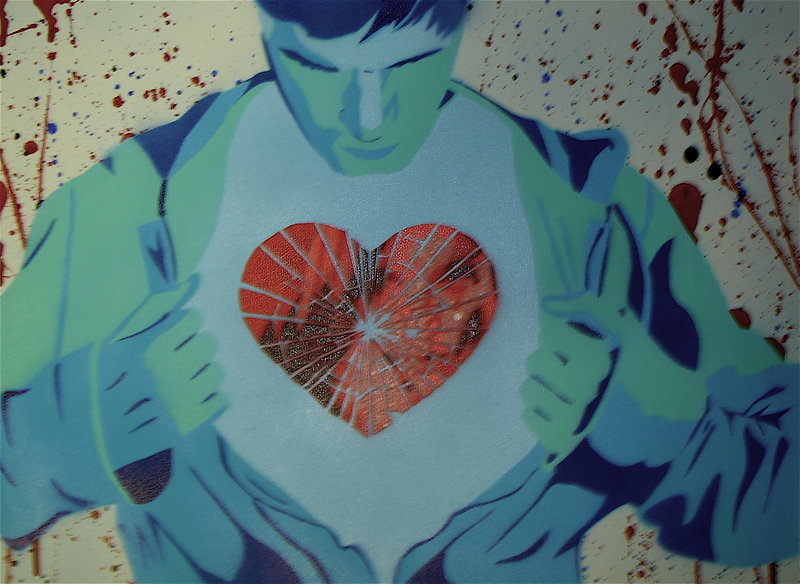
Many things happen, that reveal our heart rocky and hard.  Much traffic treading down the lanes of our heart, pack the soil of our hearts.  The soil compresses and will not allow the young roots to find the nutrients it needs. Things are hard, the soil is packed down–like concrete.

So many things roll through our hearts.  We discover that we have been trampled and stomped on.  What may have been soft and fertile, has been packed down and hardened by all the traffic.  We should-be been more aware. We turned to a “free-er” and more open acceptance of what we would take and tolerate.  Evil, which has taken advantage, moves deep into our thinking, and we “sign over” much that we will regret, but later on.

The seed though is the focus.  It is precious, and knowing this, we focus on its viability.  The seed that makes it into a tiny plant is valued incredibly.  We hover over it, trying to “will” it to grow.  (If that were possible.)  But it seems we can’t press through this point.  The “precious seed” is sown, and our hardness nullifies so much real growth.

The Lord’s gentle but deep awareness is focused on our softness.  How do we manage our hard hearts?  When his spirit reaches out to us (the other day it was a wonderful song on the radio); He was reaching to me, and than I shut it down.  I guess I know he’ll continue to reach for me, even if I’m so rude to him.

There is an old story, of a demonic horse rider who would ride through the country, and wherever the horse stepped there was a permanent deadness that would never let the seed to grow.  When we indulge sin, we enable sin to flourish, and we empower the “horse rider” to continue his advance.  Our lust, and greed, jealousy, pride and selfishness bring us a deep and shadowy darkness.  He moves through my life, and I am mostly saddened because I no longer reach to him, even though I think that I grasp for him.

But how will we manage the traffic through the soil of our lives.  Will we let it continue, or will we put up signs?  Signs create a “safety zone” and we turn to this draconian measures to keep things in a good order.  It seems harsh, but it gives us space to let what is soft to become eager to receive the seed.

Psalm 16, Study– “He is Always Good”

 Psalm 16

1 Protect me, God,
       because I trust in you.
 2 I said to the Lord, “You are my Lord.
       Every good thing I have comes from you.”
 3 As for the godly people in the world,
       they are the wonderful ones I enjoy.
 4 But those who turn to idols
       will have much pain.
    I will not offer blood to those idols
       or even speak their names.

 5 No, the Lord is all I need.
       He takes care of me.
 6 My share in life has been pleasant;
       my part has been beautiful.

Psalm 16:1-6,  New Century Version

This Psalm is profoundly deep, and the themes it discusses are definitely significant.  The Psalmist has a steady and direct confidence in all that swirls around him.  He knows that God is available and perched to protect him.  To a certain extent he thinks that as he gives himself over to Him, he will be protected and watched over.  He sees that God’s innate goodness is available to the needs his soul has.

We operate and function completely surrounded.  There is no way we can diminish God’s goodness.  It’s the way He functions–He will never be bad, but only and completely good.  The Psalmist goes on to proclaim the wonderfulness of God’s people.  They are outstanding, they are terrific.  He loves those who belong to Him.  The Psalmist understand these two incredible concepts:  God’s goodness and God’s people.  These two resources will help him deal with the future.

The Psalmist abhors the falseness of idolatry.  When you have truly experienced the reality of God, just being with  idols will truly bring you to despair and futility.  In the piercing light, we cannot imagine a substitute.  He knows that God rules and directs.  The Psalmist will not budge or falter.  God sits on the throne, exclusively, and He doesn’t share it with an idol.  Nothing can change that, especially no false maneuvering or manipulation here on earth.  He will still be God.  The Psalmist speaks,

No, the Lord is all I need.
       He takes care of me.
 6 My share in life has been pleasant;
       my part has been beautiful.”

He has a “razor’s edge” understanding of all that has been given him.  God Himself is his source.  God is the well he draws water out of.  God is the complete source of all his needs.  Can you say that?  Will God, your Father provide for a struggling “you?”

As we analyze this Psalm, we are brought into this sense that the believer has been led into a confidence, and an assurance of God’s exceptional goodness.  The writer clearly speaks of “pleasantness” and “being beautiful.”  Without a doubt, these key words will adjust, and assist us to savor His grace.  He has made things to be pleasant and beautiful.  We must take this confidence, and weave it into our lives.

^

ybic, Bryan

Umbilical Cord Christianity


“I thank Christ Jesus our Lord, who gave me strength, because he trusted me and gave me this work of serving him. In the past I spoke against Christ and persecuted him and did all kinds of things to hurt him. But God showed me mercy, because I did not know what I was doing. I did not believe.”

1 Timothy 1:12-13, NCV


Coming out and thanking God is a critical way we can grow.  Paul thanks God out loud.  He has in mind, through a modern metaphor, God as a power plant, providing him with everything he needs.  He is now being energized by God, and this infusion enables us to do some amazing things that others consider quite exceptional.  (Handling this piece of understanding is critical to fitting into the Kingdom.)

Umbilical cord Christianity is the way Paul seems to view his walk and ministry.  He seems himself connected with the Holy Spirit which transforms him and his work.  Without this deeply vital connection, Paul becomes open to all kinds of evil and atrocity.  It’s fascinating, but we actively expand darkness if we are not attached.  We will end up doing all kinds of evil.  There are many who can’t see this truth.

In these verses we find another issue–that of forgiveness of self.  Paul had an ugly past.  He had once been an effective tool in the evil one’s hands.  On a logical level, this should taint him completely and irrevocably.  Paul was marked to be a wicked presence in the early Church.  Everyone knew him and braced themselves against his personal darkness.  They all thought that Paul was completely evil.

But in a dramatic moment, Paul is converted to Christ on the Damascus Road.  This is a radical shifting in the early Church.  Paul points to the mercy that God has, and makes it very clear that God has exclusively arranged and administered this miracle.  He points to the Spirit’s work that has intrinsically changed everything.  Paul is now completely altered by the Holy Spirit.

Another vital point; it was Jesus Himself who was hurt, when His children were hurt.  All of Paul’s viciousness and meanness was really directed against God.  We seldom think this way.  We may admit sin, but we will rarely view it as against God directly.  There is an old Yiddish proverb, “If God had a house, people would come and break His windows”.  In my own desperate and personal war against the Almighty, I often strain and strive to strike at His children.

There is an immense mercy and grace for sinners like Saul.  And nothing is irrevocable.  Grace insists on that.  All we can do, is change our mind and our heart (repent).  Then, we must tether ourselves, reviving that umbilical cord, and connect to Him our very lives (sanctification).  The very presence of Jesus will change everything.


I have a definite sense that there are things in this teaching which are touching hearts.  I have very few ways to help you.  But I can pray, and hold you up to our Father.  Let me know, ok.