
That Didn’t Hurt

Note: This article was posted last November on my page at The Mighty, a great resource and community for people with chronic or mental illnesses.
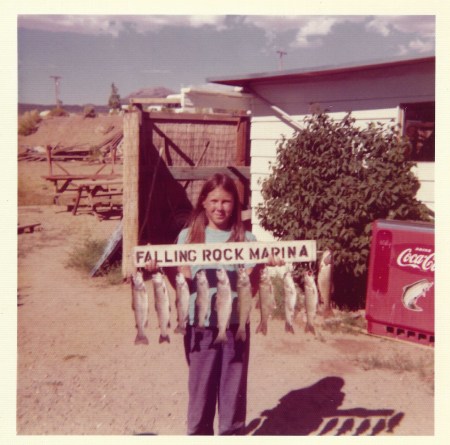
I have long, straight, super-fine hair. When I was a kid, it would often get tangled and I didn’t like to brush it. So my mom would brush it for me, yanking the brush through the rat’s nest knot. “Ow, quit yanking,” I would say with tears streaming down my face.
“That didn’t hurt.”
If I had a dollar for every time I’ve heard that phrase, I could buy a small mansion. OK, maybe that’s a bit of an exaggeration, but I did hear it a lot. Sometimes I still do, or variations of it.

A Lack of Understanding

Several years ago, my sister and I visited an aunt and cousins in Texas. We got to meet one cousin’s grandkids who lived with him.

The impish face of one granddaughter was adorable. I so wanted to play this game she’d made up.

“Hold these,” she chirped, and handed me three pine cones. I don’t even know where she got pine cones in Houston, Texas. I hadn’t seen many pine trees.

Try as I might to hold them lightly, I could barely stand having them poke my tender palms. “I can’t hold these,” I finally said, as I set them down on the coffee table. “They hurt my hands.” That was an understatement.

My sister looked at me with puzzlement written on her face. “Does that really hurt?”

At least she’d asked.

More Failure to Understand

On another trip, this time with my husband and son, Mexico was the destination. Cancun, to be specific. A place of sunshine and beautiful coral sand beaches.

Mid-trip, my husband decided he wanted to have his hair cornrow braided by a merchant in the local outdoor market. He talked me into having mine braided too. I should have known better.

While he was enjoying what felt like a wonderful scalp massage, I endured torture worse than all my mom’s hair brushings rolled into one. I felt certain the woman braiding my hair was going to pull every hair out of my scalp. I will not be doing that again. Ever.

I took the braids out the very next day because the pain wouldn’t cease until I did. My husband still didn’t understand.

Looking for Answers

The denial of my physical pain by those who know me best often makes me wonder if I’m losing my mind. Because it does hurt. At least that’s what my brain tells me.

It wasn’t until I was in my 30s that a doctor gave my sensitivity to pain a name: fibromyalgia. No one could tell me why I had this thing that can’t be tested for or proven. Sure, there were theories.

One pain specialist asked if I’d ever been sexually assaulted, because that kind of trauma is connected to fibromyalgia. I was, when I was 14, but I’d been ultra-sensitive to pain long before that. An online article suggested a link between the Epstein-Barr virus, also known as mononucleosis, and fibromyalgia. I had mono when I was in the seventh grade. But again, my pain sensitivity existed before that five-week illness.

The first doctor to mention fibromyalgia to me wouldn’t commit to a diagnosis. She prescribed amitriptyline saying that “empirically that’s what we’re treating you for.”

In addition to the chronic muscle pain, I have osteoarthritis, although I’ve been told the degeneration in my neck doesn’t look bad enough on an MRI to cause the pain I complain about. In other words, it’s really all in my head.

Happening upon Relief

As with most fibro patients, I have some other health issues, including GI problems. At one point, my doctor suggested I quit eating gluten. When I replied that I hadn’t eaten gluten in over a year, she suggested I quit eating dairy. I rolled my eyes, feeling like she had no real solutions. But I did try it.

She also wanted me to quit taking ibuprofen, which I wasn’t happy about because it was the only thing that took the edge of my chronic pain.

For four weeks, I read every label. If a food contained whey, casein, or any dairy products, I didn’t eat it. Then one day I realized my muscles didn’t ache all over. I didn’t even wish I could take ibuprofen because I didn’t need it.

So I kept it up. I didn’t eat dairy at all for four months. Then came my birthday and dinner out at The Cheesecake Factory. I decided I’d been good, so I deserved a piece of cheesecake to celebrate. I ate the whole thing, which, if you’ve ever been to The Cheesecake Factory, you know is a huge slab of pure dairy and sugar goodness.

The next morning, I awoke to a feeling like I’d been hit with a Mack truck. Every muscle ached.

I’ve been mostly dairy-free for several years now and feel much better.

Still Pain Sensitive

Which is not to say I don’t still deal with pain. I still don’t understand why pain scales have a 0 on them. Are there people who, at times, don’t feel any pain? I suppose there are, but I wouldn’t know about that. Every day something aches or I do something that results in acute pain beyond what those without fibromyalgia would feel.

But the pain is more manageable without the added inflammatory reaction from bombarding my body with dairy products it doesn’t like.

It’s also easier to deal with when I quit listening to those who don’t understand tell me, “That didn’t hurt.”


God’s Good and Perfect Gifts

I often hear people say that the bad things that happen to them are God’s punishment for something wrong they have done. I have a friend who desires to find someone to marry, but has said she doesn’t think God will ever bring her a mate because of all the wrong she has done in the past with respect to relationships. In the news we hear televangelists say natural disasters are God’s punishment for the sins of the people in the area hit by the disaster.

But I don’t think God works that way.

Photo by Pixabay on Pexels.com

James wrote, “Every good and perfect gift is from above, coming down from the Father of the heavenly lights, who does not change like shifting shadows. He chose to give us birth through the word of truth, that we might be a kind of firstfruits of all he created.” James 1:17-18 (NIV). God desires to give good gifts, not punishment.

I also think of Job, a man who endured great suffering and loss. But none of it was punishment from God. Rather, all of his sorrows came from Satan, albeit with God’s permission, so that Satan would see that God’s redeemed and faithful servants would never reject Him simply because of trials they face. See Job 1-2 (NIV).

For the believer in Christ Jesus, all the punishment for our sins has already been meted out at the cross. As Jesus said, “It is finished.” John 19:30 (NIV). To believe that we need to suffer punishment for our own sin is to believe that Jesus’ sacrifice was insufficient. The apostle John wrote, “My dear children, I write this to you so that you will not sin. But if anybody does sin, we have one who speaks to the Father in our defense—Jesus Christ, the Righteous One. He is the atoning sacrifice for our sins, and not only for ours but also for the sins of the whole world.” 1 John 2:1-2 (NIV). God does not seek to punish, but to restore and redeem those He loves.

There are, however, natural consequences of sin.

If we are gluttonous, we are likely to be overweight and suffer various illnesses that come from poor eating habits.

If we get drunk, especially habitually, we will suffer in terms of health problems, possibly losing a job, or having financial difficulties because we spend too much money on alcohol.

If we get involved with other drugs, the same problems can happen, perhaps even worse if they are illegal drugs because we could end up in prison for breaking the law.

If we are sexually promiscuous we may contract diseases, end up with a child we didn’t want, or will suffer emotional damages and loneliness.

If we gossip and badmouth others, we will damage others view of us and damage our relationships.

Every sin has natural consequences. Sometimes we are fortunate to avoid the worst of the natural consequences, but not always. And all sin results in the natural consequence of separating us from God because our guilt and shame cause us to avoid God. That has been the case from the first sin in the Garden of Eden, when Adam and Eve hid from God.

When the woman saw that the fruit of the tree was good for food and pleasing to the eye, and also desirable for gaining wisdom, she took some and ate it. She also gave some to her husband, who was with her, and he ate it. Then the eyes of both of them were opened, and they realized they were naked; so they sewed fig leaves together and made coverings for themselves.

Then the man and his wife heard the sound of the LORD God as he was walking in the garden in the cool of the day, and they hid from the LORD God among the trees of the garden. But the LORD God called to the man, “Where are you?”

He answered, “I heard you in the garden, and I was afraid because I was naked; so I hid.”

Genesis 3:6-10 (NIV).

God knows what is best for us and has declared what is sin based on His superior knowledge of what is beneficial for our physical and emotional well-being. Just as He gave to Adam and Eve all that they needed in the Garden, He desires to give us good and perfect gifts.

In addition to the natural consequences of individual sinful behavior, the sinful nature of mankind over the centuries has brought into our lives a brokenness that leads to pain and suffering. The evil nature of some people can lead to suffering by others, such as a violent man who beats his wife, or the drunk driver who causes an accident that kills others, or a serial killer who tortures his victims. Our sinfulness is also engrained in our DNA and can lead to sickness and disease that brings suffering as well.

So if you are suffering and think that God is punishing you, think again. Return to God and seek His face, seek the good and perfect gifts that He has offered. Lean on Jesus in your suffering because He desires to restore and redeem you, not cause you more suffering. “This is the message we have heard from him and declare to you: God is light; in him there is no darkness at all.” 1 John 1:5 (NIV). Come into the light and rest in His love.

A Prayer for Bryan

We must lay before Him what is in us, not what ought to be in us.

C.S. Lewis, Letters to Malcolm: Chiefly on Prayer, chap. 4, para. 15, p. 22.

If you’ve been a visitor to Broken Believers blog for very long, you may have notice a drop off in the number of posts over the past year. You may have attributed it to COVID-19. I mean, really, can’t we blame a lot of things on the uncertainty of this pandemic? But that’s not the reason posting has dropped off.

The main reason is that Bryan Lowe, the trusted servant of God who started this blog and has kept it going for so long, has experienced some serious health issues. He is currently in Colorado, where for the past five months he has been undergoing much testing and treatment, but no answers yet. He has lost far more weight than he should and is having trouble gaining it back.

Bryan longs to return to Alaska, his favorite place to be, with the exception of being in the presence of the Lord. I think Alaska is the closest place to heaven on this earth for him.

And so I am helping out around here to keep Broken Believers Blog going. I’ll be posting more than I have in the past. I hope what I post will be a blessing. But the first order of business is a prayer for Bryan. I know he appreciates all the prayer he can get, because he knows God honors our prayers when we lay before Him what is in us.

My Prayer

Heavenly Father,

I lift up to You Bryan, Your dear son and loyal servant. You know exactly what is going on in his body and in his mind. I pray for Your healing touch, for Your comfort and peace, and for Your wisdom for the doctors treating him. Lord, help him to gain weight and to feel well again. Return Bryan to his home in Alaska with a refreshed spirit and strength to continue to serve You in whatever way You are calling him to do.

In the meantime, Lord, give Bryan rest for his body and rest for his soul. Help him to draw closer to You, Jesus, and feel Your very real presence. Lead him in paths of righteousness for Your name’s sake. Make him to lie down in peaceful pastures and restore his soul. Let him truly know that this time of illness has not been wasted but is being and will be used by You for Your glory and his good.

I ask all these things in the precious name of our Lord and Savior, Jesus Christ, amen.

Your Prayers

I hope that you will join me in praying for Bryan. I know over the years he has faithfully prayed for many of you and continues to do so. He has a heart to serve, but serving is difficult when illness strikes. Please pray that he has peace. If you would like to post your prayer in the comments, I know he would be blessed.

Nothing New Under the Sun

sun1This post is one that I posted at my own blog over three years ago, but watching Pr. Lowe share his story so honestly here reminded me of it, and so I decided to share it. I know his story is one that has blessed others; I know because I am one of those people who have been blessed by his honesty and faith.

What’s your story? I know you have one; we all do. But a more important question is: Have you shared your story with anyone? So often we don’t. Even when someone asks, “How are you?” or “What’s going on with you?”, we answer with platitudes like, “I’m fine” or “Not much.” We do this even when it is not true, even when we are not fine or a multitude of stressful situations are plaguing us.

A Facebook friend posted as her status one day that everyone lies, and the biggest lie we tell is “I’m fine.” But why do we do that? Why don’t we share our story with others? I believe there are two reasons, both rooted in fear to some extent.

First, we think our story is ordinary. We are afraid that others will be bored by what we have to say about what’s going on in our lives. Sometimes this might be true, sometimes the person we are speaking with won’t really care enough to truly listen or will be bored. Dwight Yoakam sings a song called “Sorry You Asked” that exemplifies this concern:

You’ll be sorry you asked
me the reason
That she’s not here with
me tonight
And I know you were
probably just acting polite
But you’ll be sorry you
ever asked why

We think people are just acting polite when they ask how we are, and don’t really want to know the truth. But often that is not the case, at least not if you are hanging out with people who care about you.

Second, we think we are the only ones going through whatever difficulty we are experiencing. We are afraid that others will look down on us for the situation we are in or the trial we are experiencing. We are afraid they will think we are weird or worse. But seldom are we the only ones who have experienced the trial we are currently experiencing or have gone through in the past. “What has been will be again, what has been done will be done again; there is nothing new under the sun.” Ecclesiastes 1:9.

The truth is our shared stories are what bring us together in community. I believe God allows us to experience trials that He knows we can handle so that we can then be an encouragement to others in a similar situation. If you have had a miscarriage, chances are at least one of the other women in your circle of friends has had one, too, and could use some support and encouragement. If you have suffered from depression and recovered, odds are you will encounter someone else who is struggling with this problem who could benefit from your understanding. If you have lost a loved one, I would venture that many of the people you know have lost someone, too, and could find hope in the fact that you have survived this ordeal. (As a side note, all three of these circumstances are part of my story.)

I could go on and on with examples, but the specific examples are not the point. It is the fact that we are all the same in so many ways. We are not alone and need not feel alone. In Ecclesiastes 4:9-12, Solomon wrote:

9 Two are better than one,
because they have a good return for their work:

10 If one falls down,
his friend can help him up.
But pity the man who falls
and has no one to help him up!

11 Also, if two lie down together, they will keep warm.
But how can one keep warm alone?

12 Though one may be overpowered,
two can defend themselves.
A cord of three strands is not quickly broken.

So go ahead, just like the character in Dwight’s song, share your story. Tell your friends how you really are, the genuine struggles you are facing, and the frustrations you are dealing with. Who knows, you just might help them feel less afraid and alone about their own trials, or you might encounter someone who is willing to share with you their story of hope and healing that you desperately need to hear.

aasignLinda

88