Getting Down and Dirty

by Julie Anne Fidler, BB Weekly Contributor
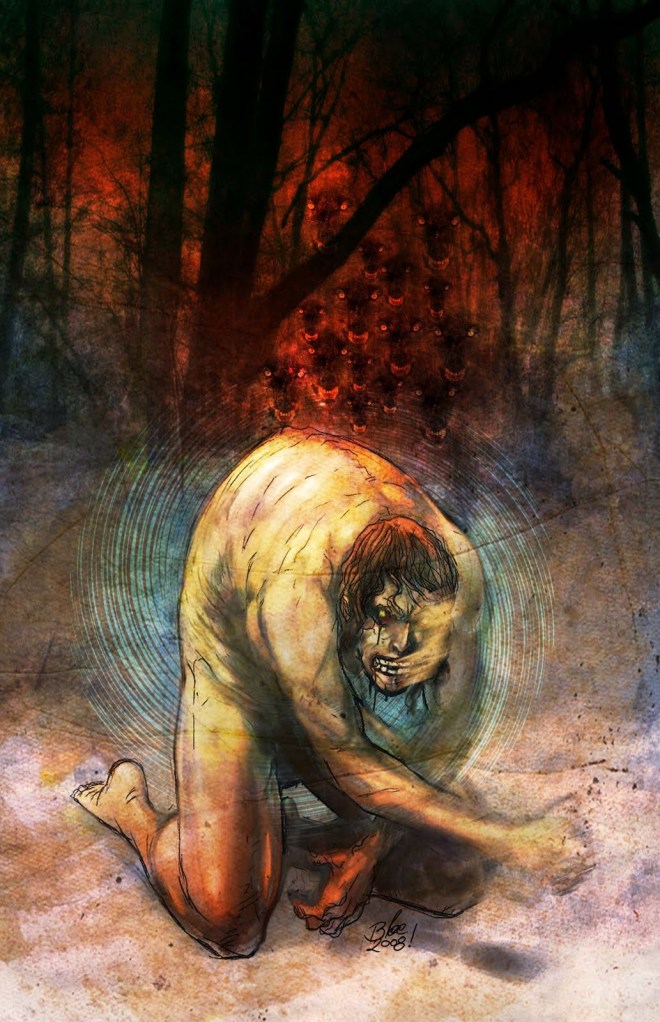
I have a confession to make: I used to avoid church. It wasn’t because the overhead lighting gave me migraines (even though it did.) It wasn’t because my lazy cat had more pep than the worship team, or because I always managed to find a pew filled with screaming children throwing Goldfish crackers. In reality, I have been a member of two churches over the past ten years and both of them were great, Bible-believing churches.

It’s just that everyone in church is so darn perfect, you know? Look around you. Everyone has it all together. Sure, those kids may be throwing crackers, but they’re destined to become evangelists. The women have great hair and impeccable fashion taste and are obviously dream wives. The men never struggle with lust and have never been guilty of spending too many hours at the office.

Right.

But this has been my impression of church for as long as I can remember. The older I get, the more I realize how crazy that is, but I do battle with the concept even now. Church is supposed to be the one place where we get really honest with God, others, and ourselves.  It’s the place where you are supposed to show up with your dirt and your bruises. We are supposed to reach out and say, “Life is hard; help me.” Too often, however, we wear our best, not just on the outside, but on the inside. We want to blend in, look content, and seem overjoyed with the life we are leading.

Even if I never had a mental illness, I would struggle. The fact that I do have one makes it that much harder because I know that a couple of pills mean the difference between being OK and all my engines completely shutting down.  I know that being obedient to Christ becomes a million times harder when I’m sick. I also know that if I shared this part of my life with everyone in that sanctuary, I’d be met with suspicion and disappointment – not by everyone, but by some.

1 John 4:18 says, “There is no fear in love. But perfect love drives out fear, because fear has to do with punishment. The one who fears is not made perfect in love.” Oh, but I definitely struggle with fear. I know I shouldn’t. I know there’s no good reason to, but I do. I fear the reaction of others. I fear I cannot measure up to the standards of others. I fear looking like a fool.

I deal with these fears by facing them. Don’t get the wrong idea – I’m not trying to frame myself as a martyr.  Some people willingly jump out of airplanes. Some people get as high as the clouds, freak out, and have to be coaxed out the door. I have to be coaxed, but the more I do it, the easier it gets.  I want to be the real me when I walk through those church doors, when I go to a small group, when I sit down with a Christian friend for coffee. Jesus went to the dark places. He knelt down in the gutters. He got dirty. I don’t want to spend my life wearing a lily white uniform.

I want the Church to understand mental illness. As it stands, I think the Church is afraid of it. Of course you are going to be afraid of something you don’t understand. If I want the Church to understand mental illness and effectively reach out to “the least of these” who are suffering with it, I have to introduce them to it. I have to get dirty. I have to be honest about my own time in the gutter, my own days of wandering, if I want them to understand and respond in love.

I may run into resistance and fear, but even if I educate one person in the process, that’s one more voice speaking the truth and cracking the façade. I take a point away from the enemy, who is the creator of fear. Don’t be silent about who you are and what you battle. Trade in your spotless uniform for some dirty rags. Let’s get the Church a little dirty. Let’s love them into loving those who are lost and alone.

Julie Anne Fidler is a contributing writer for Brokenbelievers.com.  She comes with a humble and understanding heart for those with a mental illness.  Her writing gift is valued greatly.  Look for her post weekly, on this blog.   She keeps a personal ministry blog at www.mymentalhealthday.blogspot.com.  Read more there.
Suicide– A Second Look

The World Health Organization estimates that approximately 1 million people die each year from suicide. What drives so many individuals to take their own lives? To those not in the grips of suicidal depression and despair, it’s difficult to understand. But a suicidal person is in so much pain that he or she can see no other option.

Suicide is a desperate attempt to escape suffering that has become unbearable. Blinded by feelings of self-loathing, hopelessness, and isolation, a suicidal person can’t see any way of finding relief except through death. But despite their desire for the pain to stop, most suicidal people are deeply conflicted about ending their own lives. They wish there was an alternative to committing suicide, but they just can’t see one. 

Suicide is not chosen; it happens
when pain exceeds
resources for coping with pain.

Because of their ambivalence about dying, suicidal individuals usually give warning signs or signals of their intentions. The best way to prevent suicide is to know and watch for these warning signs and to get involved if you spot them. If you believe that a friend or family member is suicidal, you can play a role in suicide prevention by pointing out the alternatives, showing that you care, and getting a doctor or psychologist involved.

Common Misconceptions about Suicide

FALSE: People who talk about suicide won’t really do it.
Almost everyone who commits or attempts suicide has given some clue or warning. Do not ignore suicide threats. Statements like “you’ll be sorry when I’m dead,” “I can’t see any way out,” — no matter how casually or jokingly said may indicate serious suicidal feelings.

FALSE: Anyone who tries to kill him/herself must be crazy.
Most suicidal people are not psychotic or insane. They must be upset, grief-stricken, depressed or despairing, but extreme distress and emotional pain are not necessarily signs of mental illness.

FALSE: If a person is determined to kill him/herself, nothing is going to stop him/her.
Even the most severely depressed person has mixed feelings about death, wavering until the very last moment between wanting to live and wanting to die. Most suicidal people do not want death; they want the pain to stop. The impulse to end it all, however overpowering, does not last forever.

FALSE: People who commit suicide are people who were unwilling to seek help . 
Studies of suicide victims have shown that more then half had sought medical help within six month before their deaths.

FALSE: Talking about suicide may give someone the idea.
You don’t give a suicidal person morbid ideas by talking about suicide. The opposite is true –bringing up the subject of suicide and discussing it openly is one of the most helpful things you can do.


Source: SAVE – Suicide Awareness Voices of Education

Excellent site: http://www.metanoia.org/suicide/

More info: http://www.helpguide.org/mental/suicide_prevention.htm

Five of the Greatest Sites Ever *


“The Teacher sought to find just the right words  to express truths clearly.”  Eccl. 12:10, NLT


I came across these and wanted very much to share them with anyone interested in some extracurricular reading.  I have hand-picked these out of hundreds of possible posts.  I know these will be a blessing.

There is somewhat of a mixture here.  Some will be links to articles on mental illness, and others on Christian discipleship.  And maybe, this might become a regular feature here on BB. (Who knows what lurks in my brain? lol)  But what you find below, may be an incredibly rich blessing for you.


I.  Lithium, “The Metal Marvel” 

Discover Magazine has always been a good source of fascinating insight.  Lithium for 50 years has been the most effective treatment for bipolar disorder.

http://discovermagazine.com/2010/the-brain-2/27-metal-marvel-mended-brains-50-years-lithium

II.  The Best Online Bible, Ever

An exceptional site that I use daily.  (It’s like a carpenter’s favorite hammer.) Almost 30 translations, search topics or themes.  It is fresh and modern.  I use it whenever I need to “cut & paste” a passage into a post.  I’ve tried many and yet, this remains the best.

http://www.biblegateway.com/

III.  Intelligence Linked to Bipolar Disorder

Research has indicated that bipolar disorder may be up to four times more common in young people who were straight-A students. A link between high IQ and bipolar disorder has been proposed for many years.

http://psychcentral.com/lib/2010/intelligence-linked-to-bipolar-disorder/

IV.  259,731 Bible Questions Answered!

 Got Questions?  A solid and comprehensive place for anyone to sort things out.  It’s easy to navigate.  It is a “safe” place to think out loud about hard things.  Do you have a question about God, Jesus, the Bible, or theology?   Have you ever needed help understanding a Bible verse or passage?  Are there any spiritual issues in your life for which you need advice or counsel?


V.  Alltop Bipolar Links

Alltop is essentially a news aggregator— they supply a one page site of continuously updated links, on a topical base.  They do a lot of broad subjects (I haven’t used it, except for BP news.)  I don’t consult it often, but when I do it is almost always great. ( Alltop has started showing Broken Believer posts, yeah!!)

http://bipolar.alltop.com/

 ************

* In my humble opinion, as of this moment, on this particular day, and is subject to change without warning

Beauty Sleep

by Julie Anne Fidler, BB Weekly Contributor

Sleep is a beautiful thing, isn’t it?

Of the many bipolar symptoms I’ve dealt with over the course of my life, sleeplessness has been the toughest. Until I started taking a med called Seroquel, I never slept… ever. I remember telling my doctor that I had no recollection of a full night’s sleep. For nearly two years, Seroquel was sedating enough to provide me with rest. Rest isn’t the word for it. I was semi-comatose because of it, not that I’m complaining.

But the sedating effects wore off and for the past few months I have been stuck between three different kinds of insomnia. There are nights I can’t fall asleep at all and I spend the next day feeling like I’m battling the flu. Some nights I fall asleep only to wake up in the wee morning hours, long before the sun has even decided to wake up for the day and I can’t fall back to asleep. And other nights, I can’t fall asleep until the wee morning hours and I end up sleeping during the day.

Last week I could not sleep at all. I tried an over-the-counter sleep med that did squat. I cut out all the caffeine in my diet (I have a pretty bad coffee habit), and nothing would work. The result was a few days of relative instability. The rubber met the road for me, so to speak. I was feeling miserable, both physically and mentally, and the last thing I wanted to do was praise God or crack open my Bible. I didn’t want to do anything. I have a lot of hobbies but none of them appealed to me.

But I knew that if I wanted to pursue this ministry of helping others with mental illness, I had to do the things I told everyone else to do. And, so, I did. Reluctantly. Little bits at a time. I called a dear friend and mentor of mind and she prayed over the phone with me and I began to see the light at the end of the tunnel. Tears still fell, but I knew “mourning may last for the night, but joy comes in the morning.”

Of course, I knew I needed to do more than that. I knew I needed to solve my sleep problem. Man, everyone likes to make fun of Michael Jackson, but I get it. Not that I would ever inject Propofol into my veins, but I understand the exhaustion and frustration he must have been feeling. It’s hard to be human when you feel like a walking zombie.

I am now the proud owner of a bottle of Ambien. I was a little scared when my doctor prescribed it for me, because I have a friend who once hallucinated on it and thought her bed was surrounded by fairies. (At least it wasn’t ninjas, Taliban, or Chuck Norris.) I kept thinking, wow, the last thing I need is to hallucinate. Here’s one symptom I haven’t had yet, and I’d like to keep it that way.

I’m happy to report I have not hallucinated. I’m also happy to report that for the past three nights, when I go to bed, I fall asleep quickly and stay that way until morning. I’m even happier to report that I feel like a real person again – not a zombie, not emotionally unstable, just me. You know – normal crazy.

Far be it for me to leave you without a lesson, so here it goes.
Sleep disturbances are very common in people with mental illness, particularly bipolar disorder. If you’re waiting around for it to get better or avoiding having to take another pill (I’ve been guilty of this), give in. God made separate days for a reason. When you can’t sleep, they all blur into one big, never-ending day and it’s hard to see the newness and fresh hope of morning when every day is just an extension of the last. It makes sense that a malfunctioning brain would make for a malfunctioning body clock.

God wants you to have rest and hope. So, if you are not experiencing that today, make plans to get your life back.

Julie Anne Fidler is a contributing writer for Brokenbelievers.com.  She comes with a humble and understanding heart for those with a mental illness.  Her writing gift is valued greatly.  Look for her post weekly, on this blog.   She keeps a personal ministry blog at www.mymentalhealthday.blogspot.com.  Read more there.