Getting to Know Your “Sheepiness”

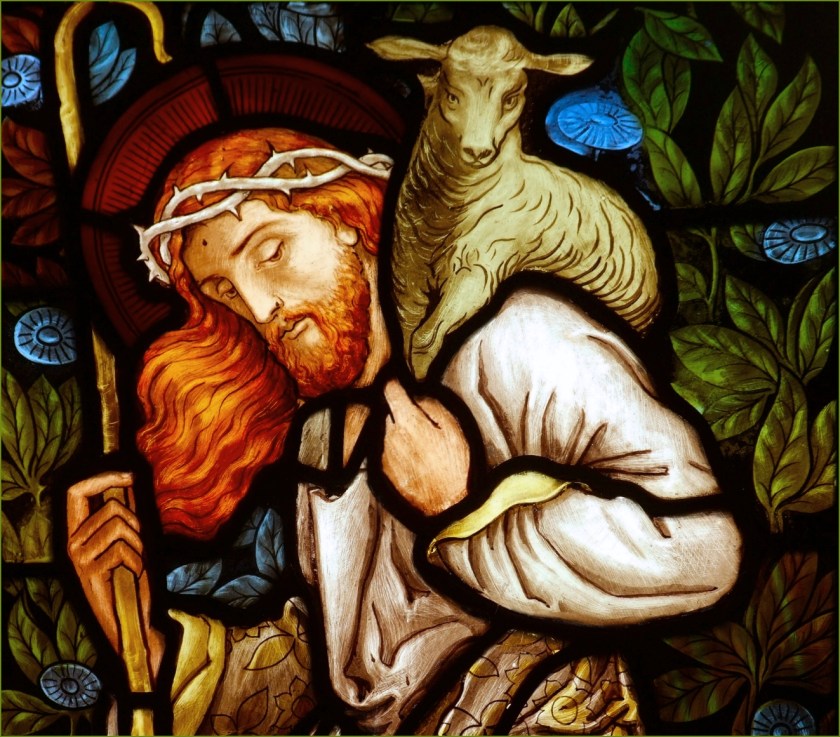
I am the good shepherd. I know my sheep, and they know me. 

–John 10:14

The shepherds of Israel have a custom of marking their sheep to make them distinct from each other.  Each bears a unique notch or brand that makes them distinguishable from their companions.  It is not done for aesthetics, but recognition.  Christ gives each person who follows Him a certain recognizable characteristic.  He “knows His sheep.”

He recognizes their faces.  All have a common demeanor, a family resemblance.  No matter where they go, they are marked as His follower.  The Prodigal fed the pigs from his abject poverty, yet he belonged to his Father.  Our voices also mark us, they are recognizable by those who are aware.  When we speak there is a heavenly inflection and tone.  I have a dear friend from Tennesee, and he couldn’t pretend to be from Boston.  You might say we have a believer’s accent that IDs us as His own.

Last of all, He knows us by our hearts.  Peter was one who not only betrayed his Lord, but he betrayed himself.  He was not quite Peter the Rock, but Peter the weak.  Jesus sees our hearts, the flaws and weaknesses are quite obvious to Him.  We may feel like we are damaged goods.  But His power to transform is legendary and without peer.

Jesus knows His sheep, He just does not tend the best, but seeks out the least.  All who are weak and pathetic are cared for with a tender love.  Those of us who are flawed and lame are given preferential treatment, but all are loved, all needs are met.

We have no power without Jesus as our Shepherd to lead  us.  We cannot manage on our own.  Solitary sheep are nothing more than a wooly snack for predators, or they will fall desperately seeking pasture.  I encourage each to merge with a local flock, a group of imperfect believers who are following the Shepherd of love.

“The LORD is my shepherd, I shall not be in want.

 2 He makes me lie down in green pastures,
       he leads me beside quiet waters,

 3 he restores my soul.
       He guides me in paths of righteousness
       for his name’s sake.”

 Psalm 23:1-3

ybic, Bryan

DOA: How Faith Killed My Faith in Atheism

(In this essay, writer Lee Strobel offers his defense of Easter.)

It was the worst news I could get as an atheist: my agnostic wife had decided to become a Christian. Two words shot through my mind. The first was an expletive; the second was “divorce.”

I thought she was going to turn into a self-righteous holy roller. But over the following months, I was intrigued by the positive changes in her character and values. Finally, I decided to take my journalism and legal training (I was legal editor of the Chicago Tribune) and systematically investigate whether there was any credibility to Christianity.

Maybe, I figured, I could extricate her from this cult.

I quickly determined that the alleged resurrection of Jesus was the key. Anyone can claim to be divine, but if Jesus backed up his claim by returning from the dead, then that was awfully good evidence he was telling the truth.

For nearly two years, I explored the minutia of the historical data on whether Easter was myth or reality. I didn’t merely accept the New Testament at face value; I was determined only to consider facts that were well-supported historically. As my investigation unfolded, my atheism began to buckle.

Was Jesus really executed? In my opinion, the evidence is so strong that even atheist historian Gerd Lüdemann said his death by crucifixion was “indisputable.”

Was Jesus’ tomb empty? Scholar William Lane Craig points out that its location was known to Christians and non-Christians alike. So if it hadn’t been empty, it would have been impossible for a movement founded on the resurrection to have exploded into existence in the same city where Jesus had been publicly executed just a few weeks before.

Besides, even Jesus’ opponents implicitly admitted the tomb was vacant by saying that his body had been stolen. But nobody had a motive for taking the body, especially the disciples. They wouldn’t have been willing to die brutal martyrs’ deaths if they knew this was all a lie.

Did anyone see Jesus alive again? I have identified at least eight ancient sources, both inside and outside the New Testament, that in my view confirm the apostles’ conviction that they encountered the resurrected Christ. Repeatedly, these sources stood strong when I tried to discredit them.

Could these encounters have been hallucinations? No way, experts told me. Hallucinations occur in individual brains, like dreams, yet, according to the Bible, Jesus appeared to groups of people on three different occasions – including 500 at once!

Was this some other sort of vision, perhaps prompted by the apostles’ grief over their leader’s execution? This wouldn’t explain the dramatic conversion of Saul, an opponent of Christians, or James, the once-skeptical half-brother of Jesus.

Neither was primed for a vision, yet each saw the risen Jesus and later died proclaiming he had appeared to him. Besides, if these were visions, the body would still have been in the tomb.

Was the resurrection simply the recasting of ancient mythology, akin to the fanciful tales of Osiris or Mithras? If you want to see a historian laugh out loud, bring up that kind of pop-culture nonsense.

One by one, my objections evaporated. I read books by skeptics, but their counter-arguments crumbled under the weight of the historical data. No wonder atheists so often come up short in scholarly debates over the resurrection.

In the end, after I had thoroughly investigated the matter, I reached an unexpected conclusion: it would actually take more faith to maintain my atheism than to become a follower of Jesus.

And that’s why I’m now celebrating my 30th Easter as a Christian. Not because of wishful thinking, the fear of death, or the need for a psychological crutch, but because of the facts.

*******

Lee Strobel wrote “The Case for Easter: Journalist Investigates the Evidence for the Resurrection“; his first novel, “The Ambition,” releases May 17.

Please check out some really great stuff at “Speak Easy” from the WSJ.  This was taken, and should be greatly acknowledged from http://blogs.wsj.com/speakeasy/2011/04/16/how-easter-killed-my-faith-in-atheism/.  I discovered several interesting articles there and encourage all BB’ers to take a minute and check it all out.  Go WSJ!

Lee Strobel is a “hotshot” writer/thinker/ex-atheist who has embraced an evangelical faith.  In many circles he is recognized as a leader in the specifics of Apologetics.  He is worth reading.

You also may checkout Wikipedia.org about the “resurrection.”  The link is http://en.wikipedia.org/wiki/Resurrection_of_Jesus.  (Just a fleeting thought.  But it’s a bit interesting.)


Explaining the Levels of Discipleship

And anyone who does not carry his cross and follow me cannot be my disciple.

(Luke 14:27 NIV)

There are various people in the world back in Jesus’ day as there are today. There were sometimes vast crowds (“multitude” In the KJV) of people numbering in the thousands. (Luke 12:1) The size of these crowds of people apparently ebbed and flowed. Sometimes there were just a few followers, and sometimes it was in the thousands.

Then there were the unnamed disciples. These apparently sometimes numbered in the hundreds. (John 6:66-67, Luke 6:17 NIV)

Then there were the twelve. (Matthew 10:1-4)

Then out of the twelve, there was an “inner circle”: Peter, who was given a promise that nobody else was given — namely that he would be the rock that Jesus would build His church upon (Matthew 16:18). Then there was James and John, the disciple that “Jesus loved” who were the only disciples present to see the transfiguration. (Mark 9:2)

Present day is little different. We all have different stations. There are evangelists, such as Billy Graham, teachers, like Joyce Meyer, and pastors of huge churches like Pastor David Yonggi Cho, and pastors of small community churches. There are elders and deacons and the congregation. There are people minister to youth, and the little old lady who brings the wonderful dishes to the pot luck dinners… All the way down to people who only go to church on Easter and Christmas.

So. How strong of a walk with Jesus do you want? It is up to you. Though God calls many, He is very polite. If you are among the called, He leaves it up to you how close you want to draw to him.

Sure it sounds great in theory – but in practice, you will find there is a cost. Sure the reward is great but so is the cost. And the devil will remind you of all the things you are “missing out on” in hopes of discouraging you.

You have to take up your cross. Not a fun task as anyone who has seen or heard about Mel Gibson’s Passion of the Christ will know. What is the “cross”? I misunderstood this for years. Your cross is not suffering for your own sins – though you will reap what you sow – everyone, believers or not, will in some fashion will reap what they sow. The cross that Jesus carried was a burden that he carried for others. If you take up burdens for other people, you are bearing your cross.

Remember Love is a choice of behavior – not a warm fuzzy emotion. Emotions go away. Love is eternal.

By this all men will know that you are my disciples, if you love one another.

(John 13:35 NIV)


*******

A.L. Howard is the founder of www.modernchristianissues.org: A Christian Apologetics Blog which attempts to provide biblical answers to tough questions — Bible Apologetics for the layman — designed to be a resource of Biblical Apologetics that you do not have to be a scholar to understand. He has been studying creation science and Bible prophecy since the early 1980s. Visit the site to explore salvation, evolution vs creation science (creationism), cults, the 12 steps and Christianity and much more.

Article Source: http://EzineArticles.com/?expert=A._L._Howard

Compatibility for Dummies

____________________

Believers are to learn the skills of compatibility.  The classic definition is “to be able to exist harmoniously.”  The word is used in a dozen different fields, from agriculture to zoology.  But the particular area we are to look at is the “spiritual.”

The Holy Spirit is the prime teacher.  The same Spirit that holds me is holding you as well.  As a result we connect in a way that is profound.  This is all done supernaturally, and it is one of best arguments for the existence of God I know of.  The world is full of discord.  It is fractious and divided.  But believers can walk in harmony and love.

I was just 17 when I enlisted in the Army.  It truly was a learning experience. One of the basic principles is conforming by adaptation.  We all wore the same clothes.  Wore the same boots.  We ate together, and developed military skills together.  We also marched together in both large and small formations, keeping in step as a group.  We did lots and lots of marching, hours and hours a day.  It had a definite purpose.

Compatibility is learned; but it also is supernaturally given.  A piano player may play Mozart, because the gift lies within.  But that same musician must practice.  You could say what they have is both a talent and a skill.  In the very same way, the agreement I have with you is supernaturally easy—and physically hard.  However it is a skill to be learned.  Once we learn to do this, it will become easier and easier.

The essential foundation for this is the “Word of God.”  We can’t walk with a brother who is clearly at odds with the Bible’s teachings.  But we all know that sin is at epidemic levels, and we are all affected.  I suppose “humility” plays a huge part of staying in step with another saint.  The Lord is so gentle with the strugglers, can’t I do the same?

Finally, all of you, have unity of mind, sympathy, brotherly love, a tender heart, and a humble mind.”  1 Peter 3:8, ESV

Nevertheless (even with this in mind) we must be committed to the Word—first and foremost.  Everything must proceed from this common point.  Loving someone else will almost always involve servanthood.  Washing someone elses feet will almost always develop compatibility.

In Bible college I had a running feud with a fellow student.  He seemed to me to be incredibly arrogant.  Things came to an ugly head and the animosity was thick.  One day in prayer I heard the Holy Spirit speak.  “Go to your brother and wash his feet.”  I charged into his dorm room and became a servant.  I became connected to him in a profound way.

Being compatible does not mean we all do the same things.  We share the same Spirit but we don’t have the same gifts.  My theory is we are all designed with certain strengths, and proscribed weaknesses.  These make us vulnerable and open to another.  In Nehemiah 4, we read of men who built, and men who guarded.  Both were necessary.

The main issue for us is learning compatibility—and all the skills that enable us to practice unity.  We must understand, we are already connected in an amazing way.  But we must “practice” it.

“Do nothing from rivalry or conceit, but in humility count others more significant than yourselves.”   Phil. 2:3, ESV