Help! I Need a Doctor

“And when Jesus heard it, he said to them, “Those who are well have no need of a physician, but those who are sick. I came not to call the righteous, but sinners.” 

Mark 2:17, ESV

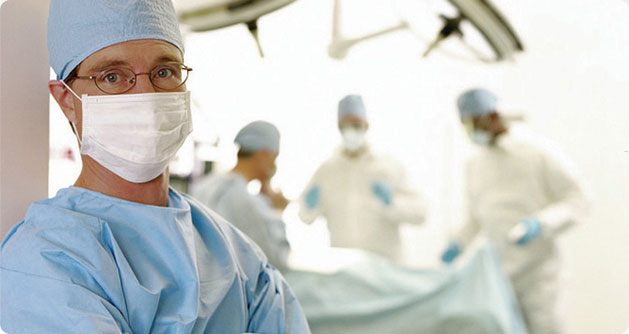
We get ‘schooled’ when we try to figure out Jesus.  It is a radical adjustment to process His thoughts and motives.  We watch and try to understand.  Jesus dictates a certain level, and we as His disciples will need to adjust.  Jesus declares that a select group will not need a doctors ministrations.  But the doctor does have a role.  There will be the ‘sick’, who need his attention.

The reality is that many are diseased and ill.  It is something that links and connects us to each  other.  We are desperately sick, and we have no medicine.  Jesus steps forward and intervenes.  He takes us and ministers to us in our desperate condition.  The diseased will be made healthy.

Jesus reaches ‘the sick’.  That is who He wants.  He makes the choice and that choice is us, full of infection and pain.  His Kingdom consists of those who understand their illness.  He bypasses the strong and the healthy.  He spends little time with them.  His heart is set on us who are broken and twisted.  Our cancerous bodies have absolutely nothing to give Him.

His Kingdom is full of sick people.  It, in a sense, is full with the ‘terminally ill’.  It is we who have ‘attracted’ Him.  Yet He has intensely sought us out.  We gather like little chicks to his protective wings.  We honestly do not have the ability even to protect ourselves.

Jesus declares that He has come for us.  Sin is very near to us.  We have the infection and we are completely vulnerable.  We are not strong spiritually.  There are many who excel before us.  We can make no claim to anything of significance.  But He has chosen us.  Sovereignly and specifically.  Strongly and decisively.  He has collected us and brought us to His heart.

*

ybic, Bryan


Coming Home

Returning Home:

“Then the men who were designated by name rose up and took the captives, and from the spoil they clothed all who were naked among them, dressed them and gave them sandals, gave them food and drink, and anointed them; and they let all the feeble ones ride on donkeys.  So they brought them to their brethren at Jericho, the city of palm trees.  Then they returned to Samaria.” 

2 Chronicles 28:15

I once was held captive by sin, ransacked and naked, starving and bereft of hope.

Lord, thank You for saving me, restoring me and returning me to the place I belong . . with You.  And here’s a simple poem . . .

Brought Back                                       

Love clothes me
and feeds me
and fills up
my flaws.
Love anoints me
and establishes me
in the presence
of all.

………..

See Deb’s blog at http://iftodaywehear.wordpress.com/

Double Trouble: A Dual Diagnosis

What is the relationship between drug abuse and mental illness?

Many chronic drug abusers–the individuals we commonly regard as addicts–often simultaneously suffer from a serious mental disorder. Drug treatment and medical professionals call this condition a co-occurring disorder or a dual diagnosis.

What is chronic drug abuse?

Chronic drug abuse is the habitual abuse of licit or illicit drugs to the extent that the abuse substantially injures a person’s health or substantially interferes with his or her social or economic functioning. Furthermore, any person who has lost the power of self-control over the use of drugs is considered a chronic drug abuser.

What are some serious mental disorders associated with chronic drug abuse?

Chronic drug abuse may occur in conjunction with any mental illness identified in the American Psychiatric Association (DSM-IV). Some common serious mental disorders associated with chronic drug abuse include schizophrenia, bipolar disorder, manic depression, attention deficit hyperactivity disorder (ADHD), generalized anxiety disorder, obsessive-compulsive disorder, post-traumatic stress disorder, panic disorder, and antisocial personality disorder. Many of these disorders carry with them an increased risk of drug abuse.

Disorders With Increased Risk of Drug Abuse

  • Antisocial personality disorder 15.5%
  • Manic episode 14.5%
  • Schizophrenia 10.1%
  • Panic disorder 04. 3%
  • Major depressive episode 04.1%
  • Obsessive-compulsive disorder 03.4%
  • Phobias 02.1%

 Source: National Institute of Mental Health.

How prevalent are co-occurring disorders?

Co-occurring disorders are very common. In 2002 an estimated 4.0 million adults met the criteria for both serious mental illness and substance dependence or abuse in the past year.

Which occurs first–chronic drug abuse or serious mental illness?

It depends. In some cases, people suffering from serious mental disorders (often undiagnosed ones) take drugs to alleviate their symptoms–a practice known as self-medicating. According to the American Psychiatric Association, individuals with schizophrenia sometimes use substances such as marijuana to mitigate the disorder’s negative symptoms (depression, apathy, and social withdrawal), to combat auditory hallucinations and paranoid delusions, or to lessen the adverse effects of their medication, which can include depression and restlessness.

In other cases mental disorders are caused by drug abuse. For example, MDMA or Ecstasy, produces long-term deficits in serotonin function in the brain, leading to mental disorders such as depression and anxiety. Chronic drug abuse by adolescents during formative years is a particular concern because it can interfere with normal socialization and cognitive development and thus frequently contributes to the development of mental disorders.

Finally, chronic substance abuse and serious mental disorders may exist completely independently of one another.

Can people with co-occurring disorders be treated effectively?

Yes, chronic drug abusers who also suffer from mental illness can be treated. Researchers currently are investigating the most effective way to treat drug abusers with mental illness, and especially whether or not treating both conditions simultaneously leads to better recovery. Currently, the two conditions often are treated separately or without regard to each other. As a result, many individuals with co-occurring disorders are sent back and forth between substance abuse and mental health treatment settings.

Source: http://www.justice.gov/ndic/pubs7/7343/index.htm

For more info on the Dual Diagnosis see: http://bipolar.about.com/cs/dualdiag/a/0008_dual_diag.htm

Seeing Things from Both Sides

“The Great Depression” Sandstorm

There was a time when I was in the midst of major depression that I believed that surviving that deep darkness was the hardest thing I would ever do. And it was a great struggle. It was especially difficult to comprehend when people would say things like, “If you didn’t want to be depressed you wouldn’t be.” Or they would say, “Just snap out of it and be happy.” As if being depressed was a conscious choice when I knew that it was not.

In retrospect I can see that to some extent my depression was the result of conscious choices, but I had no idea those choices would lead me to the pit of darkness and despair. Once there, I still could not see that it had been my choices that brought me there and I was not able without the help of God to see my way out.

Yes, I once thought the pit of depression was the worst place I could ever be. But I have recently come to realize that there is another place that is, if not worse, at least as bad as being depressed. That place is standing beside a family member or loved one who is caught in the stranglehold of this terrible condition of the mind and soul, and not being able to help.

There is more than one person in my life right now who is struggling as I once did to be free of the darkness of depression. I long to simply reach in and pull them out, but I can’t. Having seen things from the other side, I do at least know what NOT to say, but I don’t always know what to say or do. I understand their pain and their struggle, and it hurts to see them in that place of despair and hopelessness that I once traveled.

Why do I share this observation? Because I want you who are suffering from depression to understand that your loved ones mean well and want what is best for you. Seeing you in pain and hopelessness is difficult for them, too.

The problem is they simply do not know what to do. We who are on the outside can pray and offer encouragement, but only God can truly rescue you from the pit and pull you from the depths of despair. Only our Savior Jesus offers the hope of Light eternal that will shine into the darkness and show you the way out.

I can tell you about how He shone His Light into my darkness and revealed the choices that led me there, but my experience and my choices may not be the same as yours. Only God sees into the heart of a person to know what healing they require. It is only the hope that Jesus brings that makes seeing the pain of a loved one struggling with depression bearable.

The people walking in darkness
have seen a great light;
on those living in the land of deep darkness
a light has dawned.

Isaiah 9:2 (NIV).