Anorexia & Bulimia

What Are Eating Disorders?

An eating disorder is marked by extremes. It is present when a person experiences severe disturbances in eating behavior, such as extreme reduction of food intake or extreme overeating, or feelings of extreme distress or concern about body weight or shape.

A person with an eating disorder may have started out just eating smaller or larger amounts of food than usual, but at some point, the urge to eat less or more spirals out of control. Eating disorders are very complex, and despite scientific research to understand them, the biological, behavioral and social underpinnings of these illnesses remain elusive.

The two main types of eating disorders are anorexia nervosa and bulimia nervosa. A third category is “eating disorders not otherwise specified (EDNOS),” which includes several variations of eating disorders. Most of these disorders are similar to anorexia or bulimia but with slightly different characteristics. Binge-eating disorder, which has received increasing research and media attention in recent years, is one type of EDNOS.

Eating disorders frequently appear during adolescence or young adulthood, but some reports indicate that they can develop during childhood or later in adulthood. Women and girls are much more likely than males to develop an eating disorder.

Men and boys account for an estimated 5 to 15 percent of patients with anorexia or bulimia and an estimated 35 percent of those with binge-eating disorder. Eating disorders are real, treatable medical illnesses with complex underlying psychological and biological causes. They frequently co-exist with other psychiatric disorders such as depression, substance abuse, or anxiety disorders. People with eating disorders also can suffer from numerous other physical health complications, such as heart conditions or kidney failure, which can lead to death.

Eating disorders are treatable diseases

Psychological and medicinal treatments are effective for many eating disorders. However, in more chronic cases, specific treatments have not yet been identified.

In these cases, treatment plans often are tailored to the patient’s individual needs that may include medical care and monitoring; medications; nutritional counseling; and individual, group and/or family psychotherapy. Some patients may also need to be hospitalized to treat malnutrition or to gain weight, or for other reasons.

Anorexia Nervosa

Anorexia nervosa is characterized by emaciation, a relentless pursuit of thinness and unwillingness to maintain a normal or healthy weight, a distortion of body image and intense fear of gaining weight, a lack of menstruation among girls and women, and extremely disturbed eating behavior. Some people with anorexia lose weight by dieting and exercising excessively; others lose weight by self-induced vomiting, or misusing laxatives, diuretics or enemas.

Many people with anorexia see themselves as overweight, even when they are starved or are clearly malnourished. Eating, food and weight control become obsessions. A person with anorexia typically weighs herself or himself repeatedly, portions food carefully, and eats only very small quantities of only certain foods. Some who have anorexia recover with treatment after only one episode. Others get well but have relapses. Still others have a more chronic form of anorexia, in which their health deteriorates over many years as they battle the illness.

According to some studies, people with anorexia are up to ten times more likely to die as a result of their illness compared to those without the disorder. The most common complications that lead to death are cardiac arrest, and electrolyte and fluid imbalances. Suicide also can result.

Many people with anorexia also have coexisting psychiatric and physical illnesses, including depression, anxiety, obsessive behavior, substance abuse, cardiovascular and neurological complications, and impaired physical development.

Other symptoms may develop over time, including:

  • thinning of the bones (osteopenia or osteoporosis)
  • brittle hair and nails
  • dry and yellowish skin
  • growth of fine hair over body (e.g., lanugo)
  • mild anemia, and muscle weakness and loss
  • severe constipation
  • low blood pressure, slowed breathing and pulse
  • drop in internal body temperature, causing a person to feel cold all the time
  • lethargy

TREATING ANOREXIA involves three components:

  1. restoring the person to a healthy weight;
  2. treating the psychological issues related to the eating disorder; and
  3. reducing or eliminating behaviors or thoughts that lead to disordered eating, and preventing relapse.

Some research suggests that the use of medications, such as antidepressants, antipsychotics or mood stabilizers, may be modestly effective in treating patients with anorexia by helping to resolve mood and anxiety symptoms that often co-exist with anorexia. Recent studies, however, have suggested that antidepressants may not be effective in preventing some patients with anorexia from relapsing. In addition, no medication has shown to be effective during the critical first phase of restoring a patient to healthy weight. Overall, it is unclear if and how medications can help patients conquer anorexia, but research is ongoing.

Different forms of psychotherapy, including individual, group and family-based, can help address the psychological reasons for the illness. Some studies suggest that family-based therapies in which parents assume responsibility for feeding their afflicted adolescent are the most effective in helping a person with anorexia gain weight and improve eating habits and moods.

Shown to be effective in case studies and clinical trials, this particular approach is discussed in some guidelines and studies for treating eating disorders in younger, nonchronic patients.

Others have noted that a combined approach of medical attention and supportive psychotherapy designed specifically for anorexia patients is more effective than just psychotherapy. But the effectiveness of a treatment depends on the person involved and his or her situation. Unfortunately, no specific psychotherapy appears to be consistently effective for treating adults with anorexia. However, research into novel treatment and prevention approaches is showing some promise. One study suggests that an online intervention program may prevent some at-risk women from developing an eating disorder.

Bulimia Nervosa

Bulimia nervosa is characterized by recurrent and frequent episodes of eating unusually large amounts of food (e.g., binge-eating), and feeling a lack of control over the eating. This binge-eating is followed by a type of behavior that compensates for the binge, such as purging (e.g., vomiting, excessive use of laxatives or diuretics), fasting and/or excessive exercise.

Unlike anorexia, people with bulimia can fall within the normal range for their age and weight. But like people with anorexia, they often fear gaining weight, want desperately to lose weight, and are intensely unhappy with their body size and shape. Usually, bulimic behavior is done secretly, because it is often accompanied by feelings of disgust or shame. The binging and purging cycle usually repeats several times a week. Similar to anorexia, people with bulimia often have coexisting psychological illnesses, such as depression, anxiety and/or substance abuse problems. Many physical conditions result from the purging aspect of the illness, including electrolyte imbalances, gastrointestinal problems, and oral and tooth-related problems.

Other symptoms include:

  • chronically inflamed and sore throat
  • swollen glands in the neck and below the jaw
  • worn tooth enamel and increasingly sensitive and decaying teeth as a result of exposure to stomach acids
  • gastroesophageal reflux disorder
  • intestinal distress and irritation from laxative abuse
  • kidney problems from diuretic abuse
  • severe dehydration from purging of fluids

As with anorexia, TREATMENT FOR BULIMIA often involves a combination of options and depends on the needs of the individual.

To reduce or eliminate binge and purge behavior, a patient may undergo nutritional counseling and psychotherapy, especially cognitive behavioral therapy (CBT), or be prescribed medication. Some antidepressants, such as fluoxetine (Prozac), which is the only medication approved by the U.S. Food and Drug Administration for treating bulimia, may help patients who also have depression and/or anxiety. It also appears to help reduce binge-eating and purging behavior, reduces the chance of relapse, and improves eating attitudes.

CBT that has been tailored to treat bulimia also has shown to be effective in changing binging and purging behavior, and eating attitudes. Therapy may be individually oriented or group-based.

@

For more on these Eating Disorders, see: http://www.nimh.nih.gov/health/publications/eating-disorders/complete-index.shtml

For a Christian perspective: http://www.christiananswers.net/q-eden/eatingdisorders.html

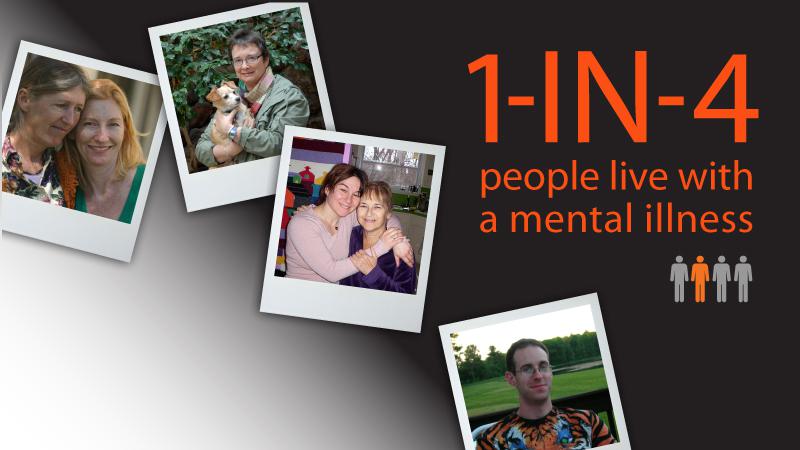
1 in 4 Church Homes Are Dealing With This!

By Carlene Hill Byron

How many families in your church have a loved one who struggles with mental health problems? That’s kind of a trick question. People don’t talk about mental health problems. You’re more likely to hear them describe their child’s condition as “something like autism,” as the elder of one church we know says.

Or they might cover up entirely, as does an elder’s wife in another congregation. When her bipolar disorder swung into mania after childbirth, her family, already managing the added responsibilities of a newborn, had to manage her condition as well. But because her condition is a secret, they did so without any support beyond the usual “new baby” dinners.

The answer to the question is, if your congregation is representative of the U.S. population, one in four households will struggle with someone’s mental health problems over their lifetime. That’s schizophrenia, bipolar disorder, obsessive compulsive disorder, disabling chronic depression, and various anxiety disorders.  Look at the faces seated around you this Sunday.  Someone is probably hurting. And they’re probably afraid to tell you.

The least acceptable disability

Schizophrenia2
Out of Control

A study where people ranked disabilities by their “acceptability” returned these results, in order–most acceptable: obvious physical disabilities, blindness, deafness, a jail record, learning disabilities, and alcoholism.

Least acceptable: mental health problems. People with mental health problems frighten us because when people become mental ill, they become someone we don’t know. A bright boy who was his family’s bright hope may find he just can’t cut it anymore as schizophrenia turns him paranoid, disoriented, unmotivated in the extreme, and overwhelmed by delusional voices that tell him, over and over, how worthless he is.

Or, in the case of bipolar disorder, a girl who was a well-liked and active member of her Teen Challenge group may suddenly turn promiscuous, run away from home, and make a new home in the streets of a strange city. Laziness. Promiscuity. Violence. Sin. That’s what many people see when they look at those with mental health problems. It’s hard to believe that people may behave in such unacceptable ways and not be in control of their behavior.

Having a mental health problem is a lot like being on alcohol or drugs, without being able to stop. Medications “work” for about two-thirds of us. That means that a third of us can’t ever get off the chemical ride that our brains produce.

For those of us who can use medications, the side effects can be daunting. I have lost about 20 percent of my small motor functionality as a result of one of the five medications I take for bipolar disorder. I prefer that to losing large motor control and having another auto accident, being so disoriented I can’t find my way home from the store, losing bowel control in a busy bookstore, gaining 45 pounds, or any of dozens of side effects I’ve experienced on other medications.

Many people become so frustrated with side effects that they stop taking medications. Only about half of us accept treatment. Even when we are treated, not everyone regains their status as a fully functioning adult. In our extended family, six people have diagnoses. Those with bipolar disorder and chronic depression are successfully medicated and work full-time. Those with panic disorder and schizophrenia are on permanent disability. Nothing has pulled them through.


What the Bible says

The Bible talks about mental illness, as well as physical illness.

  • It describes a king who was made mentally ill until he would recognize the sovereignty of God (Dan. 4:29-34).
  • It describes demonized men who lived among the tombs and terrorized everyone until Jesus set them free (Matt. 8:28-33).
  • It also describes as demonized a young boy that most scholars today say had epilepsy (Matt. 17:15-18). Jesus delivered him, too.
suicide_germs
What was once believed

What does this tell us about illness?

First, that God is able to heal. Second, that some physical and mental illnesses are caused by demons. Third, that some mental illnesses are caused by sin. But are all mental illnesses caused by demons or sin, and is seeking God our sole resource for physical and mental healing?

Since the 1950s, we have usually sent church members with epilepsy to doctors for effective treatment with anti-convulsant drugs. In a similar way, we’ve learned that medicines can effectively treat many cases of mental illness. So if all mental illnesses were caused by demons and sin, medicine would be exorcising demons and turning hearts to repentance. That is certainly untrue, for those are the works of the Holy Spirit.

Instead, we now know that most if not all mental illnesses are biological in origin, with environmental factors possibly triggering an existing genetic predisposition to the illness. Mental illnesses, just like epilepsy, are biological disorders of the brain.

What can the church do?

Compassionate service is one of our core charges as Christians. We observe it almost daily in the experience of one man we know with schizophrenia. His life is confined almost entirely to his home due to the fear, indecision, and lethargy that have become the shape of the illness in his body. But neighbors bring him occasional meals. The secretary of his small church talks to him by telephone every weekday. Several other members take weekly calls at designated times to help break his isolation. If he doesn’t feel up to driving to his Bible study meeting or Sunday services, some member will give him a ride. Nearby relatives help him plan and manage his finances, and come by to clean occasionally and for DVD “movie nights.” Phone cards given as gifts allow him to call his mother nightly. There’s much more that could be done—more frequent house cleaning and more meals and more visits—but he enjoys far more contact with many more loving people than many shut-ins.

The challenging good news is that when people with mental illness turn to someone outside “the system” for help, the church is first to get the call 40 percent of the time. Is your church ready?

…………………..

Carlene Hill Byron is the former Director of Communications for Vision New England. Through NAMI—the Nation’s Voice on Mental Illness, she and her husband, James, train churches to effectively serve people within the congregation with mental health problems and also teach NAMI’s class for families of people with mental health problems. They are members of Asbury United Methodist Church in Raleigh, North Carolina, where James serves on staff. First published by Vision New England’s Ministries with the Disabled, Acton, Massachusetts.

http://www.mentalhealthministries.net/index.html

Dealing with the Ultimate Fear?

When I was a boy I was terrified of death.  The very thought of being six feet deep in a small box, with maggots, rottenness and decay terrorized me.  I also had an incredible fear that someone would make a

mistake and that I would wake up entombed in a buried coffin.  Just thinking about it now unsettles me.  It was an anxiety that required diversions. Which I suppose led me down the road of escalating drug and alcohol abuse.  It undoubtedly led to much of my psychological issues that I deal with today.

Here is 2 Timothy 1:10, “Which now has been manifested through the appearing of our Savior Christ Jesus, who abolished death and brought life and immortality to light through the gospel.  Scripture says that  Jesus has ”abolished death”.  I have learned to love that word, “abolish”!  It means to nullify, eliminate or make obsolete.  This is a decisive and a dramatic word which soothes my fear, and calms my mind.

It’s like he pulled the plug.  Death does not operate for the believer, because he did a disconnect for us.  I used to think my terror was unique to me.  I felt like I couldn’t tell anyone that I had those moments alone when I would be overwhelmed by morbid thoughts of death.  But Jesus destroyed the devil!

“We are people of flesh and blood. That is why Jesus became one of us. He died to destroy the devil, who had power over death. But he also died to rescue all of us who live each day in fear of dying”,  Hebrews 2:14-15 NCV.

 “The fear of death is ingrafted in the common nature of all men, but faith works it out of Christians.“– V. Powell.  When an athlete goes into intense training he/she will develop in their muscles “lactic acid” (or for the geeks out there– 2-hydroxypropanoic acid)  Lactic acid is what causes the soreness and cramps in an overworked muscle.  Trainers will stretch and manipulate the athletes limbs to extract this acid.  Death has infused our souls, faith works it out of us.

Fear of death is nothing to be ashamed of.  Almost all of us have had those disturbing moments that seem irrational.  But it’s not a question of rationality, but of faith.  Do I really believe that Jesus unplugged death for me?  He made the deliberate decision to change the status quo for me.  It wasn’t an afterthought, but a definite act, purposeful and well thought out.

“I assure you, most solemnly I tell you, if anyone observes My teaching [lives in accordance with My message, keeps My word], he will by no means ever see and experience death. John 8:51, Amplified.

A tremendous promise for the believer, especially the believer who is anxious about death.  We are free now, free to live life in outrageous freedom! I proclaim Jesus’ promise to you, you are free!

———————————————————————————————-

These are odds and ends that would not fit in this post. I didn’t want to trash them so here you go. <3

“Christian! Death cannot hurt you! Death is your best friend – who is commissioned by Christ to summon you from the world of vanity and woe, and from a body of sin and death – to the blissful regions of glory and immortality, to meet your Lord, and to be forever with him.”   –Wm. Mason

“Death is no more than passing from one room into another. But there’s a difference for me, you know. Because in that other room I shall be able to see.” —Helen Keller

++++++++++++++++++++++++++++++++++++++++++++++++++++

The Things We Must Learn

I’ve learned that you cannot make someone love you. All you can do is be someone that can be loved. The rest is up to them.

I’ve learned that no matter how much I care, some people just don’t care back.

I’ve learned that it takes years to build up trust, and only seconds to destroy it.

I’ve learned that it’s not what you have in your life, but who you have in your life that counts.

I’ve learned that you shouldn’t compare yourself to the best others can do.

I’ve learned that you can do some thing in an instant that will give you heartache for life.

I’ve learned that it’s taking me a long time to become the person I want to be.

I’ve learned that you should always leave loved ones with loving words. It may be the last time you see them.

I’ve learned that you can keep going long after you can’t.

I’ve learned that we are responsible for what we do, no matter how we feel. That either you control your attitude or it controls you.

I’ve learned that heroes are the people who do what has to be done regardless of the consequences.

I’ve learned that money is a lousy way to keep score.

I’ve learned that my best friend and I can do anything or nothing and have the best time.

I’ve learned that just because someone doesn’t love you the way you want them to doesn’t mean they don’t love you with all they have.

I’ve learned that maturity has more to do with what types of experiences you’ve had and what you’ve from them and less to do with how many birthdays you’ve celebrated.

I’ve learned that you should never tell a child their dreams are unlikely or outlandish. Few things are more humiliating, and what a tragedy it would be if they believed it.

I’ve learned that no matter good a friend is, they’re going to hurt you every once in a while and you must forgive them for that.

I’ve learned that no matter how bad your heart is broken the world doesn’t stop for your grief.

I’ve learned that our background and circumstances may have influenced who we are, but we are responsible for who we become.

I’ve learned that even when you think you have no more to give, when a friend cries out to you, you will find the strength to help.