It’s Sunday morning here in Alaska. We survived already this morning– DST, an earthquake, dog poop on the carpet, and snow, and it’s not even noon yet. (Can’t wait to see what the afternoon will bring.)
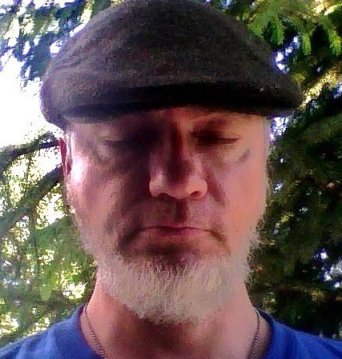
I had my appointment Friday, and my doctor was blown away. My Bell’s Palsy is diminished by about 70%. He was thunderstruck. And I believe God healed me!
There are some issues though. The BP is still affecting my eye, and the left side of my mouth. I have decided to continue the meds, and start to ease off of managing four blogs. The eyestrain isn’t going to help my affected eye.
I was able to open the service with a meditation from the Word last night at our main service. I managed to do this without a translator, or a sponge, so I survived.
Having so many praying for me, especially early this week during the acute stages was profound. Thanks for mobilizing and standing up for me in the Father’s presence. Thank you!
I really don’t know what I should say now. Yesterday, March 3, I woke up and made the frightening discovery that the entire left side of my face was paralyzed. Eye-mouth-lips-tongue. But being a true coffee drinker, I found I could only drink my morning joe with a straw, otherwise it just dribbled down my chin. And I couldn’t close my left eye.
I drove my son to his classes, and then decided on a whim that it might be wise to have my doc look at it. I was immediately escorted up to the hospital’s ER. The concern was is that I had a stroke; or in the midst of one. But the real diagnosis though is Bell’s Palsy.
Since I physically couldn’t close my left eye I experienced the horrible experience of not being able to blink. I must of made a ghastly sight with an eye that didn’t close, staring out like a cyclops. That was the worse of it. Even though the pain was minimal, the eye was affected the worst, and since I couldn’t close it on its own was very irritated. It would only close by physical pulling down the eyelid.
I suppose the worst part of it was going in for an MRI. Because of my past brain tumor that has become the biggest issue here. I could tell the tech was aware of something. And that they discovered something. The radiologist deferred any diagnosis until the past MRI from Anchorage could be consulted.
So now I sit here writing with just one working eye, and a prayer. I don’t want surgery again. And yet, at the same time, I want them to carve this thing out. I’m 52 years old, married with two great kids. In ministry that I love doing. But I am fully in God’s hands.
The Bell’s Palsy if that is all its is, has a healing rate of 3-6 months. And that’s fine– if it is just that. But if it is another brain tumor, than my symptoms will only spread. I will know on Friday, later this week. I will let you know.
If wish to help me, please take my name before the Father. Having this awareness, I can follow Him much more gracefully. We can be excited (and hopeful) for a healing, but I’ve learned it takes just as much faith to follow Him through things like this. Oh, BTW, if you run into me on the wooly streets of Homer Alaska, I’ll let you buy me a Vanilla latte. But I will need a straw, lol.
&
“I will trust Him. Whatever, wherever I am, I can never be thrown away. If I am in sickness, my sickness may serve Him; in perplexity, my perplexity may serve Him; if I am in sorrow, my sorrow may serve Him. My sickness, or perplexity, or sorrow may be necessary causes of some great end, which is quite beyond us. He does nothing in vain.”
The healing of the paralyzed man is loaded with lessons for us. He lies motionless on his pallet, unable to move. His incredible and loyal friends have dedicated themselves to getting him into Jesus’ presence. But the house is full; its beyond standing room only, they can’t get close. They are desperate. Jesus is so near, they can hear Him teach, and yet so far away.
One of them has a wild idea. They will lower him down into the room from the roof! Energized by this thought they put the plan into action. I can just see them, working feverishly. When the hole is big enough, they carefully lower the paralyzed man down slowly. We read that, “Seeing their faith, Jesus said to the man, “Young man, your sins are forgiven.” (Luke 5:20).
Example of 3D without glasses
God can see faith. It is invisible to us, and takes a special work of grace for us to do so. It is not an easy thing to see faith. If you go downtown to watch a movie in 3-D the attendant will issue you special glasses. With them everything is enhanced.
The Lord sees faith, and responds in kind. His powers of perception and discernment are advanced far beyond our puny human efforts. But God is pleased when we show our faith by our works. They fascinate Him and He delights when His children prove a living faith by actions. Our faith can only be seen by what we do.
The faith of the paralyzed man, and the faith of his friends makes them fluorescent in a black & white world. It jumps out to Jesus, and it is hard to see anything else. Faith stands out, and it cannot be hid.
There is so much here in Luke 5, so many lessons and so much wisdom. Much of it lies at the surface, and can be picked up like gold nuggets. I think that I could preach six months on this chapter alone. It is that good.
There was a time when I was in the midst of major depression that I believed that surviving that deep darkness was the hardest thing I would ever do. And it was a great struggle. It was especially difficult to comprehend when people would say things like, “If you didn’t want to be depressed you wouldn’t be.” Or they would say, “Just snap out of it and be happy.” As if being depressed was a conscious choice when I knew that it was not.
In retrospect I can see that to some extent my depression was the result of conscious choices, but I had no idea those choices would lead me to the pit of darkness and despair. Once there, I still could not see that it had been my choices that brought me there and I was not able without the help of God to see my way out.
Yes, I once thought the pit of depression was the worst place I could ever be. But I have recently come to realize that there is another place that is, if not worse, at least as bad as being depressed. That place is standing beside a family member or loved one who is caught in the stranglehold of this terrible condition of the mind and soul, and not being able to help.
There is more than one person in my life right now who is struggling as I once did to be free of the darkness of depression. I long to simply reach in and pull them out, but I can’t. Having seen things from the other side, I do at least know what NOT to say, but I don’t always know what to say or do. I understand their pain and their struggle, and it hurts to see them in that place of despair and hopelessness that I once traveled.
Why do I share this observation? Because I want you who are suffering from depression to understand that your loved ones mean well and want what is best for you. Seeing you in pain and hopelessness is difficult for them, too.
The problem is they simply do not know what to do. We who are on the outside can pray and offer encouragement, but only God can truly rescue you from the pit and pull you from the depths of despair. Only our Savior Jesus offers the hope of Light eternal that will shine into the darkness and show you the way out.
I can tell you about how He shone His Light into my darkness and revealed the choices that led me there, but my experience and my choices may not be the same as yours. Only God sees into the heart of a person to know what healing they require. It is only the hope that Jesus brings that makes seeing the pain of a loved one struggling with depression bearable.
The people walking in darkness have seen a great light; on those living in the land of deep darkness a light has dawned.







 Broken Believers