Photo: Night Sky

The heavens tell us about the Glory that God has.  We look up and see a universe that was created, and is now on display.  I remember on an isolated beach in Mexico.  One night, the entire Milky Way was revealed.  I laid on the sand transfixed by it all.  Suddenly, I got afraid and had the sensation of being very, very small.  That awareness has never left me.

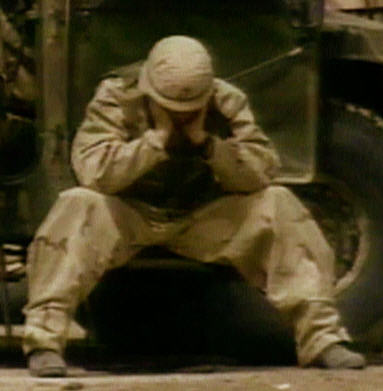
Combat’s Hidden Toll: 1 in 10 Soldiers Report Mental Health Problems

Soldiers Report PTSD Symptoms and Other Mental Health Problems
 
By KIM CAROLLO
ABCNews Medical Unit
June 9, 2010

Even though he’s retired from active military duty, CSM Samuel Rhodes still suffers from deep emotional wounds.

“I had to take this afternoon off from work today because of anxiety,” he said. “And sometimes, if I’m going through a really tough time, I think about suicide.”

He spent nearly 30 years in the Army and recently spent 30 straight months deployed in Iraq where he, like many soldiers, witnessed some of the horrors of war.

“In April 2005, it started to eat me up because I started losing one soldier after another,” Rhodes said. “We lost 37 soldiers that were in my unit.”

He was in charge of the brigade of 37 soldiers, and as time wore on, the loss of life wore him down.

“In April 2007, it came full circle. I considered suicide as an option. I felt guilty about losing those soldiers, even though I had no control over it,” he said.

“And I was sleepwalking. I had to tie myself to my cot to prevent it,” he added.

Later, during his 24th month in Iraq, he was found unconscious, and doctors diagnosed him with exhaustion. At that time, the combat stress doctor told him he was also suffering from post-traumatic stress disorder.

“He started explaining it to me, and I realized he was right,” Rhodes said.

And according to a new study conducted by researchers at Walter Reed Army Institute of Research, Rhodes’ mental health problems are common among soldiers returning from Iraq.

Between 2004 and 2007, researchers gave out anonymous surveys to four active duty brigade combat teams and two National Guard combat team three months and 12 months after deployment. The surveys screened soldiers for PTSD, depression, alcohol misuse and aggressive behavior and asked them to report whether these problems impacted their ability to get along with others, take care of things at home or perform their job duties.”A high number of those that had symptoms of PTSD and depression also reported some aspect of impairment,” said Jeffrey L. Thomas, one of the study’s co-authors. “The range was about 9 to 14 percent.” Depression rates ranged from 5 percent to 8.5 percent.

But by using a less stringent definition of PTSD, they found between 20 and 30 percent of soldiers showed symptoms of PTSD, while they found between 11.5 to 16 percent of them were depressed.

Full article, please go to:  http://abcnews.go.com/Health/MindMoodNews/10-soldiers-fought-iraq-mentally-ill/story?id=10850315&page=2

Grade Your State

Our national mental health care system is in crisis. Long fragile, fragmented, and inadequate, it is now in serious peril. In 2003, the presidential New Freedom Commission presented a vision for a life-saving, recovery-oriented, cost-effective, evidence-based system of care. States have been working to improve the system, but progress is minimal.

Today, even those states that have worked the hardest stand to see their gains wiped out. As the country faces the deepest economic crisis since the Great Depression, state budget shortfalls mean budget cuts to mental health services.

The country as a whole was graded D. No states received an A grade, and only six (Connecticut, Maine, Maryland, Massachusetts, New York and Oklahoma) received a B. Eighteen states got C’s, a whopping 21 got D’s – and 6 states (Arkansas, Kentucky, Mississippi, South Dakota, West Virginia and Wyoming) got a failing grade – F.  The state I live in,  Alaska, received a D.

To see your states report card, go to http://www.nami.org/gtsTemplate09.cfm?Section=Grading_the_States_2009

The budget cuts are coming at a time when mental health services are even more urgently needed. It is a vicious cycle that destroys lives and creates more significant financial troubles for states and the federal government in the long run.

One in four Americans experience mental illness at some point in their lives. The most serious conditions affect 10.6 million people. Mental illness is the greatest cause of disability in the nation, and twice as many Americans live with schizophrenia than with HIV/AIDS.

We know what works to save lives and help people recover. In the face of crisis, America needs to move forward, not retreat. We cannot leave our most vulnerable citizens behind.

NAMI was the source of this study, you can see it at: http://www.nami.org/Content/NavigationMenu/Grading_the_States_2009/Overview1/Overview.htm

Getting Free of Anxiety

From Warren Mueller

Do you often deal with anxiety? Are you consumed with worry? You can learn to manage these emotions by understanding what the Bible says about them. In this excerpt from his book, “Truth Seeker – Straight Talk From The Bible”, Warren Mueller studies the keys in God’s Word to overcoming your struggles with anxiety and worry.

Anxiety (Worry)

Life is full of many concerns stemming from the absence of certainty and control over our future. While we can never be completely free from worry, the Bible shows us how to minimize worry and anxiety in our lives. Philippians 4:6-7 says do not worry about anything, but with prayer and supplication with thanksgiving make your requests known to God and then the peace of God will guard your hearts and minds in Christ Jesus.

Pray About Life’s Worries

Believers are commanded to pray about life’s worries. These prayers are to be more than requests for favorable answers. They are to include thanksgiving and praise along with the needs. Praying in this way reminds us of the many blessings God continually gives us whether we ask or not. This reminds us of God’s great love for us and that He knows and does what is best for us.

A Sense of Security in Jesus

Worry is proportional to our sense of security. When life is going as planned and we feel safe in our life routines, then worries subside. Likewise, worry increases when we feel threatened, insecure or are overly focused on and committed to some result. 1 Peter 5:7 says cast your cares upon Jesus because He cares for you. The practice of believers is to take our worries to Jesus in prayer and leave them with Him. This reinforces our dependence on, and faith in Jesus.

Recognize a Wrong Focus

Worries increase when we become focused on the things of this world. Jesus said the treasures of this world are subject to decay and can be taken away but heavenly treasures are secure (Matthew 6:19). Therefore, set your priorities on God and not on money (Matthew 6:24). Man worries about such things as having food and clothes but is given life by God. God provides life, without which the concerns of life are meaningless.

Worry can cause ulcers and mental problems that can have destructive health effects that shorten life. No amount of worry will add even one hour to one’s life (Matthew 6:27). Therefore, why worry? The Bible teaches that we should deal with each day’s problems when they occur and not be obsessed with future concerns that may not happen (Matthew 6:34).

Focus on Jesus

In Luke 10:38-42, Jesus visits the house of the sisters Martha and Mary. Martha was busy with many details regarding making Jesus and his disciples comfortable. Mary, on the other hand, was sitting at the feet of Jesus listening to what he said. Martha complained to Jesus that Mary should be busy helping but Jesus told Martha that “…you are worried and anxious about many things, but only one thing is needed. Mary has chosen what is better and it will not be taken away from her.” (Luke 10:41-42)

What is this one thing that freed Mary from the business and worries experienced by her sister? Mary chose to focus on Jesus, listen to Him and ignore the immediate demands of hospitality. I do not believe that Mary was being irresponsible, rather she wanted to experience and learn from Jesus first and later, when He was done speaking, she would fulfill her duties. Mary had her priorities straight. Put God first and He will free us from worries and take care of the rest of our concerns.

From an article posted at about.com by Warren Mueller

http://christianity.about.com/od/topicalbiblestudies/a/anxiety.htm

His bio at: http://christianity.about.com/od/topicalbiblestudies/p/biowarrenmuelle.htm