Difficulty and pain sometimes come from others, and challenges to the Lordship of Jesus often come from our unique circumstances.
But what if it was something we’ve done?
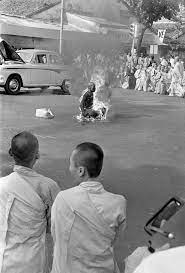
I remember the classic picture of a Buddhist monk who sat in the middle of a street. He was serene as he soaked himself with gasoline, and lit himself on fire as a protest against a war he believed was wrong and evil. He burned himself in front of the cameras.
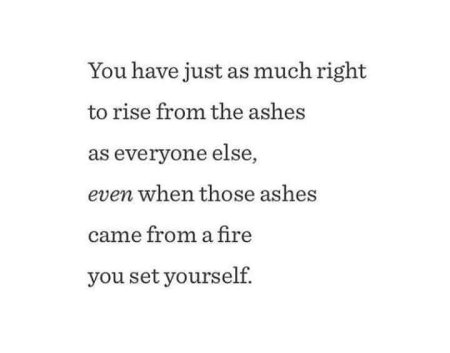
All too often we’re pretty much responsible for our own self-immolation. It is we (and we alone) that set ourselves ablaze. Sin affects our minds and hearts. We set ourselves on fire.
When we sin– when we walk in ‘known’ disobedience we always put ourselves in an awful place. We love it but learn to hate it too. But we continue to do it regardless of the awful death that ensues.
God promises to forgive us. Out of our ashes, He keeps bringing us life and hope.
You can be forgiven. You can find life again, even if you’re fully responsible for the evil we’ve done to yourself. Yes, we all sin, and yes we walk in our own personal rebellion. But Jesus knows it all. These awful things we’ve all done can be forgiven.
As a man and a preacher of the Gospel, I realize that I often choose to sin. In spite of all I know and teach I realize that I can live in the ashes of my own making. As one who also struggles with bipolar, I understand that I’m even more susceptible to doing awful things. I understand that I choose darkness even though others will call me “a man of God.”
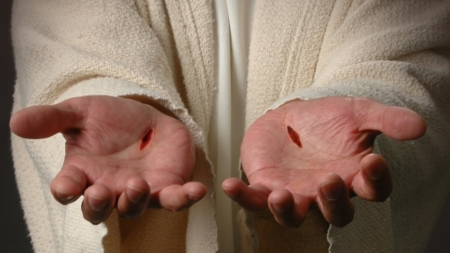
As you read this I’m praying that you find His forgiveness and mercy. You’ve come a long way it seems, but you must see His blood that was ‘released’ from His veins and arteries for you.
He desperately loves you–even if you’ve set yourself on fire, and sit in the ashes of your doing.
“To appoint unto them that mourn in Zion, to give unto them beauty for ashes, the oil of joy for mourning, the garment of praise for the spirit of heaviness; that they might be called trees of righteousness, the planting of the Lord, that he might be glorified.“
A few weeks ago in response to a poetics prompt to write about a first time for something, I thought of something that I have only done once, and am thankful I’ve never had happen again. But there are people who have had this happen so many times they maybe can’t even remember the first time.
My prayers are with them, my hope that they recognize the lie that suicide is the answer to pain and suffering and that our loved ones would be better off if we were dead.
Not Better Off Dead
Clearly I recall the first time the thought entered my mind They’d be better off if I was dead
I immediately knew it was wrong but still a method to my madness began to form in the recesses of my deeply troubled mind
I could picture the bottle of pills designed to make me better but could just as easily be my demise
Then they’d be free, I’d be free
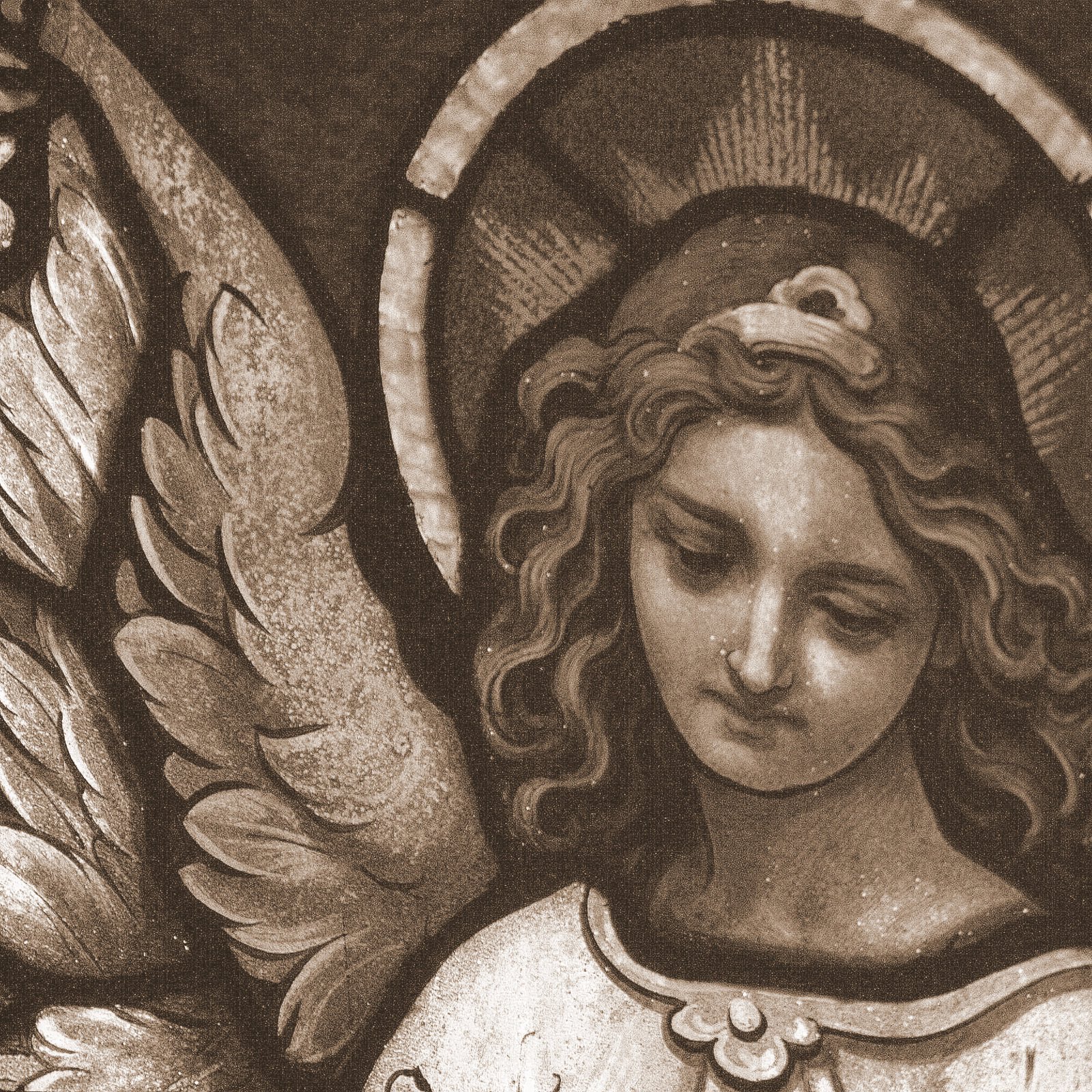
The Psalmist wrote The angel of the LORD encamps around those who fear him, and he delivers them That first time His angel was encamped around me
He delivered me from that first thought made me know it was wrong ensured it was the last time that thought ever entered my mind
Now we are free and together because the Lord let me know I was not better off dead
I write candid memoir and fearless poetry and delve into hard issues others tend to avoid. I want you to know God’s redemption and healing are just a story away.
It’s very real and it’s very possible. Often we see suicide as the only way out. It becomes an option for us. We can plot it, and entertain it. I have personally seen it first hand, and I understand its seductive pull. It seems logical. Suicide has become a real possibility.
We feel like a magnet; bad stuff gets pulled into our thinking, and we plunge into dark thoughts and a deep pain. I know, I’ve been down this road. I’ve had to walk through this stuff myself. It scares me. Once (or twice) when we make our way down this trek, it becomes easier and quicker to make the slide into what ending it all.
It happens to Christian believers. I was a pastor of a church and a teacher in a Bible college. I acquired a degree of having a competent religion but without real knowledge. I professed but never attained. There were moments though, when I got quiet enough to listen, that I knew it really wasn’t working.
Will we go to hell if we commit suicide? The answer evades me, and I can find no definite direction in scripture. King Saul in the Old Testament, and Judas in the New, are those who come to mind. Both men found themselves in a very ugly situation. There isn’t any positives for them both.
Somehow, deeply ingrained in our hearts, we know it’s wrong. Maybe it’s genetic or a societal convention. Deep down we know it can never, ever be an option. It’s completely beyond the pale. And yet, we arrive at a terrible point when it does seem it’s the only thing left open to us. We’ve become our own worst enemy.
“Suicide doesn’t take away the pain, it gives it to someone else.”
Suicide devastates those who are left behind. Our terrible pain gets passed to those who knew us; the closer they are to us, the more it will damage them. Husbands, wives, children and friends will know trauma first-hand. Our decision to die will scar their hearts forever.
We are all connected. We are each tied to each other. Family and friends, churches and communities. We all have relationships that, like it or not, bind us to each other. We’re not solitary entities existing on our own. Consciously or not, we effect others. We will never know the scope of our influence.
There are stages an afflicted person will go through. These are just generalities, but having been down this path I do see them as steps to self-destruction. They blend with each other and sometimes they can be slower or faster, depending on the individual.
Step One: Ideation.
Thinking about it, is it even possible?
Step Two: Fascination.
When the idea begins to become more real, more seductive. We see a burnished glory in it. Suicide seems like logical to us. It seems the only way out. (Besides, isn’t there a certain ‘hubris’ to killing yourself?)
Step Three: Planning
How am I going to do this? What method makes the most sense to me?
Step Four: Committing.
This is the final, ultimate step. Everything up to now is just setting me up for this.
One of the 10 Commandments expressly tells us that “You shall not murder.” Suicide is essentially “self-murder.” This I suppose, is the ultimate
Suicide is never logical. It’s a slide into that which is irrational. It isn’t normal to want to kill yourself. And it does seem that mental illness (schizophrenia, depression, anxiety etc.) can be an incredible factor. Physical illnesses or diseases also can make suicide logical. Or honestly, it can be a ‘blend’ of all that is listed here.
Suicide prevention
If you think someone is at immediate risk of self-harm or hurting another person:
• Call 911 or your local emergency number. Get help as quick as you can.
• Stay with the person until help arrives. Don’t let them alone with their ‘demons,” real or imaginary.
• Remove any guns, knives, medications, or other things that may cause harm.
• Listen, but don’t judge, argue, threaten, or yell. All of these only increase the possibilities.
If you or someone you know is considering suicide, get help from a crisis or suicide prevention hotline. Try the National Suicide Prevention Lifeline at 800-273-8255.
Most of all, PRAY! Get help from a pastor or elder of your local church. (That’s what they’re there for.)
Love,
Bryan
Commentsbb@yahoo.com
Visit my new site at: redletterstudy.wordpress.com
Sept. 10, is World Suicide Prevention Day. Why there is but a single day of the year devoted to preventing suicide, I do not know. We should endeavor every day to provide the hope the hopeless need to get them through the pain that leads to suicide.
Often we hear it said that those who kill themselves are selfish because they hurt the people they leave behind. But if you’ve ever had suicidal thoughts or tried to die by suicide, you know that is not the case.
If you never have, it is difficult to understand.
I’ve only been truly suicidal once, but my thoughts were far from selfish. At the time, my actual thought was that my husband and son would be better off without me because I was so depressed and broken that I was no good to them. I truly believed this terrible lie.
Thoughts of suicide often follow a long pattern of trying to get well with little or no success. It stems from hopelessness and a sense of feeling like you are a burden to those around you. To consider suicide is to desire to unburden others and put an end to endless pain.
Unfortunately, the thought processes of a person who is suicidal are just simply wrong. I know mine were. I can’t imagine where my husband and son (who was 1 ½ then and is 26 now) would be if I had gone through with it. They certainly would not be better off. That thought was a lie.
There is always hope, even when things seem the most hopeless. What a person struggling with depression and suicidal thoughts needs is love and hope. They need understanding and reassurance that the rest of us would not be better off if they were gone. They need to know we are there for them and that they matter to someone.
They need to know that God loves them and wants what is best for them, and that “This too shall pass.” But in the meantime, we are there to be a shoulder to cry on and a heart to confide in.





 Broken Believers