Condemnation Can’t Stay [Guilt]

make-faucet-bucket-fountain-800x800

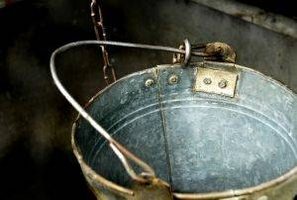
“Lord, I crawled across the barrenness to you with my empty cup uncertain in asking any small drop of refreshment. If only I had known you better I’d have come running with a bucket.”

-Nancy Spiegelberg

There can be no freedom from condemnation without submission to the saving life of Christ.  This is a definite and critical point.

Without a faith in Him, we are left with the option of carrying our own guilt.  This is a staggering possibility, and our lives turn to drinking and “drugging” and other things.  We must escape from all this pain and sin.  We are walking out condemnation, and the weight of this is immense.

Much of our life can be distilled from this viciousness.  We absorb it, adapt to it, thinking it will ease up some.  But it doesn’t, and it won’t.  We turn to all kinds of ‘pain absorbers’ looking to cope with this mindset.  There are escapes, and we try them all.  But ultimately we end up with one that is quite imperfect, and we ‘sort of’ become a little numb. Our hearts become numb and hard.

Condemnation twists us and who are in Christ. 

It deforms our spirit and destroys our confidence before our Father in Heaven.  His love is still being poured out, but we have placed a cover on our vessel.  We are blocking His mercy by our unwillingness to be forgiven.  All of our guilt seems a reasonable reaction to the heaviness of our sin.

Humans were not designed to handle guilt, and its “cousin” fear.  When we do try, we short-circuit.  Pain is always avoided, and that ends up corralling us into bondage.  From here, we can still mentally assent to the Bible; we can still have a sense of spirituality.  But it will always be filtered through our sense of condemnation.

Faith in the complete action of Jesus is enough.  Because I believe He carried the full weight of my sin, past—-present—future, I can walk out a free man.  Yes, sin does require justice, it is to be condemned.  But my faith, trust or confidence enables me to separate from the sin that would take me, straight to the bottom.

In this release, we are supposed to live. Freed from every condemnation. You must displace condemnation with grace.

We have the joy of the forgiven sinner, and that really makes no sense at all. 

It isn’t at all rational.  But it is legal, and it is binding.  And permanent.  There have been too many lies, for too long.  Grace is meant to be the most radical concept we have ever confronted.  And truly it is.

“Therefore there is now no condemnation for those who are in Christ Jesus.”

Romans 8:1


bry-signat (1)

cropped-christiangraffiti1.jpg

The Blood: A Crash Course

I believe there are three things contained in the Blood of Jesusforgiveness, deliverance and protection. Many Christians only know about the first one – forgiveness. They have no idea that there are two other things available to them that will enable them to live a victorious and overcoming life in the Lord while still living down here on this earth. I will briefly discuss each of these three things: forgiveness, deliverance, and protection.

1. Forgiveness

As Christians, we all know there is definitely forgiveness in the Blood of Jesus. This is the basic central message of true Christianity – that God the Father sent His one and only begotten Son Jesus Christ down to our earth in the flesh to physically die on a cross in order to save us and give us total and permanent forgiveness for all of our sins.

Without Jesus dying and shedding His blood on the cross, there would be no forgiveness and no remission of any of our sins. Here are some extremely powerful verses from Scripture specifically telling us this:

  • “For this is My blood of the new covenant, which is shed for many for the remission of sins.” (Matthew 26:28)
  • “In Him we have redemption through His blood, the forgiveness of sins, according to the riches of His grace.” (Ephesians 1:7)
  • “But now in Christ Jesus you who once were far off have been made near by the blood of Christ.” (Ephesians 2:13)
  • “For the life of the flesh is in the blood … for it is the blood that makes atonement for the soul.” (Leviticus 17:11)

Notice the emphasis on the word “blood” in these verses. There is no question that in these verses, and others in the Bible, that the blood that Jesus personally shed for us on the cross, which caused His physical death, is what leads us to being able to receive eternal salvation, the forgiveness of all of our sins, and entrance into heaven when we die and cross over.

2. Deliverance

Now what are the Scriptural grounds that will give us the legal right to be able to use Jesus’ Blood when taking on any attacks that may come our way? As you will see in some of the stories in the Testimonies section of our site, you can Plead the Blood of Jesus against specific types of attacks such as attacks from demons or other evil people, any kind of physical illness or disease, or any kind of addiction to drugs or alcohol.

Many Christians are not aware of this second component that is in the Blood of Jesus which will entitle us to be able to use His Blood to go on the offensive against any adversity that may come our way.

Something else happened that day when Jesus died on the cross for all of our sins. The Bible tells us that Jesus also defeated Satan and all of the powers of darkness that day! Here are several good verses from Scripture proving this point to you:

  • “… that through death He might destroy him who had the power of death, that is, the devil, and release those who through fear of death were all their lifetime subject to bondage.” (Hebrews 2:14)
  • “He has delivered us from the power of darkness and translated us into the kingdom of the Son of His love, in whom we have redemption through His blood, the forgiveness of sins.” (Colossians 1:13)
  • “Having disarmed principalities and powers, He made a public spectacle of them, triumphing over them in it.” (Colossians 2:15)
  • “For this purpose the Son of God was manifested, that He might destroy the works of the devil.” (1 John 3:8)
  • “And they overcame him by the blood of the Lamb and by the word of their testimony, and they did not love their lives to the death.” (Revelation 12:11)

What defeated Satan and all his dark powers? The physical death of Jesus on the cross. And what did Jesus do when He died that day on the cross for all of us? He shed His Blood!

This is why pleading the Blood of Jesus works so well in real life combat situations when it really is needed to defeat attacks that are coming against us from the dark side.

Many Christians are not fully aware of this second fact about the Blood of Jesus – that the Blood of Jesus can also be used to engage with our enemies when they do try to launch any kind of an attack against us. I believe that all of the above Scripture verses definitely tell us that the blood that Jesus shed that day on the cross has totally defeated Satan and all of his dark powers.

The only thing remaining is for all Christians to fully realize this incredible fact, and to grab a hold of this powerful truth and not to be afraid to use when they need it – especially when demons or other bad and evil people are attempting to come against them with any type of unjust action or attack.

Continue reading “The Blood: A Crash Course”

An Astonishing Love

Oh, how He loves you!

By Charles Spurgeon and Bryan Lowe

____

A short conversation about love, grace and sin.

*flourish1

*

“Dost thou know, O saint, how much the Holy Spirit loves thee?”

 “Me? I can’t imagine why. I’m the chief of sinners. I’m rotten to the core. I can bring nothing at all to Him.”

“Canst thou measure the love of the Spirit? Dost thou know how great is the affection of his soul towards thee?”

“So you say. But I really can’t see why He would. I want to believe, I really do. I can only be a liability. My sin is heavy.”

“Go measure heaven with thy span; go weigh the mountains in the scales; go take the ocean’s water, and tell each drop; go count the sand upon the sea’s wide shore; and when thou hast accomplished this, thou canst tell how much he loveth thee.”

“If this is true, then perhaps maybe I am worth something, I suppose. But frankly, my imagination staggers just trying to grasp this.”

“He has loved thee long, he has loved thee well, he loved thee ever, and he still shall love thee; surely he is the person to comfort thee, because he loves.”

“This kind of love is fantastically amazing, isn’t it. I must try to tell others what has happened to me.”

*

From the Daily Help Devotional, and my imagination.

Charles Haddon Spurgeon (1834-92) was England’s best-known preacher for most of the second half of the nineteenth century. In 1854, just four years after his conversion, Spurgeon, then only 20, became pastor of London’s famed New Park Street Church (formerly pastored by the famous Baptist theologian John Gill). The congregation quickly outgrew their building, moved to Exeter Hall, then to Surrey Music Hall. In these venues Spurgeon frequently preached to audiences numbering more than 10,000—all in the days before electronic amplification. In 1861 the congregation moved permanently to the newly constructed Metropolitan Tabernacle.

    Spurgeon’s printed works are voluminous, and those provided here are only a sampling of his best-known works, including his magnum opus, The Treasury of David. Nearly all of Spurgeon’s printed works are still in print and available from Pilgrim Publications, PO Box 66, Pasadena, TX USA 77501.

*

ybic, Bryan

Sins That Stick to Your Heart

It is often quite difficult for people to forgive themself from their past sins.  We have a tendency to hold ourselves to a stricter, more accountable level then other people.

I usually don’t have a big problem forgiving others.  But for many people they will struggle through their entire Christian walk with both self-forgiveness and its cousin, self-acceptance.

 Self-forgiveness is:

* Accepting yourself as a human who has faults and makes mistakes.
* Letting go of self-anger for your past failures, errors and mistakes.
* No longer needing penance, sorrow and regret over a grievous, self-inflicted, personal offense.
* The act of self-love after you have admitted your failure, mistake or misdeed.
* The spiritual self healing of your heart by calming self-rejection, quieting the sense of failure and lightening the burden of guilt.
* The act of letting go of the need to work so hard to make up for your past offenses.

Negative consequences of the absence of self-forgiveness
In the absence of self-forgiveness, you run the risk of:

* Unresolved hurt, pain and suffering from self-destructive behaviors.
* Unresolved guilt and remorse for self-inflicted offenses.
* Chronically seeking revenge and paybacks toward yourself.
* Being caught up in unresolved self-anger, self-hatred and self-blaming.
* Defensive and distant behavior with others.
* Pessimism, negativity and non-growth oriented behavior.
* Having a festering wound that never allows the revitalization of self-healing.
* Fear over making new mistakes or of having the old mistakes revealed.
* Being overwhelmed by fear of failure, fear of rejection, fear of non-approval, low self-esteem and low self-worth. 

Signs of the absence of self-forgiveness.  Lack of self-forgiveness can result in:

* A loss of love for yourself.
* Indifference toward yourself and your needs.
* An emotional vacuum in which little or no emotions are shown or shared.
* Chronic attacks or angry outbursts against self.
* Disrespectful treatment of self.
* Self-destructive behaviors.
* Self-pitying.
* Chronic recalling and reminding of past failures, mistakes, errors and offenses.
* Suspicions about others’ motives, behaviors, attitudes and beliefs when they are accepting of you.
* Chronic depression.
* Chronic hostility, sarcasm and cynicism.
* Self name-calling, belittling and self-demeaning behaviors.
* Unwillingness to change and/or unwillingness to seek the help necessary to change.
* Resistance to doing what is necessary to heal within and recover from low self-esteem.

 Irrational thinking preventing self-forgiveness

* I hurt myself so much; how can I ever expect to be forgiven for that?
* No one deserved the treatment I dished out, and I do not believe that forgiveness is deserved in this situation.
* I am sick over what I did; how can I ever forgive myself?
* I must be inherently evil, and I am despicable. No forgiveness will ever change that.
* I am vicious and cruel, and I always need to be on guard because of that; so why try to forgive what I have done?
* It is a sign of weakness or softness to forgive myself. I must always keep my guard up so as never to repeat my wrongdoings.
* There are some things I can never forgive myself for.
* Only God can forgive me, though at times I don’t believe He can for what I have done.
* What has happened in my life is God’s seeking revenge for all the evil I have done in the past.
* I have done too much for which I can never be forgiven.
* I am just seeking my forgiveness so that I can come back and hurt myself again.
* I do not deserve any self-kindness, self-compassion or self-forgiveness for what I have done to myself or others; I’ll see to it that I am never able to forget it!
* All people who do wrong deserve the worst that life has to dish out.
* I resent myself for hurting myself or others. It is better for me to be hidden behind my wall so I don’t hurt anybody again.
* If I could treat myself or others that way, then I am undeserving of being forgiven, loved or cared for.

 New behaviors needed to create self-forgiveness.  In order to forgive yourself you need to practice:

* Letting go of past hurt and pain.
* Trusting in God’s goodness. Trusting in the goodness and mercy of God to take over the burden for you.
* Letting go and letting the Holy Spirit  lead you during a hurtful time.
* Believing in the infinite justice and wisdom of the Lord                                                                                                                                                                                                                    * Letting go of fears for the future.
* Allowing yourself to be vulnerable to growth.
* Taking a risk.
* Letting go of self-hostility, resentment and self-destructive behaviors.
* Working out your self-anger.
* Overlooking slight relapses or steps backward and getting back on the wagon of recovery immediately.
* Developing a personal spirituality.
* Developing an openness to the belief that you can change.
* Developing trust in yourself.
* Open, honest and assertive communication with yourself concerning hurts, pains and offenses experienced.
* Identifying and replacing the irrational beliefs that block your ability to forgive yourself.

 Two Steps to Develop Self-forgiveness.
 

Step 1: In order to increase your ability to forgive yourself, you need to recognize what this behavior involves. Answer the following questions.

A. What do you mean by “self-forgiveness”?
B. Have you ever forgiven yourself before? How did it feel?
C. Have you ever brought up something from the past to remind you how you hurt yourself or others? How did that make you feel?
D. What role do you feel self-forgiveness has in your growing down? How could you improve?
E. How has the absence of forgiving yourself affected your current emotional stability?
F. What are the signs of the absence of self-forgiveness in your relationship with your family of origin, current family, significant others, spouse, children, parents, relatives, friends or co-workers? With whom do you experience a wall or barrier behind which you hide your past real or perceived failures, mistakes, errors or misdeeds? What feedback do you get about this wall you have been hiding behind?
G. What beliefs block your ability to forgive yourself? What would be necessary to change these beliefs?
H. What new behaviors do you need to develop in order to increase your ability to forgive yourself?
I. What role does the existence of spirituality play in your ability to forgive yourself? The lack of it?
J. For what do you need to forgive yourself?

 Step 2: Now that you have a better picture of what is involved in self-forgiveness, you are ready to work on a specific past failure, mistake, error or misdeed.

A. List a failure, mistake, error, misdeed or event for which you are unable to forgive yourself.
B. How much energy, creativity, problem solving capability and focus on growth is sapped from you whenever you recall this past hurt?
C. What feelings come to mind as you recall this past hurt?
D. How would you describe your role in this past event? In what ways were you the victim, perpetrator, enabler, martyr, bystander, instigator, target, scapegoat, distracter, peacemaker, people pleaser or rescuer?
E. Why do you feel strongly over what happened and how you treated yourself or others?
F. What did this event do to your self-esteem and self-worth?
G. Who was responsible for your reaction to the incident?
H. Who was responsible for your feelings about the incident?
I. Who was responsible for your inability to forgive yourself?
J. How can you forgive yourself?
K. How can you put this incident behind you?
L. How can you avoid being so hurt when something like this happens again?

 ybic, Bryan