Do You Have an Anchor?

“Then fearing lest we should have fallen upon rocks, they cast four anchors out of the stern, and wished for the day.”

Paul’s voyage, Acts 27:29

“This hope is a strong and trustworthy anchor for our souls. It leads us through the curtain into God’s inner sanctuary.”

Hebrews 6:19

An anchor is used when a boat needs to connect to the sea floor. It’s typically used to moor the ship or used in a bad storm.

“A boat anchor helps keep a boat attached to one place on the ocean floor so that it does not go adrift in the sea. Likewise, a “spiritual anchor” is something that helps keep us grounded, connected to what matters most, and able to cope with the challenges that life brings.”

Hopefulness is necessary for walking through the present circumstances we must face.

It also is for our future. To live without hope can be spiritually destructive. If there is no hope for us our hearts will break into pieces.

Hopelessness comes from living without an anchor. You must have an anchor as a believer. You must.

Despair will destroy you.

 A Christian may for many days together see neither sun nor star, neither light in God’s countenance, nor light in his own heart, though even at that time God darts some beams through those clouds upon the soul; the soul again by a spirit of faith sees some light through those thickest clouds, enough to keep it from utter despair, though not to settle it in peace. In this dark condition, if they do as Paul and his company did, cast an anchor even in the dark night of temptation, and pray still for day, God will appear, and all shall clear up, we shall see light without and light within; the day-star will arise in their hearts.

     Richard Sibbes

You Must Keep Walking

The Narrows slot canyon at Zion National Park is 18 miles long and if you want to walk up it you’re in the water—often very deep water, with a strong current and rocky bottom—all the way. It’s not for the weak or faint of heart.

Sometimes in life, we find ourselves in a deep, dark valley. Often it feels more like a narrow slot canyon where no sunshine can reach.

My husband and I hiked part of the way up the Narrows last summer. There was no way I could make it the full 18 miles. Even the mile we did trek was almost too much for me. My wristband that says “I can and I will” reminded me of the hope I needed to make it back downriver.

Life itself isn’t for the faint of heart.

It’s impossible without hope. Thankfully, hope never dies. And God never leaves us alone. Never.

David reminds us in Psalm 23 that no matter how dark the slot canyon of life becomes, we are not alone. We must always remember these words, “Yea, though I walk through the valley of the shadow of death, I will fear no evil for thou art with me.” We are only walking through the dark valley and on our darkest days, hope is there.

Please dear heart, keep walking.

If you find yourself walking in darkness, unable to see the light, you must keep walking. Even if you can barely muster a crawl, keep moving forward through the dark valley. You can and you will reach the other side. And when you do, you’ll find hope was there all along.

My own valley of the shadow of death lasted more than seven years.

At the time, I felt all hope was lost. But looking back I can see that my Savior never left me. Hope never died, dim though it was.

I pray you may one day look back and see that hope has never left you either.

Linda L. Kruschke blogs at Another Fearless Year.

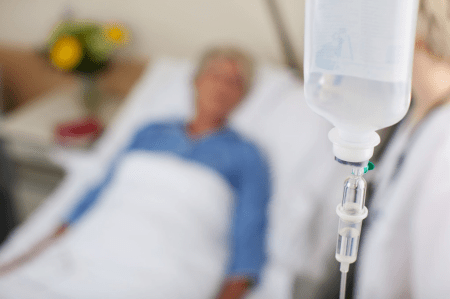
The Blessings of an Illness

The Bible is a book of miraculous healing.

Jesus Christ performed many of them. He taught His disciples, and those who would follow, to heal the sick and afflicted. This is a real part of the Gospel, and it’s the definite work of his Kingdom.

I’ve personally seen legs lengthened and fevers ‘broken’ on several occasions. Obviously it changes life for the sick person, certainly! But it can also boost the faith of those who witness these miracles. I truly believe the Holy Spirit still works these wonders today. We must let him do these things. That isn’t an option.

Somehow though, there is the ‘understanding’ that in order to be healed you must have sufficient faith. Those who are not healed are the people who have a weak faith, they’re missing out somehow on a miracle because their faith didn’t measure up. I wonder though, how much faith was needed to wash in the pool of Siloam in John 5? But really, all that is needed is a mustard seed (Matthew 17:20).

Faith is an active component to many who were healed in Scripture. Jesus said to the blind man, “Receive your sight; your faith has healed you” (Luke 18:42). It happened!

Yet we read of many believers in Hebrews 11 who endured sickness and ill-treatment. We read of vicious brutality and persecution of these “people with faith.”

Not everyone who is sick will receive a physical healing.

For believers today who suffer physically or mentally, we may question our faith. (Especially when the healing evangelist comes to town). After 2-3 tries we settle back on our “deficient’ faith feeling a bit miserable. I honestly don’t think that’s what the Lord wants.

It seems to me that the real issue is not so much a weak faith, but holding on to your faith when you are not healed.

I hear talk about having faith to be healed–but what about the faith that’s needed to be sick?

Why do we suffer from illness? I suspect that for many believers sickness is really there to bring glory to God. Holding onto faith in the midst of pain often encourages those who witness it. I believe that was Paul’s experience (2 Cor. 12:7-10).

Oh dear one, continue to seek healing, (James 5:14).

The Spirit does these things today. But if you’re left in your illness, trust in Him still. All your ways end up in His nail-scarred hands of our Lord Jesus. But remember, when he greets you in heaven, you will know him by the scars.

“The moment an ill can be patiently handled, it is disarmed of its poison, though not of its pain.”

–Henry Ward Beecher

Losing the Glimmer of Hope

In my deepest depression, I thought often how much easier it would be if I was dead. The unbearable pain never seemed to let up. But I didn’t consider suicide. Instead I slept. If I didn’t have to be anywhere in the morning, I slept until 11:00, getting twelve or thirteen hours of sleep. I’d nap if I got the chance, even after a long night’s sleep. Sleep was my escape.

Each night before I went to sleep, I held onto a glimmer of hope that when I awoke, everything would be better. It was a tiny glimmer, but a glimmer nonetheless.

As surely as one can move mountains with faith the size of a mustard seed, one can stay alive with the tiniest glimmer of hope. Because hope is a powerful commodity. Just as a nanogram of a deadly toxin holds the power to kill, a glimmer of hope has the power to give life.

So I held onto my glimmer of hope with all I had. Until one day when I awoke and the glimmer was gone. Hopelessness threatened to strangle me. That was the day I planned my demise, my exit from this cruel world, in a most calculating way. My plan involved mentally counting all the pills I had in the medicine cabinet.

Truth be told, hope remained in that dark place even though I couldn’t see it and felt certain it no longer existed. Hope didn’t depend on me. It came from a place greater than I and it kept me alive even when I desired more than anything else to leave this life of pain and suffering behind.

Hope found me, held me tight, and kept me alive.

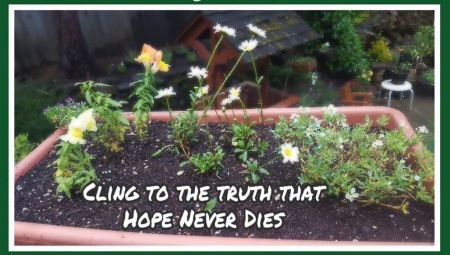
If you are in that dark place of deep despair and depression, feeling all hope has been snuffed out, cling to the truth that hope never dies. Hope never lies and never lets go.

If you have a friend or loved one who is struggling with depression, realize you might be the hope they need. They might need you to find them, hold them tight, and keep them alive, until they can see the glimmer of hope they need to hold onto themselves.

You can read more of my posts at AnotherFearlessYear.net.