When Dreams Become Real

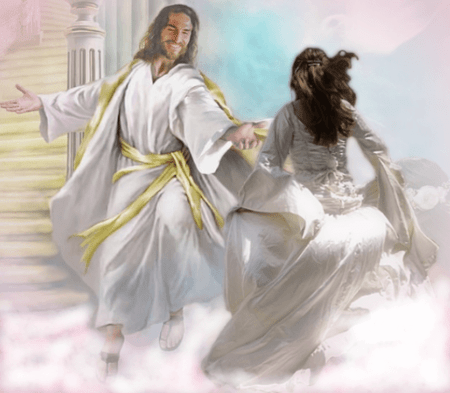
“Simeon took him in his arms and praised God, saying: “Sovereign Lord, as you have promised, you may now dismiss your servant in peace. For my eyes have seen your salvation, which you have prepared in the sight of all nations: a light for revelation to the Gentiles, and the glory of your people Israel.””

– Luke 2:28-32

Simeon has lingered, he has waited for this a very long time.  He had nights that had brought him dreams, wonderful dreams.  People who dream are different; they tend to visualize what seems to be intangible.  But they also can’t always get a grip on it.  Or explain it.  But when dreams mix with faith they produce incredible things.

Simeon is in the perfect place, at the exact time he needed to be.  When he arrives, the baby Jesus is right there.  Bringing our crazy, mixed lives to that spot sometimes takes a lifetime.  The Holy Spirit however, has ‘superintending power’.  That means that He will directly intervene in us to make things happen.

There is a baby.  And I submit to you that He is the center of this whole narrative.  Through the gospels, this is always the case.  Jesus Christ is the pivot point of every healing, or teaching, in every parable spoken.  It is also great drama when the dreams of a very old man encounter their fulfillment in this baby.

It is interesting (and frightening) to see our society marginalize people.  It seems that those on the ‘ends’ of society are pretty much forgotten.  The weak– the old, and the babies are pushed back.  Not much room for them.  Those in their 20s and 30s are our focus.  I think we need old men and old women, and littles ones to teach us our theology, and discipleship.

Notice that Simeon addresses God in this encounter.  We very quickly find that he is a believer.  His words come out of a worshipper’s heart.  They are plain and direct.  He loves what the Lord has done already, and he is soaked in the beautiful promises of salvation.  But, it’s just him and the baby Jesus at that moment.  They stand and reach up to God, but just for a moment.

A word about the Gentiles.  I think Simeon latches unto what was an obscure teaching in his day.  That the Gentiles, ‘God’s unchosen people’ will be included with the Chosen.  The promises extend out into the darkness–and these promises are luminescent.  They light everything.  This light is headed for the thickest, most dense night–the Gentiles.

A final word about Simeon.  His work is done, he has no fear at all.  He sees these few minutes with the Child as the ultimate culmination of his entire life.  He is an example for us.  And his understanding about the things of God is astonishing.  Father, help me to be like your servant, and watch over me as I struggle to figure it out.  Amen.


Christmas Carols for the Psychiatrically Challenged

“A happy heart is good medicine and a cheerful mind works healing, but a broken spirit dries up the bones.”

Proverbs 17:22, Amplified

SCHIZOPHRENIA

– Do You Hear What I Hear?


MULTIPLE PERSONALITY

– We Three Kings Disoriented Are


DEMENTIA

– I Think I’ll Be Home For Christmas


NARCISSISTIC DISORDER

– Hark The Herald Angels Sing (About Me)


BIPOLAR MANIA

– Deck the Halls and Walls and House and Lawn and Streets and Stores and Office and Town …or Deck the Halls and Spare No Expense!


PARANOIA

– Santa Claus is Coming To Get Me


BORDERLINE PERSONALITY DISORDER

– You Better Watch Out, I’m Gonna Cry, I’m Gonna Pout, then MAYBE I’ll tell you why.


OBSESSIVE COMPULSIVE

– Jingle Bell, Jingle Bell, Jingle Bell Rock, Jingle Bell, Jingle Bell, Jingle Bell Rock, Jingle Bell, Jingle Bell, Jingle Bell Rock, Jingle Bell, Jingle Bell, Jingle Bell Rock, Jingle Bell, Jingle Bell, Jingle Bell Rock, Jingle Bell, Jingle Bell, Jingle Bell Rock, Jingle Bell, Jingle Bell, Jingle Bell Rock, Jingle Bell, Jingle Bell, Jingle Bell Rock, Jingle Bell, Jingle Bell Rock, Jingle Bell, Jingle Bell, Jingle Bell Rock, Jingle Bell, Jingle Bell, Jingle Bell Rock, Jingle Bell, Jingle Bell, Jingle Bell Rock…


PASSIVE AGGRESSIVE

– On the First Day of Christmas, My True Love Gave to M(and then took it all away).

“As soap is to the body, so laughter is to the soul.”

— Jewish Proverb


Merry Christmas!

brokenbelievers.com

Tightrope Living

The Balancing Act

Circus performers have my enthusiastic admiration– especially the tightrope walkers! They move with such grace and courage. Their work above the crowds must be perfect, or else. I don’t even want to consider their failure. (I hope they can bounce).

To be a mentally ill or disabled Christian is just as formidable. We must walk out our condition 24/7, 365 days a year. It is relentless. We struggle with a weakness that pits us against symptoms and gravity of a spiritual kind. We get little support from others– sometimes criticism. It often is a very solitary feeling. We are often overlooked or scorned.

My particular rope is bipolar depression. Everyday I mount up and walk out on to it, holding my breath. I still fall a lot, but have a good safety net, and the Holy Spirit is my strength. Losing my balance happens. I pick myself up and climb up the ladder for another go at it.

There is a stigma to having weakness or disabilities. Things are usually ‘slanted’ against us. We are not truly welcomed in many venues, even the Church, I grant you that. In 2 Cor. 12 we catch the higher perspective.

“Three different times I begged the Lord to take it away. 9 Each time he said, “My grace is all you need. My power works best in weakness.” So now I am glad to boast about my weaknesses, so that the power of Christ can work through me. 10 That’s why I take pleasure in my weaknesses, and in the insults, hardships, persecutions, and troubles that I suffer for Christ. For when I am weak, then I am strong.”

God’s program includes my weakness– it actually demands it! Sometimes we chose to seek a deliverance or a healing at the expense of the Kingdom. Scripture over and over tells us that the Lord uses weakness. That’s when it’s best.

“In fact, we expected to die. But as a result, we stopped relying on ourselves and learned to rely only on God, who raises the dead. 10 And he did rescue us from mortal danger, and he will rescue us again. We have placed our confidence in him, and he will continue to rescue us. 11 And you are helping us by praying for us.”

2 Corinthians 1:9-11, NLT

We must rely on God. It is His “job” to keep us, repeatedly. So day by day I “walk the line.” My meds are my balance pole, and I don’t need any special attention. I do whatever the day brings, and even that is from His hand.

ybic, Bryan

Dog Poop in the Living Room! (Stigma)

One out of five Americans will experience a mental disorder during their lifetime.  But, people can get better.  With proper treatment, most people with a mental illness recover quickly, and the majority do not need hospital care, or have only brief admissions.

Mental illness has traditionally been surrounded by community misunderstanding, fear, and stigma.  Stigma towards people with a mental illness has a detrimental effect on their ability to obtain services, their recovery, the type of treatment and support they receive, and their acceptance in the community.

Often when we discover a pile of dog poop in the living room there can be issues. Frustration, a bit of anger, and some disgust are typical reactions.

Exactly what is stigma?  Stigma means a mark or sign of shame, disgrace or disapproval, of being shunned or rejected by others.  It emerges when people feel uneasy or embarrassed to talk about behavior they perceive as different.  The stigma surrounding mental illness is so strong that it places a wall of silence around this issue.

The effects are damaging to the community as well as to the person will the illness and his/her family and friends. But at Mental Health agencies and many churches are working hard to erase the stigma associated with having a mental illness.

In-House-46638176283_xlarge

The emphasis needs to be on supporting and treating people in their own communities, close to their families, friends and familiar surroundings.

Yet discrimination and community misconceptions remain among the most significant barriers to people with a mental illness being able to actively participate in the community and gaining access to the services they need.

But it is not only people with a mental illness who experience discrimination and stigma.  Rejection of people with mental illness inevitably spills over to the caregiver and family members.

Improving community attitudes by increasing knowledge and understanding about mental illness is essential if people with a mental illness are to live in, and contribute to, the community, free from stigma and discrimination.

People with mental problems are our neighbors. They are members of our congregations, members of our families; they are everywhere in this country. If we ignore their cries for help, we will be continuing to participate in the anguish from which those cries for help come. A problem of this magnitude will not go away. Because it will not go away, and because of our spiritual commitments, we are compelled to take action.”

~Rosalynn Carter